Kirjojen hintavertailu. Mukana 12 390 323 kirjaa ja 12 kauppaa.

Kirjailija

Florike Egmond

Kirjat ja teokset yhdessä paikassa: 5 kirjaa, julkaisuja vuosilta 1993-2016, suosituimpien joukossa Eye for Detail. Vertaile teosten hintoja ja tarkista saatavuus suomalaisista kirjakaupoista.

5 kirjaa

Kirjojen julkaisuhaarukka 1993-2016.

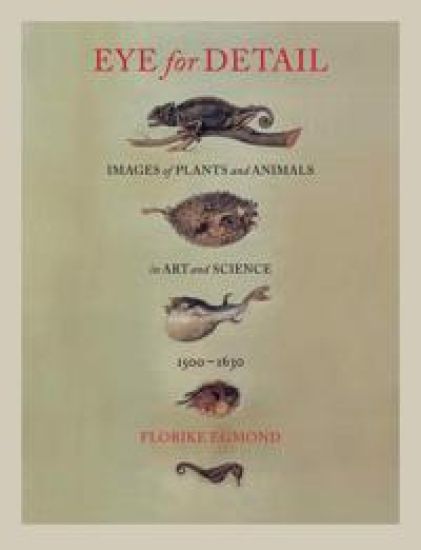
Eye for Detail

Eye for Detail

Florike Egmond

Reaktion Books
2016
sidottu
Image-transforming techniques such as close-up, time lapse and layering are often linked to the age of photography, but they were already being used half a millennium ago for the purposes of identification and study. This is why Renaissance drawings of plants and animals are immediately recognizable to the modern viewer. Discussing natural history images made throughout Europe during the sixteenth century, Eye for Detail traces the early history of image manipulation techniques.Florike Egmond shows how the roles and formats of images in nature study changed dramatically during this period, as high-definition naturalistic representation became the rule, and large image collections of plants and animals were created for identification and illustration. She investigates what the use of visual techniques like magnification can tell us about how early modern Europeans studied and ordered living nature, and focuses on how attention to visual detail reveals the overriding question that continued to occupy the minds of naturalists from antiquity well into the modern age: the secret of how life originates.Featuring many striking colour illustrations that have never been published before, this beautiful volume is an arresting guide to the large Continental collections of naturalia drawings and an absorbing study of natural history art of the sixteenth century.
The World of Carolus Clusius

The World of Carolus Clusius

Florike Egmond

Routledge
2016
nidottu
Egmond's study investigates horticultural techniques, fashions in the collection of rare plants, botanical experimentation and methods of scientific evaluation, as well as tracking the exchange of knowledge. Central to this activity is the figure of Carolus Clusius (1526-1609), the first truly scientific botanist.
The World of Carolus Clusius

The World of Carolus Clusius

Florike Egmond

Pickering Chatto (Publishers) Ltd
2010
sidottu
Egmond's study investigates horticultural techniques, fashions in the collection of rare plants, botanical experimentation and methods of scientific evaluation, as well as tracking the exchange of knowledge. Central to this activity is the figure of Carolus Clusius (1526-1609), the first truly scientific botanist.
Bodily Extremities

Bodily Extremities

Florike Egmond; Robert Zwijnenberg

Ashgate Publishing Limited
2003
sidottu
A strong preoccupation with the human body - often manifested in startling ways - is a characteristic shared by early modern Europeans and their present-day counterparts. Whilst modern manifestations of this interest include body piercing, tattoos, plastic surgery and eating disorders, early modern preoccupations encompassed such diverse phenomena as monstrous births and physical deformity, body snatching, public dissection, flagellation, judicial torture and public punishment. This volume explores such extreme manifestations of early modern bodily obsessions and fascinations, and their wider cultural significance. Agreeing that an interest in physical boundaries, extreme physical manifestations and situations developed and grew stronger during the early modern period, the essays in this volume investigate whether this interest can be traced in a wider range of cultural phenomena, and should therefore be given a prominent place in any future characterization of the early modern period. Taken as a whole, the volume can be read as an attempt to create a new context in which to explore the cultural history of the human body, as well as the metaphors of research and investigation themselves.
Underworlds

Underworlds

Florike Egmond

Polity Press
1993
sidottu
Underworlds is a lively account of organized crime and the world of marginal groups in the seventeenth- and eighteenth-century Netherlands. Rural banditry has often been associated with mountainous, poverty-stricken areas located at the peripheries of the European continent or on the borders between states. This book is about bands operating in the countryside of one of the most densely populated, economically developed, and pacified European states. It examines the nature of these criminal bands and the way they changed over time. At the same time Underworlds presents an historical anthropology of marginal groups in the Dutch Republic. Investigating the enormous cultural diversity of organized crime and the prominent role of ethnic minorities, Egmond establishes the existence of a variety of `underworlds' rather than of a single `criminal organization'. Drawing extensively on criminal archives, the author reconstructs the ways of life and activities of people whose existence has remained largely hidden behind the conventional accounts of Dutch society.