Kirjojen hintavertailu. Mukana 12 259 132 kirjaa ja 12 kauppaa.

Kirjailija

Ford Madox Ford

Kirjat ja teokset yhdessä paikassa: 264 kirjaa, julkaisuja vuosilta 1964-2026, suosituimpien joukossa Parade's End. Vertaile teosten hintoja ja tarkista saatavuus suomalaisista kirjakaupoista.

264 kirjaa

Kirjojen julkaisuhaarukka 1964-2026.

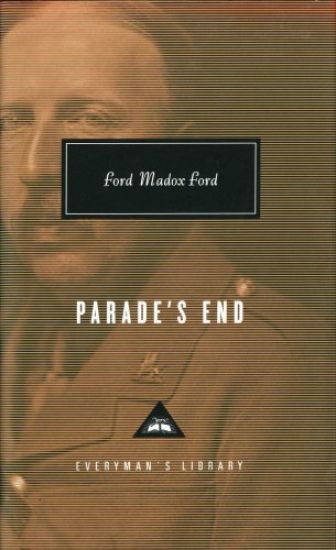
Parade's End

Parade's End

Ford Madox Ford

Everyman's Library
1992
sidottu
A story which traces the history of a house and a family at the time of World War I. This is a picture of Edwardian England at its most opulent. Exploring the themes of love, honour and betrayal, this contemporary of Henry James and Joseph Conrad shows himself their equal in literary skill.
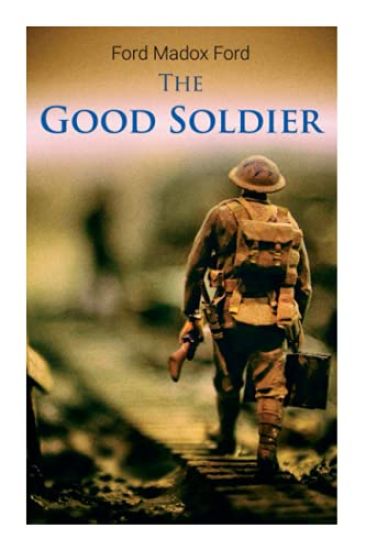
The Good Soldier

The Good Soldier

Ford Madox Ford

Les Prairies Numeriques
2020
pokkari
First published in 1915, Ford Madox Ford's The Good Soldier begins, famously and ominously, "This is the saddest story I have ever heard." The book then proceeds to confute this pronouncement at every turn, exposing a world less sad than pathetic, and more shot through with hypocrisy and deceit than its incredulous narrator, John Dowell, cares to imagine. Somewhat forgotten as a classic, The Good Soldier has been called everything from the consummate novelist's novel to one of the greatest English works of the century. And although its narrative hook--the philandering of an otherwise noble man--no longer shocks, its unerring cadences and doleful inevitabilities proclaim an enduring appeal.Ford's novel revolves around two couples: Edward Ashburnham--the title's soldier--and his capable if off-putting wife, Leonora and long-transplanted Americans John and Florence Dowell. The foursome's ostensible amiability, on display as they pass parts of a dozen pre-World War I summers together in Germany, conceals the fissures in each marriage. John is miserably mismatched with the garrulous, cuckolding Florence and Edward, dashing and sentimental, can't refrain from falling in love with women whose charms exceed Leonora's. Predictably, Edward and Florence conduct their affair, an indiscretion only John seems not to notice. After the deaths of the two lovers, and after Leonora explains much of the truth to John, he recounts the events of their four lives with an extended inflection of outrage. From his retrospective perch, his recollections simmer with a bitter skepticism even as he expresses amazement at how much he overlooked.Dowell's resigned narration is flawlessly conversational--haphazard, sprawling, lusting for sympathy. He exudes self-preservation even as he alternately condemns and lionizes Edward: "If I had had the courage and the virility and possibly also the physique of Edward Ashburnham I should, I fancy, have done much what he did." Stunningly, Edward's adultery comes to seem not merely excusable, but almost sublime. "Perhaps he could not bear to see a woman and not give her the comfort of his physical attractions," John surmises. Ford's novel deserves its reputation if for no other reason than the elegance with which it divulges hidden lives. --Ben GutersonThe novel's original title was The Saddest Story, but after the onset of World War I the publishers asked Ford for a new title. Ford suggested (sarcastically) The Good Soldier, and the name stuck.In 1998, the Modern Library ranked The Good Soldier 30th on its list of the 100 best English-language novels of the 20th century. In 2015 the BBC ranked The Good Soldier 13th on its list of the 100 greatest British novels.
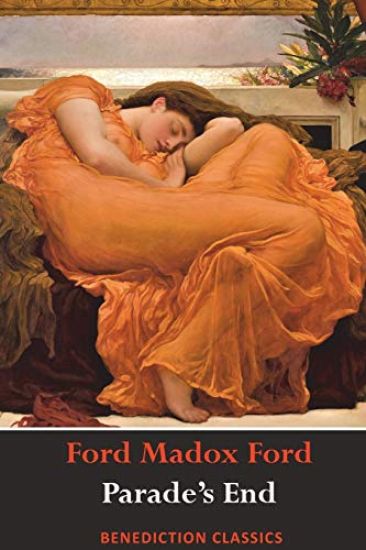
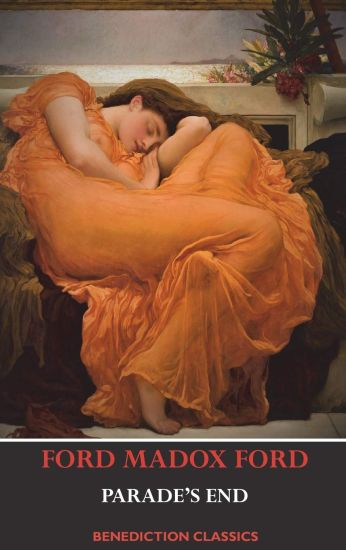
Parade's End (Full Tetralogy

Parade's End (Full Tetralogy

Ford Madox Ford

Benediction Classics
2019
pokkari
This tetralogy, widely regarded as one of the best novels in English, celebrates the end of an era, the irrevocable destruction of the comfortable, predictable society that vanished during World War I. "There are not many English novels which deserve to be called great: 'Parade's End' is one of them." -W. H. Auden.
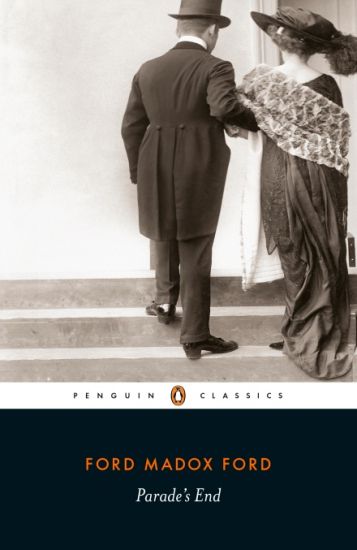
Parade's End

Parade's End

Ford Madox Ford

Penguin Classics
2019
pokkari
Ford Madox Ford's great masterpiece exploring love and identity during the First World War, in a Penguin Classics edition with an introduction by Julian Barnes. A masterly novel of destruction and regeneration, Parade's End follows the story of aristocrat Christopher Tietjens as his world is shattered by the First World War. Tracing the psychological damage inflicted by battle, the collapse of England's secure Edwardian values - embodied in Christopher's wife, the beautiful, cruel socialite Sylvia - and the beginning of a new age, epitomized by the suffragette Valentine Wannop, Parade's End is an elegy for both the war dead and the passing of a way of life.'The finest English novel about the Great War'Malcolm Bradbury'The best novel by a British writer ... It is also the finest novel about the First World War. It is also the finest novel about the nature of British society'Anthony Burgess'There are not many English novels which deserve to be called great: Parade's End is one of them'W.H. Auden'The English prose masterpiece of the time'William Carlos Williams
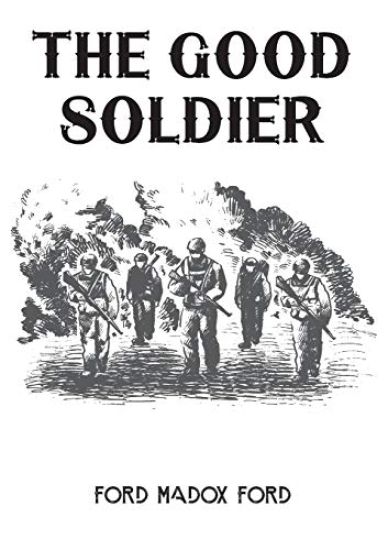
The Good Soldier (1915). By: Ford Madox Ford: Novel

The Good Soldier (1915). By: Ford Madox Ford: Novel

Ford Madox Ford

Createspace Independent Publishing Platform
2018
nidottu
The Good Soldier: A Tale of Passion is a 1915 novel by English novelist Ford Madox Ford. It is set just before World War I and chronicles the tragedy of Edward Ashburnham, the soldier to whom the title refers, and his own seemingly perfect marriage and that of two American friends. The novel is told using a series of flashbacks in non-chronological order, a literary technique that formed part of Ford's pioneering view of literary impressionism. Ford employs the device of the unreliable narrator to great effect as the main character gradually reveals a version of events that is quite different from what the introduction leads the reader to believe. The novel was loosely based on two incidents of adultery and on Ford's messy personal life. The novel's original title was The Saddest Story, but after the onset of World War I, the publishers asked Ford for a new title. Ford suggested (sarcastically) The Good Soldier, and the name stuck. In 1998, the Modern Library ranked The Good Soldier 30th on its list of the 100 best English-language novels of the 20th century. In 2015, the BBC ranked The Good Soldier 13th on its list of the 100 greatest British novels. Plot: The Good Soldier is narrated by the character John Dowell, half of one of the couples whose dissolving relationships form the subject of the novel. Dowell tells the story of those dissolutions and the deaths of three characters and the madness of a fourth, in a rambling, non-chronological fashion. As an unreliable narrator, the reader can consider whether they believe Dowell and his description of how the events unfolded, including his own role in the "saddest story ever told".......... Ford Madox Ford (born Ford Hermann Hueffer ( 17 December 1873 - 26 June 1939) was an English novelist, poet, critic and editor whose journals, The English Review and The Transatlantic Review, were instrumental in the development of early 20th-century English literature.
The Fifth Queen Crowned Ford Madox Ford

The Fifth Queen Crowned Ford Madox Ford

Ford Madox Ford

Createspace Independent Publishing Platform
2017
nidottu
The Fifth Queen trilogy has an omniscient narrator. Katharine Howard is introduced in the first book as a devout Roman Catholic, impoverished, young noblewoman escorted by her fiery cousin Thomas Culpeper. By accident, she comes to the attention of the king, in a minor way at first, is helped to a position as a lady in waiting for the then bastard Lady Mary, Henry's eldest daughter, by her old Latin tutor Nicholas Udal. Udal is a spy for Thomas Cromwell, the Lord Privy Seal. As Katharine becomes involved with the many calculating, competing, and spying members of Henry VIII's Court, she gradually rises, almost against her will, in Court. She is brought more to the attention of the King, becomes involved with him, is used by Cromwell, Bishop Gardiner and Thomas Cranmer as well as the less powerful though more personally attached Nicholas Throckmorton. Her connection to the latter puts her in some peril, as in January 1554 he is suspected of complicity in Wyatt's Rebellion and arrested, during which time Katherine is also briefly implicated.
Privy Seal Ford Madox Ford

Privy Seal Ford Madox Ford

Ford Madox Ford

Createspace Independent Publishing Platform
2017
nidottu
The Magister Udal sat in the room of his inn in Paris, where customarily the King of France lodged such envoys as came at his expense. He had been sent there to Latinise the letters that passed between Sir Thomas Wyatt and the King's Ministers of France, for he was esteemed the most learned man in these islands. He had groaned much at being sent there, for he must leave in England so many loves-the great, blonde Margot Poins, that was maid to Katharine Howard; the tall, swaying Katharine Howard herself; Judge Cantre's wife that had fed him well; and two other women, with all of whom he had succeeded easily or succeeded in no wise at all. But the mission was so well paid-with as many...
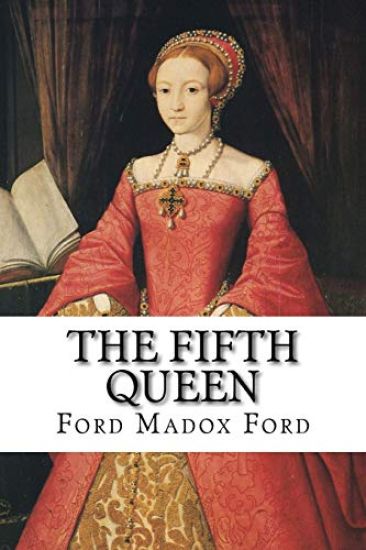
The Fifth Queen Ford Madox Ford

The Fifth Queen Ford Madox Ford

Ford Madox Ford

Createspace Independent Publishing Platform
2017
nidottu
His portrait of Catherine Howard, impulsive, warm-hearted, truth-speaking, yet daring admidst the most un-principled intrigue, is singularly attractive and life-like, making an admirable foil to the grimly-conceived Lady Mary.
The heart of the country, a survey of a modern land. by: Ford Madox Ford

The heart of the country, a survey of a modern land. by: Ford Madox Ford

Ford Madox Ford

Createspace Independent Publishing Platform
2016
nidottu
Ford Madox Ford (born Ford Hermann Hueffer 17 December 1873 - 26 June 1939) was an English novelist, poet, critic and editor whose journals, The English Review and The Transatlantic Review, were instrumental in the development of early 20th-century English literature. Ford is now remembered for his novels The Good Soldier (1915), the Parade's End tetralogy (1924-28) and The Fifth Queen trilogy (1906-08). The Good Soldier is frequently included among the great literature of the 20th century, including the Modern Library 100 Best Novels, Ford was born in Wimbledon 5] to Catherine Madox Brown and Francis Hueffer, the eldest of three; his brother was Oliver Madox Hueffer. Ford's father, who became music critic for The Times, was German and his mother English. His paternal grandfather Johann Hermann H ffer was first to publish Westphalian poet and author Annette von Droste-H lshoff. Ford used the name of Ford Madox Hueffer, but in 1919 he changed it to Ford Madox Ford (allegedly after World War I because "Hueffer" sounded too Germanic in honour of his grandfather, the Pre-Raphaelite painter Ford Madox Brown, whose biography he had written. In 1889, after the death of his father, Ford and Oliver went to live with their grandfather in London. Ford graduated from the University College School in London, but never attended university.
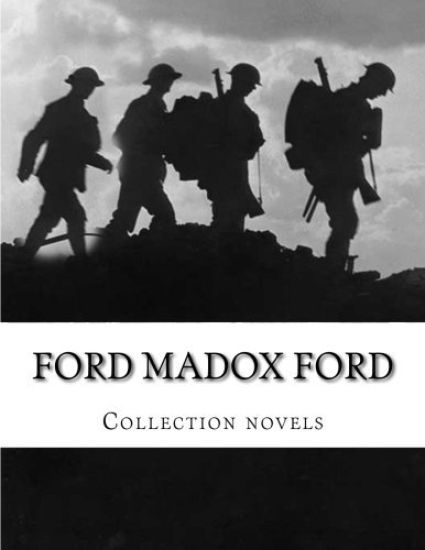
Ford Madox Ford, Collection novels

Ford Madox Ford, Collection novels

Ford Madox Ford

Createspace Independent Publishing Platform
2014
nidottu
Ford Madox Ford (1873 - 1939), was an English novelist remembered for his publications The Good Soldier (1915), the Parade's End tetralogy (1924-28) and The Fifth Queen trilogy (1906-08). The Good Soldier is frequently included among the great literature of the 20th century, including the Modern Library 100 Best Novels, The Observer's "100 Greatest Novels of All Time", and The Guardian's "1000 novels everyone must read". In this book: The Good Soldier, The Fifth Queen, Privy Seal, His Last Venture, Some Do Not..., No more Parades, A Man Could Stand up
Parade's End: Book 3 - A Man Could Stand Up

Parade's End: Book 3 - A Man Could Stand Up

Ford Madox Ford

Createspace Independent Publishing Platform
2012
nidottu
"A Man Could Stand Up" - the third volume of Ford Madox Ford's highly-regarded tetralogy Parade's End, was originally published in 1926 and has recently been made into a BBC/HBO television miniseries. The novel chronicles the life of Christopher Tietjens, "the last Tory", a brilliant government statistician from a wealthy landowning family who is serving in the British Army during World War I. The novel opens on Armistice Day and is the climax of the Parade's End series. Ford Madox Ford (17 December 1873 - 26 June 1939) was an English novelist, poet, critic and editor whose journals, The English Review and The Transatlantic Review, were instrumental in the development of early 20th-century English literature. He is now best remembered for The Good Soldier (1915), the Parade's End tetralogy (1924-28) and The Fifth Queen trilogy (1906-08).