Kirjojen hintavertailu. Mukana 12 573 922 kirjaa ja 12 kauppaa.

Kirjailija

Frances Borzello

Kirjat ja teokset yhdessä paikassa: 6 kirjaa, julkaisuja vuosilta 2010-2024, suosituimpien joukossa The Artist's Model. Vertaile teosten hintoja ja tarkista saatavuus suomalaisista kirjakaupoista.

6 kirjaa

Kirjojen julkaisuhaarukka 2010-2024.

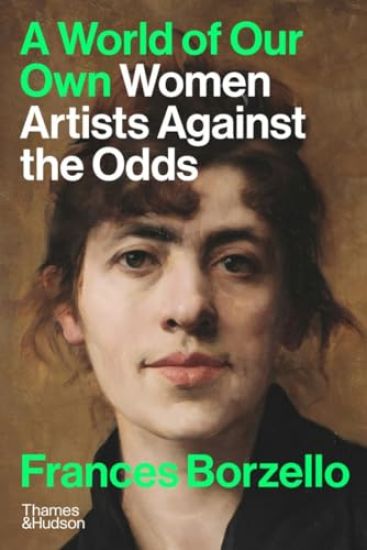
A World of Our Own

A World of Our Own

Frances Borzello

THAMES HUDSON LTD
2024
sidottu
A new edition of one of the first books to focus on the world of women artists and their practice. Women have always practised as artists, but for centuries the art world considered them mere dilettantes. Their work was derided as second-rate and they were considered intruders in a male profession. This study examines how, against the odds, they overcame these difficulties and shifts the focus away from women artists as ‘victims’ to give an account of how they actually practised their art. This stirring account documents the centuries-long struggle of gifted women who confronted the exclusionary tactics of a male-dominated art establishment but pressed ahead undaunted to gain acceptance as sought-after professionals. Frances Borzello takes readers deep into the restricted world of women artists of the past, showing how diligently they trained themselves, set up studios, and pursued sympathetic patrons. Starting with Renaissance painters Sofonisba Anguissola and Lavinia Fontana, the book reconstructs the changing world of women artists as social attitudes evolved. Seventeenth-century painters Artemisia Gentileschi and Judith Leyster enjoyed success by depicting subjects relevant to women, as did eighteenth-century greats Angelica Kauffmann and Elisabeth Vigée-Lebrun with their themes of motherhood. Further breakthroughs came in the nineteenth century as young hopefuls Mary Cassatt and Marie Bashkirtseff strove to be admitted to exhibiting societies and opened art schools. Finally, as equality for women advanced through the twentieth century, Augusta Savage, Georgia O’Keeffe, Frida Kahlo, Cindy Sherman, Mona Hatoum and others led the way for today's talented women to secure their rightful place in the annals of art. Now fully revised and updated, Frances Borzello's engaging narrative continues to inspire.
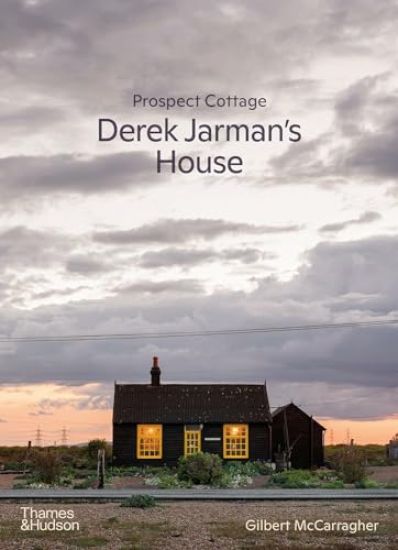
Prospect Cottage: Derek Jarman's House

Prospect Cottage: Derek Jarman's House

Gilbert McCarragher; Frances Borzello

THAMES HUDSON LTD
2024
sidottu
'Its exterior is one of the most photographed in Britain — but the inside of the artist and director’s home has seldom been seen, until now... a riveting portrait of the later years of an important British artist' Sunday Times Over a near-decade from 1986, the artist and filmmaker Derek Jarman and his partner Keith Collins created a home and sanctuary at Prospect Cottage. After Jarman’s death in 1994, Collins hung net curtains to shield the home they had shared from the eyes of visitors to Prospect’s world-famous garden. In 2018, the photographer Gilbert McCarragher, a friend and neighbour in Dungeness, was asked to record the house, a vital artwork in its own right. It was the first time this private world had been so extensively chronicled. Unfolding room by room, McCarragher’s photographs are accompanied by reflective essays that take the reader inside Prospect Cottage, revealing something of its history and his experience of photographing there.
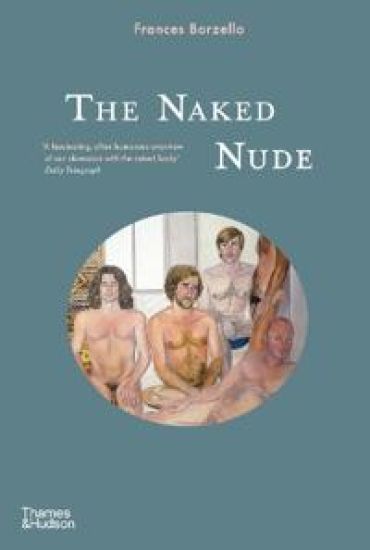
The Naked Nude

The Naked Nude

Frances Borzello

THAMES HUDSON LTD
2022
nidottu
The story of the nude in art in our times, told by a popular art historian with a rare gift for sharing her passions and ideas. The representation of the nude in art remained for many centuries a victory of fiction over fact. Beautiful, handsome, flawless – its great success was to distance the unclothed body from any uncomfortably explicit taint of sexuality, eroticism or imperfection. In this newly updated study, Frances Borzello contrasts the civilized, sanitized, perfected nude of Kenneth Clark’s classic, The Nude: A Study in Ideal Form (1956), with today’s depictions: raw, uncomfortable, both disturbing and intriguing. Grittier and more subtle, depicting variously gendered bodies, the new nude asks awkward questions and behaves provocatively. It is a very naked nude, created to deal with the issues and contradictions that surround the body in our time. Borzello explores the role of the nude in twentieth- and twenty-first-century art, looking at the work of a wide range of international artists creating contemporary nudes. Her fascinating text is complemented by a profusion of well-chosen, unusual and beautifully reproduced illustrations. The story begins with a tale of life, death and resurrection – an investigation into how and why the nude has survived and flourished in an art world that prematurely announced its demise. Subsequent chapters take a thematic approach, focusing in turn on Body art and Performance art, the new perspectives of women artists, the nude in painting, portraiture and sculpture and in its most extreme and graphic expressions that intentionally push the boundaries of both art and our comfort zone. The final chapter illustrates radical developments in art and culture over the last decade, focusing in particular on artworks by women, trans artists and artists of colour. Borzello links these works to their art-historical and political predecessors, demonstrating the continually unending capacity of the nude to disrupt traditional hierarchies and gender categories in life and art.
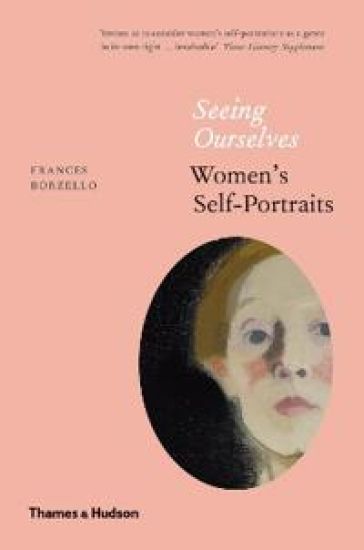
Seeing Ourselves

Seeing Ourselves

Frances Borzello

THAMES HUDSON LTD
2018
nidottu
This richly diverse exploration of female artists and self-portraits is a brilliant and poignant demonstration of originality in works of haunting variety. The two earliest self-portraits come from 12th-century illuminated manuscripts in which nuns gaze at us across eight centuries. In 16th-century Italy, Sofonisba Anguissola paints one of the longest series of self-portraits, spanning adolescence to old age. In 17th-century Holland, Judith Leyster shows herself at the easel as a relaxed, self-assured professional. In the 18th century, artists from Elisabeth Vigée-Lebrun to Angelica Kauffman express both passion for their craft and the idea of femininity; and in the 19th the salons and art schools at last open their doors to a host of talented women artists, including Berthe Morisot, ushering in a new and resonant self-confidence. The modern period demolishes taboos: Alice Neel painting herself nude at eighty, Frida Kahlo rendering physical pain, Cindy Sherman exploring identity, Marlene Dumas dispensing with all boundaries. The full verve of Frances Borzello’s enthralling text, and the hypnotic intensity of the accompanying self-portraits, is revealed to the full in this inspiring book.
Civilising Caliban

Civilising Caliban

Frances Borzello

Faber Faber
2014
pokkari
'I wrote my thesis because it seemed incredible that a nineteenth century cleric could believe that paintings had the power to civilise his community of London's poorest. Yet that is what he did believe and his ideas were exported round the world. I still don't know whether he was right...' Frances Borzello What is the purpose of art? Aside from aesthetic considerations, does it have socio-political functions? Art critic Frances Borzello reflected on this in her doctoral thesis, later expanded for publication in 1987 as Civilising Caliban. Therein she traced a link between Victorian-era exhibitions mounted for Whitechapel's poor by Anglican vicar Samuel Barnett to the munificent post-war patronage of the Arts Council. In a new preface to this edition Borzello reflects on how the idea of 'art for all' has fared - along with the questions of who pays for it and what good it achieves.
The Artist's Model

The Artist's Model

Frances Borzello

Faber Faber
2010
pokkari
'To admit to writing about artists' models is to set off an avalanche of interest. ''Didn't Rossetti marry his model?'' ''didn't Augustus John sleep with all of his?'' At first I brushed such questions aside as frivolous. Instead of revealing the facts about modelling in England from the foundation of the Royal Academy to the present day, the gossip column approach to art history seemed to veil them. But as research revealed the mundane business of a model's life, I had second thoughts about my high-minded approach. I became fascinate by the way that contrary to the facts that were emeArging, the majority of model anecdotes shared a common obsession - sex - and a common assumption - that models are female. I started to wonder to wonder how posing for artists, a tiring, tedious and lowly-paid profession practised by both sexes and all ages, could have become so fascinating to the public mind and also so distorted.'This is how Frances Borzello's unusual and revisionist book begins. Myth and reality are far apart. It is quite wrong to suppose models were always women, always naked and always promiscuous. Male models were just as much in demand for painters of History, Mythology and Genre, in which both sexes might require to be clothed in some particular manner. There are ten chapters: Fact and Fantasy, The Rise and Fall of the Professional Model, The Heyday of the Professional Model, The Model's Status, Bohemia, The Stereotype, High and Low Writing, The Propagation of Myth, The Model in Fiction, The Model in Art: and in them the author, with great originality, covers all aspects of this much misunderstood activity.'The first chapter of Frances Borzello's book, The Artist's Model, is entitled Fact and Fantasy. The facts are dull. Modelling is a boring, tiring, badly paid profession. Yet out of them we have created an image of a woman dressed only for seduction who probably sleeps with the artist, cooks for him, and inspires his best work. Rossetti has his beloved Lizzie Siddall, Whistler had his Maud, Augustus John . . . well Augustus had whoever he could, wnenever he could.' Waldemar Januszczak, Guardian