Kirjojen hintavertailu. Mukana 12 595 353 kirjaa ja 12 kauppaa.

Kirjailija

Frances Fox Piven

Kirjat ja teokset yhdessä paikassa: 12 kirjaa, julkaisuja vuosilta 1978-2016, suosituimpien joukossa How East New York Became a Ghetto. Vertaile teosten hintoja ja tarkista saatavuus suomalaisista kirjakaupoista.

12 kirjaa

Kirjojen julkaisuhaarukka 1978-2016.

How East New York Became a Ghetto

How East New York Became a Ghetto

Walter Thabit; Frances Fox Piven

New York University Press
2003
sidottu
In response to the riots of the mid-'60s, Walter Thabit was hired to work with the community of East New York to develop a plan for low- and moderate-income public housing. In the years that followed, he experienced first-hand the forces that had engineered East New York's dramatic decline and that continued to work against its successful revitalization. How East New York Became a Ghetto describes the shift of East New York from a working-class immigrant neighborhood to a largely black and Puerto Rican neighborhood and shows how the resulting racially biased policies caused the deterioration of this once flourishing area. A clear-sighted, unflinching look at one ghetto community, How East New York Became a Ghetto provides insights and observations on the histories and fates of ghettos throughout the United States.

Roots to Power

Roots to Power

Lee Staples; Richard A. Cloward; Frances Fox Piven

Praeger Publishers Inc
2016
sidottu
The third edition of the manual for community organizers tells readers how to most effectively implement community action for social change, clearly laying out grassroots organizing principles, methods, and best practices.Written for those who want to improve their own lives or the lives of others, this thoroughly revised how-to manual presents techniques groups can use to organize successfully in pursuit of their dreams. The book combines time-tested, universal principles and methods with cutting-edge material addressing new opportunities and challenges. It covers basic concepts and best practices and offers step-by-step guidelines on things an organizer needs to know, such as how to identify issues, formulate strategies, set goals, recruit participants, and much more. The work focuses on six organizing arenas: turf/geography, failth-based, issue, identity, shared experience, and work-related. It offers new or expanded material addressing community development, use of social media, internal organizational dynamics, electoral organizing, evaluation/assessment, and prevention of burnout for key leaders. There are also nuts-and-bolts articles by experts who address topics such as action research, lobbying, legal tactics, and grassroots fundraising. Numerous case examples, charts, worksheets, and small group exercises enrich the discussion and bring the material to life.
Roots to Power

Roots to Power

Lee Staples; Richard A. Cloward; Frances Fox Piven

Praeger Publishers Inc
2016
nidottu
The third edition of the manual for community organizers tells readers how to most effectively implement community action for social change, clearly laying out grassroots organizing principles, methods, and best practices.Written for those who want to improve their own lives or the lives of others, this thoroughly revised how-to manual presents techniques groups can use to organize successfully in pursuit of their dreams. The book combines time-tested, universal principles and methods with cutting-edge material addressing new opportunities and challenges. It covers basic concepts and best practices and offers step-by-step guidelines on things an organizer needs to know, such as how to identify issues, formulate strategies, set goals, recruit participants, and much more. The work focuses on six organizing arenas: turf/geography, failth-based, issue, identity, shared experience, and work-related. It offers new or expanded material addressing community development, use of social media, internal organizational dynamics, electoral organizing, evaluation/assessment, and prevention of burnout for key leaders. There are also nuts-and-bolts articles by experts who address topics such as action research, lobbying, legal tactics, and grassroots fundraising. Numerous case examples, charts, worksheets, and small group exercises enrich the discussion and bring the material to life.
Lessons For Our Struggle

Lessons For Our Struggle

Frances Fox Piven

Haymarket Books
2012
nidottu
Francis Fox Piven, a celebrated political thinker and activist, offers a concise introduction to her award-winning writings on imperialism, voting and poverty as it relates to the Occupy Wall Street movement. Piven offers a clear historical context to the current struggles around economic disparity, poverty and imperialism and relates them to the labour, civil rights and anti-imperialist struggles of the Depression era. Through examining the past, Piven presents the immense future possibilities of the Occupy Movement.
The Turbulent Years

The Turbulent Years

Frances Fox Piven; Irving Bernstein

Haymarket Books
2010
nidottu
A groundbreaking moment in the discourse of the labour movement and a classic text which revolutionised social history. Bernstein uncovers a period when industrial trade unionism, working-class power and socialism became a rallying cry for millions of workers; from fields, mills, mines and factories. This is the second instalment of Bernstein's critically acclaimed trilogy on the American labour movement which charts how the New Deal and labour unions preserved democracy and capitalism at a time when the survival of both was unclear.
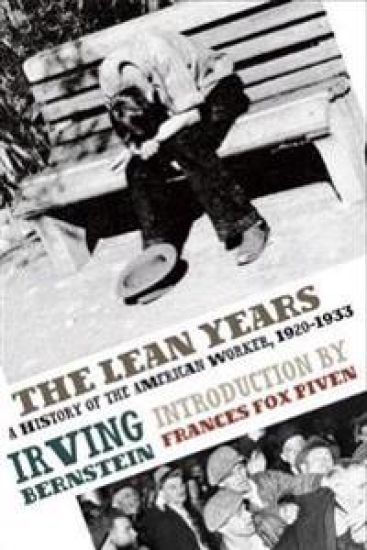
The Lean Years

The Lean Years

Frances Fox Piven; Irving Bernstein

Haymarket Books
2010
nidottu
From the Roaring Twenties through to the Great Depression, Irving Bernstein presents a comprehensive history of the American workforce. The Lean Years is the first instalment of Bernstein's critically acclaimed trilogy on the American labour movement which charts how the New Deal and labour unions preserved democracy and capitalism at a time when the survival of both was unclear. This classic text revolutionises social history, vividly narrating an era of wrenching hardships but also great victories in the workers' movement.
Challenging Authority

Challenging Authority

Frances Fox Piven; Frances Fax Piven

Rowman Littlefield Publishers
2008
nidottu
Challenging Authority argues that ordinary people exercise extraordinary political courage and power in American politics when, frustrated by politics as usual, they rise up in anger and hope and defy the authorities and the status quo rules that ordinarily govern their daily lives. By doing so, they disrupt the workings of important institutions and become a force in American politics. Drawing on critical episodes in American history, Frances Fox Piven shows that it is precisely at those seismic moments when people act outside of self-restricting political norms that they become empowered to their full democratic potential.
How East New York Became a Ghetto

How East New York Became a Ghetto

Walter Thabit; Frances Fox Piven

New York University Press
2005
pokkari
In response to the riots of the mid-'60s, Walter Thabit was hired to work with the community of East New York to develop a plan for low- and moderate-income public housing. In the years that followed, he experienced first-hand the forces that had engineered East New York's dramatic decline and that continued to work against its successful revitalization. How East New York Became a Ghetto describes the shift of East New York from a working-class immigrant neighborhood to a largely black and Puerto Rican neighborhood and shows how the resulting racially biased policies caused the deterioration of this once flourishing area. A clear-sighted, unflinching look at one ghetto community, How East New York Became a Ghetto provides insights and observations on the histories and fates of ghettos throughout the United States.

Welfare

Welfare

Frances Fox Piven

New York University Press
2003
sidottu
Federal welfare policy has been a political and cultural preoccupation in the United States for nearly seven decades. Debates about who poor people are, how they got that way, and what the government should do about poverty were particularly bitter and misleading at the end of the twentieth century. These public discussions left most Americans with far more attitude than information about poverty, the poor, and poverty policy in the United States. In response, Gwendolyn Mink and Rickie Solinger compiled the first documentary history of welfare in America, from its origins through the present. Welfare: A Documentary History of U.S. Policy and Politics provides historical context for understanding recent policy developments, as it traces public opinion, recipients' experiences, and policy continuities and innovations over time. The documents collected range across more than 100 years, from government documents and proclamations of presidents throughout the 20th century, to accounts of activist and grass roots organizations, newspaper reports and editorials, political cartoons, posters and more. They enable readers to go straight to the source to find out how public figures racialized welfare in the minds of white Americans, to explore the origins of the claim that poor women have babies in order to collect welfare, and to trace how that notion has been perpetuated and contested. The documents also illustrate how policymakers in different eras have invoked and politicized the idea of dependency, as well as how ideas about women's dependency have followed changing characterizations of poor women as workers and as mothers. Welfare provides a picture of the government's evolving ideas about poverty and provision, along side powerful examples of the voices too often eclipsed in the public square—welfare recipients and their advocates, speaking about mothering, poverty, and human rights.
Welfare

Welfare

Frances Fox Piven

New York University Press
2003
pokkari
Federal welfare policy has been a political and cultural preoccupation in the United States for nearly seven decades. Debates about who poor people are, how they got that way, and what the government should do about poverty were particularly bitter and misleading at the end of the twentieth century. These public discussions left most Americans with far more attitude than information about poverty, the poor, and poverty policy in the United States. In response, Gwendolyn Mink and Rickie Solinger compiled the first documentary history of welfare in America, from its origins through the present. Welfare: A Documentary History of U.S. Policy and Politics provides historical context for understanding recent policy developments, as it traces public opinion, recipients' experiences, and policy continuities and innovations over time. The documents collected range across more than 100 years, from government documents and proclamations of presidents throughout the 20th century, to accounts of activist and grass roots organizations, newspaper reports and editorials, political cartoons, posters and more. They enable readers to go straight to the source to find out how public figures racialized welfare in the minds of white Americans, to explore the origins of the claim that poor women have babies in order to collect welfare, and to trace how that notion has been perpetuated and contested. The documents also illustrate how policymakers in different eras have invoked and politicized the idea of dependency, as well as how ideas about women's dependency have followed changing characterizations of poor women as workers and as mothers. Welfare provides a picture of the government's evolving ideas about poverty and provision, along side powerful examples of the voices too often eclipsed in the public square—welfare recipients and their advocates, speaking about mothering, poverty, and human rights.