
Kirjailija
Frances M. Young
Kirjat ja teokset yhdessä paikassa: 15 kirjaa, julkaisuja vuosilta 1997-2025, suosituimpien joukossa Focus on God. Vertaile teosten hintoja ja tarkista saatavuus suomalaisista kirjakaupoista.
Mukana myös kirjoitusasut: Frances M Young
15 kirjaa
Kirjojen julkaisuhaarukka 1997-2025.
Scripture in Doctrinal Dispute
Frances M Young; David F Ford
WILLIAM B EERDMANS PUBLISHING CO
2024
sidottu
How did Scripture function in early arguments about doctrine? Historical criticism has revealed a gap between scripture and the mainstream doctrines that define Christianity today. Not the least of these are the Trinity and two natures of Christ--widely accepted since the fifth century, but seemingly unfounded in historical readings of Scripture. How did these dogmas become so integral to the faith in the first place? Frances M. Young tackles this monumental question in a culmination of decades of biblical and patristic research. The second of two volumes, Scripture in Doctrinal Dispute illuminates the role of biblical hermeneutics in the debates that forged Christian dogma on the nature of God. Young shows how the theological commitments to God as the sole creator of all else from nothing shaped fourth- and fifth-century disputes over Christology and the Trinity. Played out in the great councils of the fourth century and beyond, these conflicts drove the need to discern doctrinal coherence in scripture. The different sides relied on different prooftexts, and the rule of faith served as the criterion by which scriptural interpretation was measured--thereby forming the basis of the creeds. Nuanced and ecumenical, Scripture in Doctrinal Dispute completes Young's magnum opus, closing the gap between scripture and Christian tradition. Young's magisterial study holds widespread implications for not only patristics but also exegesis and systematic theology.
Scripture, the Genesis of Doctrine
Frances M Young; David F Ford
WILLIAM B EERDMANS PUBLISHING CO
2023
sidottu
How did we get from Scripture to creed?Historical criticism has revealed a gap between Scripture and the mainstream doctrines that define Christianity today. Not the least of these are the Trinity and two natures of Christ--widely accepted since the fifth century, but unfounded in historical readings of Scripture. How did these dogmas become so integral to the faith in the first place?Frances M. Young tackles this monumental question in a culmination of decades of biblical and patristic research. The first of two volumes exploring the emergence of doctrine in the early church, Scripture, the Genesis of Doctrine reframes the relationship between Scripture and doctrine according to the intellectual context of the first few centuries CE. Young situates the early Christians' biblical hermeneutic within the context of Greco-Roman learning without espousing historical relativism. Ultimately, Young argues that the scriptural canon and the Rule of Faith emerged concurrently in the early Church, and both were received as apostolic. The perceived gap between the two may in fact be the product of our modern assumptions rather than an ancient reality.Nuanced and ecumenical, Scripture, the Genesis of Doctrine explores early Christians' biblical hermeneutic, with an eye toward how we interpret the bible today. Young's magisterial study holds widespread implications for not only patristics but also exegesis and systematic theology.
Mission is one of the key subjects for the church today. What does it mean to live the Christian faith in a world of many faiths and none? In this book, two leading scholars explore what mission and discipleship meant for some of the earliest Christian communities. Morna Hooker and Frances Young outline the nature of mission for the earliest Christian communities (in the New Testament and beyond) and relate this to the context of the mission and discipleship today, thereby engaging with and challenging some common assumptions made about mission today.Originally presented as the Hugh Price Hughes Lectures in the West London Mission, the book will be of interest not only to students of theology but to all interested in the life and ministry of the church today.
Frances Young, who won high critical acclaim for her deeply committed book, Sacrifice and the Death of Christ, seeks to convey the excitement of the theological quest, the excitement of studying the Bible, the excitement of wrestling with what might seem outmoded and irrelevant ways of thinking and discovering that there is a chiming with experience. She offers a study of atonement as a demonstration of the possibilities. It stems from a deep preoccupation with suffering and its meaning, the outstretched arms of the crucified Christ, the image of the woman in travail. But this suffering and pain is the prelude to new birth, to vision and hope, to the feast of the kingdom. New birth and new creation, she sees, lie at the heart of the Christian message; and our own growth depends on the painful but rewarding labor of appropriating the Bible and our Christian heritage through critical reflection.
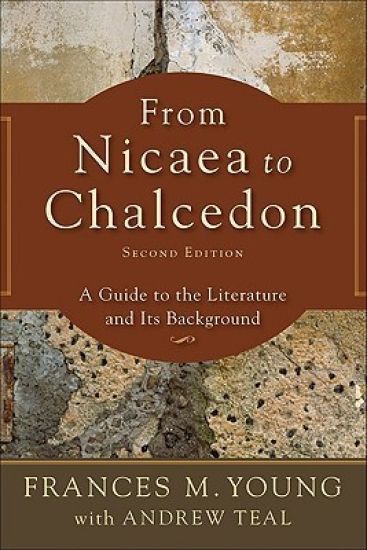
From Nicaea to Chalcedon: A Guide to the Literature and Its Background
Frances M. Young; Andrew Teal
Baker Academic
2010
nidottu
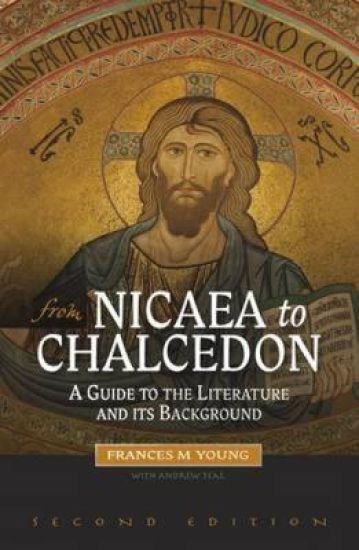
Created as a companion guide to a Patristics textbook, From Nicaea to Chalcedon surveys a variety of writings to have occurred during one of the most significant periods in the formation of the Church, from 265-466. It does not aim to cover the subject as a textbook would, but aims to delve deeper into some of the characters who were involved with the Church or the Councils during this period. Beginning with Eusebius of Caesarea and the first council of the Church at Nicaea, and ending with Theodoret of Cyrrhus, who is thought to have changed his view of Christology after the watershed Council of Chalcedon, this unique text surveys some of the most influential characters to have shaped Church history and the formation of doctrine. Surveying a mixture of significant literary figures, laymen, bishops and heretics this book presents biographical, literary-critical and theological information about each. They are chosen either because they are important to the history of doctrine, or because new material about them has thrown light upon their work, or because they will broaden the reader's understanding of the culture and history of the period or of live issues in the church at the time. Structured in five parts, each part deals with a period of time and a sequence of characters, so the book is easily followed in chronological order. Added to this, is the double bibliography, which in this edition is fully updated. Bibliography A details those texts in English of the original texts of antiquity, whilst Bibliography B provides details of publications in English, French and German which have appeared since 1960-2004 on or about the characters discussed in the body of the text.
Biblical Exegesis and the Formation of Christian Culture
Frances M. Young
Cambridge University Press
2007
pokkari
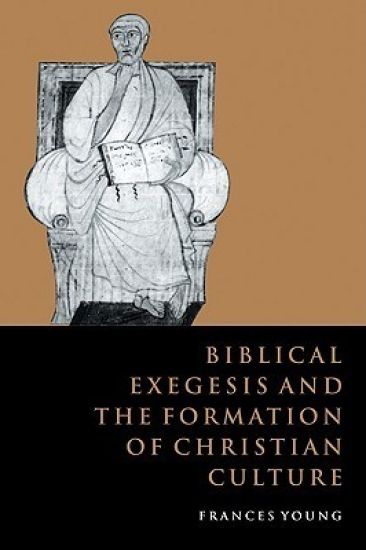
This book challenges standard accounts of early Christian exegesis of the Bible. Professor Young sets the interpretation of the Bible in the context of the Graeco-Roman world - the dissemination of books and learning, the way texts were received and read, the function of literature in shaping not only a culture but a moral universe. For the earliest Christians, the adoption of the Jewish scriptures constituted a supersessionary claim in relation to Hellenism as well as Judaism. Yet the debt owed to the practice of exegesis in the grammatical and rhetorical schools is of overriding significance. Methods were philological and deductive, and the usual analysis according to 'literal', 'typological' and 'allegorical' is inadequate to describe questions of reference and issues of religious language. The biblical texts shaped a 'totalizing discourse' which by the fifth century was giving identity, morality and meaning to a new Christian culture.

In lucid and non-technical prose, Young demonstrates how and why the two most familiar Christian creeds - the Apostles' Creed and the Nicene Creed - came into being. She describes how creeds originated in instruction before baptism and have their roots in the New Testament itself. She then shows how the rise of Gnosticism and a tendancy towards fragmentation in the church made a clear statement of faith necessary, as well as outlining the various controversies which led to particular words and phrases being included in the creeds as we now have them. She then describes the construction of the great Christian doctrines of the Trinity and incarnation.
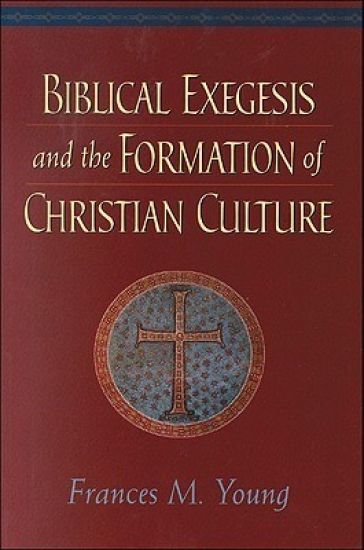
Biblical Exegesis and the Formation of Christian Culture
Frances M. Young
Baker Academic, Div of Baker Publishing Group
2002
nidottu
In this study of the influence of the late ancient educational system on patristic biblical exegesis, simplistic reductions to discrete methods (moral, typological, allegorical) and schools (Alexandrian, Antiochene) give way to a more nuanced appreciation. Professor Young's lucid study shows how early Christians used the interpretive tools of Greco-Roman culture to build an alternative Christian culture on the basis of the biblical text.

Biblical Exegesis and the Formation of Christian Culture
Frances M. Young
Cambridge University Press
1997
sidottu
This book challenges standard accounts of early Christian exegesis of the Bible. Professor Young sets the interpretation of the Bible in the context of the Graeco-Roman world - the dissemination of books and learning, the way texts were received and read, the function of literature in shaping not only a culture but a moral universe. For the earliest Christians, the adoption of the Jewish scriptures constituted a supersessionary claim in relation to Hellenism as well as Judaism. Yet the debt owed to the practice of exegesis in the grammatical and rhetorical schools is of overriding significance. Methods were philological and deductive, and the usual analysis according to 'literal', 'typological' and 'allegorical' is inadequate to describe questions of reference and issues of religious language. The biblical texts shaped a 'totalizing discourse' which by the fifth century was giving identity, morality and meaning to a new Christian culture.