

Kirjailija
Frances Park
Kirjat ja teokset yhdessä paikassa: 10 kirjaa, julkaisuja vuosilta 2000-2026, suosituimpien joukossa Where On Earth Is My Bagel?. Vertaile teosten hintoja ja tarkista saatavuus suomalaisista kirjakaupoista.
10 kirjaa
Kirjojen julkaisuhaarukka 2000-2026.

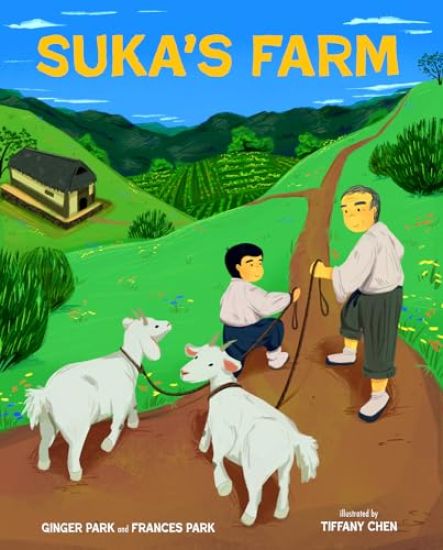
Based on the authors' family history, this story set in Japanese-occupied Korea portrays an unlikely friendship between a hungry child and an old farmer. Life in 1941 Korea is difficult for Kwan and his family. Under Japanese occupation, food is scarce. Though he's only a child, Kwan is desperate to help his family, so he asks Mr. Suka, a Japanese farmer, for a job. Mr. Suka teaches Kwan how to care for a herd of goats, and soon what began as an act of kindness becomes a genuine friendship that brings them both joy.
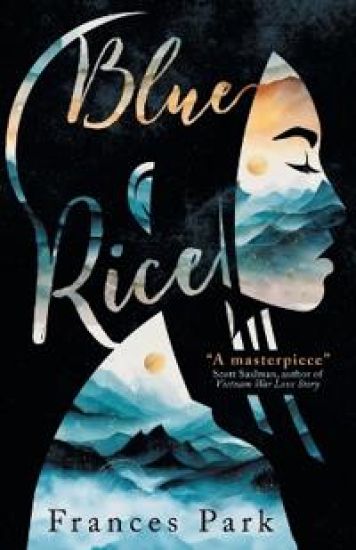
"A masterpiece" Scott Saalman, author of Vietnam War Love StoryBy candlelight, an elderly Korean woman relives her years upended by the Korean War, finding love in the rubble, and her acclimation to 1960 America.Recently widowed Honey, nee Hanhee, is preparing to move out of her Arlington home when the Virginia earthquake of 2011 hits. Subtly, something in her cracks. Four days later, Hurricane Irene strikes, evoking monsoon-swept streets of yore. With the power out, Honey's life of a half-century ago cinematically comes to light: Her months as an unlikely prostitute at Madam Cho's; her secret revolt against her dead parents whose love was in question; a mysterious monk's prediction; her great, sassy Korean friend Kissuni Kim who dreamed of nothing more than 'love-mak-ing'; her kindly American neighbor Emma Church who would guide her to independence; and, above all, her lingering love for her first husband Joe Lipton, a journalist who brought Honey to America, only to desert her.Frances Park states that writing Blue Rice was like living a dream from scenes her late mother shared with her, as well as her watercolor-like remembrances of growing up in white America as a small child of war-torn Korean parents.

The Summer My Sister Was Cleopatra Moon is an emotionally charged, cautionary tale about alienation and the spiritual deformity that ensues when it feels like the whole world hates you. In the summer of '76, with no other Koreans in Glover, Virginia, fourteen-year-old Marcy Moon idolizes her irreverent big sister Cleo, who has her pick of lovers and uses her sexuality to prevail against racism. In Marcy's eyes, every guy would cut off his ponytail, burn his guitar and shoot old ladies if you told him to. Her dream, a dangerous one, is to be like Cleo. Central to the story is the girls' inability to bond with their mom, who left her heart behind in North Korea and finds it difficult to love her daughters the way a mother should. Most heartbreaking is the sisters' love for their dad, a complicated and worldly man who wants to be the best father and provider, but, in the end, cannot escape his demons. "In her coming-of-age novel about two sisters, every page of which bears the imprint of her emotional and spiritual investment, Frances Park shows what a woman writer can achieve with such rich material at hand."-The Strait Times, Singapore "... bold, powerful comedy... The parents in particular are sketched with an unflinching eye for pathos that can be fairly heartbreaking... Frances Park's writing on adolescence is readable, unsentimental and... entrancing."-The London Times "A fresh take ... by a writer from a generation whose voice has seldom been heard."-Kirkus Reviews (of Frances Parks's memoir writing) "...Frances Park pulls off an improbability here: the ability to make you laugh one minute, cry the next, maintaining a dizzying highwire balancing act as Marcy shares her own American tale, one rich in both humor and heartbreak." -Scott Saalman, columnist, author of Vietnam War Love Story: The Love Letters of Bill and Nancy Young (1967)"This is a delicate, humane, funny novel...that stands with the best tradition of imaginative writing."-The Tapei Times"Park's poignant novel...comes to us as a cautionary tale about the perils of the American dream."-The Korea Times"The story captured a vivid image of sisterhood in all its complex glory and gore. I couldn't put the book down."-The Korean Quarterly"... written with gusto... and will likely find a place in summer beach bags."-Washington Post Book World"A deftly funny, but in the end, heartbreaking exploration of a first-generation Korean family trying to make their way in a '70s suburban America that doesn't always welcome them..."-Steve Adams, Pushcart Prize-winning author of Remember This
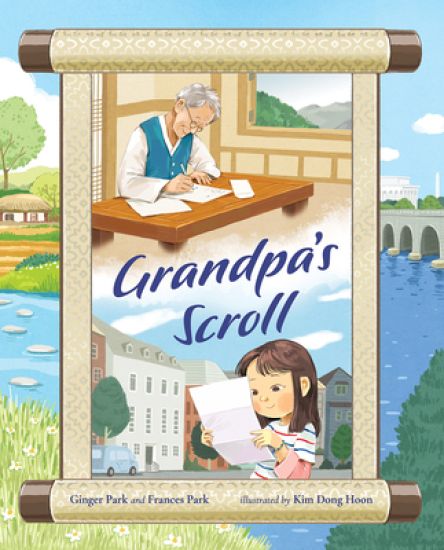
A scroll that a grandfather plans to finish painting with his granddaughter shows how love can overcome differences and distances.Lily lives in Washington, DC. Her grandpa lives in Korea. They've never met but are good pen pals. Just when he is about to visit Lily in the U.S., Grandpa dies. Lily and her mom fly to Korea, where they uncover the rice paper scroll Grandpa had hoped to finish painting with Lily. To honor his wish, Lily writes a poem about her grandfather that sits just below his poem about her, so that in the end, they have finished it together.

Frances Park's parents arrived in the United States decades before the mass migration of Koreans. Her background and memory are rich with unique histories that work their way into That Lonely Spell. A mosaic of previously published essays, this memoir reveals-with heartbreak and humor-one woman's passion, insights, and love for the family and friends who graced her life. A singular voice. Heart and humanity shine through in essays that speak to a fierce love of family and longing for home.-Kirkus Reviews Frances Park's haunted essays are part elegiac after party, part Coen brothers whispers. But it's her mother and lost-too-soon father that steal that show.-Richard Peabody, editor of Gargoyle Magazine, author of Guinness on the Quay The ferocious energy of Frances Park's essays... captivated me from beginning to end. -R.L. Maizes, author of Other People's Pets and We Love Anderson Cooper That Lonely Spell has cast its blissful spell on me... each story is heart-tugging and painfully honest - with heaps of humor throughout.-Scott Saalman, columnist, author of What Are You Going to Write About When I'm Gone? In this rich and artful memoir-in-essays, Park's loves and losses become the reader's as well. -Elizabeth McKenzie, author of The Portable Veblen Frances Park writes so elegantly about family and personal history, and how that history gradually becomes beautiful, monumental myth.-Ben Nussbaum, editor of Spirituality & Health Frances Park's stories are deep, blue and soulful-and I loved being lost in her sea of prose.-Bill Adler, author of Outwitting Squirrels and Boys and Their Toys A Korean heritage interwoven with an American-upbringing results in unique views on life and family. These coming-of-age stories-these life lessons-entertain even as they teach us something about ourselves.-Robert Kostuck, author and editor-in-chief, DoveTales A tour de force in memoir writing... informative, elegant, and extravagantly pleasurable to read. -Susan Tepper, author of What Drives Men and The Crooked Heart, a Play Each story is magical, so powerful and beautifully recalled you'll swear you were with her.-Rick Cooper, lyricist, author of For the Record

Even though Yum Yung lives in Korea, the idea of a New York bagel just pops into his head one day, and he decides he just has to have one. Yum Yung's search begins at the highest mountaintop in Korea, where he finds a pigeon to take his message to New York. "I would like to order one bagel to go." After a long wait and no bagel, Yum Yung asks his friends (the farmer, the fisherman, the beekeeper, and the baker) for help. Their creative solution will make young readers giggle with delight and as Yum Yung (with the help of his friends) fulfills his bagel dream.


Based on a true story, The Royal Bee is an elegantly written tale that pays tribute to a young boy's courage and strength of character. Song-ho is a young Korean boy destined by birth to a life of poverty. Barred from going to school--only the sons of wealthy families could attend--he dreams of learning to read and write. Then one day he hears the sound of a school bell and follows it deep into the valley. There, the school master turns him away, but Song-ho's boldness and determination earn him a chance at gaining an education nevertheless. Dramatically illustrated with richly textured oil paintings, the story offers glimpses of daily life in Korea a century ago--for both the rich and the poor.