Kirjojen hintavertailu. Mukana 12 390 323 kirjaa ja 12 kauppaa.

Kirjailija

Frances Wood

Kirjat ja teokset yhdessä paikassa: 9 kirjaa, julkaisuja vuosilta 1998-2024, suosituimpien joukossa Great Books of China. Vertaile teosten hintoja ja tarkista saatavuus suomalaisista kirjakaupoista.

9 kirjaa

Kirjojen julkaisuhaarukka 1998-2024.

Great Books of China

Great Books of China

Frances Wood

BlueBridge
2024
pokkari
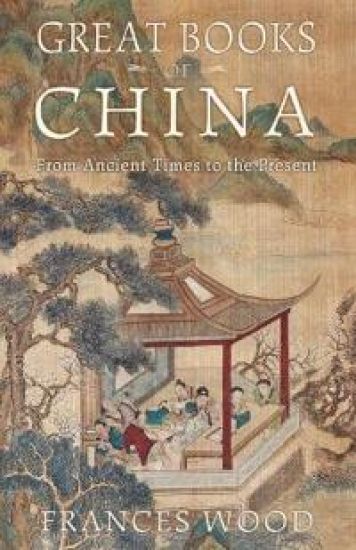
Great Books of China invites readers to discover--or rediscover--some of the major achievements of Chinese culture and civilization. The literature of China remains largely unknown in the West, yet it offers much insight into Chinese life. The long continuity of Chinese culture means that texts created more than two thousand years ago are still part of the education and background of today's China. Great Books of China introduces outstanding works of various genres, from fiction, drama, and poetry to history, science, and travel; they were written by philosophers and artists, government officials and scholars, by men and women across many centuries and from every part of China. These great books are presented in their historic, cultural, and social context, with a focused summary of content and author. Beginning with some of the Confucian and Daoist classics and ending with modern fiction, Great Books of China features famous novels including The Water Margin (Shuihu zhuan) , Journey to the West (Xiyou ji), and Dream of the Red Chamber (Hongloumeng); celebrated dramas such as The Story of the Lute (Pipa ji) and The Peach Blossom Fan (Taohua shan); poetry from ancient times and the "golden age" of the Tang to the last years of imperial China; renowned historic manuals on Chinese painting, on the construction of Chinese gardens, and on a carpenter's varied tasks; major texts describing Chinese history, the military exploits of ancient generals, and the legendary journeys of Buddhist monks; and works by a number of modern writers including Lu Xun, Ding Ling, and Lao She. Concise, provocative, and illuminating, Great Books of China introduces the literature of one of the world's most significant cultures and helps us understand the China of the present and the past.
Great Books of China

Great Books of China

Frances Wood

BLOOMSBURY PUBLISHING PLC
2023
nidottu
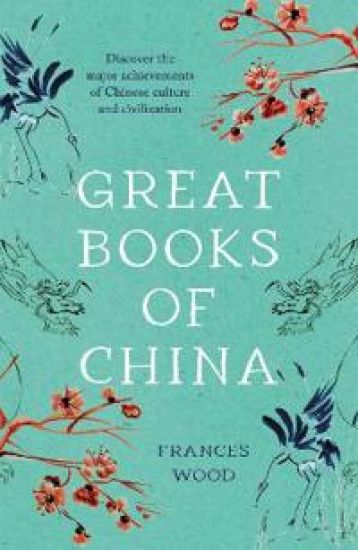
Discover – or rediscover – the major achievements of Chinese culture and civilization.Great Books of China offers concise introductions – each of them accompanied by generous quotation (in English) from the book in question – to sixty-six works in the canon of Chinese literature.The books chosen reflect the chronological and thematic breadth of Chinese literary tradition, ranging from such classics as The Book of Songs and the Confucian Analects, through popular dramas and novels (The Romance of the Western Chamber; The Water Margin), twentieth-century political and biographical works (Quotations from Chairman Mao, the autobiography of the last emperor) and modern novels that are little known in the West (Memories of South Peking, Six Chapters from a Cadre School Life).Frances Wood presents a comprehensive, accessible and richly informative primer for the uninitiated; a box of delights that opens up an entire literary culture to the inquisitive reader.
Shih-I Hsiung

Shih-I Hsiung

Da Zheng; Frances Wood

Fairleigh Dickinson University Press
2020
sidottu
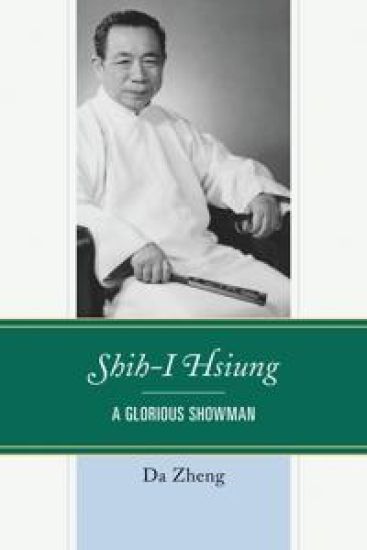
In 1933, Shih-I Hsiung (1902-1991), a student from China, met with Allardyce Nicoll, a Shakespearean scholar at the University of London, to discuss his Ph.D. study in English drama. After learning about Hsiung’s interest and background, Nicoll suggested that he should consider studying Chinese drama for his dissertation or writing a play of a Chinese subject instead. Hsiung took the advice to heart and set out to write Lady Precious Stream, a play based on a classical Beijing opera. In six weeks, the writing was completed; six months later, the manuscript was accepted for publication by Methuen; and not long after, Little Theater in London agreed to produce the play, which ran for 900 successive shows. The phenomenal success turned Hsiung into stardom all at once: he became the first Chinese to write and direct a West End play in England; in 1936, the play had its Broadway premiere and subsequent performances in Chicago, Cleveland, Boston, and other U.S. cities; and it has been produced and staged in Europe, America, South America, Africa, Asia, and Australia ever since. Following the success of Lady PreciousStream, Hsiung translated into English the Chinese classic The Romance of the Western Chamber; in addition, he wrote the play The Professor from Peking, the novel The Bridge of Heaven, and the biography The Life of Chiang Kai-shek, all in English.Shih-I Hsiung: A Glorious Showman unfolds the transnational and transcultural life experience of an extraordinary showman: a literary master, a theatre man, and a social actor bold and impassioned on socio-cultural stages. Hsiung introduced English and American literature to readers in China through his translation works in the 1920s and 1930s. Since1933, he began writing in English for audiences not familiar with the Chinese culture. His works were known for their originality, humor, and a deep sense of cultural and historical engagement. Later in his life when he was residing in Hong Kong, he was devoted to education and was also active in Chinese literary and theatre circles.
Bringing Heaven to Earth

Bringing Heaven to Earth

Frances Wood; Elizabeth Herridge

Ianthe Press Limited
2020
pokkari
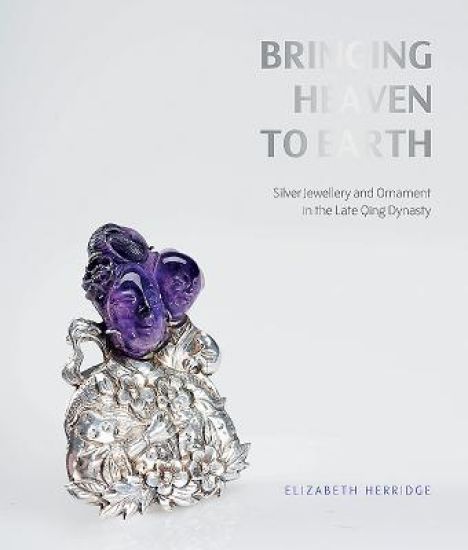
The prowess of Chinese creative abilities in the decorative arts in the 19th and early 20th centuries was well known globally, but, while much has been written about Chinese textiles and on the influence of the East on European styles of the time, the story of the influence of Western formats and tastes on the manufacture of Chinese jewellery in the period has, amazingly, never been told. In examining 50 objects of exatraordinary quality from an important private North American collection, this book seeks to redress the situation and reveal the splendour of silver and silver-gilt jewellery of the late Qing dynasty. An ancient and sophisticated culture, the Chinese – who have since records begun made up about a quarter of world’s population – had almost everything they could need or want within their own borders … except for silver. The metal had long cultural, commercial and governmental associations but had to be imported largely from South America, after both national and Japanese reserves were quickly exhausted by huge Chinese demand. Beginning in the mid 19th century – where the story told here begins – after two successive defeats in the Opium Wars, sixteen treaty ports were established on coastal and inland cities, enabling Western merchants freer movement and trade with the Chinese. The 50 pieces of jewellery and ornament presented here have been beautifully photographed and carefully documented. In superb unrestored condition, the objects incorporate exotic materials like tiger-shark teeth, teak wood, amber, precious and semi-precious stones from India and Sri Lanka, enamel, as well as finely carved and pierced nephrite, jadeite and lapis lazuli. Daoist imagery and motifs dominate but with the inclusion of some surprising Buddhist imagery as well. Though not from the imperial collection of the Qing, these exquisite pieces were seemingly commissioned and worn by prosperous members of the society from all over the vast country. The differences in manufacture, even in this varied sample of 50 items, is striking. Their appeal is more than just aesthetic, and their design and decoration speak of the social, religious, economic and political climate of their time. Questions regarding the sale and consumption of these object are discussed, and changing local and foreign tastes in the wake of the fall of the Qing dynasty and the establishment of the Republican period are also addressed.
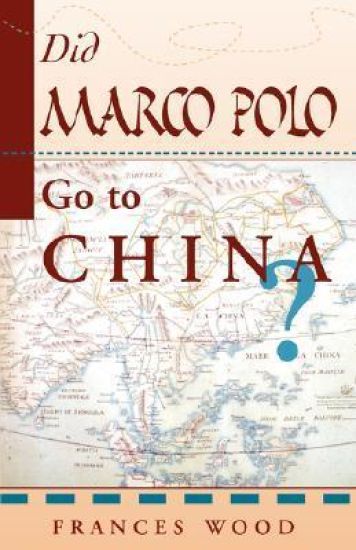
Did Marco Polo Go To China?

Did Marco Polo Go To China?

Frances Wood

Routledge
2019
sidottu
We all ?know? that Marco Polo went to China, served Ghengis Khan for many years, and returned to Italy with the recipes for pasta and ice cream. But Frances Wood, head of the Chinese Department at the British Library, argues that Marco Polo not only never went to China, he probably never even made it past the Black Sea, where his family conducted b
The Lure of China

The Lure of China

Frances Wood

Yale University Press
2010
sidottu
Medieval travellers like Marco Polo created a romantic picture of a distant and exotic land while subsequent Jesuit and diplomatic missions sought to correct the more lurid depictions with first-hand accounts. In the mid-nineteenth century China was opened to travellers, collectors and writers of all sorts. Explorers were drawn to the Silk Road and its buried treasures. Writers like Andre Malraux and Vicki Baum found fame with books set in Peking and Shanghai, and Somerset Maugham with his enchanting vignettes. More recently Ernest Hemingway and Martha Gellhorn reported from China, as did W. H. Auden, Christopher Isherwood, and the American journalist Edgar Snow. Frances Wood tracks the visits of Harold Acton, Osbert Sitwell, Noel Coward, George Bernard Shaw and Bertrand Russell, and the Chinese childhoods of Pearl Buck and J. G. Ballard. 'It was as if China made writers of them all', Wood observes, as she trawls a vast library of fiction, memoir and travelogue in this captivating and beautifully illustrated journey.
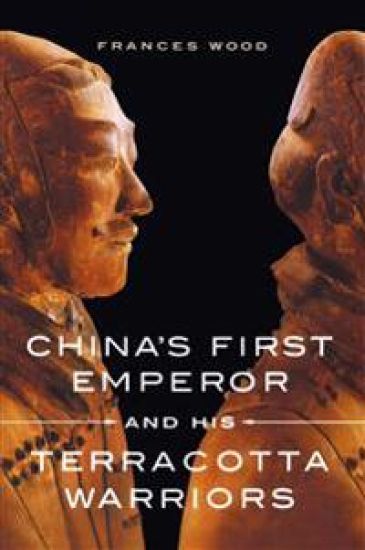
China's First Emperor and His Terracotta Warriors

China's First Emperor and His Terracotta Warriors

Frances Wood

St. Martin's Griffin
2008
pokkari
Unifier or destroyer, law-maker or tyrant? China's First Emperor (258-210 BC) has been the subject of debate for over 2,000 years. He gave us the name by which China is known in the West and, by his unification or elimination of six states, he created imperial China. He stressed the rule of law but suppressed all opposition, burning books and burying scholars alive. His military achievements are reflected in the astonishing terracotta soldiers--a veritable buried army--that surround his tomb, and his Great Wall still fascinates the world. Despite his achievements, however, the First Emperor has been vilified since his death. This book describes his life and times and reflects the historical arguments over the real founder of China and one of the most important men in Chinese history.
Did Marco Polo Go To China?

Did Marco Polo Go To China?

Frances Wood

Westview Press Inc
1998
nidottu
We all ?know? that Marco Polo went to China, served Ghengis Khan for many years, and returned to Italy with the recipes for pasta and ice cream. But Frances Wood, head of the Chinese Department at the British Library, argues that Marco Polo not only never went to China, he probably never even made it past the Black Sea, where his family conducted business as merchants.Marco Polo's travels from Venice to the exotic and distant East, and his epic book describing his extraordinary adventures, A Description of the World, ranks among the most famous and influential books ever published. In this fascinating piece of historical detection, marking the 700th anniversary of Polo's journey, Frances Wood questions whether Marco Polo ever reached the country he so vividly described. Why, in his romantic and seemingly detailed account, is there no mention of such fundamentals of Chinese life as tea, foot-binding, or even the Great Wall? Did he really bring back pasta and ice cream to Italy? And why, given China's extensive and even obsessive record-keeping, is there no mention of Marco Polo anywhere in the archives?Sure to spark controversy, Did Marco Polo Go to China? tries to solve these and other inconsistencies by carefully examining the Polo family history, Marco Polo's activities as a merchant, the preparation of his book, and the imperial Chinese records. The result is a lucid and readable look at medieval European and Chinese history, and the characters and events that shaped this extraordinary and enduring myth.