Kirjojen hintavertailu. Mukana 12 390 323 kirjaa ja 12 kauppaa.

Kirjailija

Francis J. Bremer

Kirjat ja teokset yhdessä paikassa: 9 kirjaa, julkaisuja vuosilta 1993-2026, suosituimpien joukossa A Guide to the History of Pennsylvania. Vertaile teosten hintoja ja tarkista saatavuus suomalaisista kirjakaupoista.

Mukana myös kirjoitusasut: Francis J Bremer

9 kirjaa

Kirjojen julkaisuhaarukka 1993-2026.

Puritanism

Puritanism

Francis J Bremer

Oxford University Press Inc
2009
nidottu
Written by a leading expert on the Puritans, this brief, informative volume offers a wealth of background on this key religious movement. This book traces the shaping, triumph, and decline of the Puritan world, while also examining the role of religion in the shaping of American society and the role of the Puritan legacy in American history. Francis J. Bremer discusses the rise of Puritanism in the English Reformation, the struggle of the reformers to purge what they viewed as the corruptions of Roman Catholicism from the Elizabethan church, and the struggle with the Stuart monarchs that led to a brief Puritan triumph under Oliver Cromwell. It also examines the effort of Puritans who left England to establish a godly kingdom in America. Bremer examines puritan theology, views on family and community, their beliefs about the proper relationship between religion and public life, the limits of toleration, the balance between individual rights and one's obligation to others, and the extent to which public character should be shaped by private religious belief. ABOUT THE SERIES: The Very Short Introductions series from Oxford University Press contains hundreds of titles in almost every subject area. These pocket-sized books are the perfect way to get ahead in a new subject quickly. Our expert authors combine facts, analysis, perspective, new ideas, and enthusiasm to make interesting and challenging topics highly readable.
A Guide to the History of Pennsylvania

A Guide to the History of Pennsylvania

Francis J. Bremer; Dennis B. Downey

Greenwood Press
1993
sidottu
From William Penn's treaty with the Indians, to the suffering of troops at Valley Forge, the gallantry at Gettysburg, and the early development of the petroleum industry, Pennsylvania has often been at center stage in the evolution of the nation. Yet despite this record, the historical literature on the state is not as well known as that of many other states. This volume will remedy that deficiency by assessing the vast wealth of materials on the political, social, economic, and cultural development of the Keystone State. In a series of historiographical chapters, each devoted to a specific chronological period, the contributors present a thorough and informed analysis of the most important and significant literature, thereby providing a useful companion to printed bibliographies.
The Puritan Experiment

The Puritan Experiment

Francis J. Bremer

Brandeis University Press
2026
nidottu
A revised and updated edition of a classic text on the early Puritans. First published in 1976, The Puritan Experiment is an accessible, authoritative account of early New England, one with an enduring appeal for students and general readers. This revised and updated edition explains Puritanism while incorporating fresh insights from current scholarship. Beginning with the Act of Supremacy in 1534 and ending with Jonathan Edwards’ death in 1758, Francis J. Bremer examines the causes and contexts of the Puritan movement and analyzes the religious, political, sociological, economic, and cultural changes wrought by the movement in both Old and New England. From meeting house architecture to Salem witch trials, from relations with Native Americans to the founding of the nation’s first colleges, he details with style and grace “a living system of faith” that not only had profound significance for tens of thousands of Englishmen and Americans in the sixteenth and seventeenth centuries, but also affected the course of history in the New World. This edition includes new information about lay empowerment, the role of women, Native society, and the enslavement of Native Americans and Africans.
One Small Candle

One Small Candle

Francis J. Bremer

Oxford University Press Inc
2020
sidottu
Four hundred years ago, a group of men and women who had challenged the religious establishment of early seventeenth-century England and struggled as refugees in the Netherlands risked everything to build a new community in America. The story of those who journeyed across the Atlantic on the Mayflower has been retold many times, but the faith and religious practices of these settlers has frequently been neglected or misunderstood. In One Small Candle, Francis J. Bremer focuses on the role of religion in the settlement of the Plymouth Colony and how those values influenced political, intellectual, and cultural aspects of New England life a hundred and fifty years before the American Revolution. He traces the Puritans' persecution in early seventeenth-century England for challenging the established national church and the difficulties they faced as refugees in the Netherlands in the 1610s. As they planted a colony in America, this group of puritan congregationalists was driven by the belief that ordinary men and women should play the deciding role in governing church affairs. Their commitment to lay empowerment and participatory democracy was reflected in congregational church covenants and inspired the earliest political forms of the region, including the Mayflower Compact and local New England town meetings. Their rejection of individual greed and focus on community, Bremer argues, defined the culture of English colonization in early North America. A timely narrative of the people who founded the Plymouth Colony, One Small Candle casts new light on the role of religion in the shaping of the United States.
Building a New Jerusalem

Building a New Jerusalem

Francis J. Bremer

Yale University Press
2012
sidottu
John Davenport, who cofounded the colony of New Haven, has been neglected in studies that view early New England primarily from a Massachusetts viewpoint. Francis J. Bremer restores the clergyman to importance by examining Davenport’s crucial role as an advocate for religious reform in England and the Netherlands before his emigration, his engagement with an international community of scholars and clergy, and his significant contributions to colonial America. Bremer shows that he was in many ways a remarkably progressive leader for his time, with a strong commitment to education for both women and men, a vibrant interest in new science, and a dedication to upholding democratic principles in churches at a time when many other Puritan clergymen were emphasizing the power of their office above all else.Bremer’s enlightening and accessible biography of an important figure in New England history provides a unique perspective on the seventeenth-century transatlantic Puritan movement.
First Founders

First Founders

Francis J. Bremer

University Press of New England
2012
sidottu
Francis J. Bremer has spent his entire career broadening our understanding of America's colonial founders. Now, in this eminently readable collection of biographies, Bremer brings us a surprisingly varied and dynamic group of characters who continue to guide and influence America today. With its cast of magistrates, women, clergy, merchants, and Native Americans, First Founders underscores the breadth of early American experience and the profound transatlantic roots of our country's forebears. Bremer succeeds in bringing little-known figures out of the shadows, while allowing us to appreciate better known figures in an entirely new light.This is a truly fascinating look at the Puritans with keenly drawn portraits and the insight that only a lifetime of scholarship can achieve. It should become the standard introduction to the field. Written in the mold of Joseph Ellis's Founding Brothers and Gordon Wood's Revolutionary Characters, the book will appeal to general readers, students, and scholars alike.
John Winthrop

John Winthrop

Francis J. Bremer

Continuum International Publishing Group Ltd.
2009
sidottu
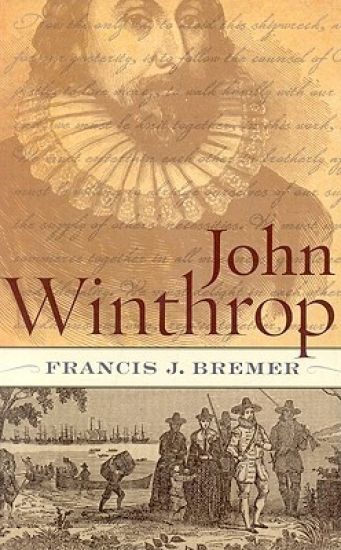
John Winthrop (1588-1649) was the first governor of the Massachusetts Bay Colony and is generally considered the principal architect of early New England society. He led the colonists through the initial struggles to survive in a new world, shaped the political organizations that gave the colonists the right to govern themselves through elected governors and representatives, worked to mediate between those who advanced radical religious and political ideas on the one hand and those who sought a very narrowly defined orthodoxy, and contributed to the development of a system of education which insured the preservation of the founders' heritage. The details of this brief biography is drawn from the author's larger, prize-winning study, John Winthrop: America's Forgotten Founding Father (Oxford University Press, 2003), though modified in minor ways by his ongoing research. To render it more accessible to an undergraduate audience, Bremer avoids in-depth discussion of theology and other specialized topics and focus instead on trying to provide students with an appreciation of how Winthrop's world differed from theirs, but how at the same time he dealt with issues that continue to resonate in our own society. In placing his life in the context of the times, Bremer discusses Winthrop's family life and the challenges of life faced by men, women, and children in the seventeenth century. The key themes that are integrated into the biographical narrative are how Winthrop's religion was shaped by the times and in turn how it influenced his family life and the moral outlook that he brought to his political career; his understanding of society as a community in which individuals had to subordinate their individual goals to the advancement of the common good; and his struggle to define where the line needed to be drawn between new or different ideas that enriched religious and political growth, and those that threatened the stability of a society.
John Winthrop

John Winthrop

Francis J. Bremer

Continuum International Publishing Group Ltd.
2009
nidottu
John Winthrop (1588-1649) was the first governor of the Massachusetts Bay Colony and is generally considered the principal architect of early New England society. In placing his life in the context of the times, Bremer discusses Winthrop's family life and the challenges of life faced by men, women, and children in the seventeenth century. John Winthrop (1588-1649) was the first governor of the Massachusetts Bay Colony and is generally considered the principal architect of early New England society. He led the colonists through the initial struggles to survive in a new world, shaped the political organizations that gave the colonists the right to govern themselves through elected governors and representatives, worked to mediate between those who advanced radical religious and political ideas on the one hand and those who sought a very narrowly defined orthodoxy, and contributed to the development of a system of education which insured the preservation of the founders' heritage. The details of this brief biography is drawn from the author's larger, prize-winning study of "John Winthrop: America's Forgotten Founding Father" (Oxford University Press, 2003), though modified in minor ways by his ongoing research. To render it more accessible to an undergraduate audience, Bremer avoids in-depth discussion of theology and other specialized topics and focus instead on trying to provide students with an appreciation of how Winthrop's world differed from theirs, but how at the same time he dealt with issues that continue to resonate in our own society. In placing his life in the context of the times, Bremer discusses Winthrop's family life and the challenges of life faced by men, women, and children in the seventeenth century. The key themes that are integrated into the biographical narrative are: how Winthrop's religion was shaped by the times and in turn how it influenced his family life and the moral outlook that he brought to his political career; his understanding of society as a community in which individuals had to subordinate their individual goals to the advancement of the common good; and, his struggle to define where the line needed to be drawn between new or different ideas that enriched religious and political growth, and those that threatened the stability of a society.