Kirjojen hintavertailu. Mukana 12 657 676 kirjaa ja 12 kauppaa.

Kirjailija

Francis O'Gorman

Kirjat ja teokset yhdessä paikassa: 13 kirjaa, julkaisuja vuosilta 2002-2022, suosituimpien joukossa Late Ruskin. Vertaile teosten hintoja ja tarkista saatavuus suomalaisista kirjakaupoista.

13 kirjaa

Kirjojen julkaisuhaarukka 2002-2022.

Liberalism and Education

Liberalism and Education

Francis O'Gorman

Bloomsbury Academic USA
2022
sidottu
Liberalism and Education examines the damaging consequences of a liberalism that seems almost obligatory within modern western universities and in literature and art. In the 20th century what had been open-minded inquiry gradually gathered an assumption that judgment, particularly moral judgment, had no part in a university education. Liberal values became the norm. That is, almost complete tolerance and non-judgmentalism. In this shift, counter-culture became the most prestigious intellectual position. But the costs were not considered. In fact, as we are seeing in the rise of non-liberal forces, the casualties of enforced liberalism are multiple. Because the educated cannot, except with risk, question liberalism, those who have not been so educated have taken up the intellectual space left behind. And the result is populism, crude versions of nationalism, violent versions of exclusion, and a spurning of establishments that once looked secure. Because liberals have insisted that intolerance is morally unacceptable, the only forms of intolerance that we can now perceive are extreme. Liberalism has handed to the extremists the only realistic option for taking a different view. Liberalism and Education is a salute to thinking again about this: to re-assessing exactly those topics that liberalism has outlawed, including the place of order, law, authority, reason, moral values, and of judgement in contemporary intellectual culture. And it is optimistic that serious thinking can revive the virtues of what has been cast-out.
Forgetfulness

Forgetfulness

Francis O'Gorman

Bloomsbury Academic USA
2020
nidottu
Forgetfulness is a book about modern culture and its profound rejection of the past. It traces the emergence in recent history of the idea that what is important in human life and work is what will happen in the future. Francis O’Gorman asks what the absence of history does to our sense of purpose, as well as what belonging both to time and place might mean in cultures without a memory. It is written in praise of the best achievement and deeds of the past, but is also an expression of profound anxiety about what forgetting them is doing to us.
Late Ruskin: New Contexts

Late Ruskin: New Contexts

Francis O'Gorman

Routledge
2019
nidottu
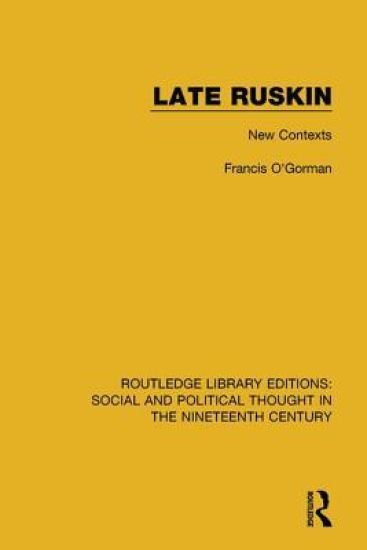
This title was first published in 2001. Ruskin said that 1860 marked the beginning of his 'proper work'. This study presents new, historicized readings of important texts and themes from that late period, 1860-1889, discussing in detail works including Unto this Last (1860), the Lectures on Art (1870), Fors Clavigera (1871-1884), and The Bible of Amiens (1880-85), and considering key themes such as Ruskin's politicized regard for Pre-Raphaelitism in the 1870s, and the complex topic of Ruskin and manliness. Claiming new and distinctive importance for this period of Ruskin's work, both in terms of Ruskin's development as a writer and his place in Victorian culture as it moved toward modernity, this book is the first solely devoted to the prolific later years, and draws on much unpublished material.
Late Ruskin: New Contexts

Late Ruskin: New Contexts

Francis O'Gorman

Routledge
2017
sidottu
This title was first published in 2001. Ruskin said that 1860 marked the beginning of his 'proper work'. This study presents new, historicized readings of important texts and themes from that late period, 1860-1889, discussing in detail works including Unto this Last (1860), the Lectures on Art (1870), Fors Clavigera (1871-1884), and The Bible of Amiens (1880-85), and considering key themes such as Ruskin's politicized regard for Pre-Raphaelitism in the 1870s, and the complex topic of Ruskin and manliness. Claiming new and distinctive importance for this period of Ruskin's work, both in terms of Ruskin's development as a writer and his place in Victorian culture as it moved toward modernity, this book is the first solely devoted to the prolific later years, and draws on much unpublished material.
Late Ruskin

Late Ruskin

Francis O'Gorman

Routledge
2017
nidottu
Readers of Victorian non-fictional prose were encouraged to believe that John Ruskin had died in 1860. Not literally, but intellectually and imaginatively. This study of his later life and work, first published in 2001, aims to refresh, revise and overturn certain perceptions about the writer that many readers still hold. This title will be of interest to students of history.
Forgetfulness

Forgetfulness

Francis O'Gorman

Bloomsbury Academic USA
2017
sidottu
Forgetfulness is a book about modern culture and its profound rejection of the past. It traces the emergence in recent history of the idea that what is important in human life and work is what will happen in the future. Francis O’Gorman shows how forgetting has been embraced as a requirement for modern existence and how our education, as well as life with fast-moving technology, further disconnects us from our pasts. But he also examines the cultural narratives that urge us to resist our collective amnesia. O’Gorman argues that such narratives, in rich but oblique ways, indicate our guilt about modernity's great unmooring from history. Forgetfulness asks what the absence of history does to our sense of purpose, as well as what belonging both to time and place might mean in cultures without a memory. It is written in praise of the best achievement and deeds of the past, but is also an expression of profound anxiety about what forgetting them is doing to us.
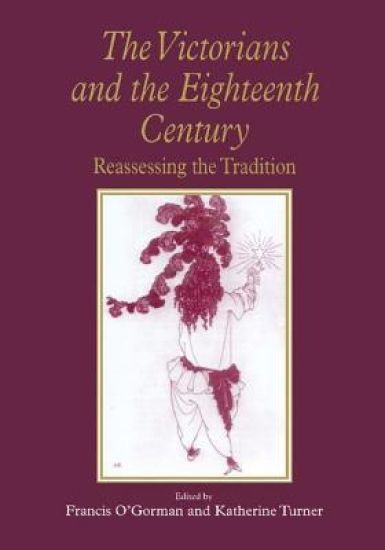
The Victorians and the Eighteenth Century

The Victorians and the Eighteenth Century

Francis O'Gorman; Katherine Turner

Routledge
2017
nidottu
Disrupting the common assumption that the Victorians regarded their eighteenth-century predecessors with little interest or with disdain, the essays in The Victorians and the Eighteenth Century propose a re-examination of these relationships. Together, they expose some of the significant and complex ways in which key aspects and texts of the eighteenth century were situated, read, and transacted within the post-Romantic nineteenth century. Individual essays examine the influence of the work of Pope and the eighteenth-century novelists such as Johnson, Chatterton, and Rousseau on a range of Victorian writers and cultural productions, including Dickens, Eliot, Oliphant, Ruskin, historical fiction, late Victorian art criticism, The English Men of Letters series, and the Oxford English Dictionary. The contributors challenge long-held views about Victorian uses of the past, and offer new insights into how the literature and culture of the eighteenth century helped shape the culture and identity of the nineteenth. This collection of essays by an impressive array of scholars, with a Preface by David Fairer, represents a unique approach to this area of literary history and offers new perspectives on the nature and methodology of 'periodization'. While it is obviously of great interest to students of eighteenth-century and Victorian literature, it will also appeal to readers more broadly concerned with questions of literary influence, periodization, and historiography.
Worrying

Worrying

Francis O'Gorman

Bloomsbury Academic USA
2016
nidottu
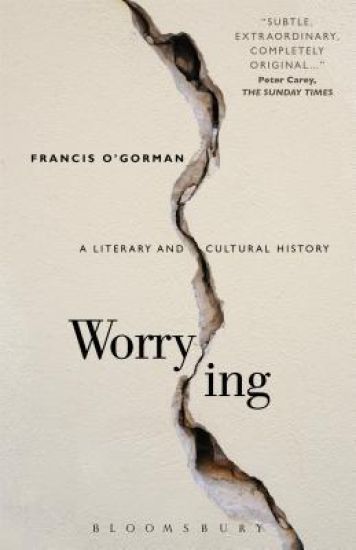
Worrying: A Literary and Cultural History suggests a unique approach to the inner life and its ordinary pains. Francis O’Gorman charts the emergence of our contemporary idea of worry in the Victorian era and its establishment, after the First World War, as a feature of modernity. For some writers between the Wars, worry was the “disease of the age.”Worrying examines the everyday kind of worry—the fearful, non-pathological, and usually hidden questioning about uncertain futures. It shows worry to be a natural companion in a world where we try to live by reason and believe we have the right to choose, finding in the worrier a peculiarly contemporary sufferer whose mental life is not only exceptionally familiar, but also deeply strange.Offering an intimately personal account of an all-too-common human experience, and of a word that slips in and out of ordinary conversation so often that it has become invisible in its familiarity, Worrying explores how the modern world has shaped our everyday anxieties.
Late Ruskin

Late Ruskin

Francis O'Gorman

Routledge
2016
sidottu
Readers of Victorian non-fictional prose were encouraged to believe that John Ruskin had died in 1860. Not literally, but intellectually and imaginatively. This study of his later life and work, first published in 2001, aims to refresh, revise and overturn certain perceptions about the writer that many readers still hold. This title will be of interest to students of history.
Worrying

Worrying

Francis O'Gorman

Bloomsbury Academic USA
2015
sidottu
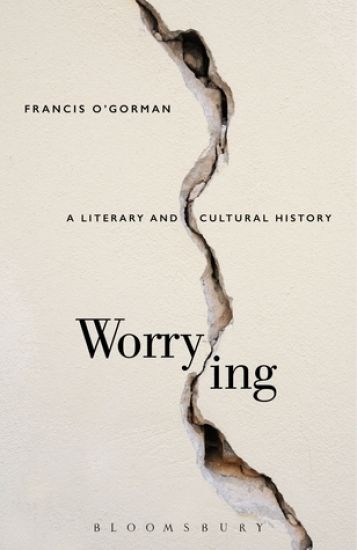
Worrying: A Literary and Cultural History suggests a unique approach to the inner life and its ordinary pains. Francis O’Gorman charts the emergence of our contemporary idea of worry in the Victorian era and its establishment, after the First World War, as a feature of modernity. For some writers between the Wars, worry was the “disease of the age.” Worrying examines the everyday kind of worry—the fearful, non-pathological, and usually hidden questioning about uncertain futures. It shows worry to be a natural companion in a world where we try to live by reason and believe we have the right to choose, finding in the worrier a peculiarly contemporary sufferer whose mental life is not only exceptionally familiar, but also deeply strange. Offering an intimately personal account of an all-too-common human experience, and of a word that slips in and out of ordinary conversation so often that it has become invisible in its familiarity, Worrying explores how the modern world has shaped our everyday anxieties.
The Victorians and the Eighteenth Century

The Victorians and the Eighteenth Century

Francis O'Gorman; Katherine Turner

Ashgate Publishing Limited
2004
sidottu
Disrupting the common assumption that the Victorians regarded their eighteenth-century predecessors with little interest or with disdain, the essays in The Victorians and the Eighteenth Century propose a re-examination of these relationships. Together, they expose some of the significant and complex ways in which key aspects and texts of the eighteenth century were situated, read, and transacted within the post-Romantic nineteenth century. Individual essays examine the influence of the work of Pope and the eighteenth-century novelists such as Johnson, Chatterton, and Rousseau on a range of Victorian writers and cultural productions, including Dickens, Eliot, Oliphant, Ruskin, historical fiction, late Victorian art criticism, The English Men of Letters series, and the Oxford English Dictionary. The contributors challenge long-held views about Victorian uses of the past, and offer new insights into how the literature and culture of the eighteenth century helped shape the culture and identity of the nineteenth. This collection of essays by an impressive array of scholars, with a Preface by David Fairer, represents a unique approach to this area of literary history and offers new perspectives on the nature and methodology of 'periodization'. While it is obviously of great interest to students of eighteenth-century and Victorian literature, it will also appeal to readers more broadly concerned with questions of literary influence, periodization, and historiography.
Ruskin and Gender

Ruskin and Gender

Dinah Birch; Francis O'Gorman

Palgrave Macmillan
2002
sidottu
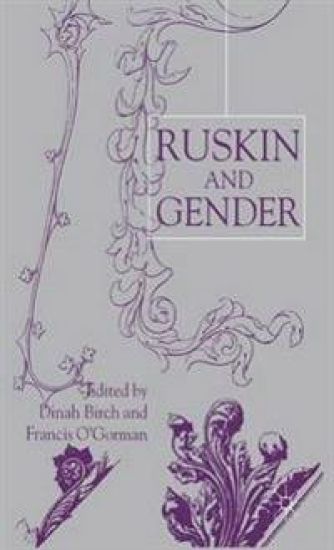
For many years Ruskin has seemed, at best, a conservative thinker on gender roles. At worst, his lecture On Queens' Gardens from Sesame and Lilies was read as a locus classicus of Victorian patriarchal oppression. These essays challenge such assumptions, presenting a wide-ranging revaluation of Ruskin's place in relation to gender, and offering new perspectives on continuing debates on issues of gender - in the Victorian period, and in our own.
Ruskin and Gender

Ruskin and Gender

Dinah Birch; Francis O'Gorman

Palgrave Macmillan
2002
nidottu
For many years Ruskin has seemed, at best, a conservative thinker on gender roles. At worst, his lecture On Queens' Gardens from Sesame and Lilies was read as a locus classicus of Victorian patriarchal oppression. These essays challenge such assumptions, presenting a wide-ranging revaluation of Ruskin's place in relation to gender, and offering new perspectives on continuing debates on issues of gender - in the Victorian period, and in our own.