Kirjojen hintavertailu. Mukana 12 657 676 kirjaa ja 12 kauppaa.
Kirjailija
Francis T. Cullen
Kirjat ja teokset yhdessä paikassa: 16 kirjaa, julkaisuja vuosilta 2006-2025, suosituimpien joukossa Confronting School Violence. Vertaile teosten hintoja ja tarkista saatavuus suomalaisista kirjakaupoista.
School violence is a significant social concern. To better understand its sources, a comprehensive meta-analysis of the school violence and victimization literature was undertaken. Across 761 studies, the relative effects of 30 different individual, school, and community level correlates were assessed (8,790 effect size estimates). Violence and victimization were conceptualized broadly to include various forms of aggression and crime at school. The results revealed that the strongest correlates of school violence perpetration were antisocial behavior, deviant peers, antisocial attitudes, victimization, and peer rejection; and that the strongest correlates of school victimization were prior/other victimization, social competence, risk avoidance, antisocial behavior, and peer rejection. Extracurricular activities and school security devices had among the weakest associations in the meta-analysis, and several traditional criminological predictors did not perform well in the school context. We conclude with recommendations for theory, future research, and policy.
The fifth edition of this text includes updated research and coverage of current issues, using real life-examples and case law discussions to define and explore forensic psychology.
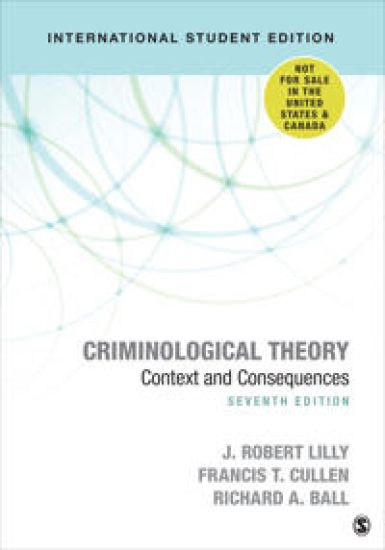
Updated Edition of a Best-Seller Offering a rich introduction to how scholars analyze crime, Criminological Theory: Context and Consequences moves readers beyond a commonsense knowledge of crime to a deeper understanding of the importance of theory in shaping crime control policies. The Seventh Edition of the authors' clear, accessible, and thoroughly revised text covers traditional and contemporary theory within a larger sociological and historical context. It includes new sources that assess the empirical status of the major theories, as well as updated coverage of crime control policies and their connection to criminological theory.
The field of criminology is limited by a 'hidden' measurement crisis. It is hidden because scholars either are not aware of the shortcomings of their measures or have implicitly agreed that scales with certain properties merit publication. It is a crisis because the approaches used to construct measures do not employ modern systematic psychometric methods. As a result, the degree to which existing measures have methodological limitations is unknown. The purpose of this Element is to unmask this hidden crisis and provide a case study demonstrating how to build a measure of a prominent criminological construct through modern systematic psychometric methods. Using multiple surveys and item response theory, it develops a ten-item scale of procedural justice in policing. This can be used in primary research and to adjudicate existing measures. The goal is to reveal the nature of the field's measurement crisis and show a strategy for solving it.
The field of criminology is limited by a 'hidden' measurement crisis. It is hidden because scholars either are not aware of the shortcomings of their measures or have implicitly agreed that scales with certain properties merit publication. It is a crisis because the approaches used to construct measures do not employ modern systematic psychometric methods. As a result, the degree to which existing measures have methodological limitations is unknown. The purpose of this Element is to unmask this hidden crisis and provide a case study demonstrating how to build a measure of a prominent criminological construct through modern systematic psychometric methods. Using multiple surveys and item response theory, it develops a ten-item scale of procedural justice in policing. This can be used in primary research and to adjudicate existing measures. The goal is to reveal the nature of the field's measurement crisis and show a strategy for solving it.
Criminological Theory: Past to Present by Francis T. Cullen, Roben Agnew, and Pamela Wilcox is a comprehensive and authoritative reader for upper-level undergraduate and graduate courses in criminological theory. An Introduction precedes each Part, as well as each individual reading, situating the book's selections within the historical development of criminological theory as a discipline.
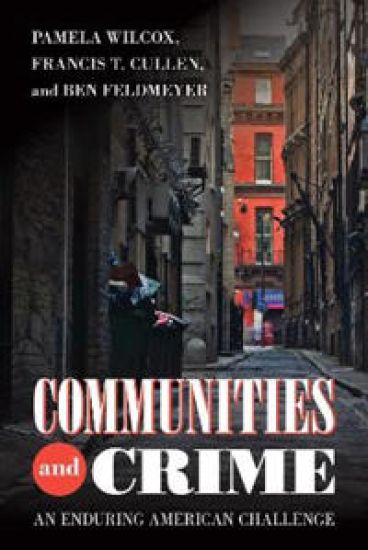
Social scientists have long argued over the links between crime and place. The authors of Communities and Crime provide an intellectual history that traces how varying images of community have evolved over time and influenced criminological thinking and criminal justice policy.The authors outline the major ideas that have shaped the development of theory, research, and policy in the area of communities and crime. Each chapter examines the problem of the community through a defining critical or theoretical lens: the community as social disorganization; as a system of associations; as a symptom of larger structural forces; as a result of criminal subcultures; as a broken window; as crime opportunity; and as a site of resilience. Focusing on these changing images of community, the empirical adequacy of these images, and how they have resulted in concrete programs to reduce crime, Communities and Crime theorizes about and reflects upon why some neighborhoods produce so much crime. The result is a tour of the dominant theories of place in social science today.
Social scientists have long argued over the links between crime and place. The authors of Communities and Crime provide an intellectual history that traces how varying images of community have evolved over time and influenced criminological thinking and criminal justice policy.The authors outline the major ideas that have shaped the development of theory, research, and policy in the area of communities and crime. Each chapter examines the problem of the community through a defining critical or theoretical lens: the community as social disorganization; as a system of associations; as a symptom of larger structural forces; as a result of criminal subcultures; as a broken window; as crime opportunity; and as a site of resilience. Focusing on these changing images of community, the empirical adequacy of these images, and how they have resulted in concrete programs to reduce crime, Communities and Crime theorizes about and reflects upon why some neighborhoods produce so much crime. The result is a tour of the dominant theories of place in social science today.
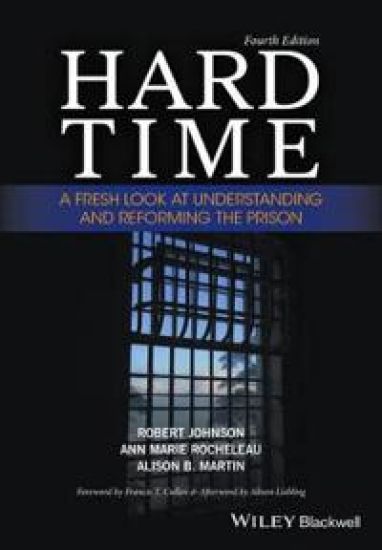
Hard Time: A Fresh Look at Understanding and Reforming the Prison, 4th Edition, is a revised and updated version of the highly successful text addressing the origins, evolution, and promise of America’s penal system. Draws from both ethnographic and professional material, and situates the prison experience within both contemporary and historical contextsFeatures first person accounts from male and female inmates and staff, revealing what it’s actually like to live and work in prisonIncludes all-new chapters on prison reform and on supermax correctional facilities, including the latest research on confinement, long-term segregation, and death rowExplores a wide range of topics, including the nature of prison as punishment; prisoner personality types and coping strategies; gang violence; prison officers’ custodial duties; and psychological, educational, and work programs Develops policy recommendations for the future based on qualitative and quantitative research and evidence-based initiatives
"The text is an incredible composite of the literature that has shaped correctional practice. The authors have a great capacity for making research interesting and accessible. Cullen and Jonson have accomplished their goal of motivating readers to become sophisticated consumers of correctional knowledge." —Betsy Matthews, Eastern Kentucky University The Second Edition of Correctional Theory: Context and Consequences continues to identify and evaluate the major competing theories used to guide the goals, policies, and practices of the correctional system. Authors Francis T. Cullen and Cheryl Lero Jonson demonstrate that changes in theories can legitimize new ways of treating and punishing offenders, and they help readers understand how transformations in the social and political context of U.S. society impact correctional theory and policy. Designed to motivate readers to become sophisticated consumers of correctional information, the book emphasizes the importance of using evidence-based information to guide decisions, rather than relying on nonscientific commonsense or ideology-based beliefs.
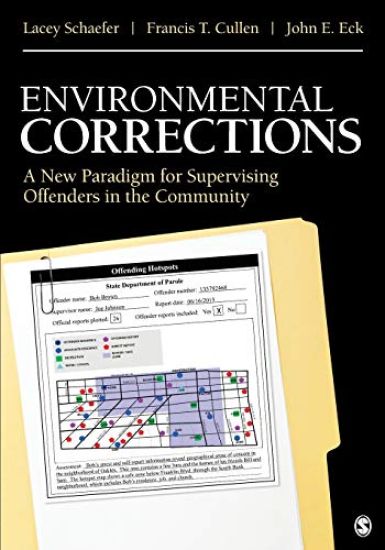
A new paradigm for supervising offenders in the community Environmental Corrections is an innovative guide filled with rich insights and strategies for probation and parole officers to effectively integrate offenders back into the community and reduce recidivism. Authors Lacey Schaefer, Francis T. Cullen, and John E. Eck move beyond traditional models for interventions and build directly on the applied focus of environmental criminology theories. Using this approach, the authors answer the question of what officers can do to decrease opportunities for an offender to commit a crime. Readers will learn how to recognize and assess specific criminal opportunities in an offender’s past and gain the tools and strategies they need to design an individualized supervision plan that channels offenders away from these criminogenic situations.
In exploring the criminalization of corporations, this book uses the landmark "Ford Pinto case" as a centerpiece for exploring corporate violence and the long effort to bring such harm within the reach of the criminal law. Corporations that illegally endanger human life now must negotiate the surveillance of government regulators and risk civil suits from injured parties seeking financial compensation. They also may be charged with criminal offenses and their officials sent to prison.
A theme that has persisted throughout the history of American corrections is that efforts should be made to reform offenders. In particular, at the beginning of the 1900s, the rehabilitative ideal was enthusiastically trumpeted and helped to direct the renovation of the correctional system (e.g., implementation of indeterminate sentencing, parole, probation, a separate juvenile justice system). For the next seven decades, offender treatment reigned as the dominant correctional philosophy. Then, in the early 1970s, rehabilitation suffered a precipitous reversal of fortune. The larger disruptions in American society in this era prompted a general critique of the "state run" criminal justice system. Rehabilitation was blamed by liberals for allowing the state to act coercively against offenders, and was blamed by conservatives for allowing the state to act leniently toward offenders. In this context, the death knell of rehabilitation was seemingly sounded by Robert Martinson's (1974b) influential "nothing works" essay, which reported that few treatment programs reduced recidivism. This review of evaluation studies gave legitimacy to the antitreatment sentiments of the day; it ostensibly "proved" what everyone "already knew": Rehabilitation did not work. In the subsequent quarter century, a growing revisionist movement has questioned Martinson's portrayal of the empirical status of the effectiveness of treatment interventions. Through painstaking literature reviews, these revisionist scholars have shown that many correctional treatment programs are effective in decreasing recidivism. More recently, they have undertaken more sophisticated quantitative syntheses of an increasing body of evaluation studies through a technique called "meta-analysis." These meta-analyses reveal that across evaluation studies, the recidivism rate is, on average, 10 percentage points lower for the treatment group than for the control group. However, this research has also suggested that some correctional interventions have no effect on offender criminality (e.g., punishment-oriented programs), while others achieve substantial reductions in recidivism (i.e., approximately 25 percent). This variation in program success has led to a search for those "principles" that distinguish effective treatment interventions from ineffective ones. There is theoretical and empirical support for the conclusion that the rehabilitation programs that achieve the greatest reductions in recidivism use cognitive-behavioral treatments, target known predictors of crime for change, and intervene mainly with high-risk offenders. "Multisystemic treatment" is a concrete example of an effective program that largely conforms to these principles. In the time ahead, it would appear prudent that correctional policy and practice be "evidence based." Knowledgeable about the extant research, policymakers would embrace the view that rehabilitation programs, informed by the principles of effective intervention, can "work" to reduce recidivism and thus can help foster public safety. By reaffirming rehabilitation, they would also be pursuing a policy that is consistent with public opinion research showing that Americans continue to believe that offender treatment should be an integral goal of the correctional system.
An unprecedented look at college women's risks of and experiences with sexual victimizationUnsafe in the Ivory Tower examines the nature and dimensions of a salient social problem—the sexual victimization of female college students today, and how women respond when they are, in fact, sexually victimized. The authors discuss the research that scholars have conducted to illuminate the origins and extent of this controversial issue as well as what can be done to prevent it. Students and other interested readers learn about the nature of victimization while simultaneously gaining an understanding of the ways in which criminologists, victimologists, and social scientists conduct research that informs theory and policy debates.Key FeaturesProvides detailed information about sexual victimization on college campuses todayIntroduces broad lessons about the interactions of ideology, science and methodology, and public policyIntegrates current data, research, and theory, based on the authors' national studies of more than 8,000 randomly selected female college studentsIntended AudienceThis supplemental text is ideal for courses such as Sex Crimes, Violence and Abuse, Victimology, Gender and Crime, Sociology of Violence, Sociology of Women, and the Sociology of Sex and Gender in departments of criminology, criminal justice, sociology, and women's studies. It is also useful for those involved in studying or creating public policy related to this issue and for those interested in sexual victimization on campuses generally.
An unprecedented look at college women's risks of and experiences with sexual victimizationUnsafe in the Ivory Tower examines the nature and dimensions of a salient social problem—the sexual victimization of female college students today, and how women respond when they are, in fact, sexually victimized. The authors discuss the research that scholars have conducted to illuminate the origins and extent of this controversial issue as well as what can be done to prevent it. Students and other interested readers learn about the nature of victimization while simultaneously gaining an understanding of the ways in which criminologists, victimologists, and social scientists conduct research that informs theory and policy debates.Key FeaturesProvides detailed information about sexual victimization on college campuses todayIntroduces broad lessons about the interactions of ideology, science and methodology, and public policyIntegrates current data, research, and theory, based on the authors' national studies of more than 8,000 randomly selected female college studentsIntended AudienceThis supplemental text is ideal for courses such as Sex Crimes, Violence and Abuse, Victimology, Gender and Crime, Sociology of Violence, Sociology of Women, and the Sociology of Sex and Gender in departments of criminology, criminal justice, sociology, and women's studies. It is also useful for those involved in studying or creating public policy related to this issue and for those interested in sexual victimization on campuses generally.
In exploring the criminalization of corporations, this book uses the landmark "Ford Pinto case" as a centerpiece for exploring corporate violence and the long effort to bring such harm within the reach of the criminal law. Corporations that illegally endanger human life now must negotiate the surveillance of government regulators and risk civil suits from injured parties seeking financial compensation. They also may be charged with criminal offenses and their officials sent to prison.