Kirjojen hintavertailu. Mukana 12 595 353 kirjaa ja 12 kauppaa.

Kirjailija

Francis Young

Kirjat ja teokset yhdessä paikassa: 36 kirjaa, julkaisuja vuosilta 2006-2026, suosituimpien joukossa Edmund. Vertaile teosten hintoja ja tarkista saatavuus suomalaisista kirjakaupoista.

36 kirjaa

Kirjojen julkaisuhaarukka 2006-2026.

Edmund

Edmund

Francis Young

Bloomsbury Academic
2020
nidottu
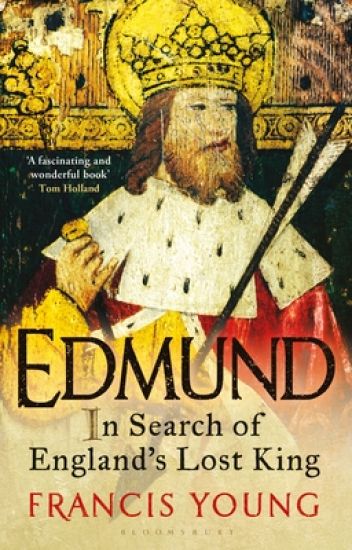
What buried secret lies beneath the stones of one of England’s greatest former churches and shrines, the Benedictine Abbey of Bury St Edmunds? The search for the final resting place of King Edmund has led to this site, beneath which Francis Young argues the lost king's remains are waiting to be found. Edmund: In Search of England's Lost King explores the history of the martyred monarch of East Anglia and England's first patron saint, showing how he became a pivotal figure around whom Saxons, Danes and Normans all rallied. Young also examines Edmund's legacy in the centuries since his death at the hands of marauding Vikings in the 9th century. In doing so, this fascinating book points to the imminent rediscovery of the ruler who created England.
Paganism Persisting

Paganism Persisting

Robin Douglas; Francis Young

UNIVERSITY OF EXETER PRESS
2026
nidottu
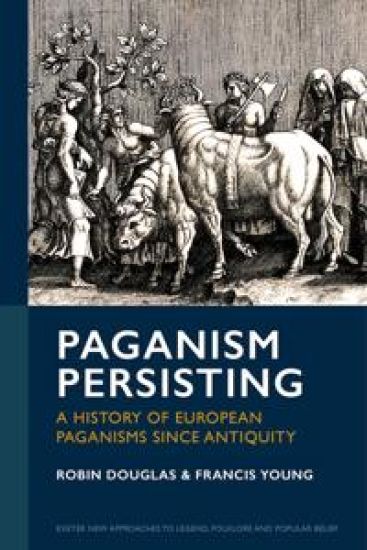
Paganism in Europe was not defeated by Christianity: it never went away. From the fourth century to the twentieth, against the background of a largely Christian culture, people repeatedly attempted to revive various kinds of pre-Christian religion – beliefs and practices that we have come to label as ‘paganism’. Ancient paganism did not survive the Middle Ages in its original form; this book tells the story of the persistence of elements of paganism and the pagan idea through Europe’s pagan revivals, from Byzantine Greece to medieval Eastern Europe and Renaissance Florence, from eighteenth-century Norwich to revolutionary Paris and Edwardian England. While some of these revivals are well known and others are almost entirely forgotten, they reveal the rich diversity of interpretations of paganism – and how those interpretations have been conditioned by the surrounding culture. Revived paganisms ranged from the austerely rational to the earnestly romantic, from the mystical and occult to the stridently nationalistic. Paganism Persisting reveals European paganism’s long afterlife, up to and including the emergence of modern paganism as a mass movement in the twentieth century. The authors are both historians of religion specializing, respectively, in the intellectual history of the idea of paganism and in the development of popular religion and folklore. This book has much to offer to anyone interested in European cultural history, the history of ideas and religious studies.
Fairies

Fairies

Francis Young

JOHN WILEY AND SONS LTD
2026
sidottu
Many people think they know what fairies are, what a fairy looks like, and how a fairy is expected to behave. Francis Young's new history of fairies demonstrates that the truth about belief in fairies is far stranger than clichéd images of tiny figures with wings and wands. Before the rise of the 'small winged fairy' in the 19th century, the category of fairies included a vast range of supernatural human-like creatures, from the elves of Scandinavia and the aos sí of Ireland to the vilas of the Balkans and the fadas of Iberia. Young traces the ancient origins of belief in such creatures and how it adapted to the rise of Christianity and then flourished in medieval Europe, before being transformed - but not destroyed - by the upheavals of the Reformation, the Enlightenment, and even European colonial expansion, which made fairies a global phenomenon. He concludes this uniquely wide-ranging history by reflecting on the surprising ways in which fairy belief endures in our apparently disenchanted contemporary world. No one who reads this brilliant tour through the enchanted pathways of fairyland will ever look at the winged creatures of contemporary popular culture - or the woods at the end of their garden - in the same way again.
Magic in Merlin's Realm

Magic in Merlin's Realm

Francis Young

Cambridge University Press
2025
pokkari
Belief in magic was, until relatively recent times, widespread in Britain; yet the impact of such belief on determinative political events has frequently been overlooked. In his wide-ranging new book, Francis Young explores the role of occult traditions in the history of the island of Great Britain: Merlin's realm. He argues that while the great magus and artificer invented by Geoffrey of Monmouth was a powerful model for a succession of actual royal magical advisers (including Roger Bacon and John Dee), monarchs nevertheless often lived in fear of hostile sorcery while at other times they even attempted magic themselves. Successive governments were simultaneously fascinated by astrology and alchemy, yet also deeply wary of the possibility of treasonous spellcraft. Whether deployed in warfare, rebellion or propaganda, occult traditions were of central importance to British history and, as the author reveals, these dark arts of magic and politics remain entangled to this day.
Silence of the Gods

Silence of the Gods

Francis Young

Cambridge University Press
2025
sidottu
The formal conversion to Christianity in 1387 of the Grand Duchy of Lithuania seemingly marked the end of Europe's last 'pagan' peoples. But the reality was different. At the margins, often under the radar, around the dusky edgelands, pre-Christian religions endured and indeed continued to flourish for an astonishing five centuries. Silence of the Gods tells, for the first time, the remarkable story of these forgotten peoples: belated adopters of Christian belief on the outer periphery of Christendom, from the Sámi of the frozen north to the Estonians, Latvians and Lithuanians around the Baltic, as well as the Finno-Ugric peoples of Russia's Volga-Ural Plain. These communities, Dr Young reveals, responded creatively to Christianity's challenge, but for centuries stopped short of embracing it. His book addresses why this was so, uncovering stories of fierce resistance, unlikely survival and considerable ingenuity. He revolutionises understandings of the lost religions of the last pagans.
Pre-Christian Baltic Religion and Belief

Pre-Christian Baltic Religion and Belief

Francis Young

ARC Humanities Press
2025
nidottu
The Baltic peoples of Prussia, Lithuania, and Latvia were among the last in Europe to be Christianized. In spite of their survival (in some cases) as late as the eighteenth century, the pre-Christian religions of the Baltic are little known beyond the Baltic states. Baltic religions have often been interpreted through the lens of modern reconstructions of mythology based on nineteenth-century folklore collections. This book, by contrast, draws on historical sources contemporaneous with or close in time to the practice of pre-Christian cults. These include the writings of chroniclers and early ethnographers, documents produced by authorities concerned about the continuation of pre-Christian practices, and the evidence of archaeology. Focusing on the deities, sacred places, and sacred rites of the Balts, this book is the first dedicated introduction in English to the religious world of some of Europe's last pagan peoples.
English Catholics and the Supernatural, 1553?1829
In spite of an upsurge in interest in the social history of the Catholic community and an ever-growing body of literature on early modern 'superstition' and popular religion, the English Catholic community's response to the invisible world of the preternatural and supernatural has remained largely neglected. Addressing this oversight, this book explores Catholic responses to the supernatural world, setting the English Catholic community in the contexts of the wider Counter-Reformation and the confessional culture of early modern England. In so doing, it fulfils the need for a study of how English Catholics related to manifestations of the devil (witchcraft and possession) and the dead (ghosts) in the context of Catholic attitudes to the supernatural world as a whole (including debates on miracles). The study further provides a comprehensive examination of the ways in which English Catholics deployed exorcism, the church's ultimate response to the devil. Whilst some aspects of the Catholic response have been touched on in the course of broader studies, few scholars have gone beyond the evidence contained within anti-Catholic polemical literature to examine in detail what Catholics themselves said and thought. Given that Catholics were consistently portrayed as 'superstitious' in Protestant literature, the historian must attend to Catholic voices on the supernatural in order to avoid a disastrously unbalanced view of Catholic attitudes. This book provides the first analysis of the Catholic response to the supernatural and witchcraft and how it related to a characteristic Counter-Reformation preoccupation, the phenomenon of exorcism.
Paganism Persisting

Paganism Persisting

Robin Douglas; Francis Young

UNIVERSITY OF EXETER PRESS
2024
sidottu
Paganism in Europe was not defeated by Christianity: it never went away. From the fourth century to the twentieth, against the background of a largely Christian culture, people repeatedly attempted to revive various kinds of pre-Christian religion – beliefs and practices that we have come to label as ‘paganism’. Ancient paganism did not survive the Middle Ages in its original form; this book tells the story of the persistence of elements of paganism and the pagan idea through Europe’s pagan revivals, from Byzantine Greece to medieval Eastern Europe and Renaissance Florence, from eighteenth-century Norwich to revolutionary Paris and Edwardian England. While some of these revivals are well known and others are almost entirely forgotten, they reveal the rich diversity of interpretations of paganism – and how those interpretations have been conditioned by the surrounding culture. Revived paganisms ranged from the austerely rational to the earnestly romantic, from the mystical and occult to the stridently nationalistic. Paganism Persisting reveals European paganism’s long afterlife, up to and including the emergence of modern paganism as a mass movement in the twentieth century. The authors are both historians of religion specializing, respectively, in the intellectual history of the idea of paganism and in the development of popular religion and folklore. This book has much to offer to anyone interested in European cultural history, the history of ideas and religious studies.
Introduction to the Chemistry of Inorganic Cements

Introduction to the Chemistry of Inorganic Cements

Karen Scrivener; Francis Young; Ruben Snellings

CRC Press
2024
nidottu
Introduction to the Chemistry of Inorganic Cements presents the chemistry of inorganic cements to anyone coming to the study of these materials. It is aimed mainly at students with a civil engineering, materials science or chemistry background beginning research in the area either at a PhD level or in industry, as well as professionals entering the field. It details the manufacture and characterisation of the unreacted cement, the hydration processes leading to setting and hardening, the hydrates formed, and the microstructural development and degradation processes.Portland cements are the main focus, because of their over-riding importance in civil construction, but the increasingly important supplementary cementing materials, such as slag and fly ash, are also considered in detail. A separate chapter looks at calcium aluminate cements and calcium sulfo aluminate cements. The latest ideas and concepts in the field are outlined, as are the major methods of characterization used in the field.
SAINTS AND SINNERS ON HORSEBACK

SAINTS AND SINNERS ON HORSEBACK

Francis Young

Trivent Publishing
2023
sidottu
In Saints and Sinners on Horseback Volume I we meet saints, sinners, and their horses, mules, and donkeys on the road. Whether saint, sinner, or simply all too human, the medieval individual's connection to equids reflected relationships with other animals, the rest of humanity, and with the deity. Knowledge of horses permeated hagiographies and homilies, histories and biographies. Equids were recruited in commentaries on morality and Christian duty. In a world in which equids are not so readily encountered, Saints and Sinners on Horseback informs the modern reader about the essential part played by horses in medieval life, literature, and belief.
Twilight of the Godlings

Twilight of the Godlings

Francis Young

Cambridge University Press
2023
sidottu
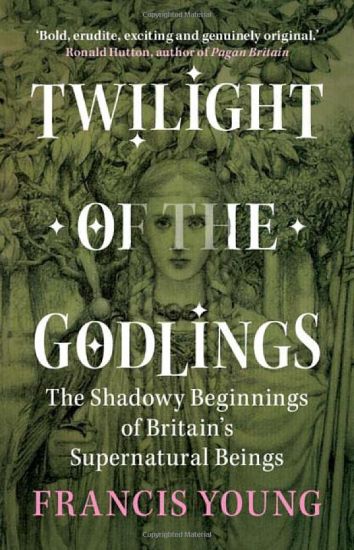
Throughout the recorded history of Britain, belief in earthbound spirits presiding over nature, the home and human destiny has been a feature of successive cultures. From the localised deities of Britannia to the Anglo-Saxons' elves and the fairies of late medieval England, Britain's godlings have populated a shadowy, secretive realm of ritual and belief running parallel to authorised religion. Twilight of the Godlings delves deep into the elusive history of these supernatural beings, tracing their evolution from the pre-Roman Iron Age to the end of the Middle Ages. Arguing that accreted cultural assumptions must be cast aside in order to understand the godlings – including the cherished idea that these folkloric creatures are the decayed remnants of pagan gods and goddesses – this bold, revisionist book traces Britain's 'small gods' to a popular religiosity influenced by classical learning. It offers an exciting new way of grasping the island's most mysterious mythical inhabitants.
Magic in Merlin's Realm

Magic in Merlin's Realm

Francis Young

Cambridge University Press
2022
sidottu
Belief in magic was, until relatively recent times, widespread in Britain; yet the impact of such belief on determinative political events has frequently been overlooked. In his wide-ranging new book, Francis Young explores the role of occult traditions in the history of the island of Great Britain: Merlin's realm. He argues that while the great magus and artificer invented by Geoffrey of Monmouth was a powerful model for a succession of actual royal magical advisers (including Roger Bacon and John Dee), monarchs nevertheless often lived in fear of hostile sorcery while at other times they even attempted magic themselves. Successive governments were simultaneously fascinated by astrology and alchemy, yet also deeply wary of the possibility of treasonous spellcraft. Whether deployed in warfare, rebellion or propaganda, occult traditions were of central importance to British history and, as the author reveals, these dark arts of magic and politics remain entangled to this day.
Witchcraft and the Modern Roman Catholic Church

Witchcraft and the Modern Roman Catholic Church

Francis Young

Cambridge University Press
2022
pokkari
Witchcraft is rarely mentioned in official documents of the contemporary Roman Catholic church, but ideas about the dangers of witchcraft and other forms of occultism underpin the recent revival of interest in exorcism in the church. This Element examines hierarchical and clerical understandings of witchcraft within the contemporary Roman Catholic church. The Element considers the difficulties faced by clergy in parts of the developing world, where belief in witchcraft is so dominant it has the potential to undermine the church's doctrine and authority. The Element also considers the revival of interest in witchcraft and cursing among Catholic demonologists and exorcists in the developed world. The Element explores whether it is possible for a global church to adopt any kind of coherent approach to a phenomenon appraised so differently across different cultures that the church's responses to witchcraft in one context are likely to seem irrelevant in another.
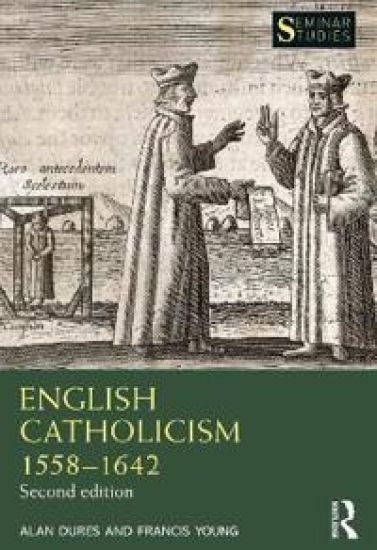
English Catholicism 1558–1642

English Catholicism 1558–1642

Alan Dures; Francis Young

Routledge
2021
nidottu
Newly revised and updated, the second edition of English Catholicism 1558–1642 explores the position of Catholics in early modern English society, their political significance, and the internal politics of the Catholic community.The Elizabethan religious settlement of 1559 ostensibly outlawed Catholicism in England, while subsequent events such as the papal excommunication of Elizabeth I, the Spanish Armada, and the Gunpowder Plot led to draconian penalties and persecution. The problem of Catholicism preoccupied every English government between Elizabeth I and Charles I, even if the numbers of Catholics remained small. Nevertheless, a Catholic community not only survived in early modern England but also exerted a surprising degree of influence. Amid intense persecution, expressions of Catholicism ranged from those who refused outright to attend the parish church (recusants) to ‘church papists’ who remained Catholics at heart. English Catholicism 1558–1642 shows that, against all odds, Catholics remained an influential and historically significant minority of religious dissenters in early modern England.Co-authored with Francis Young, this volume has been updated to include recent developments in the historiography of English Catholicism. It is a useful introduction for all undergraduate students interested in the English Reformation and early modern English history.