Kirjojen hintavertailu. Mukana 12 595 353 kirjaa ja 12 kauppaa.

Kirjailija

Francisco Durand

Kirjat ja teokset yhdessä paikassa: 3 kirjaa, julkaisuja vuosilta 2017-2024, suosituimpien joukossa Peru. Vertaile teosten hintoja ja tarkista saatavuus suomalaisista kirjakaupoista.

3 kirjaa

Kirjojen julkaisuhaarukka 2017-2024.

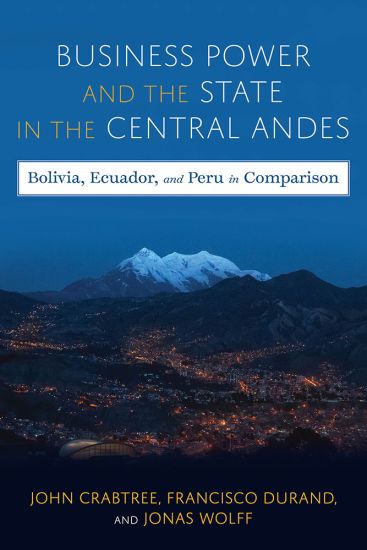
Business Power and the State in the Central Andes

Business Power and the State in the Central Andes

John Crabtree; Jonas Wolff; Francisco Durand

UNIVERSITY OF PITTSBURGH PRESS
2024
sidottu
This coauthored monograph examines how business groups have interacted with state authorities in the three central Andean countries from the mid-twentieth century through the early twenty-first. This time span covers three distinct economic regimes: the period of state-led import substitutive industrialization from the 1950s through the 1970s, the neoliberalism of the 1980s and 1990s, and the post-neoliberal period since the earlier 2000s. These three countries share many similarities but also have important differences that reveal how power is manifested. Peru has had an almost unbroken hegemony of business elites who leverage their power over areas of state activity that affect them. Bolivia, by contrast, shows how strong social movements have challenged business dominance at crucial periods, reflecting a weaker elite class that is less able to exercise influence over decision-making. Ecuador falls in between these two, with business elites being more fragmented than in Peru and social movements being weaker than in Bolivia. The authors analyze the viability of these different regimes and economic models, why they change in specific circumstances, and how they affect the state and its citizen.
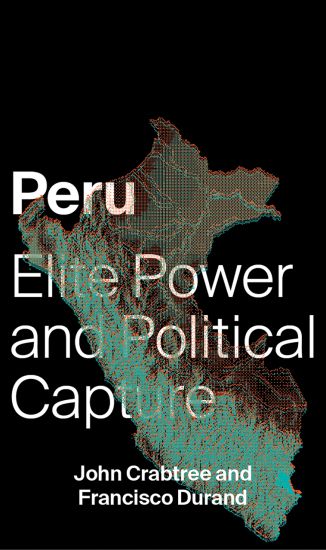
Peru

Peru

John Crabtree; Francisco Durand

Zed Books Ltd
2017
nidottu
While leftist governments have been elected across Latin America, this ‘Pink Tide’ has so far failed to reach Peru. Instead, the corporate elite remains firmly entrenched, and the left continues to be marginalised. Peru therefore represents a particularly stark example of ‘state capture’, in which an extreme concentration of wealth in the hands of a few corporations and pro-market technocrats has resulted in a monopoly on political power.Post the 2016 elections, John Crabtree and Francisco Durand look at the ways in which these elites have been able to consolidate their position at the expense of genuine democracy, with a particular focus on the role of mining and other extractive industries, where extensive privatization and deregulation has contributed to extreme disparities in wealth and power.In the process, Crabtree and Durand provide a unique case study of state development, by revealing the mechanisms used by elites to dominate political discussion and marginalize their opponents, as well as the role played by external actors such as international financial institutions and foreign investors. The significance of Crabtree’s findings therefore extends far beyond Peru, and illuminates the wider issue of why mineral-rich countries so often struggle to attain meaningful democracy.
Peru

Peru

John Crabtree; Francisco Durand

Zed Books Ltd
2017
sidottu
While leftist governments have been elected across Latin America, this ‘Pink Tide’ has so far failed to reach Peru. Instead, the corporate elite remains firmly entrenched, and the left continues to be marginalised. Peru therefore represents a particularly stark example of ‘state capture’, in which an extreme concentration of wealth in the hands of a few corporations and pro-market technocrats has resulted in a monopoly on political power.Post the 2016 elections, John Crabtree and Francisco Durand look at the ways in which these elites have been able to consolidate their position at the expense of genuine democracy, with a particular focus on the role of mining and other extractive industries, where extensive privatization and deregulation has contributed to extreme disparities in wealth and power.In the process, Crabtree and Durand provide a unique case study of state development, by revealing the mechanisms used by elites to dominate political discussion and marginalize their opponents, as well as the role played by external actors such as international financial institutions and foreign investors. The significance of Crabtree’s findings therefore extends far beyond Peru, and illuminates the wider issue of why mineral-rich countries so often struggle to attain meaningful democracy.