Kirjojen hintavertailu. Mukana 12 657 676 kirjaa ja 12 kauppaa.

Kirjailija

Francisco Louçã

Kirjat ja teokset yhdessä paikassa: 6 kirjaa, julkaisuja vuosilta 1997-2018, suosituimpien joukossa As Time Goes By. Vertaile teosten hintoja ja tarkista saatavuus suomalaisista kirjakaupoista.

6 kirjaa

Kirjojen julkaisuhaarukka 1997-2018.

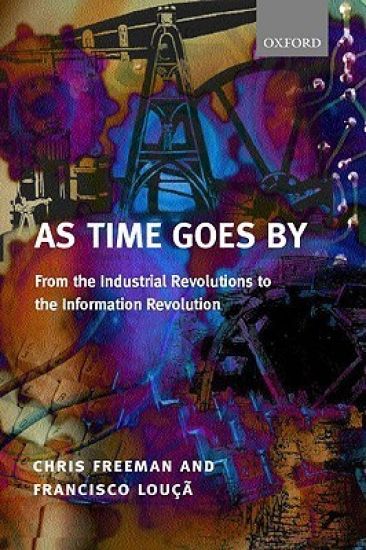
As Time Goes By

As Time Goes By

Chris Freeman; Francisco Louçã

Oxford University Press
2002
nidottu
This title charts the history of five technological revolutions: water- and steam-powered mechanization, electrification, motorization, and computerization. It shows the need to take account of politics, culture, entrepreneurship, and science and technology in the analysis of economic growth.
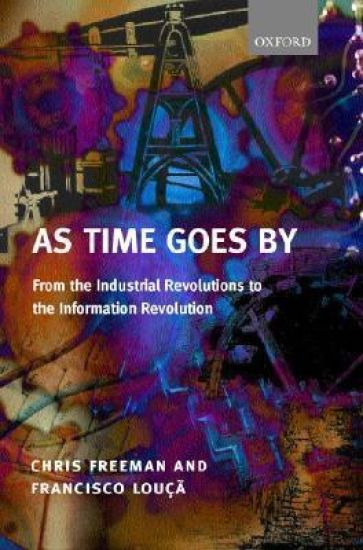
As Time Goes By

As Time Goes By

Chris Freeman; Francisco Louçã

Oxford University Press
2001
sidottu
How can we best understand the impact of revolutionary technologies on the business cycle, the economy, and society? Why is economics meaningless without history and without an understanding of institutional and technical change? Does the 'new economy' mean the 'end of history'?an we best understand the impact of revolutionary technologies on business organization and the business cycle? These are some of the questions addressed in this authoritative analysis of modern economic growth from the Industrial Revolution to the 'New Economy' of today. Chris Freeman has been one of the foremost researchers on innovation for a long time and his colleague Francisco Louçã is an outstanding historian of economic theory and an analyst of econometric models and methods. Together they chart the history of five technological revolutions: water-powered mechanization, steam-powered mechanization, electrification, motorization, and computerization. They demonstrate the necessity to take account of politics, culture, organizational change, and entrepreneurship, as well as science and technology in the analysis of economic growth. This is an well-informed, highly topical, and persuasive study of interest across all the social sciences.
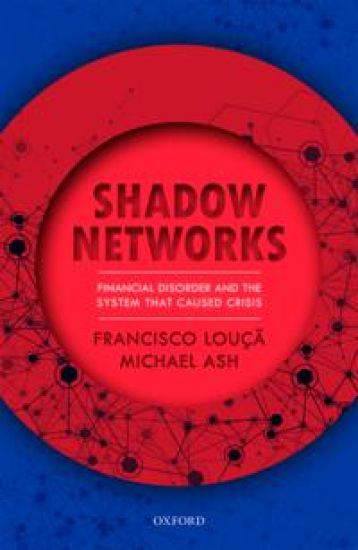
Shadow Networks

Shadow Networks

Francisco Louçã; Michael Ash

Oxford University Press
2018
sidottu
The 2007-08 financial crisis surprised many economists and the public. But how did the crisis come about, why was it so deep, and why has the clean-up been so slow and painful? Many accounts of the crisis focus on renegade activity in marginal financial sectors. Shadow Networks challenges this pervading view and sets out to demonstrate that, far from a dissident branch, the shadow finance that initiated the crisis is tightly networked with, and highly profitable for, bank-based finance. The collapse was not an accident, but baked into the system of finance from the start. Shadow Networks traces the complex web of power that caused crisis and gives vivid descriptions of the actors in the quarter century leading up to 2007 to explain how the now decade-long crisis took shape. Shadow Networks: Financial Disorder and the System that Caused Crisis is a probing examination of the roles of the powerful elite. It traces the networks and institutions that support a finance-focused, market centered model of economy and society from their ascendancy to their surprising resilience in the face of manifest failures.
The Years of High Econometrics

The Years of High Econometrics

Francisco Louçã

Routledge
2012
nidottu
A fascinating and comprehensive history, this book explores the most important transformation in twentieth century economics: the creation of econometrics.Containing fresh archival material that has not been published before and taking Ragnar Frisch as the narrator, Francisco Louca discusses both the keys events - the establishment of the Econometric Society, the Cowles Commission and the journal Econometrica – and the major players - economists like Wesley Mitchell, mathematicians like John von Neumann and statisticians like Karl Pearson - in history that shaped the development of econometrics. He discusses the evolution of their thought, detailing the debates, the quarrels and the interrogations that crystallized their work and even offers a conclusion of sorts, suggesting that some of the more influential thinkers abandoned econometrics or became critical of its development. International in scope and appeal, The Years of High Econometrics is an excellent accompaniment for students taking courses on probability, econometric methods and the history of economic thought.
The Years of High Econometrics

The Years of High Econometrics

Francisco Louçã

Routledge
2007
sidottu
A fascinating and comprehensive history, this book explores the most important transformation in twentieth century economics: the creation of econometrics.Containing fresh archival material that has not been published before and taking Ragnar Frisch as the narrator, Francisco Louca discusses both the keys events - the establishment of the Econometric Society, the Cowles Commission and the journal Econometrica – and the major players - economists like Wesley Mitchell, mathematicians like John von Neumann and statisticians like Karl Pearson - in history that shaped the development of econometrics. He discusses the evolution of their thought, detailing the debates, the quarrels and the interrogations that crystallized their work and even offers a conclusion of sorts, suggesting that some of the more influential thinkers abandoned econometrics or became critical of its development. International in scope and appeal, The Years of High Econometrics is an excellent accompaniment for students taking courses on probability, econometric methods and the history of economic thought.
Turbulence in Economics

Turbulence in Economics

Francisco Louçã

Edward Elgar Publishing Ltd
1997
sidottu
Turbulence in Economics presents the economy as an evolutionary process, economics as a realistic science and reintroduces history as fundamental to understanding economic processes. It examines cycles and fluctuations in economic history from the point of view of turbulence in the physical sciences, (specifically hydrodynamics), and argues that an evolutionary approach is required for a better understanding of historical economic processes.Economic time is marked by a succession of long periods of economic expansion and depression, separated by deep structural changes. These periods represent distinct forms of organization of social relations, science and technology, cultural trends and political and social institutions. This is accepted by historians but rejected in orthodox economics. In this book the author challenges this and argues that the divorce between economics and history limits the ability of economics to explain reality. Within this inquiry into the crisis of orthodox economics the author considers Keynes's, Mitchell's and Schumpeter's critiques of neoclassical economics. The author then compares these to the contributions of Frisch and Wicksell, and examines recent studies of chaos, nonlinear and complex dynamics to explain the historical development of modern economics.This book will be welcomed by economic historians, historians of economic thought, institutional and evolutionary economists and those interested in chaos, complexity and modern methodology.