Kirjojen hintavertailu. Mukana 12 595 353 kirjaa ja 12 kauppaa.

Kirjailija

Francisco Rojas Aravena

Kirjat ja teokset yhdessä paikassa: 10 kirjaa, julkaisuja vuosilta 2001-2012, suosituimpien joukossa United States and Chile. Vertaile teosten hintoja ja tarkista saatavuus suomalaisista kirjakaupoista.

10 kirjaa

Kirjojen julkaisuhaarukka 2001-2012.

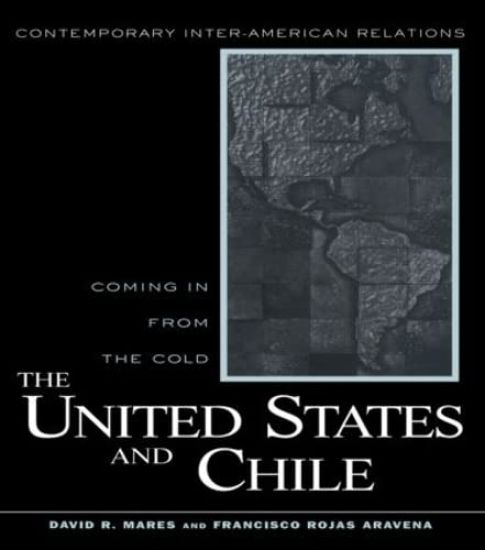
United States and Chile

United States and Chile

David R. Mares; Francisco Rojas Aravena

Routledge
2001
sidottu
The United States and Chile is the ideal introduction to U.S.- Chilean relations. From our strained Cold War relations and the Allende assassination to current democratic and economic development, senior scholars Mares and Aravena deftly trace the path of the relationship from early partners, through tense Cold War stand-offs, to the slowly warming relations of the present. The authors include information on General Augusto Pinochet's human rights violations, his current prosecution for them, and the United State's complicity in bringing him to power. Chile is only just now recovering from decades of political instability and government abuses, and this volume provides a thorough look back, and an informed vision of the future.
United States and Chile

United States and Chile

David R. Mares; Francisco Rojas Aravena

Routledge
2001
nidottu
The United States and Chile is the ideal introduction to U.S.- Chilean relations. From our strained Cold War relations and the Allende assassination to current democratic and economic development, senior scholars Mares and Aravena deftly trace the path of the relationship from early partners, through tense Cold War stand-offs, to the slowly warming relations of the present. The authors include information on General Augusto Pinochet's human rights violations, his current prosecution for them, and the United State's complicity in bringing him to power. Chile is only just now recovering from decades of political instability and government abuses, and this volume provides a thorough look back, and an informed vision of the future.
América Latina y el Caribe: Construyendo posiciones comunes en política exterior: Antecedentes para Centroamérica
La integraci n es una herramienta para enfrentar los desaf os internacionales de la globalizaci n, adem s de ser una b squeda constante por mejorar las condiciones para el desarrollo. Centroam rica debe buscar una integraci n efectiva y una inserci n global que le garantice acciones hacia un desarrollo sostenible. Los l deres democr ticos de la regi n han identificado la necesidad de converger en aras de la estabilidad, el crecimiento econ mico y el fortalecimiento de los procesos de integraci n regional a trav s de nuevas opciones. El presente documento ha sido elaborado por la Secretar a General de FLACSO, a petici n de la Secretar a General del SICA, partiendo de la premisa que el fin ltimo a alcanzar requiere de una construcci n gradual de los consensos necesarios entre los Estados Miembros del SICA, aprendiendo de otros procesos ya en curso e inventariando las bases ya existentes para emprender tal tarea. Los estudios que forman parte de este documento abarcan espec ficamente las experiencias y buenas pr cticas acumuladas por tres instancias regionales de integraci n o concertaci n: la Uni n Europea (UE), la Uni n Africana (UA) y la Comunidad del Caribe (CARICOM); un inventario y estudio de las acciones y/o posiciones en materia de pol tica exterior consignadas en las Declaraciones Presidenciales del SICA para el per odo 2000-2010; otro sobre las coincidencias y diferencias en las posiciones asumidas por los Estados Miembros del SICA en los distintos rganos de las Naciones Unidas en el per odo 2000-2010 y finalmente las coincidencias en la Pol tica Exterior de los Estados Miembros del SICA en la Organizaci n de Estados Americanos (OEA) para el periodo 2000- 2010.
América Latina y el Caribe: Relaciones Internacionales en el siglo XXI: Diplomacia de Cumbres y espacios de concertación regional y global
Frente a un nuevo contexto global con m ltiples actores y sin un multilateralismo efectivo, el sistema multilateral se encuentra hoy en d a en crisis. Esto se debe, en gran parte, a la crisis econ mico financiera que se vive desde el 2008; a menor atenci n de los Estados Unidos hacia Am rica Latina y otras regiones del mundo y su inercia unilateral; al bloqueo en el sistema de Naciones Unidas y a la baja legitimidad de instituciones emergentes que no logran dar gobernabilidad global. En Occidente se constatan cambios profundos e importantes, como lo es la profundizaci n de las relaciones de Am rica Latina, particularmente de Am rica del Sur, con la regi n Asia Pac fico; la consolidaci n de China como socio comercial estrat gico relevante para Am rica Latina desplazando a la Uni n Europea, entre otros. Adem s las revoluciones y cambios en los pa ses rabes y los cambios en frica reorientan prioridades y tendencias en Europa que sin duda repercuten en Am rica Latina. Esta publicaci n recoge las ideas centrales expuestas por destacados acad micos (as) acerca de los cambios globales y las distintas visiones de pa ses hegem nicos de la regi n y fuera de ella; as como acerca de las diplomacias de Cumbres como la de APEC, CELAC, de las Am ricas y la Uni n Europea y las ideas expuestas en torno a temas emergentes transnacionales como lo son el cambio clim tico, la seguridad, la gobernanza, la gobernabilidad y la integraci n. A su vez, se analizan los temas de seguridad y defensa de cara a los nuevos desaf os del siglo XXI y los actores relevantes en la pol tica exterior hemisf rica, tales como Canad , los Estados Unidos, M xico y Brasil. Finalmente, esta publicaci n cuenta con una reflexi n acerca de la visi n sobre los cambios que se han dado que contin an ocurriendo en el Sistema Internacional. Description in English] Latin America and the Caribbean: International Relations in the 21st Century Summit Diplomacy and Spaces of Regional and Global Agreement Faced with a new global context that has multiple actors but no effective multilateralism, the multilateral system is now in crisis. This is largely due to the economic and financial crisis underway since 2008; to the United States paying less attention to Latin America and other regions of the world and its unilateral inertia; and to the deadlock in the United Nations system and the reduced legitimacy of emerging institutions, which are unable to achieve global governability. In the West, profound and important changes are being witnessed, such as the deepening of relations between Latin America, particularly South America, and the Asia Pacific region, and China's consolidation as a significant strategic trading partner for Latin America, supplanting other partners like the European Union. In addition, the revolutions and transformations occurring in Arab countries and the changes taking place in Africa are reorienting priorities and trends in Europe that no doubt affect Latin America. This publication brings together the main ideas presented by prominent academics with regard to these global changes and the different visions of hegemonic countries within and beyond the region; and to summit diplomacies such as that of APEC, CELAC, the Americas and the EU; as well as the ideas presented in relation to emerging transnational issues such as climate change, security, governance, governability and integration. In turn, the issues of security and defense are analyzed in relation to the new challenges of the 21st century and the relevant actors within hemispheric foreign policy, including Canada, the United States, Mexico and Brazil. Lastly, this work contains a reflection on this view of the changes that continue to take place within the International System.
América Latina y el Caribe: Vínculos globales en un contexto multilateral complejo
Am rica Latina y el Caribe es una regi n diversa y heterog nea en un mundo en mutaci n. Las formas y tipos de inserci n internacional de sus pa ses responden a miradas pol tico estrat gicas distintas y eso se refleja en sus relaciones con otras regiones del mundo. La asociaci n para la cooperaci n aparece como una demanda efectiva para satisfacer los intereses nacionales y regionales tanto en la Uni n Europea como en Am rica Latina y el Caribe. Esa cooperaci n requiere establecer v nculos entre los diversos foros y procesos de coordinaci n, cooperaci n e integraci n multilateral, regional y birregional dentro de una l gica de gobernanza multinivel acorde con los cambios que conlleva la creciente multipolaridad. Para que la regi n latinoamericana y caribe a aumente su influencia en el nuevo multilateralismo en construcci n deber enfrentar un gran reto: construir una posici n com n en reas prioritarias, dise ando, adem s, un proyecto pol tico estrat gico que gu e su inserci n en el sistema internacional. En este sentido se observa en Am rica Latina la emergencia de nuevas formas de asociaci n a nivel intrarregional que se distinguen de los antiguos mecanismos de integraci n. Asimismo se desarrollan entre las naciones de la regi n y los pa ses y grupos de pa ses fuera del continente nuevas relaciones que muestran la forma en que Am rica Latina se est insertando en un sistema con m ltiples actores. Ejemplo de ello son los BRICS y el G-20. Description in English] Latin America and the Caribbean: Global Links in a Complex Multilateral Context Latin America and the Caribbean is a diverse and heterogeneous region in a transforming world. The forms and types of international insertion implemented by the region's countries correspond to different politico-strategic visions, and this is reflected in their relations with other regions of the world. Association for the sake of cooperation appears to be an effective demand for satisfying national and regional interests both in the European Union and in Latin America and the Caribbean. That cooperation requires the establishment of links between the different forums and processes of multilateral, regional and bi-regional coordination, cooperation and integration within a logic of multilevel governance that is in keeping with the changes brought about by increasing multi-polarity. In order for the Latin American and Caribbean region to increase its influence in the new multilateralism now being constructed, it must face an enormous challenge, which involves building a common position on priority areas, as well as putting together a politico-strategic project that can orient its insertion into the international system. Along these lines, Latin America is witnessing the emergence of new forms of association at the intra-regional level that differ from former integration mechanisms. Similarly, the new relationships being formed between the nations of the region and countries and groups of countries outside of the continent show how Latin America is becoming inserted into a system with multiple actors. Cases in point are the BRIC countries and the G-20.
América Latina y el Caribe: Confianza, ¿Un bien escaso?

América Latina y el Caribe: Confianza, ¿Un bien escaso?

Andrea Álvarez-Marín; Francisco Rojas Aravena

Teseo
2011
nidottu
La convivencia democr tica s lo es posible en un entorno de confianza. La confianza es el fundamento de toda relaci n social que no est sustentada en la fuerza. En contextos democr ticos recurrir a la imposici n es una pr ctica ileg tima y reprochable, por lo que se deben establecer relaciones diferentes, relaciones de confianza. La confianza aumenta las posibilidades de cooperaci n m s all de la interacci n con personas conocidas. Por otro lado, la confianza reduce los costos de transacci n en las relaciones sociales y agiliza la toma de decisiones. Es el punto de partida para la derivaci n de reglas para la conducta apropiada. La confianza act a como una columna vertebral en la interacci n de las personas, en la relaci n de los ciudadanos con el Estado y las instituciones, as como en la relaci n bilateral, regional o multilateral de los pa ses para hacerle frente a los desafios del acontecer mundial. Este libro forma parte del proyecto "Gobernabilidad y convivencia democr tica en Am rica Latina y el Caribe", el cual cuenta con el auspicio de la Agencia Espa ola de Cooperaci n Internacional para el Desarrollo (AECID). Los autores afirman que la confianza es un ingrediente clave para la consolidaci n de la gobernabilidad y la convivencia democr ticas. Cada uno desarrolla distintas dimensiones de la confianza, la confianza pol tica, la confianza acad mica, la confianza empresarial, la confianza diplom tica, la confianza militar y la confianza desde los pueblos originarios. Description in English] Latin America and the Caribbean: Trust, a scarce good? Democratic coexistence is only possible in an environment of trust. Trust is the foundation for any social relationship not based on force. In democratic contexts, resorting to imposition is an illegitimate and reprehensible practice, which is why it is necessary to establish different relationships - relationships of trust. Trust increases the chances of cooperation beyond interaction with prior acquaintances. In addition, trust reduces transaction costs in social relationships and speeds up decision making. It is the starting point for formulating rules on appropriate behavior. Trust acts as the backbone of interaction between people, and the relations between citizens and the State and institutions, as well as the bilateral, regional or multilateral relations established by countries to deal with the challenges posed by world events. This book forms part of the project entitled "Governability and Democratic Coexistence in Latin America and the Caribbean", sponsored by the Spanish Agency for International Development Cooperation (AECID). The authors contend that trust is a key ingredient in the consolidation of democratic governance and coexistence. Each looks at different dimensions of trust: political trust, academic trust, business-related trust, diplomatic trust, military trust and the trust of native peoples.
América Latina y el Caribe: Multilateralismo vs. Soberanía: La Construcción de la Comunidad de Estados Latinoamericanos y Caribeños
Los temas de car cter global que configuran la nueva agenda internacional obligan a las regiones y pa ses a dise ar respuestas coordinadas entre los Estados y entre estos y los actores no estatales. La regi n de Am rica Latina y el Caribe no est exenta de esto. Para enfrentar estos nuevos procesos y sus consecuencias nacionales y regionales se requiere de la asociaci n para la cooperaci n. Tanto en el mbito pol tico como en el econ mico, el multilateralismo global contin a en crisis. La necesidad de mayor cooperaci n demanda que deban superarse estas deficiencias y que se establezcan normas b sicas que busquen un bien com n, disminuyan el conflicto, y potencien la participaci n de los pa ses de la regi n. Los an lisis que se presentan en este libro desean contribuir al conocimiento y la construcci n de mejores formas de relacionamiento entre los pa ses de Am rica Latina y el Caribe a nivel intrarregional, y entre stos y el sistema internacional, partiendo de que la agenda latinoamericana en temas prioritarios es muy similar, los temas globales forman parte esencial de la agenda regional y que muchos temas hemisf ricos son "interm sticos" para todos, aunque con consecuencias muy diferentes. Sin embargo, la forma de resolverlos, prevenirlos, y a qui n se acude para trabajarlos, a n resulta muy dis mil. Description in English] Latin America and the Caribbean: Multilateralism versus Sovereignty Building the Community of Latin American and Caribbean States The issues of a global nature that make up the new international agenda force regions and countries to formulate responses coordinated between States, as well as between them and non-state actors. The region of Latin America and the Caribbean is no exception. Dealing with these new processes and their national and regional consequences requires association for the sake of cooperation. In both the political and economic arena, global multilateralism continues to be in crisis. The need for greater cooperation demands that these weaknesses be overcome and that basic rules be established to pursue the common good, reduce conflict and boost the participation of the countries in the region. The analyses presented in this book aim to contribute to the understanding and construction of better ways for the countries of Latin America and the Caribbean to relate to each other at the intra-regional level, and also to the international system. The starting point is that, on priority issues, the Latin American agenda is very similar, global issues form an essential part of the regional agenda and many hemispheric issues are 'intermestic' for all concerned. However, there is still a great deal of difference with regard to the way such issues are resolved and prevented, and whose responsibility this is deemed to be.
América Latina y el Caribe: Gobernabilidad Democrática: Política, Ciudadanía, Exclusión, Memoria y Demografía
A finales de la d cada de los setenta se inicia la tercera ola de la democracia. Am rica Latina rompi el ciclo pol tico que entre 1945-1978 produjo frecuentes oscilaciones entre reg menes democr ticos y autoritarios. Por primera vez algunos pa ses experimentaron los procesos democr ticos. A pesar de este hito hist rico, a n persisten amenazas para la consolidaci n democr tica. Los Estados deben enfrentar problemas de corrupci n, erosi n de los Estados de Derecho, altos niveles de impunidad, falta de transparencia en las acciones gubernamentales, as como altas tasas de desempleo, desigualdad, pobreza y violencia. Lo anterior se traduce en crecientes sentimientos anti-pol ticos y anti-democr ticos en la regi n. La necesidad de generar pol ticas p blicas en torno a la consolidaci n de la gobernabilidad democr tica es una de las razones por las cuales FLACSO est desarrollando el proyecto "Gobernabilidad y convivencia democr tica en Am rica Latina" con el auspicio de la Agencia Espa ola de Cooperaci n Internacional para el Desarrollo (AECID). Este libro se inserta en este proyecto y recoge los aportes de los Consejeros a Titulo Individual de la FLACSO. Los autores contribuyen con la generaci n de conocimiento sobre la gobernabilidad democr tica desde un enfoque interdisciplinario, desde la pol tica, la ciudadan a, la exclusi n, la memoria y la demograf a. Description in English] Latin America and the Caribbean: Democratic Governability Politics, Citizenship, Exclusion, Memory and Demography The late 1970s saw the beginning of the third wave of democracy. Latin America broke the political cycle that from 1945-1978 produced frequent oscillations between democratic and authoritarian regimes. Some countries experienced democratic processes for the first time. Despite this historic milestone, threats to democratic consolidation still persist. States must confront problems of corruption, the erosion of the rule of law, high levels of impunity, a lack of transparency in government actions, and high levels of unemployment, inequality, poverty and violence. This translates into increasing anti-political and anti-democratic feeling in the region. The need to generate public policies centered around the consolidation of democratic governability is one of the reasons why FLACSO is developing the project entitled "Governability and Democratic Coexistence in Latin America and the Caribbean", sponsored by the Spanish Agency for International Development Cooperation (AECID). This book is part of that project and brings together the contributions of the Independent Advisors to FLACSO. The authors contribute towards the generation of knowledge on democratic governability in an interdisciplinary approach, from the perspectives of politics, citizenship, exclusion, memory and demography.
América Latina y el Caribe: ¿Integrados o Marginados?

América Latina y el Caribe: ¿Integrados o Marginados?

Francisco Rojas Aravena; Tatiana Beirute Brealey; Josette Altmann Borbón

Teseo
2011
nidottu
La integraci n regional pasa por comprender la complementariedad y el trabajo conjunto, las visiones compartidas y el fin ltimo del bienestar de las poblaciones por encima de tensiones e ideolog as. Los retos del mundo actual, caracterizado por una amplia interdependencia, variados polos de poder y una reestructuraci n de las visiones respecto a la forma de combatir las nuevas amenazas, que tienen particularidades propias de la poca, exigen que Am rica Latina logre construir objetivos estrat gicos compartidos para que sus intereses sean escuchados en esta reconfiguraci n del sistema mundial. Am rica Latina no ha logrado establecer esta visi n de conjunto ante ninguno de los actores internacionales de mayor peso; sin embargo debe destacarse el desarrollo de nuevas formas de vincularse con stos en condiciones m s horizontales con algunos resultados exitosos. A nivel subregional es importante observar la creaci n de nuevos mecanismos o procesos de integraci n que buscan adaptarse y responder al contexto actual. A pesar de ellos pareciera que Am rica Latina en t rminos de integraci n regional ha logrado pocos avances concretos, tendencia que la creaci n de nuevas propuestas de integraci n necesariamente no resolver . Description in English]Latin America and the Caribbean: Integrated or Marginalized? Regional integration has to do with understanding complementarity and working together, with shared visions and the ultimate goal of putting the welfare of populations before tensions and ideologies. The challenges of today's world, characterized by a broad interdependence, varied hubs of power and a restructuring of visions on how to combat new threats, which have features particular to the age, require Latin America to succeed in building shared strategic objectives so that its interests are heard in this reconfiguration of the world system. Latin America has not managed to establish this joint vision in regard to any of the major international actors; however, it should be emphasized that new ways of relating to them in a more horizontal manner have been developed with some degree of success. At the sub-regional level it is important to observe the creation of new integration mechanisms or processes that seek to adapt and respond to the current context. In spite of this, it would appear that, in terms of regional integration, Latin America has achieved little concrete progress, a tendency that the creation of new integration initiatives will not necessarily resolve.
América Latina y el Caribe: Nuevas formas de Cooperación: Las Dimensiones Sur-Sur
La Cooperaci n Sur-Sur retoma su importancia. La alta heterogeneidad y las apremiantes necesidades de los pa ses de renta media, como los latinoamericanos, muestran que los flujos de ayuda internacional son insuficientes, pues se han desplazado en una importante proporci n a otras regiones del mundo. Adem s, dentro de estos pa ses se ha venido observando la disposici n en aumento de ser actores importantes en el proceso de cooperaci n para el desarrollo de otras naciones. Este libro busca aportar al an lisis de las formas en que las distintas modalidades de cooperaci n para el desarrollo que se observan en la regi n latinoamericana se est n manifestando y cu les son sus desafios y potencialidades en un contexto din mico y con retos complejos. Con las contribuciones de estos importantes autores y autoras el libro busca contribuir en la generaci n de conocimiento respecto al camino a seguir para lograr que la cooperaci n internacional, en cualquiera de sus modalidades, logre ser m s eficaz y contribuir de manera efectiva en el desarrollo de las naciones. Description in English] Latin America and the Caribbean: New forms of Cooperation South-South dimensions South-South cooperation has acquired renewed importance. The enormous heterogeneity and the pressing needs of middle income countries, like those of Latin America, demonstrate that international aid flows are insufficient, since they have largely shifted to other regions of the world. In addition, within these countries there has been an increasing willingness to be important actors in the cooperation process for the development of other nations. This book seeks to contribute to the analysis of the ways in which the different modalities of cooperation for development can be observed in the Latin American region and the challenges and potentialities they face in a dynamic and complex context. Through the contributions of these distinguished authors, the book aims to help generate knowledge on the path to follow to ensure that international cooperation, in any of its forms, is more efficacious and contributes more effectively to the development of nations.