Kirjojen hintavertailu. Mukana 12 390 323 kirjaa ja 12 kauppaa.

Kirjailija

Frank A. Sloan

Kirjat ja teokset yhdessä paikassa: 9 kirjaa, julkaisuja vuosilta 1992-2017, suosituimpien joukossa Insuring Medical Malpractice. Vertaile teosten hintoja ja tarkista saatavuus suomalaisista kirjakaupoista.

9 kirjaa

Kirjojen julkaisuhaarukka 1992-2017.

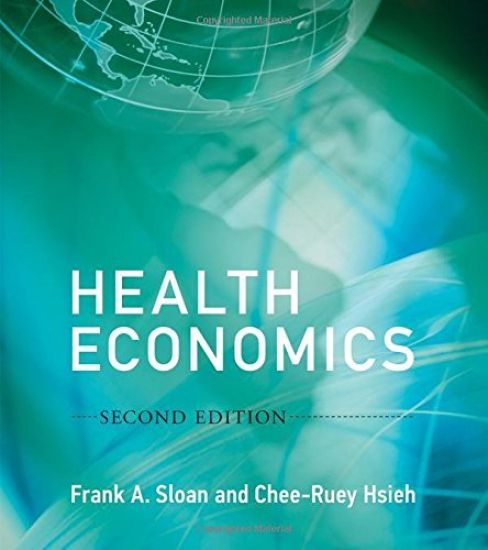
Health Economics

Health Economics

Frank A. Sloan; Chee-Ruey Hsieh

MIT Press
2017
sidottu
The new edition of a textbook that combines economic concepts with empirical evidence, updated with material on the Affordable Care Act and other developments.This book introduces students to the growing research field of health economics. Rather than offer details about health systems without providing a theoretical context, Health Economics combines economic concepts with empirical evidence to enhance readers' economic understanding of how health care institutions and markets function. The theoretical and empirical approaches draw heavily on the general field of applied microeconomics, but the text moves from the individual and firm level to the market level to a macroeconomic view of the role of health and health care within the economy as a whole. The book takes a global perspective, with description and analysis of institutional features of health sectors in countries around the world. This second edition has been updated to include material on the U.S. Patient Protection and Affordable Care Act, material on the expansion of health insurance in Massachusetts, and an evaluation of Oregon's Medicaid expansion via lottery. The discussion of health care and health insurance in China has been substantially revised to reflect widespread changes there. Tables and figures have been updated with newly available data. Also new to this edition is a discussion of the health economics literature published between 2010 and 2015. The text includes readings, extensive references, review and discussion questions, and exercises. A student solutions manual offers solutions to selected exercises. Downloadable supplementary material is available for instructors.
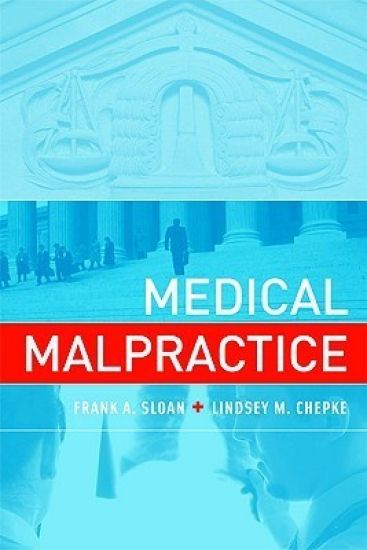
Medical Malpractice

Medical Malpractice

Frank A. Sloan; Lindsey M. Chepke

MIT Press
2010
pokkari
A comprehensive analysis of medical malpractice from legal, medical, economic, and insurance perspectives that considers why past efforts at reform have not worked and offers recommendations for realistic, achievable policy changes.Most experts would agree that the current medical malpractice system in the United States does not work effectively either to compensate victims fairly or prevent injuries caused by medical errors. Policy responses to a series of medical malpractice crises have not resulted in effective reform and have not altered the fundamental incentives of the stakeholders. In Medical Malpractice, economist Frank Sloan and lawyer Lindsey Chepke examine the U.S. medical malpractice process from legal, medical, economic, and insurance perspectives, analyze past efforts at reform, and offer realistic, achievable policy recommendations. They review the considerable empirical evidence in a balanced fashion and assess objectively what works in the current system and what does not. Sloan and Chepke argue that the complexity of medical malpractice stems largely from the interaction of the four discrete markets that determine outcomes-legal, medical malpractice insurance, medical care, and government activity. After describing what the evidence shows about the functioning of medical malpractice, types of defensive medicine, and the effects of past reforms, they examine such topics as scheduling damages as an alternative to flat caps, jury behavior, health courts, incentives to prevent medical errors, insurance regulation, reinsurance, no-fault insurance, and suggestions for future reforms. Medical Malpractice is the most comprehensive treatment of malpractice available, integrating findings from several different areas of research and describing them accessibly in nontechnical language. It will be an essential reference for anyone interested in medical malpractice.
The Law and Economics of Public Health

The Law and Economics of Public Health

Frank A. Sloan; Lindsey M. Chepke

now publishers Inc
2007
nidottu
The Law and Economics of Public Health synthesizes the empirical research findings on the relationship between law and the public's health that are found scattered in different literature ranging from economic journals to medical journals, journals on addictive behaviors, law reviews, and books. This is the only study to date that has assembled the empirical evidence from many areas ranging from motor vehicle liability and dram shop liability to medical malpractice, products liability as it applies to pharmaceutical products, and medical devices.The book addresses the fundamental question as to whether or not and the extent to which imposing tort liability on potential injurers improves the public's health. Does the threat of litigation on potential injurers make them exercise more caution? Does insurance coverage counter incentives to be careful? Does the tort system operate as perfectly as the theory would have it? This monograph answers these questions on the basis of empirical evidence. It discusses both theory and empirical evidence in several areas of personal injury to which tort liability has been applied.The monograph starts by describing the general law and economics framework used to assess both positive and normative issues relating to tort liability. It then presents the rationale for and empirical evidence on particular applications of tort liability as it applies to personal injury.
The Smoking Puzzle

The Smoking Puzzle

Frank A. Sloan; V. Kerry Smith; Donald H. Taylor

Harvard University Press
2003
sidottu
How do smokers evaluate evidence that smoking harms health? Some evidence suggests that smokers overestimate health risks from smoking. This book challenges this conclusion. The authors find that smokers tend to be overly optimistic about their longevity and future health if they quit later in life. Older adults' decisions to quit smoking require personal experience with the serious health impacts associated with smoking. Smokers over fifty revise their risk perceptions only after experiencing a major health shock--such as a heart attack. But less serious symptoms, such as shortness of breath, do not cause changes in perceptions. Waiting for such a jolt to occur is imprudent. The authors show that well-crafted messages about how smoking affects quality of life can greatly affect current perceptions of smoking risks. If smokers are informed of long-term consequences of a disease, and if they are told that quitting can indeed come too late, they are able to evaluate the risks of smoking more accurately, and act accordingly.
Drinkers, Drivers, and Bartenders

Drinkers, Drivers, and Bartenders

Frank A. Sloan; Emily M. Stout; Kathryn Whetten-Goldstein; Lan Liang

University of Chicago Press
2000
nidottu
According to the United States Public Health Service, over 100,000 deaths a year are attributable to alcohol, including 20,000 highway fatalities. In response, legislatures have enacted various forms of regulation intended both to reduce alcohol consumption and to curb its harmful effects. This study focuses on one such form of regulation, the liability imposed on alcohol servers and social hosts by tort law. Basing their analysis on important new data from their extensive research and in-depth interviews with actors on all sides of the issue, the authors conclude that, despite their relative unpopularity, tort laws are very effective in reducing accidents - even more than criminal sanctions. Extraordinary in scope and exacting in detail, "Drinkers, Drivers and Bartenders: Balancing Private Choices and Public Accountability" links alcohol problems, deterrence and serving practices in a way no other work has been able to do and is certain to become a crucial reference point for researchers and policymakers alike.
Drinkers, Drivers, and Bartenders

Drinkers, Drivers, and Bartenders

Frank A. Sloan; Emily M. Stout; Kathryn Whetten-Goldstein; Lan Liang

University of Chicago Press
2000
sidottu
According to the United States Public Health Service, over 100,000 deaths a year are attributable to alcohol, including 20,000 highway fatalities. In response, legislatures have enacted various forms of regulation intended both to reduce alcohol consumption and to curb its harmful effects. This groundbreaking study focuses on one such form of regulation, the liability imposed on alcohol servers and social hosts by tort law. Basing their analysis on important new data from their extensive research and in-depth interviews with actors on all sides of the issue, the authors conclude that, despite their relative unpopularity, tort laws are very effective in reducing accidents—even more than criminal sanctions. Extraordinary in scope and exacting in detail, Drinkers, Drivers, and Bartenders: Balancing Private Choices and Public Accountability links alcohol problems, deterrence, and serving practices in a way no other work has been able to do and is certain to become a crucial reference point for researchers and policymakers alike.
Suing for Medical Malpractice

Suing for Medical Malpractice

Frank A. Sloan; Penny B. Githens; Ellen Wright Clayton; Gerald B. Hickson

University of Chicago Press
1993
sidottu
Medical malpractice suits today can result in multi-million-dollar settlements, and a practicing physician can pay $100,000 or more annually for malpractice insurance. Some complain that lawyers and plaintiffs are overcompensated by exorbitant judgments that add to the rising cost of health care. But there has been very little evidence to show whether these arguments are true. In this timely work, six experts in health policy, law, and medicine study nearly 200 malpractice claims to show that, contrary to popular perceptions, victims of malpractice are not overcompensated and our legal system for dealing with malpractice claims is not defective. The authors survey claims filed in Florida between 1986 and 1989 by people who suffered permanent injury or death during birth or during treatment in an emergency room. How often did illegitimate claims result in financial awards? What was the relation between the injury and the amount the patient lost economically? How much did the plaintiffs actually recover? How did the claimants choose their lawyers and what kind of relationship did they have? Contrary to common perceptions, in the majority of cases the claims were merited, and the authors found that claimants were on average substantially undercompensated--only about one-fifth of plaintiffs recovered more than their economic loss caused by injury or death. The evidence in this book suggests that placing dollar limits on malpractice cases is unjustified and that our tort system is not so faulty after all.
Insuring Medical Malpractice

Insuring Medical Malpractice

Frank A. Sloan; Randall A. Bovbjerg; Penny B. Githens

Oxford University Press Inc
1992
sidottu
This book addresses a topic of great concern in the fields of medicine and medical economics. The cost of malpractice insurance to physicians has been increasing rapidly in recent years, and in some areas is not even available. The book describes and analyses, in a non-technical way, the workings of physicians' own liability insurance.