Kirjojen hintavertailu. Mukana 12 105 437 kirjaa ja 12 kauppaa.

Kirjailija

Frank B. Wilderson

Kirjat ja teokset yhdessä paikassa: 6 kirjaa, julkaisuja vuosilta 2010-2021, suosituimpien joukossa Ties that Bind. Vertaile teosten hintoja ja tarkista saatavuus suomalaisista kirjakaupoista.

6 kirjaa

Kirjojen julkaisuhaarukka 2010-2021.

Ties that Bind

Ties that Bind

Jon Soske; Shannon Walsh; Sisonke Msimang; Stacy Hardy; Lesego Rampolokeng; T. J. Tallie; Franco Barchiesi; Bridget Kenny; Daniel Magaziner; Neelika Jayawardane; Tsitsi Jaji; Mosa Phadi; Nomancotsho Pakade; Molemo Moiloa; Nare Mokgotho; Frank B. Wilderson

Wits University Press
2016
nidottu
What does friendship have to do with racial difference, settler colonialism and post-apartheid South Africa? While histories of apartheid and colonialism in South Africa have often focused on the ideologies of segregation and white supremacy, Ties that Bind explores how the intimacies of friendship create vital spaces for practices of power and resistance. Combining interviews, history poetry, visual arts, memoir and academic essay, the collection keeps alive the promise of friendship and its possibilities while investigating how affective relations are essential to the social reproduction of power. From the intimacy of personal relationships to the organising ideology of liberal colonial governance, the contributors explore the intersection of race and friendship from a kaleidoscope of viewpoints and scales. Insisting on a timeline that originates in settler colonialism, Ties that Bind uncovers the implication of anti-Blackness within nonracialism, and powerfully challenges a simple reading of the Mandela moment and the rainbow nation. In the wake of countrywide student protests calling for decolonization of the university, and reignited debates around racial inequality, this timely volume insists that the history of South African politics has always already been about friendship.Written in an accessible and engaging style, Ties that Bind will interest a wide audience of scholars, students, and activists, as well as general readers curious about contemporary South African debates around race and intimacy.
Afropessimism

Afropessimism

Frank B. Wilderson

WW Norton Co
2021
nidottu
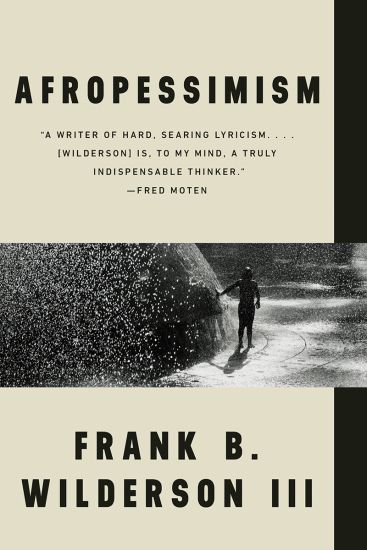
A seminal work that combines ground-breaking philosophy with searing flights of memoir, Afropessimism presents the tenets of an increasingly influential intellectual movement that theorises blackness through the lens of perpetual slavery. Rather than interpreting slavery through a Marxist framework of class oppression, Frank B. Wilderson III, demonstrates that the social construct of slavery is hardly a relic of the past but an almost necessary force in our civilisation that flourishes today, and that Black struggles cannot be conflated with the experiences of any other oppressed group. In mellifluous prose, he juxtaposes his seemingly idyllic Minneapolis upbringing with the harshness later encountered, whether in Berkeley or Soweto. Afropessimism reverberates with wisdom and painful clarity in the fractured world we inhabit.
Afropessimism

Afropessimism

Frank B. Wilderson

Liveright Publishing Corporation
2020
sidottu
A seminal work that combines ground-breaking philosophy with searing flights of memoir, Afropessimism presents the tenets of an increasingly influential intellectual movement that theorises blackness through the lens of perpetual slavery. Rather than interpreting slavery through a Marxist framework of class oppression, Frank B. Wilderson III, demonstrates that the social construct of slavery is hardly a relic of the past but an almost necessary force in our civilisation that flourishes today, and that Black struggles cannot be conflated with the experiences of any other oppressed group. In mellifluous prose, he juxtaposes his seemingly idyllic Minneapolis upbringing with the harshness later encountered, whether in Berkeley or Soweto. Afropessimism reverberates with wisdom and painful clarity in the fractured world we inhabit.
Incognegro

Incognegro

Frank B. Wilderson

Duke University Press
2015
pokkari
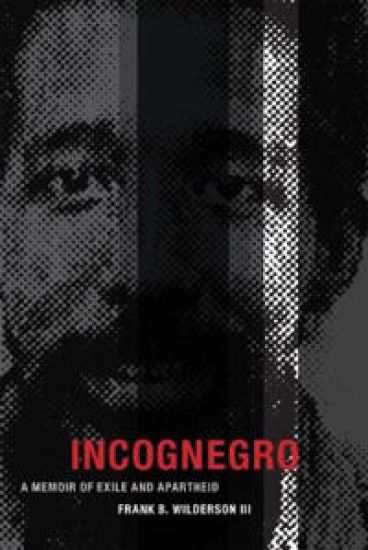
In 1995, a South African journalist informed Frank Wilderson, one of only two American members of the African National Congress (ANC), that President Nelson Mandela considered him "a threat to national security." Wilderson was asked to comment. Incognegro is that "comment." It is also his response to a question posed five years later in a California university classroom: "How come you came back?" Although Wilderson recollects his turbulent life as an expatriate during the furious last gasps of apartheid, Incognegro is at heart a quintessentially American story. During South Africa's transition, Wilderson taught at universities in Johannesburg and Soweto by day. By night, he helped the ANC coordinate clandestine propaganda, launch psychological warfare, and more. In this mesmerizing political memoir, Wilderson's lyrical prose flows from unspeakable dilemmas in the red dust and ruin of South Africa to his return to political battles raging quietly on US campuses and in his intimate life. Readers will find themselves suddenly overtaken by the subtle but resolute force of Wilderson's biting wit, rare vulnerability, and insistence on bearing witness to history no matter the cost.
Red, White & Black

Red, White & Black

Frank B. Wilderson

Duke University Press
2010
pokkari
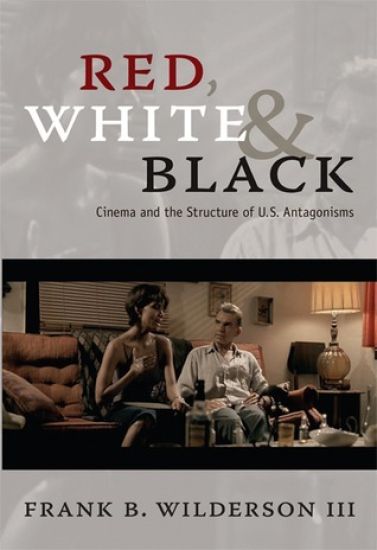
Red, White & Black is a provocative critique of socially engaged films and related critical discourse. Offering an unflinching account of race and representation, Frank B. Wilderson III asks whether such films accurately represent the structure of U.S. racial antagonisms. That structure, he argues, is based on three essential subject positions: that of the White (the “settler,” “master,” and “human”), the Red (the “savage” and “half-human”), and the Black (the “slave” and “non-human”). Wilderson contends that for Blacks, slavery is ontological, an inseparable element of their being. From the beginning of the European slave trade until now, Blacks have had symbolic value as fungible flesh, as the non-human (or anti-human) against which Whites have defined themselves as human. Just as slavery is the existential basis of the Black subject position, genocide is essential to the ontology of the Indian. Both positions are foundational to the existence of (White) humanity.Wilderson provides detailed readings of two films by Black directors, Antwone Fisher (Denzel Washington) and Bush Mama (Haile Gerima); one by an Indian director, Skins (Chris Eyre); and one by a White director, Monster’s Ball (Marc Foster). These films present Red and Black people beleaguered by problems such as homelessness and the repercussions of incarceration. They portray social turmoil in terms of conflict, as problems that can be solved (at least theoretically, if not in the given narratives). Wilderson maintains that at the narrative level, they fail to recognize that the turmoil is based not in conflict, but in fundamentally irreconcilable racial antagonisms. Yet, as he explains, those antagonisms are unintentionally disclosed in the films’ non-narrative strategies, in decisions regarding matters such as lighting, camera angles, and sound.
Red, White & Black

Red, White & Black

Frank B. Wilderson

Duke University Press
2010
sidottu
Red, White & Black is a provocative critique of socially engaged films and related critical discourse. Offering an unflinching account of race and representation, Frank B. Wilderson III asks whether such films accurately represent the structure of U.S. racial antagonisms. That structure, he argues, is based on three essential subject positions: that of the White (the “settler,” “master,” and “human”), the Red (the “savage” and “half-human”), and the Black (the “slave” and “non-human”). Wilderson contends that for Blacks, slavery is ontological, an inseparable element of their being. From the beginning of the European slave trade until now, Blacks have had symbolic value as fungible flesh, as the non-human (or anti-human) against which Whites have defined themselves as human. Just as slavery is the existential basis of the Black subject position, genocide is essential to the ontology of the Indian. Both positions are foundational to the existence of (White) humanity.Wilderson provides detailed readings of two films by Black directors, Antwone Fisher (Denzel Washington) and Bush Mama (Haile Gerima); one by an Indian director, Skins (Chris Eyre); and one by a White director, Monster’s Ball (Marc Foster). These films present Red and Black people beleaguered by problems such as homelessness and the repercussions of incarceration. They portray social turmoil in terms of conflict, as problems that can be solved (at least theoretically, if not in the given narratives). Wilderson maintains that at the narrative level, they fail to recognize that the turmoil is based not in conflict, but in fundamentally irreconcilable racial antagonisms. Yet, as he explains, those antagonisms are unintentionally disclosed in the films’ non-narrative strategies, in decisions regarding matters such as lighting, camera angles, and sound.