Kirjojen hintavertailu. Mukana 12 595 353 kirjaa ja 12 kauppaa.

Kirjailija

Frank E. Ritter

Kirjat ja teokset yhdessä paikassa: 4 kirjaa, julkaisuja vuosilta 2013-2021, suosituimpien joukossa Building Better Interfaces for Remote Autonomous Systems. Vertaile teosten hintoja ja tarkista saatavuus suomalaisista kirjakaupoista.

Mukana myös kirjoitusasut: Frank E Ritter

4 kirjaa

Kirjojen julkaisuhaarukka 2013-2021.

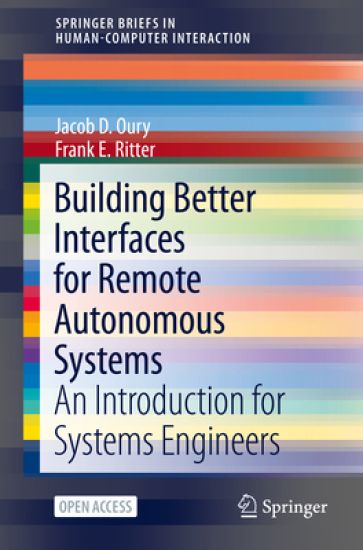
Building Better Interfaces for Remote Autonomous Systems

Building Better Interfaces for Remote Autonomous Systems

Jacob D. Oury; Frank E. Ritter

Springer Nature Switzerland AG
2021
nidottu
This 'Open Access' SpringerBrief provides foundational knowledge for designing autonomous, asynchronous systems and explains aspects of users relevant to designing for these systems, introduces principles for user-centered design, and prepares readers for more advanced and specific readings. It provides context and the implications for design choices made during the design and development of the complex systems that are part of operation centers. As such, each chapter includes principles to summarize the design implication that engineers can use to inform their own design of interfaces for operation centers and similar systems. It includes example materials for the design of a fictitious system, which are referenced in the book and can be duplicated and extended for real systems. The design materials include a system overview, the system architecture, an example scenario, a stakeholder analysis, a task analysis, a description of the system and interface technology, and contextualized design guidelines. The guidelines can be specified because the user, the task, and the technology are well specified as an example.Building Better Interfaces for Remote Autonomous Systems is for working system engineers who are designing interfaces used in high throughput, high stake, operation centers (op centers) or control rooms, such as network operation centers (NOCs). Intended users will have a technical undergraduate degree (e.g., computer science) with little or no training in design, human sciences, or with human-centered iterative design methods and practices. Background research for the book was supplemented by interaction with the intended audience through a related project with L3Harris Technologies (formerly Harris Corporation).

Skills to Obstruct Pandemics

Skills to Obstruct Pandemics

Frank E Ritter; Amanda C Clase; Stephanie Leigh Harvill

Sunbury Press, Inc.
2020
pokkari
COVID-19 is disrupting life around the world. People in every country are forced to adjust their lives and protect themselves and loved ones from this sweeping pandemic. But the concept of a pandemic is not new. No matter the outcome of this strain of coronavirus, a pandemic can always hit.So what can you do to better understand COVID-19 and similar infections?SKILLS TO OBSTRUCT PANDEMICS is a short but comprehensive how-to guide for people who want to protect themselves and others in current and future pandemics. These strategies can be done by everyone, and the language in STOP is easy to read without prior medical knowledge. It offers practical information and actionable daily practices to help flatten the curve. This is not a first-aid kit to treat COVID-19; it's a zeroth-aid kit to help you avoid it.The author team includes MDs, RNs, and PhDs with knowledge of medicine, nursing, public health and disaster medicine, and learning theory. The people who reviewed it included further MDs, nurses, a psychologist, and a nutritionist.This book includes: A quiz at the end of each section to help you retain information and begin healthy practicesInformation on how COVID-19 transmits through the airDaily strategies to help you avoid coronavirus and live in quarantineUseful resources for external reading on important topicsAccess to an online tutor to help you understand how viruses spread and how to stop itAll references included as an easy to access websiteAnd much more
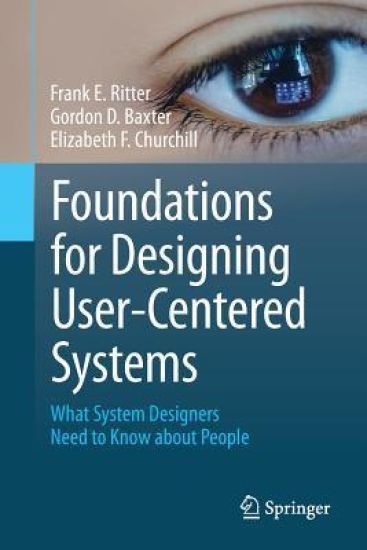
Foundations for Designing User-Centered Systems

Foundations for Designing User-Centered Systems

Frank E. Ritter; Gordon D. Baxter; Elizabeth F. Churchill

Springer London Ltd
2014
nidottu
Foundations for Designing User-Centered Systems introduces the fundamental human capabilities and characteristics that influence how people use interactive technologies. Organized into four main areas—anthropometrics, behaviour, cognition and social factors—it covers basic research and considers the practical implications of that research on system design. Applying what you learn from this book will help you to design interactive systems that are more usable, more useful and more effective.The authors have deliberately developed Foundations for Designing User-Centered Systems to appeal to system designers and developers, as well as to students who are taking courses in system design and HCI. The book reflects the authors’ backgrounds in computer science, cognitive science, psychology and human factors. The material in the book is based on their collective experience which adds up to almost 90 years of working in academia and both with, and within, industry;covering domains that include aviation, consumer Internet, defense, eCommerce, enterprise system design, health care, and industrial process control.
Running Behavioral Studies With Human Participants

Running Behavioral Studies With Human Participants

Frank E. Ritter; Jong W. Kim; Jonathan H. Morgan; Richard A. (Alan) Carlson

SAGE Publications Inc
2013
nidottu
Running Behavioral Experiments With Human Participants: A Practical Guide provides a concrete, practical roadmap for the implementation of experiments and controlled observation using human participants. Covering both conceptual and practical issues critical to implementing an experiment, the book is organized to follow the standard process in experiment-based research, covering such issues as potential ethical problems, risks to validity, experimental setup, running a study, and concluding a study. The detailed guidance on each step of an experiment is ideal for those in both universities and industry who have had little or no previous practical training in research methodology. The book provides example scenarios to help readers organize how they run experimental studies and anticipate problems, and example forms that can serve as effective initial "recipes." Examples and forms are drawn from areas such as cognitive psychology, human factors, human–computer interaction, and human–robotic interaction.