Kirjojen hintavertailu. Mukana 12 595 353 kirjaa ja 12 kauppaa.

Kirjailija

Frank Graziano

Kirjat ja teokset yhdessä paikassa: 8 kirjaa, julkaisuja vuosilta 1999-2019, suosituimpien joukossa Wounds of Love. Vertaile teosten hintoja ja tarkista saatavuus suomalaisista kirjakaupoista.

8 kirjaa

Kirjojen julkaisuhaarukka 1999-2019.

Historic Churches of New Mexico Today

Historic Churches of New Mexico Today

Frank Graziano

Oxford University Press Inc
2019
sidottu
This interpretive guide combines history and ethnography to represent living traditions at the adobe and stone churches of New Mexico. Each chapter treats a particular church or group of churches and includes photographs, practical information for visitors, and context pertinent to current understanding. Frank Graziano provides unprecedented coverage of the churches by combining his extensive fieldwork with research in archives and previous scholarship. The book is written in an engaging narrative prose that brings the reader inside of congregations in Indian and Hispanic villages. The focus is less on church buildings than on people in relation to churches -- parishioners, caretakers, priests, restorers -- and on the author's experiences researching among them.
Historic Churches of New Mexico Today

Historic Churches of New Mexico Today

Frank Graziano

Oxford University Press Inc
2019
nidottu
This interpretive guide combines history and ethnography to represent living traditions at the adobe and stone churches of New Mexico. Each chapter treats a particular church or group of churches and includes photographs, practical information for visitors, and context pertinent to current understanding. Frank Graziano provides unprecedented coverage of the churches by combining his extensive fieldwork with research in archives and previous scholarship. The book is written in an engaging narrative prose that brings the reader inside of congregations in Indian and Hispanic villages. The focus is less on church buildings than on people in relation to churches -- parishioners, caretakers, priests, restorers -- and on the author's experiences researching among them.
Miraculous Images and Votive Offerings in Mexico

Miraculous Images and Votive Offerings in Mexico

Frank Graziano

Oxford University Press Inc
2016
nidottu
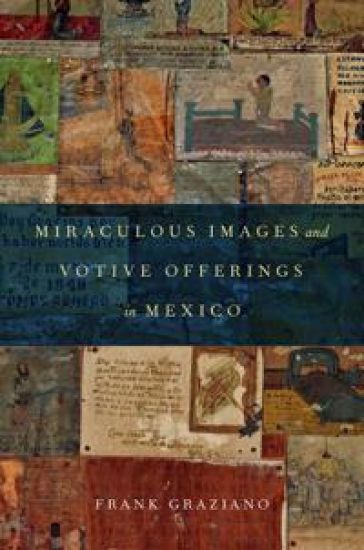
Mexican statues and paintings of figures like the Virgin of Guadalupe and the Lord of Chalma are endowed with sacred presence and the power to perform miracles. Millions of devotees visit these miraculous images to request miracles for health, employment, children, and countless everyday matters. When requests are granted, devotees reciprocate with votive offerings. Collages, photographs, documents, texts, milagritos, hair and braids, clothing, retablos, and other representative objects cover walls at many shrines. Miraculous Images and Votive Offerings in Mexico studies such petitionary devotion--primarily through extensive fieldwork at several shrines in Guanajuato, Jalisco, Querétaro, San Luis Potosí, and Zacatecas. Graziano is interested in retablos not only as extraordinary works of folk art but: as Mexican expressions of popular Catholicism comprising a complex of beliefs, rituals, and material culture; as archives of social history; and as indices of a belief system that includes miraculous intercession in everyday life. Previous studies focus almost exclusively on commissioned votive paintings, but Graziano also considers the creative ex votos made by the votants themselves. Among the many miraculous images treated in the book are the Cristo Negro de Otatitlán, Niño del Cacahuatito, Señor de Chalma, and the Virgen de Guadalupe. The book is written in two voices, one analytical to provide an understanding of miracles, miraculous images, and votive offerings, and the other narrative to bring the reader closer to lived experiences at the shrines. This book appears at a moment of transition, when retablos are disappearing from church walls and beginning to appear in museum exhibitions; when the artistic value of retablos is gaining prominence; when the commercial value of retablos is increasing, particularly among private collectors outside of Mexico; and when traditional retablo painters are being replaced by painters with a more commercial and less religious approach to their trade. Graziano's book thus both records a disappearing tradition and charts the way in which it is being transformed.
Miraculous Images and Votive Offerings in Mexico

Miraculous Images and Votive Offerings in Mexico

Frank Graziano

Oxford University Press Inc
2016
sidottu
Mexican statues and paintings of figures like the Virgin of Guadalupe and the Lord of Chalma are endowed with sacred presence and the power to perform miracles. Millions of devotees visit these miraculous images to request miracles for health, employment, children, and countless everyday matters. When requests are granted, devotees reciprocate with votive offerings. Collages, photographs, documents, texts, milagritos, hair and braids, clothing, retablos, and other representative objects cover walls at many shrines. Miraculous Images and Votive Offerings in Mexico studies such petitionary devotion--primarily through extensive fieldwork at several shrines in Guanajuato, Jalisco, Querétaro, San Luis Potosí, and Zacatecas. Graziano is interested in retablos not only as extraordinary works of folk art but: as Mexican expressions of popular Catholicism comprising a complex of beliefs, rituals, and material culture; as archives of social history; and as indices of a belief system that includes miraculous intercession in everyday life. Previous studies focus almost exclusively on commissioned votive paintings, but Graziano also considers the creative ex votos made by the votants themselves. Among the many miraculous images treated in the book are the Cristo Negro de Otatitlán, Niño del Cacahuatito, Señor de Chalma, and the Virgen de Guadalupe. The book is written in two voices, one analytical to provide an understanding of miracles, miraculous images, and votive offerings, and the other narrative to bring the reader closer to lived experiences at the shrines. This book appears at a moment of transition, when retablos are disappearing from church walls and beginning to appear in museum exhibitions; when the artistic value of retablos is gaining prominence; when the commercial value of retablos is increasing, particularly among private collectors outside of Mexico; and when traditional retablo painters are being replaced by painters with a more commercial and less religious approach to their trade. Graziano's book thus both records a disappearing tradition and charts the way in which it is being transformed.
Undocumented Dominican Migration

Undocumented Dominican Migration

Frank Graziano

University of Texas Press
2013
nidottu
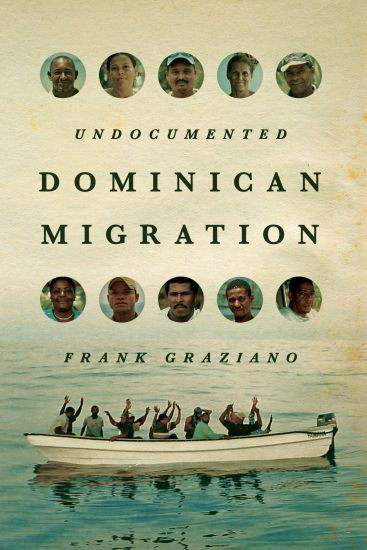
Undocumented Dominican Migration is the first comprehensive study of boat migration from the Dominican Republic to Puerto Rico. It brings together the interactive global, cultural, and personal factors that induce thousands of Dominicans to journey across the Mona Passage in attempts to escape chronic poverty. The book provides in-depth treatment of decision-making, experiences at sea, migrant smuggling operations, and U.S. border enforcement. It also explores several topics that are rare in migration studies. These include the psychology of migrant motivation, religious beliefs, corruption and impunity, procreation and parenting, compulsive recidivism after failed attempts, social values in relation to law, marriage fraud, and the use of false documents for air travel from Puerto Rico to the mainland United States.Frank Graziano’s extensive fieldwork among migrants, smugglers, and federal agencies provides an authority and immediacy that brings the reader close to the migrants’ experiences. The exhaustive research and multidisciplinary approach, highly readable narrative, and focus on lesser-known emigrants make Undocumented Dominican Migration an essential addition to public and academic debates about migration.
Cultures of Devotion

Cultures of Devotion

Frank Graziano

Oxford University Press Inc
2006
sidottu
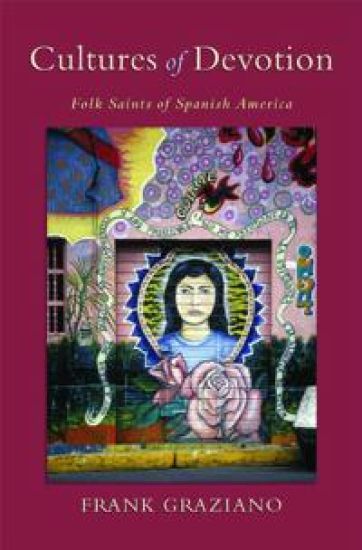
Spanish America has produced numerous "folk saints" -- venerated figures regarded as miraculous but not officially recognized by the Catholic Church. Some of these have huge national cults with hundreds -- perhaps millions -- of devotees. In this book Frank Graziano prvides the first overview in any language of these saints, offering in-depth studies of the beliefs, rituals, and devotions surrounding seven representative figures. These case studies are illuminated by comparisons to some hundred additional saints from contemporary Spanish America. Among the six primary cases are Difunta Correa, at whose shrines devotees offer bottles of water and used auto parts in commemoration of her tragic death in the Argentinian desert. Gaucho Gil is only one of many gaucho saints, whose characteristic narrative involves political injustice and Robin-Hood crimes on behalf of the exploited people. The widespread cult of the Mexican saint Nino Fidencio is based on faith healing performed by devotees who channel his powers. Nino Compadrito is an elegantly dressed skeleton of a child, whose miraculous powers are derived in part from an Andean belief in the power of the skull of one who has suffered a tragic death. Graziano draws upon site visits and extensive interviews with devotees, archival material, media reports, and documentaries to produce vivid portraits of these fascinating popular movements. In the process he sheds new light on the often fraught relationship between orthodox Catholicism and folk beliefs and on an important and little-studied facet of the dynamic culture of contemporary Spanish America.
Wounds of Love

Wounds of Love

Frank Graziano

Oxford University Press Inc
2004
sidottu
St. Rose of Lima (Isabel Flores y Oliva, 1586-1617) was canonized in 1671 as the first saint of the New World and Patron of the Americas. In this engrossing new biography, Frank Graziano offers the most comprehensive examination of the life of Rose to appear in any language. An obscure, self-mortifying mystic, Rose seems a strange choice for the distinction of first American saint. Graziano argues that the cult that grew up around St. Rose during her life and greatly expanded after her death was seen by both Church and State as a challenge and even a threat to authority. For that reason, he contends, the Church acted quickly to render her harmless by "bringing her into the fold." Graziano goes on to consider Rose's ascetic Christianity in its cultural context. He seeks to discover why the severe austerities and mortifications of female piety that today are regarded as psychopathological were lauded as exemplary means of worship in the seventeenth century. In fact, he shows, St. Rose's behavior and experiences were initially regarded as pathological by many significant observers within her own culture, but such assessments were gradually dismissed as her saintly image was constructed. Drawing on key archival sources and the insights offered by psychoanalytic theory, Graziano constructs a compelling portrait of one of the Catholic Church's most beloved saints.
The Millennial New World

The Millennial New World

Frank Graziano

Oxford University Press Inc
1999
sidottu
The approach of the year 2000 has created a surge of popular interest in millennialism--the idea that something climactic will happen at the turn of the millennium. But millennialism in the broader sense, comprising apocalyptic, messianic, and utopian ideologies and movements, has long been of intense interest to scholars of history and religion. Much has been written about millennialism in the U.S. and its European roots. Although it is widely recognized that millennialism is also endemic to Latin America, however, until now there has been no systematic study of this phenomenon as it has flourished in that part of the world. Frank Graziano here offers the first such study, examining Latin American millennialism from the Pre-Columbian period up to the present. Organizing his work thematically, he introduces a fascinating array of movements, ideas, and figures, from the legendary Aztec culture hero Quetzalcoatl (whose expected return led to Montezuma's initial acceptance of Cortez) to the contemporary Peruvian rebels of the Shining Path and their messianic leader Abimael Guzman. Along the way he provides a comprehensive overview of indigenous efforts to eliminate the Spaniards and their culture and restore a remembered pre-colonial utopia, offering exampes from the Andes, the Tarahumara of Northern Mexico, the Yucatan Maya and others. Christian millennialism and its descendants also appear in many forms, from the Franciscan missionary attempt to recreate the Primitive Church in the New World, to Liberation Theology and the "Jesus of the Poor" of contemporary Nicaragua. Throughout the book, Graziano argues that millennialism in Latin America has roots in all three of the major cultural sources--native American, European, and African--that have come together to constitute Latin American culture, and he skillfully traces the subtle blendings and mutual influences among these millennial traditions. The result, he shows, is not just a mixture of existing ideas but a fusion exhibiting elements of real originality.