Kirjojen hintavertailu. Mukana 12 394 031 kirjaa ja 12 kauppaa.

Kirjailija

Frank J. Fabozzi

Kirjat ja teokset yhdessä paikassa: 78 kirjaa, julkaisuja vuosilta 1995-2026, suosituimpien joukossa Equipment Leasing. Vertaile teosten hintoja ja tarkista saatavuus suomalaisista kirjakaupoista.

Mukana myös kirjoitusasut: Frank J Fabozzi

78 kirjaa

Kirjojen julkaisuhaarukka 1995-2026.

Project Financing: Analyzing And Structuring Projects

Project Financing: Analyzing And Structuring Projects

Carmel De Nahlik; Frank J Fabozzi

World Scientific Publishing Co Pte Ltd
2021
sidottu
This book covers the project financing process from the perspective of a wider and more general group of stakeholders by addressing the three key elements of cash flow; collateral/support structures; and risk management. Following a detailed description of project financing in the first chapter, the authors discuss the project financing process, modelling and risk management, public private partnerships and project financing in practice including the use of the principles in a range of different contexts. A sound understanding of project management is fundamental to successful project financing, as is the need to have a clear plan for a project to communicate the essential information that different stakeholders require.A successful project financing starts with the different phases of a project and descriptions of the key risk areas include the challenges in estimating the cost of a project and the general principles of financial modelling with a discussion of the unique aspects of financial modelling for different industries. Throughout the book, short recent international case studies are used to illustrate successful and unsuccessful projects allowing the lessons learned to be visible and there are many examples of specific applications of project finance techniques throughout the text.
Asset Management: Tools And Issues

Asset Management: Tools And Issues

Frank J Fabozzi; Francesco A Fabozzi; Marcos Lopez De Prado; Stoyan V Stoyanov

World Scientific Publishing Co Pte Ltd
2021
sidottu
Long gone are the times when investors could make decisions based on intuition. Modern asset management draws on a wide-range of fields beyond financial theory: economics, financial accounting, econometrics/statistics, management science, operations research (optimization and Monte Carlo simulation), and more recently, data science (Big Data, machine learning, and artificial intelligence). The challenge in writing an institutional asset management book is that when tools from these different fields are applied in an investment strategy or an analytical framework for valuing securities, it is assumed that the reader is familiar with the fundamentals of these fields. Attempting to explain strategies and analytical concepts while also providing a primer on the tools from other fields is not the most effective way of describing the asset management process. Moreover, while an increasing number of investment models have been proposed in the asset management literature, there are challenges and issues in implementing these models. This book provides a description of the tools used in asset management as well as a more in-depth explanation of specialized topics and issues covered in the companion book, Fundamentals of Institutional Asset Management. The topics covered include the asset management business and its challenges, the basics of financial accounting, securitization technology, analytical tools (financial econometrics, Monte Carlo simulation, optimization models, and machine learning), alternative risk measures for asset allocation, securities finance, implementing quantitative research, quantitative equity strategies, transaction costs, multifactor models applied to equity and bond portfolio management, and backtesting methodologies. This pedagogic approach exposes the reader to the set of interdisciplinary tools that modern asset managers require in order to extract profits from data and processes.
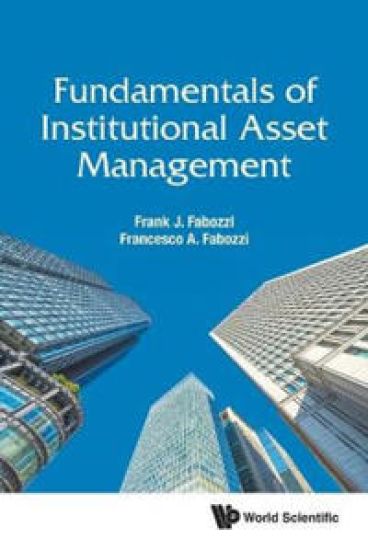
Fundamentals Of Institutional Asset Management

Fundamentals Of Institutional Asset Management

Frank J Fabozzi; Francesco A Fabozzi

World Scientific Publishing Co Pte Ltd
2020
nidottu
This book provides the fundamentals of asset management. It takes a practical perspective in describing asset management. Besides the theoretical aspects of investment management, it provides in-depth insights into the actual implementation issues associated with investment strategies. The 19 chapters combine theory and practice based on the experience of the authors in the asset management industry. The book starts off with describing the key activities involved in asset management and the various forms of risk in managing a portfolio. There is then coverage of the different asset classes (common stock, bonds, and alternative assets), collective investment vehicles, financial derivatives, common stock analysis and valuation, bond analytics, equity beta strategies (including smart beta), equity alpha strategies (including quantitative/systematic strategies), bond indexing and active bond portfolio strategies, and multi-asset strategies. The methods of using financial derivatives (equity derivatives, interest rate derivatives, and credit derivatives) in managing the risks of a portfolio are clearly explained and illustrated.
Fundamentals Of Institutional Asset Management

Fundamentals Of Institutional Asset Management

Frank J Fabozzi; Francesco A Fabozzi

World Scientific Publishing Co Pte Ltd
2020
sidottu
This book provides the fundamentals of asset management. It takes a practical perspective in describing asset management. Besides the theoretical aspects of investment management, it provides in-depth insights into the actual implementation issues associated with investment strategies. The 19 chapters combine theory and practice based on the experience of the authors in the asset management industry. The book starts off with describing the key activities involved in asset management and the various forms of risk in managing a portfolio. There is then coverage of the different asset classes (common stock, bonds, and alternative assets), collective investment vehicles, financial derivatives, common stock analysis and valuation, bond analytics, equity beta strategies (including smart beta), equity alpha strategies (including quantitative/systematic strategies), bond indexing and active bond portfolio strategies, and multi-asset strategies. The methods of using financial derivatives (equity derivatives, interest rate derivatives, and credit derivatives) in managing the risks of a portfolio are clearly explained and illustrated.
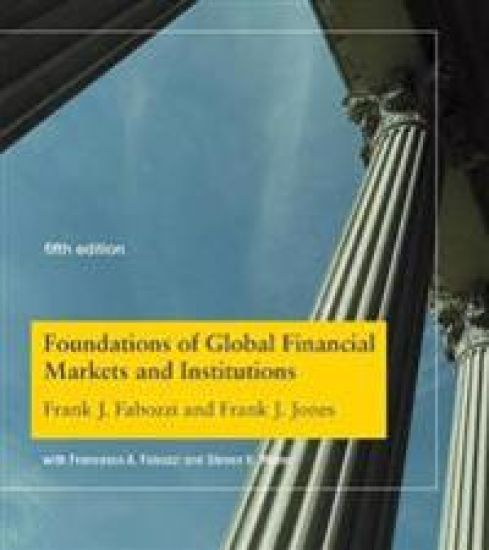
Foundations of Global Financial Markets and Institutions

Foundations of Global Financial Markets and Institutions

Frank J. Fabozzi; Frank J. Jones

MIT Press
2019
sidottu
A thoroughly revised and updated edition of a textbook for graduate students in finance, with new coverage of global financial institutions.This thoroughly revised and updated edition of a widely used textbook for graduate students in finance now provides expanded coverage of global financial institutions, with detailed comparisons of U.S. systems with non-U.S. systems. A focus on the actual practices of financial institutions prepares students for real-world problems.After an introduction to financial markets and market participants, including asset management firms, credit rating agencies, and investment banking firms, the book covers risks and asset pricing, with a new overview of risk; the structure of interest rates and interest rate and credit risks; the fundamentals of primary and secondary markets; government debt markets, with new material on non-U.S. sovereign debt markets; corporate funding markets, with new coverage of small and medium enterprises and entrepreneurial ventures; residential and commercial real estate markets; collective investment vehicles, in a chapter new to this edition; and financial derivatives, including financial futures and options, interest rate derivatives, foreign exchange derivatives, and credit risk transfer vehicles such as credit default swaps. Each chapter begins with learning objectives and ends with bullet point takeaways and questions.
Recent Evidence on the Distribution Patterns in Chapter 11 Reorganizations
This work has been selected by scholars as being culturally important, and is part of the knowledge base of civilization as we know it. This work was reproduced from the original artifact, and remains as true to the original work as possible. Therefore, you will see the original copyright references, library stamps (as most of these works have been housed in our most important libraries around the world), and other notations in the work.This work is in the public domain in the United States of America, and possibly other nations. Within the United States, you may freely copy and distribute this work, as no entity (individual or corporate) has a copyright on the body of the work.As a reproduction of a historical artifact, this work may contain missing or blurred pages, poor pictures, errant marks, etc. Scholars believe, and we concur, that this work is important enough to be preserved, reproduced, and made generally available to the public. We appreciate your support of the preservation process, and thank you for being an important part of keeping this knowledge alive and relevant.
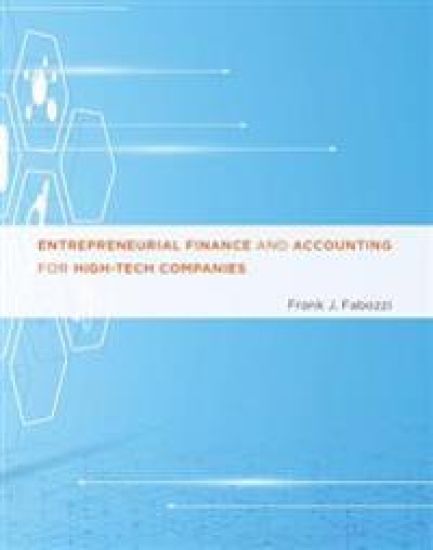
Entrepreneurial Finance and Accounting for High-Tech Companies
Financial aspects of launching and operating a high-tech company, including risk analysis, business models, U.S. securities law, financial accounting, tax issues, and stock options, explained accessibly.This book offers an accessible guide to the financial aspects of launching and operating a high-tech business in such areas as engineering, computing, and science. It explains a range of subjects-from risk analysis to stock incentive programs for founders and key employees-for students and aspiring entrepreneurs who have no prior training in finance or accounting.The book begins with the rigorous analysis any prospective entrepreneur should undertake before launching a business, covering risks associated with a new venture, the reasons startup companies fail, and the stages of financing. It goes on to discuss business models and their components, business plans, and exit planning; forms of business organization, and factors to consider in choosing one; equity allocation to founders and employees; applicable U.S. securities law; and sources of equity capital. The book describes principles of financial accounting, the four basic financial statements, and financial ratios useful in assessing management performance. It also explains financial planning and the use of budgets; profit planning; stock options and other option-type awards; methodologies for valuing a private company; economic assessment of a potential investment project; and the real options approach to risk and managerial flexibility. Appendixes offer case studies of Uber and of the valuation of Tentex.
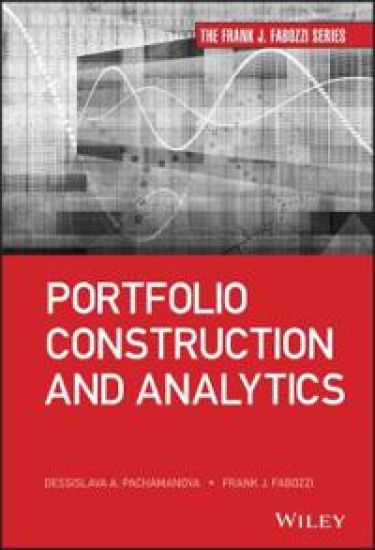
Portfolio Construction and Analytics

Portfolio Construction and Analytics

Frank J. Fabozzi; Dessislava A. Pachamanova

John Wiley Sons Inc
2016
sidottu
A detailed, multi-disciplinary approach to investment analytics Portfolio Construction and Analytics provides an up-to-date understanding of the analytic investment process for students and professionals alike. With complete and detailed coverage of portfolio analytics and modeling methods, this book is unique in its multi-disciplinary approach. Investment analytics involves the input of a variety of areas, and this guide provides the perspective of data management, modeling, software resources, and investment strategy to give you a truly comprehensive understanding of how today's firms approach the process. Real-world examples provide insight into analytics performed with vendor software, and references to analytics performed with open source software will prove useful to both students and practitioners. Portfolio analytics refers to all of the methods used to screen, model, track, and evaluate investments. Big data, regulatory change, and increasing risk is forcing a need for a more coherent approach to all aspects of investment analytics, and this book provides the strong foundation and critical skills you need. Master the fundamental modeling concepts and widely used analyticsLearn the latest trends in risk metrics, modeling, and investment strategiesGet up to speed on the vendor and open-source software most commonly usedGain a multi-angle perspective on portfolio analytics at today's firms Identifying investment opportunities, keeping portfolios aligned with investment objectives, and monitoring risk and performance are all major functions of an investment firm that relies heavily on analytics output. This reliance will only increase in the face of market changes and increased regulatory pressure, and practitioners need a deep understanding of the latest methods and models used to build a robust investment strategy. Portfolio Construction and Analytics is an invaluable resource for portfolio management in any capacity.
Investing in Mortgage-Backed and Asset-Backed Securities, + Website

Investing in Mortgage-Backed and Asset-Backed Securities, + Website

Glenn M. Schultz; Frank J. Fabozzi

John Wiley Sons Inc
2016
sidottu
A complete guide to investing in and managing a portfolio of mortgage- and asset-backed securities Mortgage- and asset-backed securities are not as complex as they might seem. In fact, all of the information, financial models, and software needed to successfully invest in and manage a portfolio of these securities are available to the investment professional through open source software. Investing in Mortgage and Asset-Backed Securities + Website shows you how to achieve this goal. The book draws entirely on publicly available data and open source software to construct a complete analytic framework for investing in these securities. The analytic models used throughout the book either exist in the quantlib library, as an R package, or are programmed in R and incorporated into the analytic framework used. Examines the valuation of fixed-income securities—metrics, valuation framework, and return analysisCovers residential mortgage-backed securities—security cash flow, mortgage dollar roll, adjustable rate mortgages, and private label MBSDiscusses prepayment modeling and the valuation of mortgage creditPresents mortgage-backed securities valuation techniques—pass-through valuation and interest rate models Engaging and informative, this book skillfully shows you how to build, rather than buy, models and proprietary analytical platforms that will allow you to invest in mortgage- and asset-backed securities.
Robust Equity Portfolio Management, + Website

Robust Equity Portfolio Management, + Website

Woo Chang Kim; Jang Ho Kim; Frank J. Fabozzi

John Wiley Sons Inc
2016
sidottu
A comprehensive portfolio optimization guide, with provided MATLAB code Robust Equity Portfolio Management + Website offers the most comprehensive coverage available in this burgeoning field. Beginning with the fundamentals before moving into advanced techniques, this book provides useful coverage for both beginners and advanced readers. MATLAB code is provided to allow readers of all levels to begin implementing robust models immediately, with detailed explanations and applications in the equity market included to help you grasp the real-world use of each technique. The discussion includes the most up-to-date thinking and cutting-edge methods, including a much-needed alternative to the traditional Markowitz mean-variance model. Unparalleled in depth and breadth, this book is an invaluable reference for all risk managers, portfolio managers, and analysts. Portfolio construction models originating from the standard Markowitz mean-variance model have a high input sensitivity that threatens optimization, spawning a flurry of research into new analytic techniques. This book covers the latest developments along with the basics, to give you a truly comprehensive understanding backed by a robust, practical skill set. Get up to speed on the latest developments in portfolio optimizationImplement robust models using provided MATLAB codeLearn advanced optimization methods with equity portfolio applicationsUnderstand the formulations, performances, and properties of robust portfolios The Markowitz mean-variance model remains the standard framework for portfolio optimization, but the interest in—and need for—an alternative is rapidly increasing. Resolving the sensitivity issue and dramatically reducing portfolio risk is a major focus of today's portfolio manager. Robust Equity Portfolio Management + Website provides a viable alternative framework, and the hard skills to implement any optimization method.
Capital Markets

Capital Markets

Frank J. Fabozzi

MIT Press
2015
sidottu
The substantially revised fifth edition of a textbook covering the wide range of instruments available in financial markets, with a new emphasis on risk management.Over the last fifty years, an extensive array of instruments for financing, investing, and controlling risk has become available in financial markets, with demand for these innovations driven by the needs of investors and borrowers. The recent financial crisis offered painful lessons on the consequences of ignoring the risks associated with new financial products and strategies. This substantially revised fifth edition of a widely used text covers financial product innovation with a new emphasis on risk management and regulatory reform. Chapters from the previous edition have been updated, and new chapters cover material that reflects recent developments in financial markets.The book begins with an introduction to financial markets, offering a new chapter that provides an overview of risk-including the key elements of financial risk management and the identification and quantification of risk. The book then covers market participants, including a new chapter on collective investment products managed by asset management firms; the basics of cash and derivatives markets, with new coverage of financial derivatives and securitization; theories of risk and return, with a new chapter on return distributions and risk measures; the structure of interest rates and the pricing of debt obligations; equity markets; debt markets, including chapters on money market instruments, municipal securities, and credit sensitive securitized products; and advanced coverage of derivative markets. Each chapter ends with a review of key points and questions based on the material covered.
The Basics of Financial Econometrics

The Basics of Financial Econometrics

Frank J. Fabozzi; Sergio M. Focardi; Svetlozar T. Rachev; Bala G. Arshanapalli

John Wiley Sons Inc
2014
sidottu
An accessible guide to the growing field of financial econometrics As finance and financial products have become more complex, financial econometrics has emerged as a fast-growing field and necessary foundation for anyone involved in quantitative finance. The techniques of financial econometrics facilitate the development and management of new financial instruments by providing models for pricing and risk assessment. In short, financial econometrics is an indispensable component to modern finance. The Basics of Financial Econometrics covers the commonly used techniques in the field without using unnecessary mathematical/statistical analysis. It focuses on foundational ideas and how they are applied. Topics covered include: regression models, factor analysis, volatility estimations, and time series techniques. Covers the basics of financial econometrics—an important topic in quantitative financeContains several chapters on topics typically not covered even in basic books on econometrics such as model selection, model risk, and mitigating model risk Geared towards both practitioners and finance students who need to understand this dynamic discipline, but may not have advanced mathematical training, this book is a valuable resource on a topic of growing importance.
Mathematical Methods for Finance

Mathematical Methods for Finance

Sergio M. Focardi; Frank J. Fabozzi; Turan G. Bali

John Wiley Sons Inc
2013
sidottu
The mathematical and statistical tools needed in the rapidly growing quantitative finance field With the rapid growth in quantitative finance, practitioners must achieve a high level of proficiency in math and statistics. Mathematical Methods and Statistical Tools for Finance, part of the Frank J. Fabozzi Series, has been created with this in mind. Designed to provide the tools needed to apply finance theory to real world financial markets, this book offers a wealth of insights and guidance in practical applications. It contains applications that are broader in scope from what is covered in a typical book on mathematical techniques. Most books focus almost exclusively on derivatives pricing, the applications in this book cover not only derivatives and asset pricing but also risk management—including credit risk management—and portfolio management. Includes an overview of the essential math and statistical skills required to succeed in quantitative financeOffers the basic mathematical concepts that apply to the field of quantitative finance, from sets and distances to functions and variablesThe book also includes information on calculus, matrix algebra, differential equations, stochastic integrals, and much moreWritten by Sergio Focardi, one of the world's leading authors in high-level finance Drawing on the author's perspectives as a practitioner and academic, each chapter of this book offers a solid foundation in the mathematical tools and techniques need to succeed in today's dynamic world of finance.
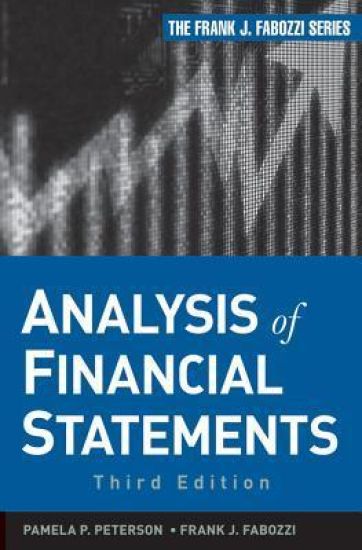
Analysis of Financial Statements

Analysis of Financial Statements

Pamela Peterson Drake; Frank J. Fabozzi

John Wiley Sons Inc
2012
sidottu
The fully update Third Edition of the most trusted book on financial statement analysis Recent financial events have taught us to take a more critical look at the financial disclosures provides by companies. In the Third Edition of Analysis of Financial Statements, Pamela Peterson-Drake and Frank Fabozzi once again team up to provide a practical guide to understanding and interpreting financial statements. Written to reflect current market conditions, this reliable resource will help analysts and investors use these disclosures to assess a company's financial health and risks. Throughout Analysis of Financial Statements, Third Edition, the authors demonstrate the nuts and bolts of financial analysis by applying the techniques to actual companies. Along the way, they tackle the changing complexities in the area of financial statement analysis and provide an up-to-date perspective of new acts of legislation and events that have shaped the field. Addresses changes to U.S. and international accounting standards, as well as innovations in the areas of credit risk models and factor modelsIncludes examples, guidance, and an incorporation of information pertaining to recent events in the accounting/analysis communityCovers issues of transparency, cash flow, income reporting, and much more Whether evaluating a company's financial information or figuring valuation for M&A's, analyzing financial statements is essential for both professional investors and corporate finance executives. The Third Edition of Analysis of Financial Statements contains valuable insights that can help you excel at this endeavor.
Introduction to Financial Economics

Introduction to Financial Economics

Frank J. Fabozzi

Wiley-Blackwell (an imprint of John Wiley Sons Ltd)
2012
sidottu
Financial Economics has quickly established itself as a strong and growing market. "Introduction to Financial Economics" by Frank Fabozzi, Ted Neave, and Gaofu Zhou presents an introduction to basic financial ideas through a strong grounding in microeconomic theory. This calculus based text explores the theoretical framework for analyzing the decisions by individuals and managers of firms, and area which is common to both the financial economics and microeconomics. It also explores the interplay of these decisions on the prices of financial assets.
Financial Economics

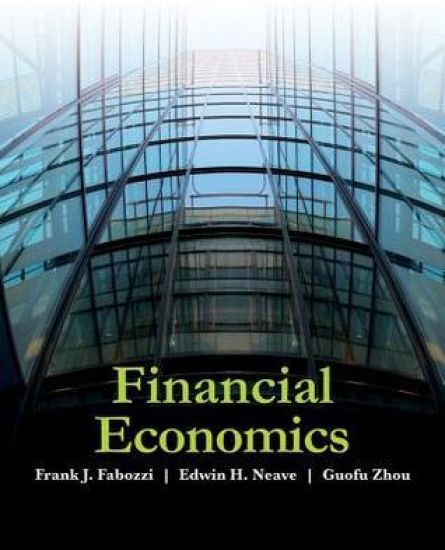
Financial Economics

Frank J. Fabozzi; Edwin H. Neave; Guofu Zhou

John Wiley Sons Inc
2012
sidottu
Financial Economics has quickly established itself as a strong and growing market. Introduction to Financial Economics by Frank Fabozzi, Ted Neave, and Gaofu Zhou presents an introduction to basic financial ideas through a strong grounding in microeconomic theory. This calculus based text explores the theoretical framework for analyzing the decisions by individuals and managers of firms, and area which is common to both the financial economics and microeconomics. It also explores the interplay of these decisions on the prices of financial assets.
Equity Valuation and Portfolio Management

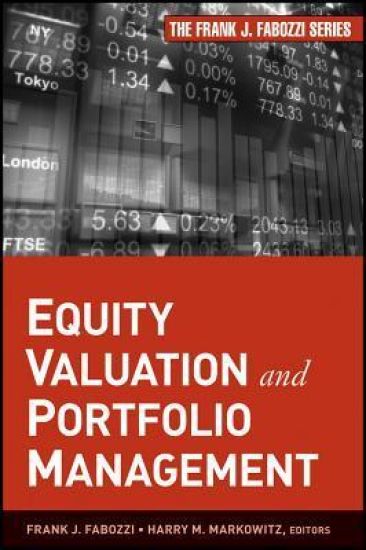
Equity Valuation and Portfolio Management

Frank J. Fabozzi; Harry M. Markowitz

John Wiley Sons Inc
2011
sidottu
A detailed look at equity valuation and portfolio management Equity valuation is a method of valuing stock prices using fundamental analysis to determine the worth of the business and discover investment opportunities. In Equity Valuation and Portfolio Management Frank J. Fabozzi and Harry M. Markowitz explain the process of equity valuation, provide the necessary mathematical background, and discuss classic and new portfolio strategies for investment managers. Divided into two comprehensive parts, this reliable resource focuses on valuation and portfolio strategies related to equities. Discusses both fundamental and new techniques for valuation and strategiesFabozzi and Markowitz are experts in the fields of investment management and economicsIncludes end of chapter bullet point summaries, key chapter take-aways, and study questions Filled with in-depth insights and practical advice, Equity Valuation and Portfolio Management will put you in a better position to excel at this challenging endeavor.
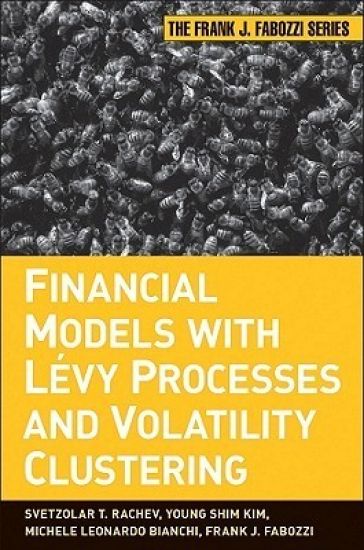
Financial Models with Levy Processes and Volatility Clustering

Financial Models with Levy Processes and Volatility Clustering

Svetlozar T. Rachev; Young Shin Kim; Michele L. Bianchi; Frank J. Fabozzi

John Wiley Sons Inc
2011
sidottu
An in-depth guide to understanding probability distributions and financial modeling for the purposes of investment management In Financial Models with Lévy Processes and Volatility Clustering, the expert author team provides a framework to model the behavior of stock returns in both a univariate and a multivariate setting, providing you with practical applications to option pricing and portfolio management. They also explain the reasons for working with non-normal distribution in financial modeling and the best methodologies for employing it. The book's framework includes the basics of probability distributions and explains the alpha-stable distribution and the tempered stable distribution. The authors also explore discrete time option pricing models, beginning with the classical normal model with volatility clustering to more recent models that consider both volatility clustering and heavy tails. Reviews the basics of probability distributionsAnalyzes a continuous time option pricing model (the so-called exponential Lévy model)Defines a discrete time model with volatility clustering and how to price options using Monte Carlo methodsStudies two multivariate settings that are suitable to explain joint extreme events Financial Models with Lévy Processes and Volatility Clustering is a thorough guide to classical probability distribution methods and brand new methodologies for financial modeling.
A Probability Metrics Approach to Financial Risk Measures

A Probability Metrics Approach to Financial Risk Measures

Svetlozar T. Rachev; Stoyan V. Stoyanov; Frank J. Fabozzi

Wiley-Blackwell (an imprint of John Wiley Sons Ltd)
2011
sidottu
A Probability Metrics Approach to Financial Risk Measures relates the field of probability metrics and risk measures to one another and applies them to finance for the first time. Helps to answer the question: which risk measure is best for a given problem?Finds new relations between existing classes of risk measuresDescribes applications in finance and extends them where possiblePresents the theory of probability metrics in a more accessible form which would be appropriate for non-specialists in the fieldApplications include optimal portfolio choice, risk theory, and numerical methods in financeTopics requiring more mathematical rigor and detail are included in technical appendices to chapters
The Handbook of Traditional and Alternative Investment Vehicles

The Handbook of Traditional and Alternative Investment Vehicles

Mark J. P. Anson; Frank J. Fabozzi; Frank J. Jones

John Wiley Sons Inc
2011
sidottu
A comprehensive volume that covers a complete array of traditional and alternative investment vehicles This practical guide provides a comprehensive overview of traditional and alternative investment vehicles for professional and individual investors hoping to gain a deeper understanding of the benefits and pitfalls of using these products. In it, expert authors Mark Anson, Frank Fabozzi, and Frank Jones clearly present the major principles and methods of investing and their risks and rewards. Along the way, they focus on providing you with the information needed to successfully invest using a host of different methods depending upon your needs and goals. Topics include equities, all types of fixed income securities, investment-oriented insurance products, mutual funds, closed-end funds, investment companies, exchange-traded funds, futures, options, hedge funds, private equity, and real estateWritten by the expert author team of Mark Anson, Frank Fabozzi, and Frank JonesIncludes valuable insights for everyone from finance professionals to individual investors Many finance books offer collections of expertise on one or two areas of finance, but The Handbook of Traditional and Alternative Investment Vehicles brings all of these topics together in one comprehensive volume.