Kirjojen hintavertailu. Mukana 12 390 323 kirjaa ja 12 kauppaa.
Kirjailija
Frank J. Williams
Kirjat ja teokset yhdessä paikassa: 19 kirjaa, julkaisuja vuosilta 1994-2025, suosituimpien joukossa The Emancipation Proclamation. Vertaile teosten hintoja ja tarkista saatavuus suomalaisista kirjakaupoista.
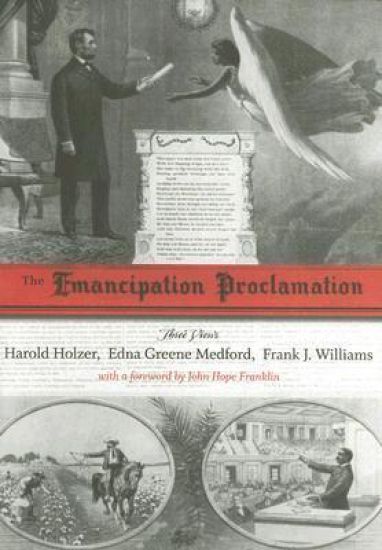
The Emancipation Proclamation is the most important document of arguably the greatest president in U.S. history. Now, Edna Greene Medford, Frank J. Williams, and Harold Holzer -- eminent experts in their fields -- remember, analyse, and interpret the Emancipation Proclamation in three distinct respects: the influence of and impact upon African Americans; the legal, political, and military exigencies; and the role pictorial images played in establishing the document in public memory. The result is a carefully balanced yet provocative study that views the proclamation and its author from the perspective of fellow Republicans, antiwar Democrats, the press, the military, the enslaved, free blacks, and the antislavery white establishment, as well as the artists, publishers, sculptors, and their patrons who sought to enshrine Abraham Lincoln and his decree of freedom in iconography. Medford places African Americans, the people most affected by Lincoln's edict, at the center of the drama rather than at the periphery, as previous studies have done. She argues that blacks interpreted the proclamation much more broadly than Lincoln intended it, and during the postwar years and into the twentieth century they became disillusioned by the broken promise of equality and the realities of discrimination, violence, and economic dependence. Williams points out the obstacles Lincoln overcame in finding a way to confiscate property -- enslaved humans -- without violating the Constitution. He suggests that the president solidified his reputation as a legal and political genius by issuing the proclamation as Commander-in-Chief, thus taking the property under the pretext of military necessity. Holzer explores how it was only after Lincoln's assassination that the Emancipation Proclamation became an acceptable subject for pictorial celebration. Even then, it was the image of the martyr-president as the great emancipator that resonated in public memory, while any reference to those African Americans most affected by the proclamation was stripped away. This multilayered treatment reveals that the proclamation remains a singularly brave and bold act -- brilliantly calculated to maintain the viability of the Union during wartime, deeply dependent on the enlightened voices of Lincoln's contemporaries, and owing a major debt in history to the image-makers who quickly and indelibly preserved it.
In this new short biography of Ulysses S. Grant, leading scholars provide an accessible introduction to Grant and his legacy. Grant led Federal forces to victory in the Civil War, was the first modern American president, and authored his memoirs, which would eventually become one of the greatest books of nonfiction by an American author. The authors present a thematic exploration of Grant, providing the necessary insight to appreciate Grant and correct the myths that for too long clouded his true importance. They highlight specific moments or relationships in Grant’s life—including his connection to such key figures as Abraham Lincoln and Mark Twain—and elaborate on the more controversial elements of Grant’s legacy, such as accusations about his drinking and corruption during the Grant presidency. Not to overlook his military accomplishments, they devote time to the study of Grant’s war strategy and military career, beginning as early as his reluctant enrollment into West Point.From humble birth to tragic death, this new take on Ulysses S. Grant instills readers with a deeper understanding of the military legend’s nuanced personal history and an appreciation for the late president’s tragic and triumphant story.
As Grant battled relentlessly down the Tennessee River and across Tennessee, defending Shiloh, he was followed by an enterprising group of studio photographers hoping to profit from the public's demand for images of the rising general from the West. They never stopped because Grant never stopped. Thus far, 307 distinct photographs have been found of Ulysses S. Grant, revealing him to be the most photographed American of the nineteenth century.Readers of Ulysses S. Grant: A Photographic History travel alongside Grant through the Civil War and his two terms as president, on his unusual two-year journey around the world, and to his final days on Mount McGregor. The sheer volume of exposure shows the toll of duty, war, and command. From every angle, this collection captures Grant's regard for soldier and family, his disregard of uniform, and his disheveled appearance that reflected his resilience. The reader will look into the eyes of a man who saw the worst and labored for the best.This curated volume opens the largest collection of Grant photos to the public for the first time. Excerpts from Grant's personal writings divulge his candid thoughts about the people he posed with and the situations he faced around the time the photographs were taken. An extraordinary addition to Grant scholarship, Ulysses S. Grant: A Photographic History will be the photographic reference work on Grant for decades to come as the simple man from Ohio continues to astonish the world.
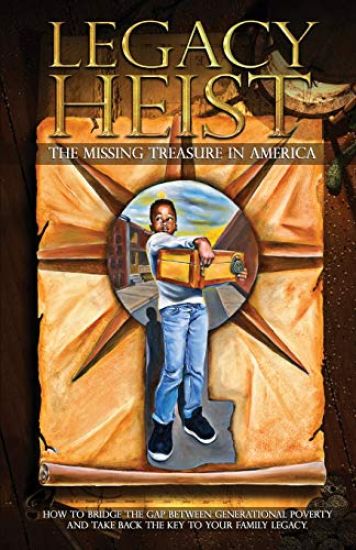
"38.1 million people in America are living in poverty; and millions of all Americans live near the federal poverty line." -United States Census BureauLegacy Heist is the life-story of Frank J. Williams, a businessman from Milwaukee, Wisconsin who was born into poverty, and grew up to become a millionaire.Written by Lance Brazelton, this biography is unlike any in its genre, because Frank's life-story is merely an example for a universal message that's bigger than himself.This book will take you on a real-life journey beyond the boundaries of statistics. Generational poverty is a pandemic, but Legacy Heist breaks it down to an epidemic so you can experience how to win the fight against it. This isn't an ordinary book, it's the portal to a key that will set you, your future family, and your ancestors free.Find yourself in the reflection of this narrative and follow what you're afraid of, because that's where the missing treasure in America is buried alive.
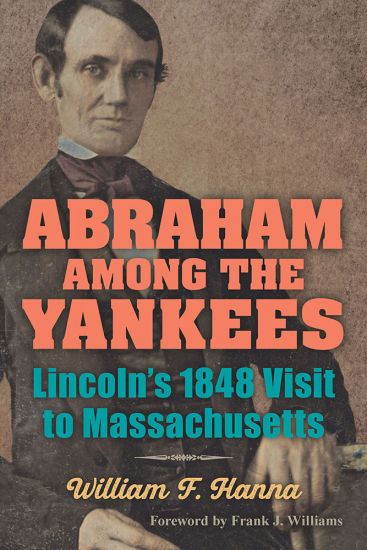
Filling in a portion of Lincoln’s political career that few are aware of, this engaging travelogue details Lincoln’s twelve-day trip through Massachusetts as a young, aspiring Illinois politician campaigning for Zachary Taylor, a slaveowner and the Whig candidate for president in 1848. Moving swiftly, William F. Hanna follows Lincoln from town to town, explaining why Lincoln supported a slaveholder and describing one of Lincoln’s earliest attempts to appeal to an audience beyond his home territory. Hanna provides excellent context on the politics of the era, particularly the question of slavery, both in Massachusetts and nationwide, and he features the people Lincoln met and the cities or towns in which he spoke. Lincoln stumped for Taylor in Worcester, New Bedford, Boston, Lowell, Dorchester, Chelsea, Dedham, Cambridge, and Taunton. He gave twelve speeches in eleven days to audiences who responded with everything from catcalls to laughter to applause. Whatever they thought of Lincoln’s arguments, those who saw him were impressed by his unusual western style and remembered his style more than the substance of his talks. Meticulously researched, Abraham among the Yankees invites readers to take an East Coast journey with a thirty-nine-year-old Lincoln during election season in 1848 to see how Massachusetts audiences responded to the humorous, informal approach that served Lincoln well during the rest of his political career.
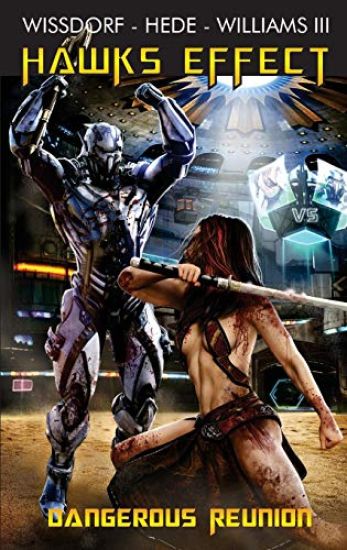
BAND ON THE RUNLaurina and the women are forced to flee along with Gavrael and the Aeternus soldiers. Their last hope is gaining sanctuary from the mysterious denizens of SubLupina who still bear a deep resentment towards humanity. With a horde of Draconian soldiers and ten clones of Praetor in hot pursuit, the group plays a desperate game of cat and mouse for their own survival. Wracked with guilt over killing Praetor and with their backs against the wall, Laurina has no choice but to call upon her new found Power for protection, but is she willing to pay the price?----------------------Hawks Effect is a serialized SciFi Urban Fantasy Novel. Volume One "Emergence" appears in 10 Episodes - this is Number four. The previous Episodes are: One Last Con, Dire Revelations and Dangerous Reunion.
There are common-sense rules for even the most daring investment speculation, even in a precarious economic environment... as in the wake of the dramatic stock market crash of 1929.This guide to smart speculating offers sound advice on determining whether you're really cut out for speculation, what warning signs in your financial situation should steer you toward safer investing, the best way to use margin trading, how to find reliable information on stocks, why you should shun all tips, why you should be a "bad loser," and much more.Not just a historical guide to one of the most unstable periods in American economic history, this is a useful primer for today's investor, too.
THIS IS REAL Trapped in Athena's dark domain and forced to fight for her amusement, Galicia Hawks and Sinza Flanagan launch a risky gambit to escape from captivity and the unwanted attentions of Mert the sadistic guard captain.Meanwhile, face to face with the realization that she is not in a simulation, Laurina Hawks is thrust into Athena's deadly Arena and pitted against her stable of genetically constructed gladiators in an impossible fight to the death. With the eyes of Nedara focused on the spectacle, Laurina finds herself in crisis. Half naked and ill-equipped for the rigors of Bloodsport, will her emerging but unreliable new power be enough to ensure her survival?This is Episode III of "Hawks Effect". Will be continued with Episode IV: Laurina Rising.
Street smart former dancer turned con artist, Laurina Hawks, receives a cryptic message from her sister who is working abroad in America. Turning to her brother Abel for help in decoding the message, they discover that she is in danger. Undaunted, Laurina decides to go to Phoenix Arizona to rescue her. Since travel airfare and lodging are expensive, and her funds are low, she must pull one last con to finance the trip. An accident after the meeting propels her into unfamiliar surroundings where danger lurks at every turn. Each person she meets has their own agenda. Now, someone wants her death. As her resolve to save her sister is tested again and again, Laurina soon discovers that there are worse things than having Scotland Yard on your tail. This Edition is the US Version, which can be shipped in all countries.
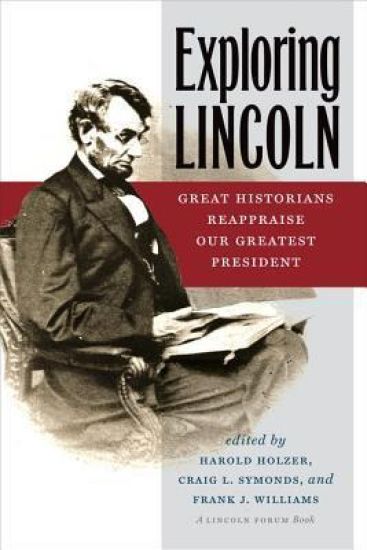
Ubiquitous and enigmatic, the historical Lincoln, the literary Lincoln, even the cinematic Lincoln have all proved both fascinating and irresistible. Though some 16,000 books have been written about him, there is always more to say, new aspects of his life to consider, new facets of his persona to explore. Enlightening and entertaining, Exploring Lincoln offers a selection of sixteen papers presented at the Lincoln Forum symposia over the past three years. Shining new light on particular aspects of Lincoln and his tragically abbreviated presidency, Exploring Lincoln presents a compelling snapshot of current Lincoln scholarship and a fascinating window into understanding America's greatest president.
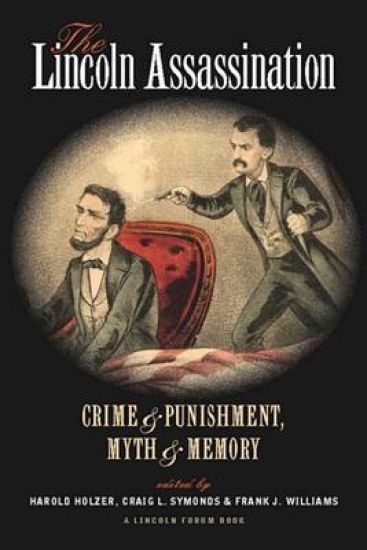
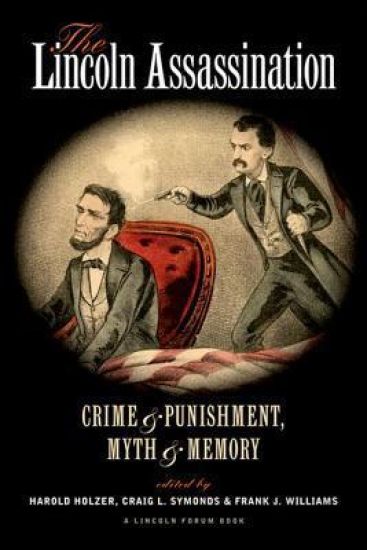
The assassination of President Abraham Lincoln remains one of the most prominent events in U.S. history. It continues to attract enormous and intense interest from scholars, writers, and armchair historians alike, ranging from painstaking new research to wild-eyed speculation. At the end of the Lincoln bicentennial year, and the onset of the Civil War sesquicentennial, the leading scholars of Lincoln and his murder offer in one volume their latest studies and arguments about the assassination, its aftermath, the extraordinary public reaction (which was more complex than has been previously believed), and the iconography that Lincoln's murder and deification inspired. Contributors also offer the most up-to-date accounts of the parallel legal event of the summer of 1865—the relentless pursuit, prosecution, and punishment of the conspirators. Everything from graphic tributes to religious sermons, to spontaneous outbursts on the streets of the nation's cities, to emotional mass-mourning at carefully organized funerals, as well as the imposition of military jurisprudence to try the conspirators, is examined in the light of fresh evidence and insightful analysis. The contributors are among the finest scholars who are studying Lincoln's assassination. All have earned well-deserved reputations for the quality of their research, their thoroughness, their originality, and their writing. In addition to the editors, contributors include Thomas R. Turner, Edward Steers Jr., Michael W. Kauffman, Thomas P. Lowry, Richard E. Sloan, Elizabeth D. Leonard, and Richard Nelson Current.
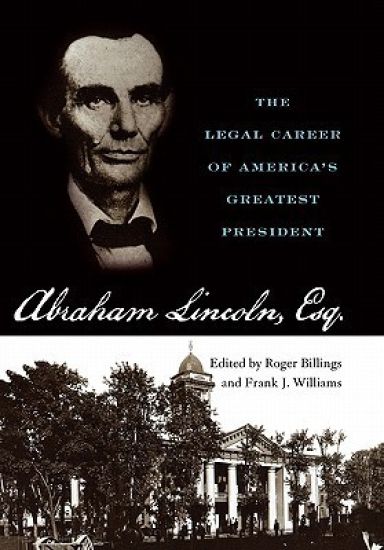
As our nation's most beloved and recognizable president, Abraham Lincoln is best known for the Emancipation Proclamation and for guiding our country through the Civil War. But before he took the oath of office, Lincoln practiced law for nearly twenty-five years in the Illinois courts. Abraham Lincoln, Esq.: The Legal Career of America's Greatest President examines Lincoln's law practice and the effect it had on his presidency and the country. Editors Roger Billings and Frank J. Williams, along with a notable list of contributors, examine Lincoln's career as a general-practice attorney, looking both at his work in Illinois and at the time he spent in Washington. Each chapter offers an expansive look at Lincoln's legal mind and covers diverse topics such as Lincoln's legal writing, ethics, the Constitution, and international law. Abraham Lincoln, Esq. emphasizes this often overlooked period in Lincoln's career and sheds light on Lincoln's life before he became our sixteenth president.
The assassination of President Abraham Lincoln remains one of the most prominent events in U.S. history. It continues to attract enormous and intense interest from scholars, writers, and armchair historians alike, ranging from painstaking new research to wild-eyed speculation. At the end of the Lincoln bicentennial year, and the onset of the Civil War sesquicentennial, the leading scholars of Lincoln and his murder offer in one volume their latest studies and arguments about the assassination, its aftermath, the extraordinary public reaction (which was more complex than has been previously believed), and the iconography that Lincoln's murder and deification inspired. Contributors also offer the most up-to-date accounts of the parallel legal event of the summer of 1865—the relentless pursuit, prosecution, and punishment of the conspirators. Everything from graphic tributes to religious sermons, to spontaneous outbursts on the streets of the nation's cities, to emotional mass-mourning at carefully organized funerals, as well as the imposition of military jurisprudence to try the conspirators, is examined in the light of fresh evidence and insightful analysis. The contributors are among the finest scholars who are studying Lincoln's assassination. All have earned well-deserved reputations for the quality of their research, their thoroughness, their originality, and their writing. In addition to the editors, contributors include Thomas R. Turner, Edward Steers Jr., Michael W. Kauffman, Thomas P. Lowry, Richard E. Sloan, Elizabeth D. Leonard, and Richard Nelson Current.
Judging Lincoln collects nine of the most insightful essays on the topic of the sixteenth president written by Frank J. Williams, chief justice of the Rhode Island Supreme Court and one of the nation's leading authorities on Abraham Lincoln. For Judge Williams, Lincoln remains the central figure of the American experience - past, present, and future. Williams begins with a survey of the interest in - and influence of - Lincoln both at home and abroad and then moves into an analysis of Lincoln's personal character with respect to his ability to foster relationships of equality among his intimates. Williams then addresses Lincoln's leadership abilities during the span of his career, with particular emphasis on the Civil War. Next, he compares the qualities of Abraham Lincoln, Franklin Delano Roosevelt, and Winston Churchill. The final essay, cowritten with Mark E. Neely Jr., concerns collecting Lincoln artifacts as a means of preserving and fostering the Lincoln legacy.
First published in hardcover asThe Women in Lincoln's Life,this paperback is a revised and expanded version with a foreword by Frank Williams, chairman of the prestigious Lincoln Forum, sidebars, and an appendix on the Lincoln-Rutledge romance and engagement. Abraham Lincoln was no ladies' man. Part of his awkwardness with women was due to his lanky, rough appearance, but he also floundered in no small part due to the emotional burdens he bore after the death of his mother when he was only nine years old, the death of his sister when he was eighteen, and the death of his first love, Ann Rutledge, shortly after they had become engaged (a point that author H. Donald Winkler explores and asserts). As a result, Lincoln cultivated an emotional barrier that antagonized some women who tried to be close to him. He may even have been incapable of loving anyone as he did Ann Rutledge, and so he fumbled his way through other courtships and two rejected proposals of marriage. Then he stumbled into an unlikely relationship with aristocratic Mary Todd. Their tumultuous twenty-three years together were the scuttlebutt of Springfield and the gossip of Washington. Yet there were other women in Lincoln's life, and Winkler cites thirty of them in this book. Though they were not always romantic relationships, they affected his personally and professionally. And despite his awkwardness, these relationships were as positive for the women as they were for Lincoln himself.
This essay collection is a retrospective analysis of the Washington administration's importance to the understanding of the modern presidency. Contemporary presidential scholarship gives little attention to the enormous impact that Washington's actions had on establishing the presidency. Most contemporary literature starts with 1933 and, although FDR's impact on the development of the modern institution of the presidency is undeniable, Washington's actions in office also established standards for practices that continue to this day.This analysis of the Washington presidency begins with an examination of Washington's leadership and its relevance to the modern presidency. The second group of essays looks at different aspects of presidential powers and the precedents established by the Washington administration. The third section examines Washington's press coverage, looking at the origins of Washington's image and the various myths in the press as well as the president's difficult relations with his contemporary press. A thoughtful and important corrective that will be of interest to scholars, students, and researchers involved with the American presidency and its history.
Written by both historians and political scientists, this new essay collection explores the sources, style, and quality of Lincoln's leadership. Challenging several popular schools of thought, the contributors show that both Lincoln's character and American democratic culture influenced his leadership style. They present him as a principled leader who sought realistic solutions in extenuating circumstances. Building on the democratic principles of the nation's framers, his vision of equality was consistent with the views of Thomas Jefferson and John Adams. The portrait that emerges is of an active-flexible president whose culture permitted a magnanimous and prudential political style. Lincoln's leadership encouraged the development of responsible democratic rule.The volume places Lincoln's leadership in a historical context and within the political perspective of the influences on him and his impact on others. It also examines his leadership style in terms of the factors organization theorists consider essential for effectiveness. The initial chapters focus on the impact others had on Lincoln and how he transformed their ideas into his own political vision. The work then turns to Lincoln's political style during the Civil War and how he influenced others. The final chapter puts Lincoln's political style in the perspective of world leaders of his age. This volume will be of interest to both historians and political scientists.