Kirjojen hintavertailu. Mukana 12 521 537 kirjaa ja 12 kauppaa.

Kirjailija

Frank Knight

Kirjat ja teokset yhdessä paikassa: 11 kirjaa, julkaisuja vuosilta 1982-2023, suosituimpien joukossa Field Guide to the Frogs of Australia. Vertaile teosten hintoja ja tarkista saatavuus suomalaisista kirjakaupoista.

11 kirjaa

Kirjojen julkaisuhaarukka 1982-2023.

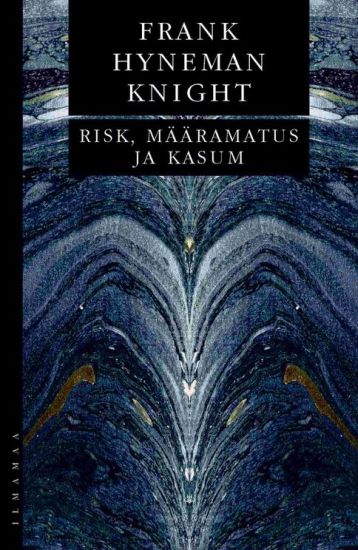
Risk, määramatus ja kasum

Risk, määramatus ja kasum

Frank Knight

Ilmamaa
2023
nidottu
Ameerika majandusteoreetik Frank Hyneman Knight (1885-1972) heidab oma tuntuima töö "Risk, määramatus ja kasum" (1921) algusosa esimeses peatükkis pilgu majandusteooria meetoditele, teine peatükk on pühendatud 19. sajandi majandusteaduse ülevaatele. Raamatu teine osa kirjeldab täieliku konkurentsi korral tekkivaid probleeme. Knighti käsitluse panus majandusteooriasse ongi riski ja määramatuse eristamine. Tema jaoks on risk mõõdetav määramatus, mille mõju on erinevate meetoditega võimalik piirata või vältida. Määramatus on aga teadmatus, mille mõju hindamist pole võimalik välja arvutada. Nõnda on ühtede kaante vahel nii ettevõtluse arengu ajalooline ülevaade kui ka klassikaks muutunud teoreetiline käsitlus. Eesti väljaandele on saatesõna kirjutanud tõlkija Alari Purju.
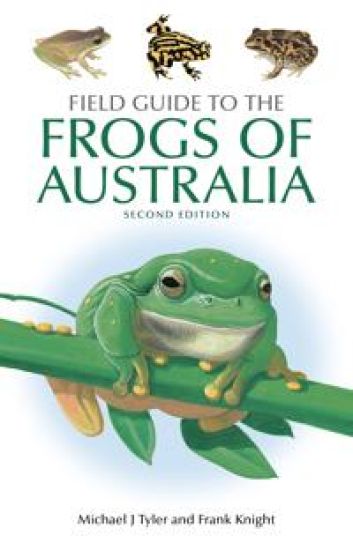
Field Guide to the Frogs of Australia

Field Guide to the Frogs of Australia

Michael J. Tyler; Frank Knight

CSIRO Publishing
2020
nidottu
Throughout much of the world, frog populations are declining, with the survival of many species under threat. In Australia, several species have become extinct in the past 35 years. This second edition of Field Guide to the Frogs of Australia provides fully updated accounts of all the known frogs of Australia. There are 248 species within the five native frog families: Hylidae, Limnodynastidae, Microhylidae, Myobatrachidae and Ranidae. Also included are the introduced Cane Toad and nine ‘stowaway’ species that have arrived in Australia. Each species account includes details of size, status, distribution, habitat, behaviour and advertisement call. Species are beautifully illustrated with full-colour paintings and distribution maps are also included. Closely related frogs are shown in identical poses so that comparisons can be made readily. The introductory section of the book covers frog biology and habitats and includes notes on families and genera. FEATURES Provides fully updated species accounts for 248 species of frogs, within five native frog families Provides updated information on the distribution of many species, including several toadlets in Western Australia Contains beautiful painted illustrations of frog species to allow identification, including a number of new paintings
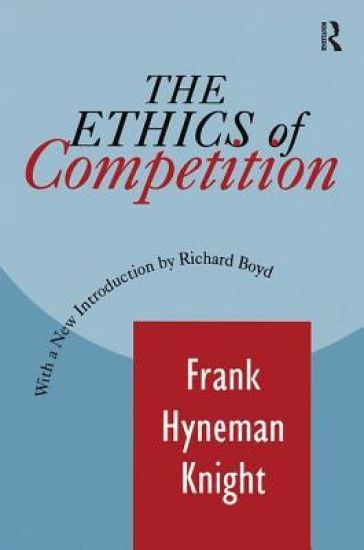
The Ethics of Competition

The Ethics of Competition

Frank Knight

Routledge
2017
sidottu
The Ethics of Competition is a book of Frank H. Knight's writings on a common theme: the problem of social control and its various implications. Knight believed in free economic institutions but was also aware that the competitive economic system could be improved. One of the central figures of neoclassical economics in the twentieth century, Knight pursued a lifelong campaign against irrationalities of nationalism, religious fanaticism, and group conflict, while conceding that these were fundamental orientations of human action that might yet frustrate his own work as an economist. While Knight vigorously defended human freedom and the liberal order, he also was sufficiently moved by the shortcomings of liberalism as to condemn it as rife with abuse.As Richard Boyd writes in the new introduction, The Ethics of Competition is nothing short of visionary. Knight foresaw virtually all of the reductionistic tendencies that have come to plague the discipline he cultivated, neoclassical economic theory. Even more impressively, Knight related these disciplinary proclivities back to themes as grand as the fate of liberal democracy and human nature. Boyd discusses Knight's belief that the human craving for simple, mechanical explanations inevitably leads to frustration rather than material satisfaction. Chapters in The Ethics of Competition include "Economic Psychology and the Value Problem," "The Limitations of Scientific Method in Economics," "Marginal Utility Economics," "Fallacies in the Interpretation of Social Cost," and "Economic Theory and Nationalism." This volume will be of essential value to economists, political theorists, philosophers, and sociologists.
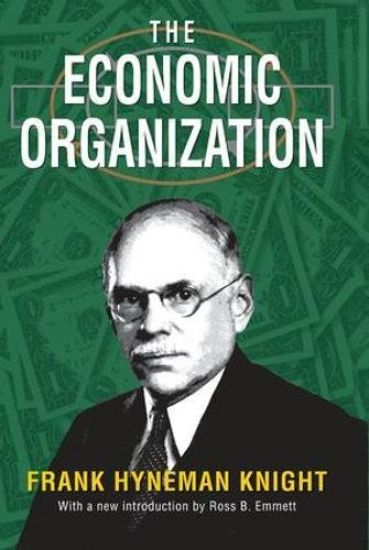
The Economic Organization

The Economic Organization

Frank Knight

Routledge
2017
sidottu
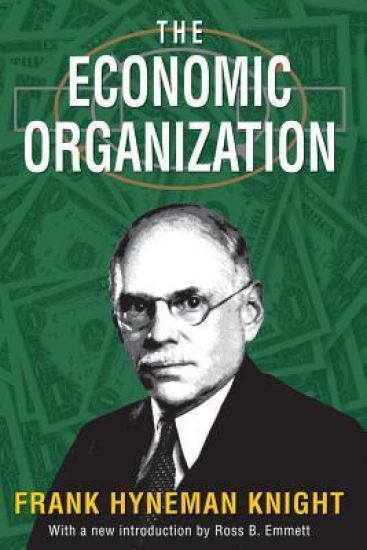
When originally released, Frank Hyneman Knight's The Economic Organization revitalized the teaching of economic theory in America during the 1930s, laying the foundation for the price theory revolution led by economists emerging from Knight's circle at The University of Chicago. Knight shows that when societies choose to allow market organization, their economy simultaneously solves the fundamental functions of valuation and efficiency. It also organizes the production and distribution of resources, providing incentives for progress.The Economic Organization provides a short introduction to the basic principles of supply, demand, and distribution that emerge from neoclassical price theory. The central role of the price mechanism in market organization is illustrated neatly by Knight's "wheel of wealth" the circular flow diagram most often identified with macroeconomic flows, but introduced here for price theoretic reasons. This version also includes his essay on "Utility and Cost," which provides a seamlessly integrated alternative-cost interpretation of neoclassical theory.This expanded edition of The Economic Organization includes a new introduction by Ross B. Emmett, which expands upon the short note on capital theory inserted in the original. Knight wrote three versions of the note for student use, and all three are included in the second chapter. Few books have changed the landscape of American economics and economic education as much as Knight's The Economic Organization. This book should be read by all economists, historians, and policy makers.
The Economic Organization

The Economic Organization

Frank Knight

AldineTransaction
2013
nidottu
When originally released, Frank Hyneman Knight's The Economic Organization revitalized the teaching of economic theory in America during the 1930s, laying the foundation for the price theory revolution led by economists emerging from Knight's circle at The University of Chicago. Knight shows that when societies choose to allow market organization, their economy simultaneously solves the fundamental functions of valuation and efficiency. It also organizes the production and distribution of resources, providing incentives for progress.The Economic Organization provides a short introduction to the basic principles of supply, demand, and distribution that emerge from neoclassical price theory. The central role of the price mechanism in market organization is illustrated neatly by Knight's "wheel of wealth"—the circular flow diagram most often identified with macroeconomic flows, but introduced here for price theoretic reasons. This version also includes his essay on "Utility and Cost," which provides a seamlessly integrated alternative-cost interpretation of neoclassical theory.This expanded edition of The Economic Organization includes a new introduction by Ross B. Emmett, which expands upon the short note on capital theory inserted in the original. Knight wrote three versions of the note for student use, and all three are included in the second chapter. Few books have changed the landscape of American economics and economic education as much as Knight's The Economic Organization. This book should be read by all economists, historians, and policy makers.
Captain Anson and the Treasure of Spain: The True Story of a Great Adventure
Captain Anson and the Treasure of Spain: The True Story of a Great Adventure is a historical non-fiction book written by Frank Knight. The book tells the captivating story of Captain George Anson and his crew, who set sail in 1740 on a mission to capture Spanish treasure ships in the Pacific Ocean. The book begins with the background of the war between England and Spain, which led to the expedition. The author then delves into the details of the journey, including the challenges faced by the crew, such as disease, mutiny, and harsh weather conditions. As the crew sailed across the Pacific, they encountered several Spanish ships, which they successfully captured. The author describes the battles in detail, highlighting the bravery and determination of Captain Anson and his men. The book also explores the cultural differences between the English and Spanish, as well as the impact of the expedition on the global balance of power. The author provides a vivid portrayal of life at sea during the 18th century, including the daily routines, food, and living conditions of the crew. Overall, Captain Anson and the Treasure of Spain: The True Story of a Great Adventure is a thrilling and informative read that transports readers to a time of exploration and conquest. The book is well-researched and provides a fascinating insight into one of the most significant naval expeditions in history.This scarce antiquarian book is a facsimile reprint of the old original and may contain some imperfections such as library marks and notations. Because we believe this work is culturally important, we have made it available as part of our commitment for protecting, preserving, and promoting the world's literature in affordable, high quality, modern editions, that are true to their original work.
Field Guide to Mammals of Australia

Field Guide to Mammals of Australia

Peter Menkhorst; Frank Knight

OUP Australia and New Zealand
2010
nidottu
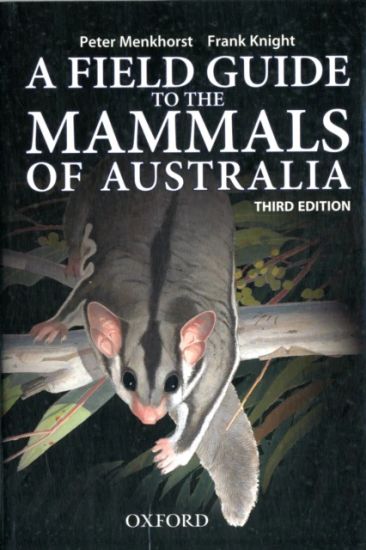
This fully revised and updated edition of A Field Guide to the Mammals of Australia is the only comprehensive guide to identifying all 382 species of mammals known in Australia. This book provides concise and accurate details of the appearance, diagnostic features, distribution, habitat, and key behavioural characteristics of all mammals known to have occurred in Australia or its waters since the time of European settlement. Each double-page spread provides all the information needed to identify an animal, a full-colour illustration of the entire animal, a smaller diagram of diagnostic features, a distribution map, and species description and measurements, including details of how to differentiate between similar species. Identification keys are provided for groups that are difficult to identify to species level, including keys to the genera of small marsupials, rodents, and bats, and all marine mammals likely to be washed on to an Australian beach: whales, dolphins, porpoises, seals, and the Dugong.
The Ethics of Competition

The Ethics of Competition

Frank Knight

Transaction Publishers
1997
nidottu
The Ethics of Competition is a book of Frank H. Knight's writings on a common theme: the problem of social control and its various implications. Knight believed in free economic institutions but was also aware that the competitive economic system could be improved. One of the central figures of neoclassical economics in the twentieth century, Knight pursued a lifelong campaign against irrationalities of nationalism, religious fanaticism, and group conflict, while conceding that these were fundamental orientations of human action that might yet frustrate his own work as an economist. While Knight vigorously defended human freedom and the liberal order, he also was sufficiently moved by the shortcomings of liberalism as to condemn it as rife with abuse.As Richard Boyd writes in the new introduction, The Ethics of Competition is nothing short of visionary. Knight foresaw virtually all of the reductionistic tendencies that have come to plague the discipline he cultivated, neoclassical economic theory. Even more impressively, Knight related these disciplinary proclivities back to themes as grand as the fate of liberal democracy and human nature. Boyd discusses Knight's belief that the human craving for simple, mechanical explanations inevitably leads to frustration rather than material satisfaction. Chapters in The Ethics of Competition include "Economic Psychology and the Value Problem," "The Limitations of Scientific Method in Economics," "Marginal Utility Economics," "Fallacies in the Interpretation of Social Cost," and "Economic Theory and Nationalism." This volume will be of essential value to economists, political theorists, philosophers, and sociologists.
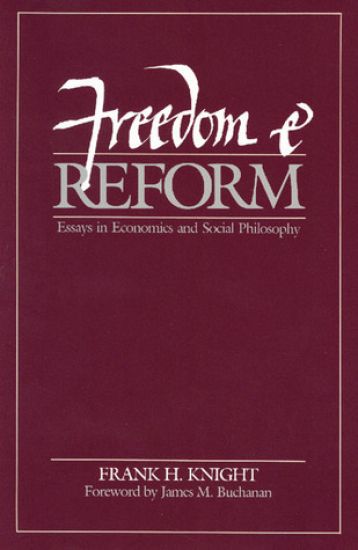
Freedom & Reform

Freedom & Reform

Frank Knight

Liberty Fund Inc
1982
sidottu
The fifteen essays in this collection, first published in 1947, treat a variety of economic, social, political and philosophical problems and were written by a legendary professor of economics at the University of Chicago.
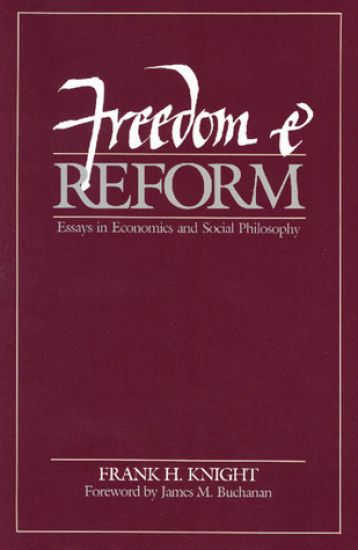
Freedom & Reform

Freedom & Reform

Frank Knight

Liberty Fund Inc
1982
nidottu
The fifteen essays in this collection, first published in 1947, treat a variety of economic, social, political and philosophical problems and were written by a legendary professor of economics at the University of Chicago.