Kirjojen hintavertailu. Mukana 12 511 415 kirjaa ja 12 kauppaa.

Kirjailija

Frank Lentricchia

Kirjat ja teokset yhdessä paikassa: 17 kirjaa, julkaisuja vuosilta 1981-2025, suosituimpien joukossa Forms of Attention. Vertaile teosten hintoja ja tarkista saatavuus suomalaisista kirjakaupoista.

17 kirjaa

Kirjojen julkaisuhaarukka 1981-2025.

Forms of Attention

Forms of Attention

Frank Kermode; Frank Lentricchia

University of Chicago Press
2011
nidottu
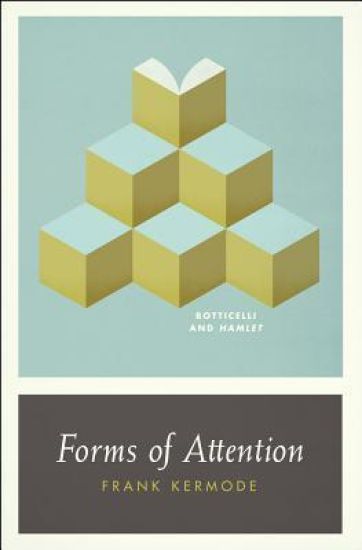
Sir Frank Kermode, the British scholar, teacher, and author, was an inspired critic. "Forms of Attention" is based on a series of three lectures he gave on canon formation, or how we choose what art to value. The opening essay, on Botticelli, traces the artist's sudden popularity in the nineteenth century for reasons that have more to do with poetry than painting. In the second essay, Kermode reads Hamlet from a very modern angle, offering a useful (and playful) perspective for a contemporary audience. The final essay is a defense of literary criticism as a process and conversation that, while often conflating knowledge with opinion, keeps us reading great art and working with - and for - literature.
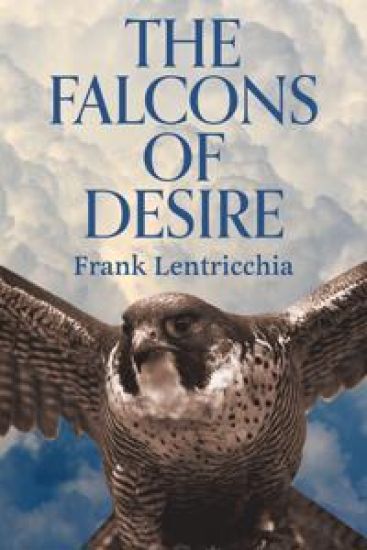
The Falcons of Desire

The Falcons of Desire

Frank Lentricchia

GUERNICA EDITIONS,CANADA
2025
pokkari
A beautiful stranger from Italy appears in sleepy Utica, N.Y., carrying a deadly secret that goes back generations. Her movements through the city ensnare a young couple and their extended family, a college professor, a mafia don, and a professional assassin. What unfolds is a story about love and infidelity, the hidden costs of immigration, the rituals of memory, and the types of revenge that can take decades to enact.
Manhattan Meltdown

Manhattan Meltdown

Frank Lentricchia

Guernica Editions,Canada
2022
pokkari
Two men, no longer young, and friends from childhood, fly to NYC—each with a secret purpose unknown to the other. They arrive just as COVID-19 explodes across the city's 5 boroughs. One of the men (white) has come to Manhattan to confront a theater producer who has made a coercive offer to his wife. The other man (black, former All-American football star) plans to confront and take revenge on his white girlfriend from college days—who left him for a white man. As they pursue their goals they are caught up in the hunt for America's most famous criminal. The black man, seeking revenge, makes a surprising turn. The white man, who has taken his confrontation with the theater producer to criminal length, may never leave Manhattan to return to his family. Manhattan Meltdown introduces a series of inter-connected characters who, ever as their lives are impacted by lethal disease, must continue to struggle with more conventional personal crises: uterine cancer, imperiled romantic relationships, and the deteriorations of advancing old age.
The Gaiety of Language

The Gaiety of Language

Frank Lentricchia

University of California Press
2021
sidottu
This study explores the radical poetics of William Butler Yeats and Wallace Stevens, focusing on their contributions to modern literary theory and the unique role of imagination in their works. By tracing their poetic theories within the broader context of post-Romantic criticism, the essay critiques both the romantic idealism of the 19th century and the contextual theories of modern criticism. Yeats and Stevens challenge the notion of poetry as a direct avenue to transcendental truth, redefining the role of the imagination as an artistic force that operates within its own linguistic medium, unburdened by metaphysical or empirical agendas. Their poetics, often interpreted through contrasting lenses such as romantic organicism or the "visionary" archetypes championed by scholars like Northrop Frye, instead offer a framework where poems are self-contained entities. These works articulate the tension between the impoverished modern imagination and its capacity to find freedom and meaning within the act of creation itself. Through close readings of Yeats's and Stevens's prose and poetry, this essay argues that their works embody a "poetics of will," wherein the imagination, though constrained by the limitations of a disenchanted modern world, still achieves a vital cultural role. Unlike their predecessors, who viewed poetry as a conduit to metaphysical revelation, Yeats and Stevens position the poem as an autonomous artifact that captures fleeting moments of freedom and beauty. For the poet, the creative act becomes an assertion of control over the chaos of inner and outer realities, while for the reader, the well-wrought poem offers a brief but profound engagement with the artist’s vision. In this way, Yeats and Stevens redefine the purpose of poetry, suggesting its essential contribution to human happiness and cultural resilience in an age marked by existential and aesthetic challenges. This title is part of UC Press's Voices Revived program, which commemorates University of California Press’s mission to seek out and cultivate the brightest minds and give them voice, reach, and impact. Drawing on a backlist dating to 1893, Voices Revived makes high-quality, peer-reviewed scholarship accessible once again using print-on-demand technology. This title was originally published in 1968.
The Gaiety of Language

The Gaiety of Language

Frank Lentricchia

University of California Press
2021
pokkari
This study explores the radical poetics of William Butler Yeats and Wallace Stevens, focusing on their contributions to modern literary theory and the unique role of imagination in their works. By tracing their poetic theories within the broader context of post-Romantic criticism, the essay critiques both the romantic idealism of the 19th century and the contextual theories of modern criticism. Yeats and Stevens challenge the notion of poetry as a direct avenue to transcendental truth, redefining the role of the imagination as an artistic force that operates within its own linguistic medium, unburdened by metaphysical or empirical agendas. Their poetics, often interpreted through contrasting lenses such as romantic organicism or the "visionary" archetypes championed by scholars like Northrop Frye, instead offer a framework where poems are self-contained entities. These works articulate the tension between the impoverished modern imagination and its capacity to find freedom and meaning within the act of creation itself. Through close readings of Yeats's and Stevens's prose and poetry, this essay argues that their works embody a "poetics of will," wherein the imagination, though constrained by the limitations of a disenchanted modern world, still achieves a vital cultural role. Unlike their predecessors, who viewed poetry as a conduit to metaphysical revelation, Yeats and Stevens position the poem as an autonomous artifact that captures fleeting moments of freedom and beauty. For the poet, the creative act becomes an assertion of control over the chaos of inner and outer realities, while for the reader, the well-wrought poem offers a brief but profound engagement with the artist’s vision. In this way, Yeats and Stevens redefine the purpose of poetry, suggesting its essential contribution to human happiness and cultural resilience in an age marked by existential and aesthetic challenges. This title is part of UC Press's Voices Revived program, which commemorates University of California Press’s mission to seek out and cultivate the brightest minds and give them voice, reach, and impact. Drawing on a backlist dating to 1893, Voices Revived makes high-quality, peer-reviewed scholarship accessible once again using print-on-demand technology. This title was originally published in 1968.
A Place in the Dark/ The Glamour of Evil

A Place in the Dark/ The Glamour of Evil

Frank Lentricchia

Guernica Editions,Canada
2021
pokkari
This is a flip book with two novels: A Place In The Dark braids history, fiction and politics. It is set in Utica with substantial passages of painful, site-specific memories of the characters of both the Vietnam war and the American engagement in Iraq. These memories are carried by a Vietnamese immigrant woman living in Utica, who suffered in Saigon, an American Marine and Italian-American Utican who committed an atrocity during the siege of Khe Sanh, and an Iraqi who administered torture and worked as translator and interpreter in Baghdad on America's behalf. The central character is an ex-private investigator, of Utica, who is an Italian-American, beset by his long-standing guilt for his deferment from the draft during the Vietnam era and now suffering from serious heart disease. The Glamour of Evil deals with how, some males, especially literary/intellectual types, are drawn to violent men in organized crime. How they secretly desire intimacy with such people whom they find charismatic, powerful and uniquely free inside a world where the freedom of the individual is in much doubt. The novel features a legendary American Mafioso--who loved modern fiction and French existentialism--Crazy Joey Gallo and his dark world. This is combined with a whodunit involving Eliot Conte's daughter, a crisis that a connected man of literary flair promises to resolve for Conte--for an unusual price.
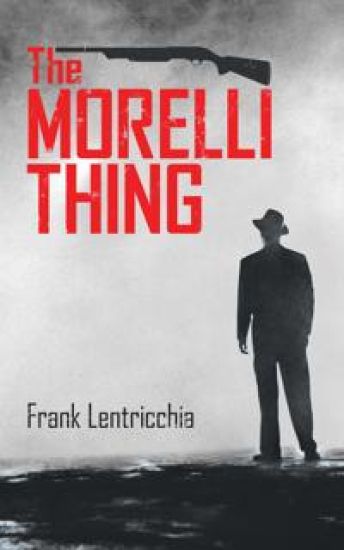
The Morelli Thing

The Morelli Thing

Frank Lentricchia

Guernica Editions,Canada
2015
pokkari
The unsolved murder of Fred Morelli, in Utica, New York, in 1947, comes to the fore more than 60 years later when 15-year-old Angel, hacker extraordinaire, has his guitar smashed by Victor Bocca, one of the original suspects in the murder. Angel hacks files that may point not only to Bocca's involvement but also that of the mob. From there, mayhem breaks loose as assassins descend on Utica to silence Angel. In the midst of it is Angel's adoptive father, Eliot Conte, who, along with his close friend Police Chief Antonio Robinson, must try to unravel the mystery of what is going on before more killings take place, including that of Angel himself.
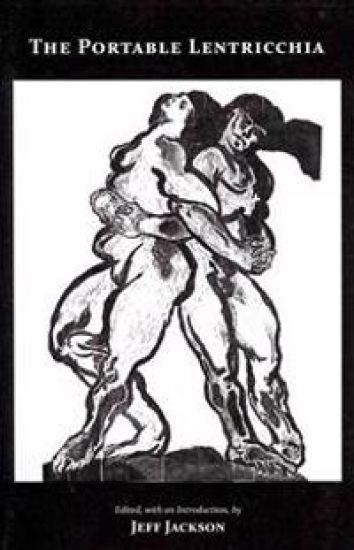
The Portable Lentricchia

The Portable Lentricchia

Frank Lentricchia

Bordighera Press
2012
pokkari
Fiction. THE PORTABLE LENTRICCHIA is an ideal entrance into the fictional world of the novelist described as "the greatest unknown writer in America." This thrilling selection of Frank Lentricchia's fiction from his debut Johnny Critelli to the forthcoming The Accidental Pallbearer showcases much of his best work, underlining the themes that have preoccupied him and offering readers an astonishing range of set pieces filled with surging lyricism, abrupt violence, and outrageous humor."
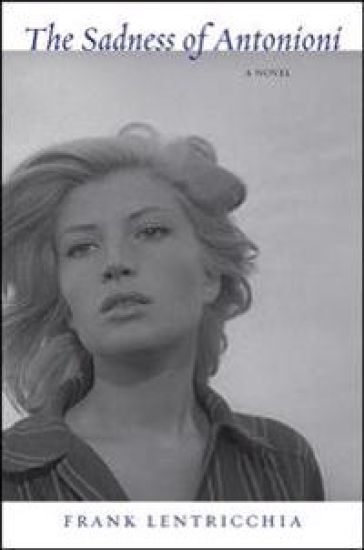
The Sadness of Antonioni

The Sadness of Antonioni

Frank Lentricchia

Excelsior Editions
2011
pokkari
An American adventure in the Antonioni vein—visually rich and emotionally mysterious. Part Mafia murder mystery, part novel of ideas, but most of all a love story, The Sadness of Antonioni follows Hank Morelli, a young assistant professor of film who is obsessed with Antonioni's L'Avventura. As he embarks on an unlikely romance with a Wendy's cashier, he is also drawn into the mystery of his grandfather's underworld connections and tempted by his department chair and his department chair's mysterious girlfriend, Nadia, to take part in a monstrous film project they are planning. Haunted throughout by the terror of time's raw present without exit, The Sadness of Antonioni is an American adventure in the Antonioni vein-visually rich and emotionally mysterious-in which an unlikely young couple navigates the difficult waters of their relationship, each suffering the remnants of a violent past that must be resolved if they hope to stay together. Heartrending and unsparing, yet with a persistent comic vein, this is Frank Lentricchia's seventh and most ambitious and disturbing novel to date.
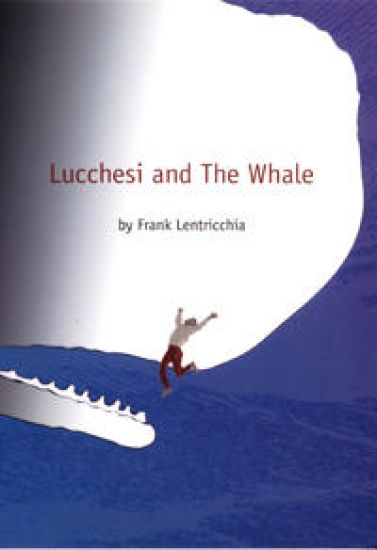
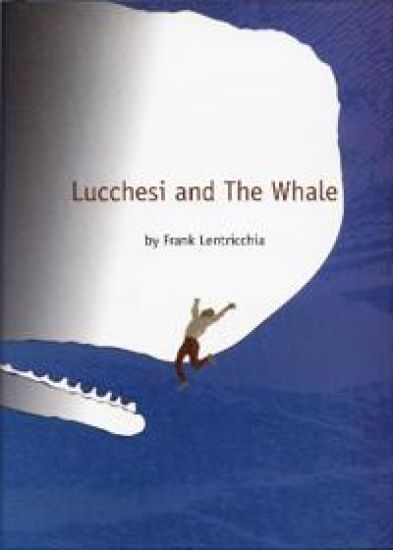
Lucchesi and the Whale

Lucchesi and the Whale

Frank Lentricchia

Duke University Press
2003
pokkari
Lucchesi and The Whale is an unusual work of fiction by noted author and critic Frank Lentricchia. Its central character, Thomas Lucchesi Jr., is a college professor in the American heartland whose obsessions and compulsions include traveling to visit friends in their last moments of life-because grief alone inspires him to write-and searching for secret meaning in Herman Melville’s Moby-Dick. Himself a writer of “stories full of violence in a poetic style,” Lucchesi tells his students that he teaches “only because [his] fiction is commercially untouchable” and to “never forget that.” Austerely isolated, anxiety-ridden, and relentlessly self-involved, Lucchesi nonetheless cannot completely squelch his eagerness for love.Having become “a mad Ahab of reading,” who is driven to dissect the “artificial body of Melville’s behemothian book” to grasp its truth, Lucchesi allows his thoughts to wander and loop from theory to dream to reality to questionable memory. But his black humor-tinged musings are often as profoundly moving as they are intellectual, such as the section in which he ponders the life and philosophy of Ludwig Wittgenstein in relation to the significance of a name-and then attempts to share these thoughts with a sexy, middle-aged flight attendant-or another in which he describes a chance meeting with a similarly-named mafia don.Despite apparent spiritual emptiness, Lucchesi in the end does find “a secret meaning” to Moby-Dick. And Lentricchia’s creations-both Lucchesi and The Whale and its main character-reveal this meaning through a series of ingeniously self-reflective metaphors, in much the way that Melville himself did in and through Moby-Dick. Vivid, humorous, and of unparalleled originality, this new work from Frank Lentricchia will inspire and console all who love and ponder both great literature and those who would write it.
Lucchesi and the Whale

Lucchesi and the Whale

Frank Lentricchia

Duke University Press
2000
sidottu
Lucchesi and The Whale is an unusual work of fiction by noted author and critic Frank Lentricchia. Its central character, Thomas Lucchesi Jr., is a college professor in the American heartland whose obsessions and compulsions include traveling to visit friends in their last moments of life-because grief alone inspires him to write-and searching for secret meaning in Herman Melville’s Moby-Dick. Himself a writer of “stories full of violence in a poetic style,” Lucchesi tells his students that he teaches “only because [his] fiction is commercially untouchable” and to “never forget that.” Austerely isolated, anxiety-ridden, and relentlessly self-involved, Lucchesi nonetheless cannot completely squelch his eagerness for love.Having become “a mad Ahab of reading,” who is driven to dissect the “artificial body of Melville’s behemothian book” to grasp its truth, Lucchesi allows his thoughts to wander and loop from theory to dream to reality to questionable memory. But his black humor-tinged musings are often as profoundly moving as they are intellectual, such as the section in which he ponders the life and philosophy of Ludwig Wittgenstein in relation to the significance of a name-and then attempts to share these thoughts with a sexy, middle-aged flight attendant-or another in which he describes a chance meeting with a similarly-named mafia don.Despite apparent spiritual emptiness, Lucchesi in the end does find “a secret meaning” to Moby-Dick. And Lentricchia’s creations-both Lucchesi and The Whale and its main character-reveal this meaning through a series of ingeniously self-reflective metaphors, in much the way that Melville himself did in and through Moby-Dick. Vivid, humorous, and of unparalleled originality, this new work from Frank Lentricchia will inspire and console all who love and ponder both great literature and those who would write it.
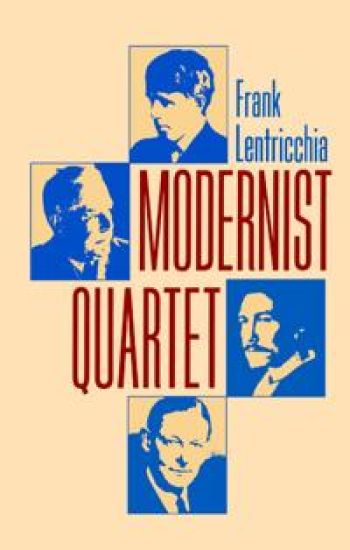
Modernist Quartet

Modernist Quartet

Frank Lentricchia

Cambridge University Press
1994
sidottu
Modernist Quartet is a study of the four major American modernist poets (Frost, Stevens, Pound, Eliot) in various historical environments (literary, philosophical, gender relations, the business of capitalist economics) with special attention given to their central poetic texts as they both reflect and shape our understanding of those environments. Frank Lentricchia presents the poems as stories, sometimes only implicit, of the poets seeking to sustain a life in non-commercial writing, in a culture that is hospitable only (for the most part) to commercial art. Central chapters give a synoptic vision of the lives and literary careers of the four poets in question.
Modernist Quartet

Modernist Quartet

Frank Lentricchia

Cambridge University Press
1994
pokkari
Modernist Quartet is a study of the four major American modernist poets (Frost, Stevens, Pound, Eliot) in various historical environments (literary, philosophical, gender relations, the business of capitalist economics) with special attention given to their central poetic texts as they both reflect and shape our understanding of those environments. Frank Lentricchia presents the poems as stories, sometimes only implicit, of the poets seeking to sustain a life in non-commercial writing, in a culture that is hospitable only (for the most part) to commercial art. Central chapters give a synoptic vision of the lives and literary careers of the four poets in question.
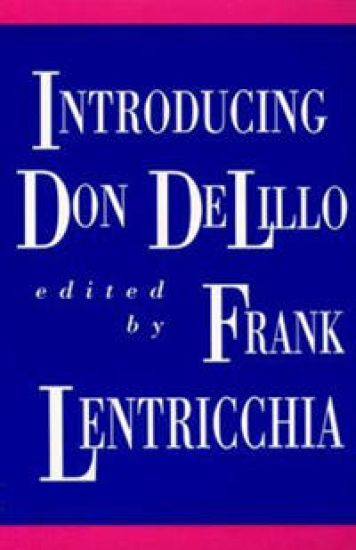
Introducing Don DeLillo

Introducing Don DeLillo

Frank Lentricchia

Duke University Press
1991
pokkari
If you want to find out what a rock critic, a syndicated columnist, and scholars of American literature have to say about one of America’s most important contemporary novelists, turn to Introducing Don DeLillo. Placing the author’s work in a cultural context, this is the first book-length collection on DeLillo, adding considerably to the emerging critical discourse on his work.Diversity is the key to this striking assemblage of cultural criticism edited by Frank Lentricchia. Special features include an expanded version of the Rolling Stone interview with the author (“An Outsider in this Society”) and the extraordinary tenth chapter of DeLillo’s Ratner’s Star. Accessibly written and entertaining, the collection will be of great interest to both students and scholars of contemporary American literature as well as to general readers interested in DeLillo’s work.Contributors. Frank Lentricchia, Anthony Decurtis, Daniel Aaron, Hal Crowther, John A. McClure, Eugene Goodheart, Charles Molesworth, Dennis A. Foster, and John Frow
Ariel and the Police

Ariel and the Police

Frank Lentricchia

University of Wisconsin Press
1989
nidottu
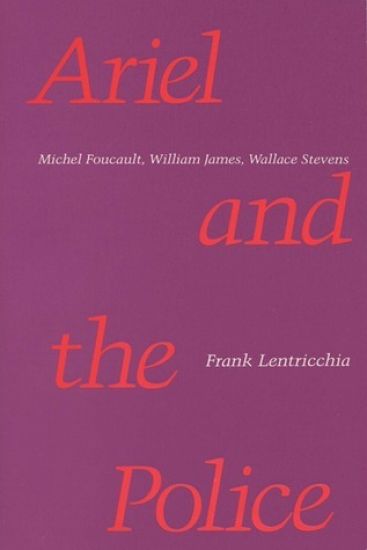
In Ariel and the Police, Frank Lentricchia searches through the totalizing desires for power that have built and help to maintain tangible and intangible structures of confinement and purification within, and sometimes as, the house of modernism. And what he finds, in his lyrical effort to redeem the subject for history, is that someone lives there, slyly, sometimes even playfully defiant.
Criticism and Social Change

Criticism and Social Change

Frank Lentricchia

University of Chicago Press
1985
nidottu
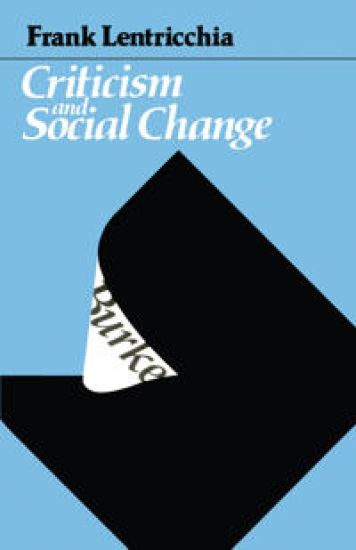
"Criticism and Social Change speaks with special timeliness to the role of the political intellectual (here embodied in Kenneth Burke). Lentricchia's provocative analysis demands serious reflection by American radicals."—Frederic Jameson "A profound meditation on relations obtaining among writing, political consciousness, and criticism—this last taken in its most general sense. It is written with passion and grace; it is shot through with learning, intimate knowledge of the critical tradition, and a deep (though by no means uncritical) understanding of the work (as well as social significance) of Kenneth Burke."—Hayden White
After the New Criticism

After the New Criticism

Frank Lentricchia

University of Chicago Press
1981
nidottu
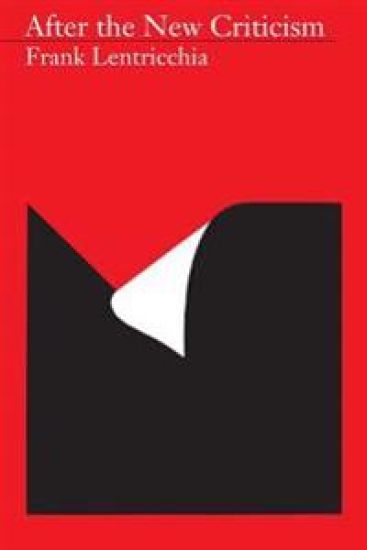
This work is the first history and evaluation of contemporary American critical theory within its European philosophical contexts. In the first part, Frank Lentricchia analyzes the impact on our critical thought of Frye, Stevens, Kermode, Sartre, Poulet, Heidegger, Sussure, Barthes, L vi-Strauss, Derrida, and Foucault, among other, less central figures. In a second part, Lentricchia turns to four exemplary theorists on the American scene-Murray Krieger, E. D. Hirsch, Jr., Paul de Man, and Harold Bloom-and an analysis of their careers within the lineage established in part one. Lentricchia's critical intention is in evidence in his sustained attack on the more or less hidden formalist premises inherited from the New Critical fathers. Even in the name of historical consciousness, he contends, contemporary theorists have often cut literature off from social and temporal processes. By so doing he believes that they have deprived literature of its relevant values and turned the teaching of both literature and theory into a rarefied activity. All along the way, with the help of such diverse thinkers as Saussure, Barthes, Foucault, Derrida, and Bloom, Lentricchia indicates a strategy by which future critical theorists may resist the mandarin attitudes of their fathers.