Kirjojen hintavertailu. Mukana 12 390 323 kirjaa ja 12 kauppaa.
Kirjailija
Frank Lloyd Wright
Kirjat ja teokset yhdessä paikassa: 16 kirjaa, julkaisuja vuosilta 1969-2026, suosituimpien joukossa Frank Lloyd Wright in the Realm of Ideas. Vertaile teosten hintoja ja tarkista saatavuus suomalaisista kirjakaupoista.
One hundred years from now, people will look at his ideas, his principles, his forms, and seewith wonder and amazementthat those ideas are still fresh, vibrant, applicable, and intensely prophetic. Olgivanna Lloyd Wright (1969).Nearly twenty years later, this exhibition of Frank Lloyd Wright s principles and forms validates Mrs. Wright s prophecy highlighting his ideasthe foundation of his achievement.Part 1 of the book, prepared by Bruce Brooks Pfeiffer, contains four sections defined by Wright s own words: The Destruction of the Box: The Freedom of Space; The Nature of the Site; Materials and Methods; and The Architecture of Democracy. The 150 illustrations in this part (86 in full color), are dazzling visions of what was but is no more, what was planned but never built, as well as those architectural treasures that continue to enrich and challenge our society. The illustrations are accompanied by quotations from Frank Lloyd Wright that demonstrate how his ideas found expression in his designs.Part 2 contains 5 essays that serve to increase our awareness and appreciation of Frank Lloyd Wright s contribution: Jack Quinan, Frank Lloyd Wright in 1893: The Chicago Context; Aaron Green, Organic Architecture: The Principles of Frank Lloyd Wright; E. T. Casey, Structure in Organic Architecture; Narciso Menocal, Frank Lloyd Wright s Architectural Democracy: An American Jeremiad; and Bruce Brooks Pfeiffer, The Second Career: 19241959. An appendix provides full descriptions of the works in part 1, including notes on media, methods, and measurements."

In May 1939, the celebrated American architect Frank Lloyd Wright visited London and gave four lectures at the Royal Institute of British Architects. The meetings were hailed at the time as the most remarkable events of recent architectural affairs in England, and the lectures were published as 'An Organic Architecture' in September 1939 by Lund Humphries. The texts remain an important expression of the architect's core philosophy and are being reissued now in a new edition to commemorate the 150th anniversary in 2017 of Frank Lloyd Wright's birth. In the lectures, Frank Lloyd Wright covers a wide range of topics including his Usonian houses, his visions for the future of cities both in North America and elsewhere, particularly in Britain, Taliesin and the Johnson Waxworks factory, the then-imminent Second World War, and the 'Future'. In doing so, his charismatic, flamboyant character leaps to life from the pages, not to mention his hugely creative intelligence, making these essays very enjoyable and entertaining.This new edition includes an insightful new essay by esteemed architectural historian, Professor Andrew Saint, which sets the lectures within context and highlights their continued resonance and appeal.
A Pictorial Record Of Architectural Progress by Frank Lloyd Wright is a comprehensive book that showcases the architectural designs and progress of the renowned American architect. The book features more than 400 illustrations, including photographs, sketches, and drawings, that capture the evolution of Wright's work over the course of his career. The book is divided into several sections, each of which focuses on a particular aspect of Wright's work. The first section covers Wright's early years and his apprenticeship with Adler and Sullivan. The subsequent sections explore Wright's major works, including the Prairie Style houses, the Unity Temple, the Imperial Hotel in Tokyo, and Fallingwater. In addition to showcasing Wright's designs, the book also provides insight into his design philosophy and approach to architecture. The text is written by Wright himself, providing readers with a unique perspective on his work. Overall, A Pictorial Record Of Architectural Progress is an essential book for anyone interested in the work of Frank Lloyd Wright or the history of modern architecture. It provides a comprehensive overview of Wright's career and his contributions to the field of architecture.This scarce antiquarian book is a facsimile reprint of the old original and may contain some imperfections such as library marks and notations. Because we believe this work is culturally important, we have made it available as part of our commitment for protecting, preserving, and promoting the world's literature in affordable, high quality, modern editions, that are true to their original work.
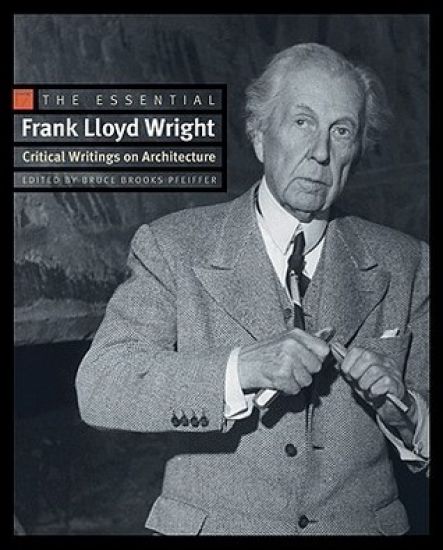
He was the most iconoclastic of architects, and at the height of his career his output of writings about architecture was as prolific and visionary as his architecture itself. Frank Lloyd Wright pioneered a bold new kind of architecture, one in which the spirit of modern man truly "lived in his buildings." The Essential Frank Lloyd Wright is a one-volume compendium of Wright's most critically important--and personally revealing--writings on every conceivable aspect of his craft. Wright was perhaps the most influential and inspired architect of the twentieth century, and this is the only book that gathers all of his most significant essays, lectures, and articles on architecture. Bruce Pfeiffer includes each piece in its entirety to present the architect's writings as he originally intended them. Beginning early in Wright's career with "The Art and Craft of the Machine" in 1901, the book follows major themes through The Disappearing City, The Natural House, and many other writings, and ends with A Testament in 1957, published two years before his death. This volume is beautifully illustrated with original drawings and photographs, and is complemented by Pfeiffer's general introduction, which provides history and context. The Essential Frank Lloyd Wright is a must-have resource for architects and scholars and a delight for general readers.
Modern Architecture is a landmark text--the first book in which America's greatest architect put forth the principles of a fundamentally new, organic architecture that would reject the trappings of historical styles while avoiding the geometric abstraction of the machine aesthetic advocated by contemporary European modernists. One of the most important documents in the development of modern architecture and the career of Frank Lloyd Wright, Modern Architecture is a provocative and profound polemic against America's architectural eclecticism, commercial skyscrapers, and misguided urban planning. The book is also a work of savvy self-promotion, in which Wright not only advanced his own concept of an organic architecture but also framed it as having anticipated by decades--and bettered--what he saw as the reductive modernism of his European counterparts. Based on the 1931 original, for which Wright supplied the cover illustration, this beautiful edition includes a new introduction that puts Modern Architecture in its broader architectural, historical, and intellectual context for the first time. The subjects of these lively lectures--from "Machinery, Materials and Men" to "The Tyranny of the Skyscraper" and "The City"--move from a general statement of the conditions of modern culture to particular applications in the fields of architecture and urbanism at ever broadening scales. Wright's vision in Modern Architecture is ultimately to equate the truly modern with romanticism, imagination, beauty, and nature--all of which he connects with an underlying sense of American democratic freedom and individualism.
In 1974, Maya Moran and her husband purchased a dilapidated Frank Lloyd Wright house in Riverside, Illinois. She has since spent the intervening years rescuing and restoring that house, acting as contractor, maintenance woman, decorator, furniture designer, gardener, curator, and tour guide. In "Down to Earth, "Moran tells how she resurrected the 1904 Tomek House, transforming it into both a home and a showplace, and describes in vivid detail its impact on her life.Historian Robert Twombly notes in his foreword, "This is the first book about a Prairie house by someone who lives in one, the first about restoring a Wright residence, about renewing his landscaping. It is the first to reveal the tribulations, responsibilities, and frustrations (as well as the joys, rewards, and stimulations) of caring for such a place, that is, of living inside an early work of Wright s art. And it is the first to describe how Wright s] ideas transformed the lives of real people. It is a book, therefore, about the union of theory and practice."Illustrating her story with nearly ninety photographs and with Wright s preliminary renderings and site and floor plans, Moran describes not only an early Frank Lloyd Wright Prairie house but also the people who have lived in it and the town in which it is located. The first owners, Ferdinand and Emily Tomek, are as important to the story as is the village of Riverside itself. One of the first planned suburbs in the United States, Riverside occupies a unique position in the history of landscape architecture.Moran compellingly shows how Frank Lloyd Wright continues even now to influence the inhabitants of the Tomek House: as she puts it, she has designed gardens and furnishings the "Wright way" in keeping with the harmony and spirit Wright imbued his dwellings. Through her discussion of all aspects of living in the Tomek Housefrom struggling with drainage problems to appreciating its fine acoustics and the magic of its play of lightshe convincingly conveys an intimate understanding of the house.Reflecting on her years residing in a Frank Lloyd Wright Prairie house, Moran writes, "We were unaware of the heavy responsibility we had assumed and did not suspect that after our labors a work of art would reemerge. Little did we know that it would take many years, with Wright looking over our shoulders. Little did I know that it would become a love-hate affair, for the first seven years were most trying (though slowly the repose and beauty of the house began to captivate me). I had no inkling that ethics would play a role in maintaining, owning, and being owned by a Wright house. Nor did I have any idea of the varied sacrifices the house would demand. We certainly had no idea that a Wright boom was coming and with it a stream of visitors, or that our lives would be enriched in many ways.""
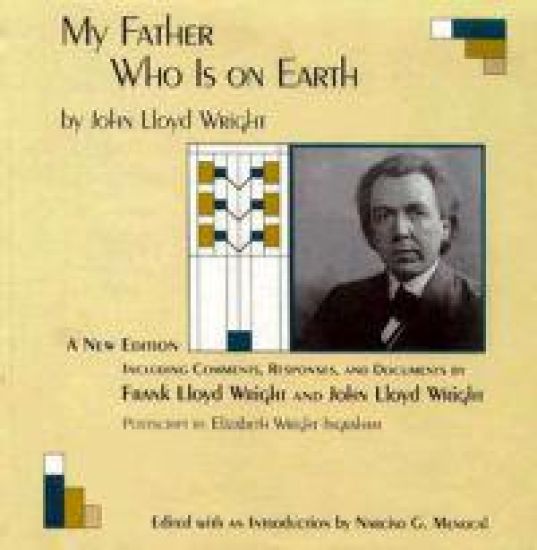
On 6 March 1945, after hearing rumors that his son John was writing a book about their stormy past, Frank Lloyd Wright wrote a note asking him, "What is this talk of a book? Of all that I don't need and dread is more exploitation. Can't you drop it?" John assured his father that he would like the book and sent him a copy on its publication - 29 March 1946. A few days later, Frank Lloyd Wright returned this copy with numerous comments penciled in the margin, responding to what his son had written, and a request that a new, second copy be sent to him. John complied with the request, but first transcribed not only all his father's comments into the clean copy in black pencil but also his own answers to them in red pencil. He also transcribed all these comments into a third copy, again using colors to differentiate his comments from those of his father. The third copy is the basis for this newest edition of John Lloyd Wright's book.
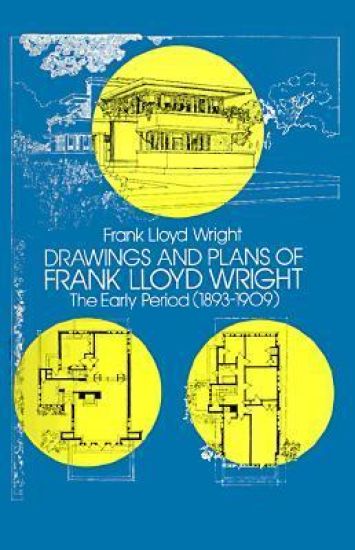
"I would much rather build than write about building, but when I am not building, I will write about building -- or the significance of those buildings I have already built." -- Frank Lloyd WrightFrank Lloyd Wright built a body of works and drawings to illustrate and explain his work: collections of designs with commentary that temperamentally parallel that work: irascible, radical, powerful and dense, astonishing and simple in its clarity. One of his earliest published works illustrates the parallel, preserving thought and design at a prophetic moment, shortly before Wright's genius and fame captured two continents and many converts. The Wasmuth portfolio of drawings (named after the original German publisher) is reproduced here from an extremely rare first edition (1910).Wright's polemical preface indicates the importance he attached to the drawings and their publication: ". . . the work illustrated in this volume, with the exception of the work of Louis Sullivan, is the first consistent protest in bricks and mortar against this pitiful waste academic, inorganic styles]. It is a serious attempt to formulate some industrial and aesthetic ideals that in a quiet, rational way will help to make a lovely thing of an American's home environment. . . ." "Home environment" for Wright was the Midwestern plain; these these drawings, perhaps his earliest experiments in organic design, partake of the Illinois, Indiana, Michigan and Wisconsin prairie with their emphasis on the horizontal ("the line of domesticity") and the environmental motif: "A beautiful elm standing near gave the suggestion for the mass of the building," Wright says of the Winslow house in River Forest, Illinois, a dwelling he cites as the first embodiment of many of his ideas. Elegant full-page architectural drawings and plans show Wright's atelier in Oak Park, Illinois, many homes, cottages, banks, a burial chapel, Unity Church temple, a concrete house designed for Ladies' Home Journal and numerous studies for buildings, treated as problems in design, that were never built.The republication of this rare work gives access again to what has been called "the single most important collection of work published by Frank Lloyd Wright." Students of American architectural genius will find here the seeds of Wright's greatness.