Kirjojen hintavertailu. Mukana 12 595 353 kirjaa ja 12 kauppaa.

Kirjailija

Frank Webster

Kirjat ja teokset yhdessä paikassa: 7 kirjaa, julkaisuja vuosilta 1986-2014, suosituimpien joukossa Journalists Under Fire. Vertaile teosten hintoja ja tarkista saatavuus suomalaisista kirjakaupoista.

7 kirjaa

Kirjojen julkaisuhaarukka 1986-2014.

Theories of the Information Society
Information is regarded as a distinguishing feature of our world. Where once economies were built on industry and conquest, we are now part of a global information economy. Pervasive media, expanding information occupations and the development of the internet convince many that living in an Information Society is the destiny of us all. Coping in an era of information flows, of virtual relationships and breakneck change poses challenges to one and all. In Theories of the Information Society Frank Webster sets out to make sense of the information explosion, taking a sceptical look at what thinkers mean when they refer to the Information Society, and critically examining the major post-war approaches to informational development. The fourth edition of this classic study brings it up to date with new research and with social and technological changes – from the ‘Twitter Revolutions’ of North Africa, to financial crises that introduced the worst recession in a life time, to the emergence of social media and blogging – and reassesses the work of key theorists in the light of these changes.More outspoken than in previous editions, Webster urges abandonment of Information Society scenarios, preferring analysis of the informatization of long-established relationships. This interdisciplinary book is essential reading for those trying to make sense of social and technological change in the post-war era. It addresses issues of central concern to students of sociology, politics, geography, communications, information science, cultural studies, computing and librarianship.

Theories of the Information Society
Information is regarded as a distinguishing feature of our world. Where once economies were built on industry and conquest, we are now part of a global information economy. Pervasive media, expanding information occupations and the development of the internet convince many that living in an Information Society is the destiny of us all. Coping in an era of information flows, of virtual relationships and breakneck change poses challenges to one and all. In Theories of the Information Society Frank Webster sets out to make sense of the information explosion, taking a sceptical look at what thinkers mean when they refer to the Information Society, and critically examining the major post-war approaches to informational development. The fourth edition of this classic study brings it up to date with new research and with social and technological changes – from the ‘Twitter Revolutions’ of North Africa, to financial crises that introduced the worst recession in a life time, to the emergence of social media and blogging – and reassesses the work of key theorists in the light of these changes.More outspoken than in previous editions, Webster urges abandonment of Information Society scenarios, preferring analysis of the informatization of long-established relationships. This interdisciplinary book is essential reading for those trying to make sense of social and technological change in the post-war era. It addresses issues of central concern to students of sociology, politics, geography, communications, information science, cultural studies, computing and librarianship.

Journalists Under Fire

Journalists Under Fire

Howard Tumber; Frank Webster

SAGE Publications Inc
2006
sidottu
'...it will appeal not only to students of journalism and media but also to anyone interested in the world around them' - Marie Kinsey, Times Higher Education Supplement 'Professor Tumber weaves together traditional and topical themes to produce a comprehensive overview of the media's role at times of conflict' - Stewart Purvis, City University London 'Presents a vivid picture of what it’s like to be working as a journalist on the front line during a ‘modern’ war. Through the eyes of leading correspondents in the field the authors examine their experience and its impact on the audience, their profession and their own lives' - The Information Centre about Asylum and Refugees in the UK (ICAR) Journalists Under Fire is the first book to combine a conceptually audacious analysis of the changing nature of war with an empirically rich critical analysis of journalists who cover conflict. In Journalists Under Fire, authors Howard Tumber and Frank Webster explore questions about the information war and journalistic practices. Frontline correspondents play a key role in information war, but their position is considerably more ambiguous and ambivalent than in the epoch of industrial war. They play a central role in the presentation of what is often spectacle to audiences around the world whose actual experience of war is far removed from combat. In the era of multi-national journalism, of the internet and satellite videophone, the book highlights central features of media reporting in contemporary conflict. Drawing on over fifty lengthy interviews with frontline correspondents, the authors shed light on the motivations, fears and practices of those who work under conditions of journalism under fire. Journalists Under Fire is designed for undergraduate and postgraduate students and for scholars, academics and researchers in the fields of journalism, media and communication, Media Studies, sociology, international relations and war studies.
Journalists Under Fire

Journalists Under Fire

Howard Tumber; Frank Webster

SAGE Publications Inc
2006
nidottu
Combines a conceptual analysis of the changing nature of war with a critical analysis of journalists who cover conflict. This book explores questions about information war and journalistic practices. It highlights central features of media reporting in contemporary conflict.
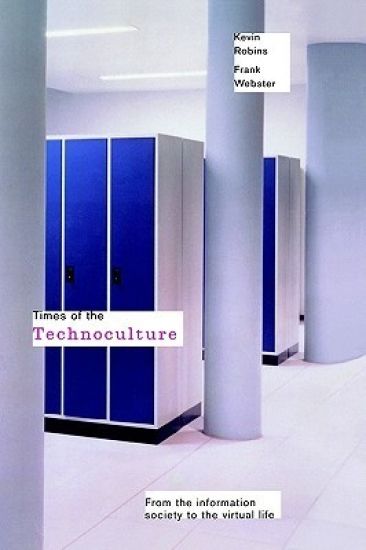
Times of the Technoculture

Times of the Technoculture

Kevin Robins; Frank Webster

Routledge
1999
nidottu
Times of the Technoculture explores the social and cultural impact of new technologies, tracing the origins of the information society from the coming of the machine with the industrial revolution to the development of mass production techniques in the early twentieth century.The authors look at how the military has controlled the development of the information society, and consider the centrality of education in government attempts to create a knowledge society. Engaging in contemporary debates surrounding the internet, Robins and Webster question whether it can really offer us a new world of virtual communities, and suggest more radical alternatives to the corporate agenda of contemporary technologies.
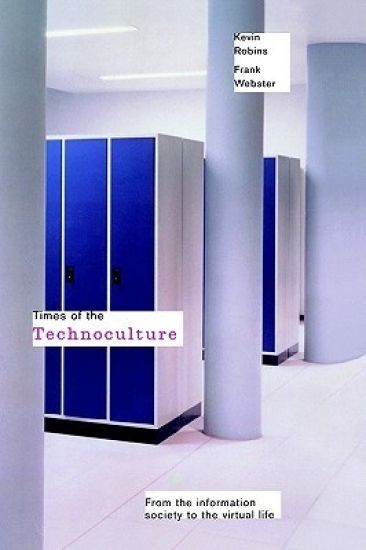
Times of the Technoculture

Times of the Technoculture

Kevin Robins; Frank Webster

Routledge
1999
sidottu
Times of the Technoculture explores the social and cultural impact of new technologies, tracing the origins of the information society from the coming of the machine with the industrial revolution to the development of mass production techniques in the early twentieth century.The authors look at how the military has controlled the development of the information society, and consider the centrality of education in government attempts to create a knowledge society. Engaging in contemporary debates surrounding the internet, Robins and Webster question whether it can really offer us a new world of virtual communities, and suggest more radical alternatives to the corporate agenda of contemporary technologies.
Information Technology

Information Technology

Kevin Robins; Frank Webster

Praeger Publishers Inc
1986
sidottu
Drawing widely on sociological, economic, and political theory cominbined with detailed attention to technical, business, and sociological evidence, this critical scholarly work offers a comprehensive analysis both of the significance of computing and communications technologies and the nature of contemporary society. This study argues that information technology, in association with the spread of corporate capitalism and the modern state, represents the extension and consolidation of control within the workplace and out into the wider society. The book includes detailed historical, empirical, and theoretical analysis which are crucial for an understaning of the new information technologies.