Kirjojen hintavertailu. Mukana 12 595 353 kirjaa ja 12 kauppaa.

Kirjailija

Franklyn M. Branley

Kirjat ja teokset yhdessä paikassa: 22 kirjaa, julkaisuja vuosilta 1983-2017, suosituimpien joukossa The International Space Station. Vertaile teosten hintoja ja tarkista saatavuus suomalaisista kirjakaupoista.

Mukana myös kirjoitusasut: Franklyn M Branley

22 kirjaa

Kirjojen julkaisuhaarukka 1983-2017.

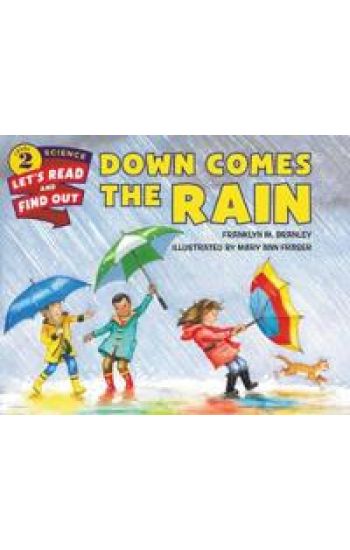
Down Comes the Rain

Down Comes the Rain

Franklyn M. Branley

HarperCollins
2017
nidottu
Read and find out about the ups and downpours of the water cycle! With colorful illustrations and engaging text, Down Comes the Rain is a fascinating look into the stages of the water cycle. After rain comes down, the sun comes out and dries the puddles. But the water isn't gone. The heat from the sun has turned it into water vapor-it has evaporated. Eventually, this moisture in the air condenses to form new clouds. Soon the rain will fall again. Featuring rich vocabulary bolded throughout the text, this brand-new edition of Franklyn M. Branley's 1997 title includes original illustrations by Mary Ann Fraser. This book also includes a glossary and a find out more section with an activity about the water cycle. Both the text and the artwork were newly vetted for accuracy by Don W. Hen and Dr. Sonia M Kreidenweis, Professor of Atmospheric Science at Colorado State University. This is a Level 2 Let's-Read-and-Find-Out Science title, which means the book explores more challenging concepts for children in the primary grades and supports the Common Core Learning Standards, Next Generation Science Standards, and the Science, Technology, Engineering, and Math (STEM) standards. Let's-Read-and-Find-Out is the winner of the American Association for the Advancement of Science/Subaru Science Books & Films Prize for Outstanding Science Series.
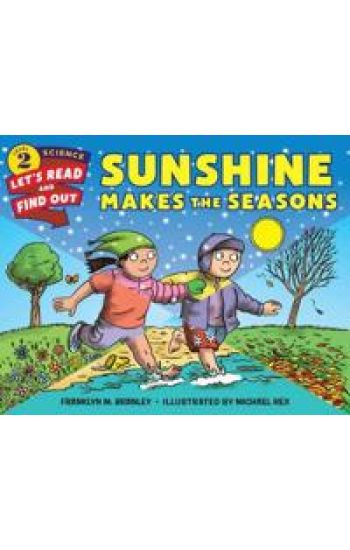
Sunshine Makes the Seasons

Sunshine Makes the Seasons

Franklyn M. Branley

HarperCollins
2016
nidottu
The sun shines down on us, giving warmth and light. But did you know that the sun also makes the seasons? As the earth makes one complete rotation around the sun every year, the seasons on the earth change-from winter to spring to summer to fall and back to winter again. Find out how the light from the sun affects life on the earth for all living things in this look at the only star in our solar system. Now rebranded with a new cover look, this book features content-rich vocabulary, fascinating side bars and diagrams by bestselling illustrator Michael Rex, and a find out more section with a simple experiment that allows kids to make their own orbiting model with an orange and a pencil. The author, Franklyn M. Branley, was the author of over 150 science books for children and Astronomer Emeritus and former Chairman of the American Museum of Natural History-Hayden Planetarium. The text and art were vetted for accuracy by an expert in the field. This is a Level 2 Let's-Read-and-Find-Out Science title, which means the book explores more challenging concepts for children in the primary grades and supports the Common Core Learning Standards, Next Generation Science Standards, and the Science, Technology, Engineering, and Math (STEM) standards. Let's-Read-and-Find-Out Science is the winner of the American Association for the Advancement of Science/Subaru Science Books & Films Prize for Outstanding Science Series.
What Makes a Magnet?

What Makes a Magnet?

Franklyn M. Branley

HarperCollins
2016
nidottu
Why does a magnet pick up a paper clip but not a leaf or a penny? How can the whole world be a magnet? Follow the step-by-step instructions about how to make your own magnet, and then find out for yourself what makes a magnet!
The Moon Seems to Change

The Moon Seems to Change

Franklyn M. Branley

HarperCollins
2015
nidottu
Have you noticed that the moon sometimes seems to grow and shrink? Read and find out about the phases of the moon! With a simple experiment using an orange, a pencil, and a flashlight, you can see for yourself why the moon looks different at different times of the month. Now rebranded with a new cover look, this classic picture book features rich vocabulary and simple diagrams. Both text and artwork were vetted for accuracy by an expert. This is a Level 2 Let's-Read-and-Find-Out Science title, which means the book explores more challenging concepts for children in the primary grades and supports the Common Core Learning Standards, Next Generation Science Standards, and the Science, Technology, Engineering, and Math (STEM) standards. Let's-Read-and-Find-Out Science is the winner of the American Association for the Advancement of Science/Subaru Science Books & Films Prize for Outstanding Science Series.
Earthquakes

Earthquakes

Franklyn M. Branley

HarperCollins
2015
nidottu
Read and find out about one of nature's most mysterious forces-the earthquake. Some earthquakes are so small that you don't even feel them, while others can make even big buildings shake! Learn why earthquakes happen, where they are most likely to occur, and what to do if one happens near you. Now rebranded with a new cover look and with updated text and art, this classic picture book describes the causes and effects of earthquakes (including a tsunami). This book features rich vocabulary and fascinating cross-sections of mountains, volcanoes, and faults in the earth's moving crust. The text and art were vetted by Dr. Roland Burgmann, Professor of the Department of Earth and Planetary Science at the University of California, Berkeley. This is a Level 2 Let's-Read-and-Find-Out Science title, which means the book explores more challenging concepts for children in the primary grades and supports the Common Core Learning Standards, Next Generation Science Standards, and the Science, Technology, Engineering, and Math (STEM) standards. Let's-Read-and-Find-Out Science is the winner of the American Association for the Advancement of Science/Subaru Science Books & Films Prize for Outstanding Science Series.
The Planets in Our Solar System

The Planets in Our Solar System

Franklyn M. Branley

HarperCollins
2015
nidottu
Where is it partly cloudy and 860 F? Venus! This classic picture book is a fascinating exploration of space written by children's nonfiction veteran and former chairman of the American Museum of Natural History-Hayden Planetarium Franklyn M. Branley and illustrated by Kevin O'Malley. Full of interesting facts about the eight planets in our solar system, including our very own Earth, this bestselling book also features photographs from Voyager and other space explorers. Now rebranded with a new cover look, this book features a find out more section with instructions for making your own solar system mobile and web research prompts about how to track the moon. Both text and artwork were vetted for accuracy by Jurrie van der Woude of NASA. This is a Level 2 Let's-Read-and-Find-Out, which means the book explores more challenging concepts perfect for children in the primary grades and supports the Common Core Learning Standards and Next Generation Science Standards. Let's-Read-and-Find-Out is the winner of the American Association for the Advancement of Science/Subaru Science Books & Films Prize for Outstanding Science Series.
What Makes Day and Night

What Makes Day and Night

Franklyn M. Branley

Harpercollins
2015
nidottu
Read and find out about what makes day and night in this colorfully illustrated nonfiction picture book.This clear and appealing science book for early elementary age kids, both at home and in the classroom, uses simple, fun diagrams and a guided experiment to explain what makes day and night. This book also includes a find out more section with additional activities to track nocturnal animals and to compare different times of day around the world.If you lived on the moon, you would have two straight weeks of daylight and then two weeks of night On earth, we have both day and night in just twenty-four hours, thanks to the quick rotation of our planet. Read and find out more in What Makes Day and Night This is a Level 2 Let's-Read-and-Find-Out, which means the book explores more challenging concepts for children in the primary grades. The 100+ titles in this leading nonfiction series are: hands-on and visualacclaimed and trustedgreat for classroomsTop 10 reasons to love LRFOs: Entertain and educate at the same timeHave appealing, child-centered topicsDevelopmentally appropriate for emerging readersFocused; answering questions instead of using survey approachEmploy engaging picture book quality illustrationsUse simple charts and graphics to improve visual literacy skillsFeature hands-on activities to engage young scientistsMeet national science education standardsWritten/illustrated by award-winning authors/illustrators & vetted by an expert in the fieldOver 130 titles in print, meeting a wide range of kids' scientific interestsBooks in this series support the Common Core Learning Standards, Next Generation Science Standards, and the Science, Technology, Engineering, and Math (STEM) standards. Let's-Read-and-Find-Out is the winner of the American Association for the Advancement of Science/Subaru Science Books & Films Prize for Outstanding Science Series.
Volcanoes

Volcanoes

Franklyn M. Branley

HarperCollins Children's Books
2008
nidottu
Read and find out about volcanoes in this colorfully illustrated nonfiction picture book. Volcanoes are one of nature's great wonders. For years, they can stand dormant, but once active, they can erupt in tremendous explosions of power. Marc Simont's fascinating illustrations and colorful maps denoting volcano locations around the world are beautifully paired with Franklyn Branley's clear, simple text. This is a clear and appealing science book for early elementary age kids, both at home and in the classroom. It's a Level 2 Let's-Read-and-Find-Out, which means the book explores more challenging concepts for children in the primary grades. The 100+ titles in this leading nonfiction series are: hands-on and visual acclaimed and trusted great for classrooms Top 10 reasons to love LRFOs: Entertain and educate at the same time Have appealing, child-centered topics Developmentally appropriate for emerging readers Focused; answering questions instead of using survey approach Employ engaging picture book quality illustrations Use simple charts and graphics to improve visual literacy skills Feature hands-on activities to engage young scientists Meet national science education standards Written/illustrated by award-winning authors/illustrators & vetted by an expert in the field Over 130 titles in print, meeting a wide range of kids' scientific interests Books in this series support the Common Core Learning Standards, Next Generation Science Standards, and the Science, Technology, Engineering, and Math (STEM) standards. Let's-Read-and-Find-Out is the winner of the American Association for the Advancement of Science/Subaru Science Books & Films Prize for Outstanding Science Series.

Gravity Is a Mystery

Gravity Is a Mystery

Franklyn M. Branley

Harpercollins
2007
nidottu
Read and find out about gravity in this colorfully illustrated nonfiction picture book.What goes up must come down. Everybody knows that. But what is it that pulls everything from rocks to rockets toward the center of the earth? It's gravity.Nobody can say exactly what it is, but gravity is there, pulling on everything, all the time. With the help of an adventurous scientist and his fun-loving dog, you can read and find out about this mysterious force.This is a clear and appealing science book for early elementary age kids, both at home and in the classroom. It's a Level 2 Let's-Read-and-Find-Out, which means the book explores more challenging concepts for children in the primary grades. The 100+ titles in this leading nonfiction series are: hands-on and visualacclaimed and trustedgreat for classroomsTop 10 reasons to love LRFOs: Entertain and educate at the same timeHave appealing, child-centered topicsDevelopmentally appropriate for emerging readersFocused; answering questions instead of using survey approachEmploy engaging picture book quality illustrationsUse simple charts and graphics to improve visual literacy skillsFeature hands-on activities to engage young scientistsMeet national science education standardsWritten/illustrated by award-winning authors/illustrators & vetted by an expert in the fieldOver 130 titles in print, meeting a wide range of kids' scientific interestsBooks in this series support the Common Core Learning Standards, Next Generation Science Standards, and the Science, Technology, Engineering, and Math (STEM) standards. Let's-Read-and-Find-Out is the winner of the American Association for the Advancement of Science/Subaru Science Books & Films Prize for Outstanding Science Series.
Air Is All Around You

Air Is All Around You

Franklyn M Branley

HARPERCOLLINS PUBLISHERS INC
2006
nidottu
Read and find out about how to discover more about the air that's all around you in this colorfully illustrated nonfiction picture book. What weighs 5 quadrillion tons but can't knock you down? Air The air that surrounds the earth weighs an enormous amount, but you can't even feel it unless the wind is blowing. You can't see air or smell it, either. But we know it's there, and we couldn't live without it. When it's not windy, it can be easy to forget about air. But air is everywhere--it fills your house, your car, and even your empty milk glass. In fact, a regular room holds about 75 pounds of it This is a clear and appealing science book for early elementary age kids, both at home and in the classroom. It includes simple experiments that will show you how to prove that there is mysterious, miraculous air--all around you. This is a Level 1 Let's-Read-and-Find-Out, which means the book explores introductory concepts perfect for children in the primary grades. The 100+ titles in this leading nonfiction series are: hands-on and visual acclaimed and trusted great for classrooms Top 10 reasons to love LRFOs: Entertain and educate at the same time Have appealing, child-centered topics Developmentally appropriate for emerging readers Focused; answering questions instead of using survey approach Employ engaging picture book quality illustrations Use simple charts and graphics to improve visual literacy skills Feature hands-on activities to engage young scientists Meet national science education standards Written/illustrated by award-winning authors/illustrators & vetted by an expert in the field Over 130 titles in print, meeting a wide range of kids' scientific interests Books in this series support the Common Core Learning Standards, Next Generation Science Standards, and the Science, Technology, Engineering, and Math (STEM) standards. Let's-Read-and-Find-Out is the winner of the American Association for the Advancement of Science/Subaru Science Books & Films Prize for Outstanding Science Series.
Mission to Mars

Mission to Mars

Franklyn M. Branley

Harpercollins
2002
nidottu
Read and find out about exploring Mars in this colorfully illustrated nonfiction picture book.Someday people from Earth may live on Mars. Soon we will go to the planet to learn more about it. It will become our outpost in space--our space colony. The author-illustrator pair who brought us The International Space Station, Floating in Space, and What the Moon Is Like tackle the hot topic in space: a mission to the red planet.This is a clear and appealing science book for early elementary age kids, both at home and in the classroom. It's a Level 2 Let's-Read-and-Find-Out, which means the book explores more challenging concepts for children in the primary grades. The 100+ titles in this leading nonfiction series are: hands-on and visualacclaimed and trustedgreat for classroomsTop 10 reasons to love LRFOs: Entertain and educate at the same timeHave appealing, child-centered topicsDevelopmentally appropriate for emerging readersFocused; answering questions instead of using survey approachEmploy engaging picture book quality illustrationsUse simple charts and graphics to improve visual literacy skillsFeature hands-on activities to engage young scientistsMeet national science education standardsWritten/illustrated by award-winning authors/illustrators & vetted by an expert in the fieldOver 130 titles in print, meeting a wide range of kids' scientific interestsBooks in this series support the Common Core Learning Standards, Next Generation Science Standards, and the Science, Technology, Engineering, and Math (STEM) standards. Let's-Read-and-Find-Out is the winner of the American Association for the Advancement of Science/Subaru Science Books & Films Prize for Outstanding Science Series.
The Sun

The Sun

Franklyn M Branley

HARPERCOLLINS PUBLISHERS INC
2002
nidottu
Read and find out about the sun in this colorfully illustrated nonfiction picture book.The sun brings heat, warmth, and energy to the Earth. What is the sun made of? How big is it? How far away? Read and find out This is a clear and appealing science book for early elementary age kids, both at home and in the classroom. It's a Level 2 Let's-Read-and-Find-Out, which means the book explores more challenging concepts for children in the primary grades. The 100+ titles in this leading nonfiction series are: hands-on and visualacclaimed and trustedgreat for classroomsTop 10 reasons to love LRFOs: Entertain and educate at the same timeHave appealing, child-centered topicsDevelopmentally appropriate for emerging readersFocused; answering questions instead of using survey approachEmploy engaging picture book quality illustrationsUse simple charts and graphics to improve visual literacy skillsFeature hands-on activities to engage young scientistsMeet national science education standardsWritten/illustrated by award-winning authors/illustrators & vetted by an expert in the fieldOver 130 titles in print, meeting a wide range of kids' scientific interestsBooks in this series support the Common Core Learning Standards, Next Generation Science Standards, and the Science, Technology, Engineering, and Math (STEM) standards. Let's-Read-and-Find-Out is the winner of the American Association for the Advancement of Science/Subaru Science Books & Films Prize for Outstanding Science Series.
The International Space Station

The International Space Station

Franklyn M Branley

HARPERCOLLINS PUBLISHERS INC
2000
nidottu
Read and find out about the International Space Station in this colorfully illustrated nonfiction picture book. The International Space Station races through space at 17,500 miles per hour. How do people live there? What may they discover? Find out the story of the twenty-first century's great scientific adventure in this this in-depth look at the construction and purpose of the International Space Station. Winner, Outstanding Science Trade Books for Children (selected by National Science Teachers Association & Children's Book Council) and an ALA Booklist Top 10 Science Books for Children This is a clear and appealing science book for early elementary age kids, both at home and in the classroom. It's a Level 2 Let's-Read-and-Find-Out, which means the book explores more challenging concepts for children in the primary grades. The 100+ titles in this leading nonfiction series are: hands-on and visual acclaimed and trusted great for classrooms Top 10 reasons to love LRFOs: Entertain and educate at the same time Have appealing, child-centered topics Developmentally appropriate for emerging readers Focused; answering questions instead of using survey approach Employ engaging picture book quality illustrations Use simple charts and graphics to improve visual literacy skills Feature hands-on activities to engage young scientists Meet national science education standards Written/illustrated by award-winning authors/illustrators & vetted by an expert in the field Over 130 titles in print, meeting a wide range of kids' scientific interests Books in this series support the Common Core Learning Standards, Next Generation Science Standards, and the Science, Technology, Engineering, and Math (STEM) standards. Let's-Read-and-Find-Out is the winner of the American Association for the Advancement of Science/Subaru Science Books & Films Prize for Outstanding Science Series.
What the Moon is Like

What the Moon is Like

Franklyn M Branley

HARPERCOLLINS PUBLISHERS INC
2000
nidottu
Read and find out about what the moon is like in this colorfully illustrated nonfiction picture book.Imagine that you're walking on the moon. What is it like? For thousands of years people looked up at the moon and wondered about it. Now we know what the moon is like. There is no air on the moon and nothing grows, but there are towering mountains and deep craters--and much more.Colder than the desert, the hotter than the desert, the moon is an amazing place to explore.This is a clear and appealing science book for early elementary age kids, both at home and in the classroom. It's a Level 2 Let's-Read-and-Find-Out, which means the book explores more challenging concepts for children in the primary grades. The 100+ titles in this leading nonfiction series are: hands-on and visualacclaimed and trustedgreat for classroomsTop 10 reasons to love LRFOs: Entertain and educate at the same timeHave appealing, child-centered topicsDevelopmentally appropriate for emerging readersFocused; answering questions instead of using survey approachEmploy engaging picture book quality illustrationsUse simple charts and graphics to improve visual literacy skillsFeature hands-on activities to engage young scientistsMeet national science education standardsWritten/illustrated by award-winning authors/illustrators & vetted by an expert in the fieldOver 130 titles in print, meeting a wide range of kids' scientific interestsBooks in this series support the Common Core Learning Standards, Next Generation Science Standards, and the Science, Technology, Engineering, and Math (STEM) standards. Let's-Read-and-Find-Out is the winner of the American Association for the Advancement of Science/Subaru Science Books & Films Prize for Outstanding Science Series.
What Happened to the Dinosaurs?

What Happened to the Dinosaurs?

Franklyn M. Branley

Harpercollins
2000
nidottu
Read and find out about what happened to the dinosaurs in this colorfully illustrated nonfiction picture book.For millions of years these fantastic creatures roamed our planet. Then, suddenly, they all disappeared. Scientists investigate what could have caused this huge extinction 65 million years ago.Distinguished writer Franklyn M. Branley and award-winning artist Marc Simont provide the perfect introduction to an always fascinating subject--the disappearance of the dinosaurs.This Outstanding Science Trade Books for Children is a clear and appealing science book for early elementary age kids, both at home and in the classroom. It's a Level 2 Let's-Read-and-Find-Out, which means the book explores more challenging concepts for children in the primary grades. The 100+ titles in this leading nonfiction series are: hands-on and visualacclaimed and trustedgreat for classroomsTop 10 reasons to love LRFOs: Entertain and educate at the same timeHave appealing, child-centered topicsDevelopmentally appropriate for emerging readersFocused; answering questions instead of using survey approachEmploy engaging picture book quality illustrationsUse simple charts and graphics to improve visual literacy skillsFeature hands-on activities to engage young scientistsMeet national science education standardsWritten/illustrated by award-winning authors/illustrators & vetted by an expert in the fieldOver 130 titles in print, meeting a wide range of kids' scientific interestsBooks in this series support the Common Core Learning Standards, Next Generation Science Standards, and the Science, Technology, Engineering, and Math (STEM) standards. Let's-Read-and-Find-Out is the winner of the American Association for the Advancement of Science/Subaru Science Books & Films Prize for Outstanding Science Series.
Snow Is Falling

Snow Is Falling

Franklyn M Branley

HARPERCOLLINS PUBLISHERS INC
2000
nidottu
Read and find out about snow in this colorfully illustrated nonfiction picture book.Snow is wonderful--for sledding, for skiing, and for building snowmen. But did you know that snow can actually keep things warm? Find out how snow helps plants, animals, and people to survive. But when a blizzard blows, watch out The snow that is so useful can be dangerous too.Franklyn M. Branley and Holly Keller team up for a fun and colorful exploration of the world of snow, including experiments and activities for cold winter days.This is a clear and appealing science book for early elementary age kids, both at home and in the classroom. It's a Level 1 Let's-Read-and-Find-Out, which means the book explores introductory concepts perfect for children in the primary grades. The 100+ titles in this leading nonfiction series are: hands-on and visualacclaimed and trustedgreat for classroomsTop 10 reasons to love LRFOs: Entertain and educate at the same timeHave appealing, child-centered topicsDevelopmentally appropriate for emerging readersFocused; answering questions instead of using survey approachEmploy engaging picture book quality illustrationsUse simple charts and graphics to improve visual literacy skillsFeature hands-on activities to engage young scientistsMeet national science education standardsWritten/illustrated by award-winning authors/illustrators & vetted by an expert in the fieldOver 130 titles in print, meeting a wide range of kids' scientific interestsBooks in this series support the Common Core Learning Standards, Next Generation Science Standards, and the Science, Technology, Engineering, and Math (STEM) standards. Let's-Read-and-Find-Out is the winner of the American Association for the Advancement of Science/Subaru Science Books & Films Prize for Outstanding Science Series.
Flash Crash Rumble and Roll

Flash Crash Rumble and Roll

Franklyn M Branley

HARPERCOLLINS PUBLISHERS INC
1999
pokkari
Read and find out about what causes the flash, crash, rumble, and roll of thunderstorms in this colorfully illustrated nonfiction picture book.Did you know that lightning bolts can be over a mile long? Or that they may come from clouds that are ten miles high? Storms can be scary, but not if you know what causes them. Before the next thunderstorm, grab this book by the expert science team Franklyn Branley and True Kelley and learn all about thunderstorms.This is a clear and appealing science book for early elementary age kids, both at home and in the classroom. It's a Level 2 Let's-Read-and-Find-Out, which means the book explores more challenging concepts for children in the primary grades. The 100+ titles in this leading nonfiction series are: hands-on and visualacclaimed and trustedgreat for classroomsTop 10 reasons to love LRFOs: Entertain and educate at the same timeHave appealing, child-centered topicsDevelopmentally appropriate for emerging readersFocused; answering questions instead of using survey approachEmploy engaging picture book quality illustrationsUse simple charts and graphics to improve visual literacy skillsFeature hands-on activities to engage young scientistsMeet national science education standardsWritten/illustrated by award-winning authors/illustrators & vetted by an expert in the fieldOver 130 titles in print, meeting a wide range of kids' scientific interestsBooks in this series support the Common Core Learning Standards, Next Generation Science Standards, and the Science, Technology, Engineering, and Math (STEM) standards. Let's-Read-and-Find-Out is the winner of the American Association for the Advancement of Science/Subaru Science Books & Films Prize for Outstanding Science Series.
Day Light, Night Light: Where Light Comes from

Day Light, Night Light: Where Light Comes from

Franklyn M. Branley

Harpercollins
1998
nidottu
Read and find out about the science of light in this colorfully illustrated nonfiction picture book.Any budding scientist who's ever wondered about the fascinating properties of light will want to read this classic science title. Readers will even learn how fast light can travel: from the moon to the Earth in less than three seconds Veteran science author Franklyn M. Branley's lively text and Stacey Schuett's new illustrations combine fun facts and hands-on activities, making this an accessible introduction to the science of light. This is a clear and appealing science book for early elementary age kids, both at home and in the classroom. It's a Level 2 Let's-Read-and-Find-Out, which means the book explores more challenging concepts for children in the primary grades. The 100+ titles in this leading nonfiction series are: hands-on and visualacclaimed and trustedgreat for classroomsTop 10 reasons to love LRFOs: Entertain and educate at the same timeHave appealing, child-centered topicsDevelopmentally appropriate for emerging readersFocused; answering questions instead of using survey approachEmploy engaging picture book quality illustrationsUse simple charts and graphics to improve visual literacy skillsFeature hands-on activities to engage young scientistsMeet national science education standardsWritten/illustrated by award-winning authors/illustrators & vetted by an expert in the fieldOver 130 titles in print, meeting a wide range of kids' scientific interestsBooks in this series support the Common Core Learning Standards, Next Generation Science Standards, and the Science, Technology, Engineering, and Math (STEM) standards. Let's-Read-and-Find-Out is the winner of the American Association for the Advancement of Science/Subaru Science Books & Films Prize for Outstanding Science Series.
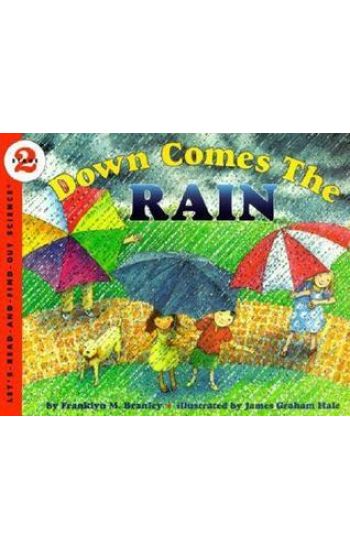
Down Comes the Rain

Down Comes the Rain

Franklyn M Branley; J G Hale

HarperCollins Children's Books
1997
nidottu
After rain comes down, the sun comes out and dries the puddles. But the water isn't gone. The heat from the sun has turned it into water vapor-it has evaporated. Eventually, this moisture in the air condenses to form new clouds. Soon the rain will fall again. Read on to find out all the ups and downpours of the water cycle!