Kirjojen hintavertailu. Mukana 12 174 226 kirjaa ja 12 kauppaa.

Kirjailija

Fred Dervin

Kirjat ja teokset yhdessä paikassa: 69 kirjaa, julkaisuja vuosilta 2013-2026, suosituimpien joukossa Interculturality Between East and West. Vertaile teosten hintoja ja tarkista saatavuus suomalaisista kirjakaupoista.

69 kirjaa

Kirjojen julkaisuhaarukka 2013-2026.

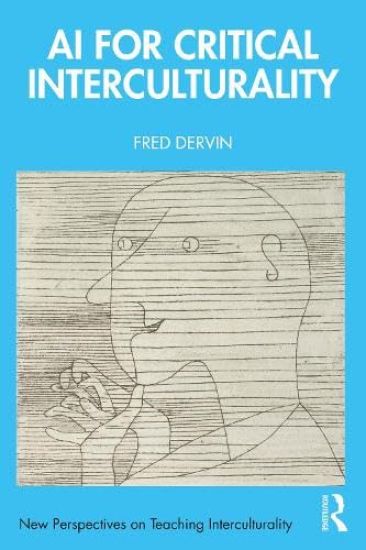
AI for Critical Interculturality

AI for Critical Interculturality

Fred Dervin

TAYLOR FRANCIS LTD
2025
sidottu
Provocative, interdisciplinary, and daringly critical, AI for Critical Interculturality doesn’t spoon-feed ready-made answers but rather inspires readers to think, question and interrogate interculturality alongside AI. In a world where AI is often feared as a threat to human intelligence and creativity, the book flips the script by positioning AI as a valuable partner in the study of interculturality as both a scientific and educational notion. How could AI help us dismantle biases, interrogate knowledge production/dissemination and foster deeper self-reflexivity in the broad field of Intercultural Communication Education and Research? What happens when we treat AI not as a passive tool but as an active interlocutor – one that mirrors our ideological blind spots and pushes us toward sharper criticality and reflexivity? Through rich theoretical and conceptual insights, real-world cases and interactive activities, this book equips readers to unmask ideologies in AI-generated knowledge about interculturality; leverage AI as a mirror to expose and confront personal and systemic biases; consider some language stratagems to disrupt linguistic norms in human-AI dialogue. More importantly, the author asks us to forge an ethical and non-utilitarian partnership with AI. This boundary-shattering work invites students, educators and researchers of interculturality to envision and co-create the future of intercultural studies.

Money and Interculturality

Money and Interculturality

Fred Dervin

TAYLOR FRANCIS LTD
2025
sidottu
This book challenges the silence surrounding money, revealing its profound influences on personal and social identities and power dynamics in intercultural contexts.In this inimitable book, Fred Dervin continues to explore the notion of interculturality by offering a novel and critical exploration of the often-overlooked role of money, especially within the broad field of Intercultural Communication Education and Research (ICER). Adopting a robust interdisciplinary lens and drawing on concrete examples, the author combines, for example, financial education, literature, philosophy and sociology to critique the economic and moral dimensions of global interactions in today's confused and confusing world. From examining the commodification of intercultural relations to proposing shared responsibility and ethical reasoning, Money and Interculturality: A Theory provides a fresh perspective on how money shapes and often distorts interculturality. Based on a unique integration of contemporary, historical and literary insights, Dervin questions and deepens our understanding of interculturality while equipping readers with new vocabulary and frameworks to address the harsh realities of global, unpredictable and power-laden communication.This somewhat provocative book represents an essential reference for educators, practitioners, researchers and students seeking to investigate the connections between money and interculturality.
Money and Interculturality

Money and Interculturality

Fred Dervin

TAYLOR FRANCIS LTD
2025
nidottu
This book challenges the silence surrounding money, revealing its profound influences on personal and social identities and power dynamics in intercultural contexts.In this inimitable book, Fred Dervin continues to explore the notion of interculturality by offering a novel and critical exploration of the often-overlooked role of money, especially within the broad field of Intercultural Communication Education and Research (ICER). Adopting a robust interdisciplinary lens and drawing on concrete examples, the author combines, for example, financial education, literature, philosophy and sociology to critique the economic and moral dimensions of global interactions in today's confused and confusing world. From examining the commodification of intercultural relations to proposing shared responsibility and ethical reasoning, Money and Interculturality: A Theory provides a fresh perspective on how money shapes and often distorts interculturality. Based on a unique integration of contemporary, historical and literary insights, Dervin questions and deepens our understanding of interculturality while equipping readers with new vocabulary and frameworks to address the harsh realities of global, unpredictable and power-laden communication.This somewhat provocative book represents an essential reference for educators, practitioners, researchers and students seeking to investigate the connections between money and interculturality.
Intercultural Self-Defence

Intercultural Self-Defence

Fred Dervin

TAYLOR FRANCIS LTD
2025
sidottu
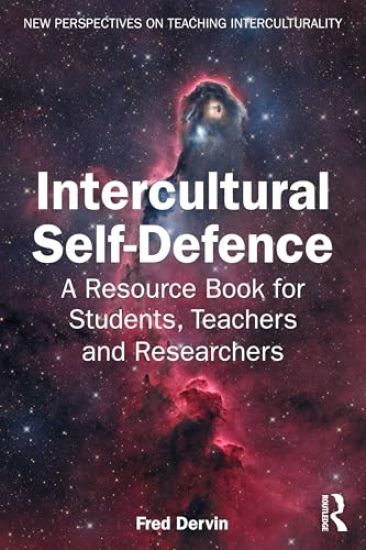
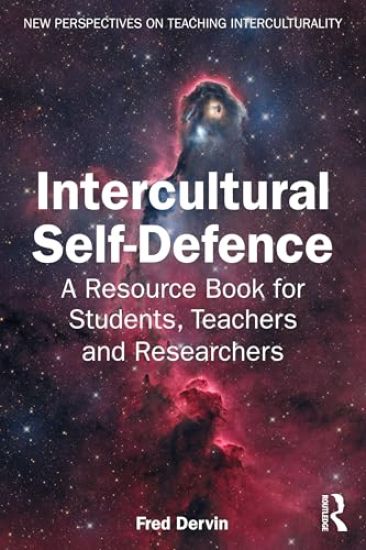
Based on the author’s 25 years of experience in researching and teaching interculturality, Intercultural Self-Defence: A Resource Book for Students, Teachers and Researchers is a compelling exploration of the subtle forces that shape Intercultural Communication Education and Research (ICER).The Resource Book delves into the adversaries lurking within ICER - indoctrination, intellectual inertia and linguistic indifference - and unveils how they can stifle genuine understanding and growth. Each chapter acts as a critical lens, scrutinising the boundaries between education and indoctrination, the stagnation of thought and the perils of linguistic complacency. The author illustrates the impact of these forces on interculturality and the ethical implications they carry. The book contains a series of activities designed to encourage creative self-reflection and fosters a deeper understanding of the interplay between language, power and interculturality. But it is more than a resource: It is a manifesto for continuous learning, active engagement and the pursuit of a more inclusive and dynamic field of intercultural communication education and scholarship.Advocating a vigilant and self-reflexive approach, the book will serve as a critical guide for students, teachers and researchers specialising in intercultural research and education to navigate the complexities of interculturality.
Intercultural Self-Defence

Intercultural Self-Defence

Fred Dervin

TAYLOR FRANCIS LTD
2025
nidottu
Based on the author’s 25 years of experience in researching and teaching interculturality, Intercultural Self-Defence: A Resource Book for Students, Teachers and Researchers is a compelling exploration of the subtle forces that shape Intercultural Communication Education and Research (ICER).The Resource Book delves into the adversaries lurking within ICER - indoctrination, intellectual inertia and linguistic indifference - and unveils how they can stifle genuine understanding and growth. Each chapter acts as a critical lens, scrutinising the boundaries between education and indoctrination, the stagnation of thought and the perils of linguistic complacency. The author illustrates the impact of these forces on interculturality and the ethical implications they carry. The book contains a series of activities designed to encourage creative self-reflection and fosters a deeper understanding of the interplay between language, power and interculturality. But it is more than a resource: It is a manifesto for continuous learning, active engagement and the pursuit of a more inclusive and dynamic field of intercultural communication education and scholarship.Advocating a vigilant and self-reflexive approach, the book will serve as a critical guide for students, teachers and researchers specialising in intercultural research and education to navigate the complexities of interculturality.
Flexing Interculturality

Flexing Interculturality

Hamza R'boul; Fred Dervin

TAYLOR FRANCIS LTD
2024
nidottu
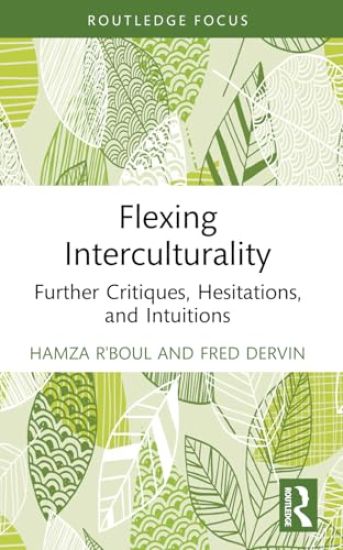
This book continues the two scholars’ endeavours for opening up more spaces for alternative perspectives, analyses and praxis in interculturality. The main text features fragments that bear relevance to a wide range of topics including education, politics, personal experiences, social realities, hierarchies, self-critique, language and locus of enunciation. The book takes a step forward by using fragments as an alternative way of doing research and writing scholarship. The premise here is that fragments are human and they reflect our fleeting, inconsistent and unsystematic production of knowledge that today’s scholarship has presented to be linear, structured and aligned. The authors draw on fragments to make their points as forcefully as possible by constructing sentences that destabilize themselves and readers to consider other paths and perspectives. That is, writing otherwise may propel thinking otherwise since the very bases, upon which we push our insights to mould through and by, are shaken and ultimately transcended. The chapters include questions with (temporary) answers as an attempt to induce readers to think for themselves and to move beyond what this book has to offer. This book will be a great read to scholars and students in the field of interculturality, education and sociology. The authors hope that this book will be seen as a genuine example of de-linking from mainstream writing and thinking conventions about interculturality in communication and education without compromising epistemic depth and nuance.
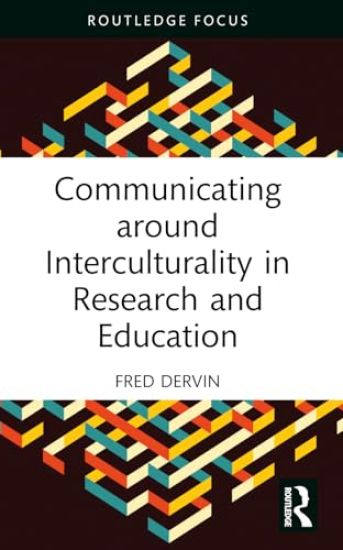
Communicating around Interculturality in Research and Education
This book does not instruct the reader how to communicate interculturally but supports them in reflecting on how they can (re-)negotiate and (re-)construct knowledge(s), ideologies and relations around the notion of interculturality. Anchored in the author’s original and thought-provoking perspectives on interculturality, this interdisciplinary and global-minded book explores how communicating around the notion cannot do away with ideologisms, issues of language and translation or the problematization of voice and silence in research and education. Written in an original and stimulating way, relying on different writing genres and styles to ‘mimic’ the dynamism and flexibility of the very notion under review, the author urges us to (un-)voice, scrutinize, nurture and galvanize our ways of dealing with interculturality alone and together with others in academia. The very specific focus of the book, communicating around interculturality (instead of ‘doing’ interculturality), represents a fresh and important move for observing, analyzing, speaking of and contributing to today's complex and divided world. The title is aimed at researchers, students and educators interested in examining and enriching their own takes on interculturality, from a more reflexive and interactive perspective.
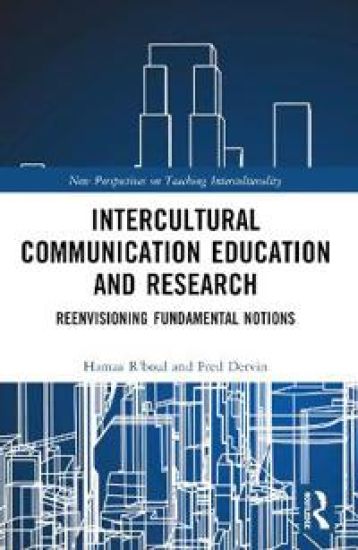
Intercultural Communication Education and Research

Intercultural Communication Education and Research

Hamza R'boul; Fred Dervin

TAYLOR FRANCIS LTD
2024
nidottu
Seeking to uncover underlying epistemic invisibilities in generating intercultural communication education and research knowledge and to open up space for envisaging interculturality alternatively, this book reexamines and problematizes the assumptions and ontologies in the conceptual systems of interculturality.In enunciating and critiquing what has been largely endorsed, normalized and taken for granted, this volume brings to the fore different, changing and situated understandings of intercultural ontologies and epistemologies in terms of premises, workings and objectives, unveiling the entangled factors and contexts that have delimited and circumscribed the realm. The authors believe that the field would benefit from some cognitive and sensory dissonance while reengaging effectively with notions to move forward. In particular, they endeavour to de-monumentalize and disrupt the very conceptual tenets that may have rendered interculturality myopic, repetitive, monolithic and aseptic in expanding the epistemic concerns of the “intercultural”, especially in the English language.This book will be an essential read for scholars and students of the sociology of education, educational philosophy and intercultural education and also for all readers interested in the broad field of interculturality.
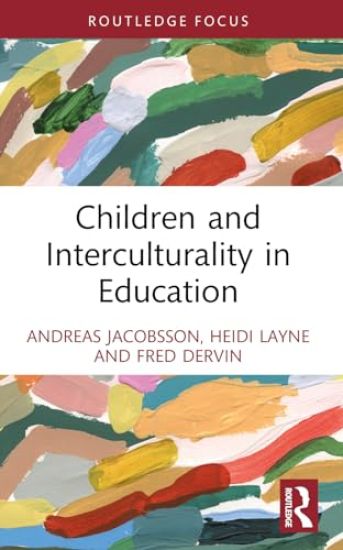
Children and Interculturality in Education

Children and Interculturality in Education

Andreas Jacobsson; Heidi Layne; Fred Dervin

TAYLOR FRANCIS LTD
2024
nidottu
This book is unique in presenting new perspectives on how to introduce interculturality to children. It proposes critical ideas for introducing sensitive topics around culture, race and intersectionality. The book develops the reader’s criticality and reflexivity, providing original and concrete tools to introduce interculturality to children and to make children aware of how intercultural issues matter in their lives and in the world at large. It includes case studies of children’s realities from across the world, and provides insights into how to approach sensitive topics such as culturalism, discrimination, inequality and racism in relation to diversity in different contexts.Written in the spirit of critical interculturality, the book will be of great interest to researchers and students in the field of intercultural studies, global childhood and early childhood education, as well as trainee teachers and educators.
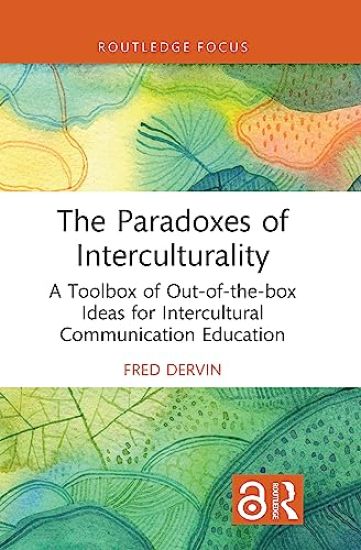
The Paradoxes of Interculturality

The Paradoxes of Interculturality

Fred Dervin

TAYLOR FRANCIS LTD
2024
nidottu
Offering a unique reading experience, this book examines the epistemologies of interculturality and explores potential routes to review and revisit the notion anew.Grounded in different sociocultural, economic and political perspectives around the world, interculturality in education and research bears a paradoxical attribute of 'contradictions' and 'inconsistencies', making it a polysemous and flexible notion that has no definitive diagnosis and requires constant unthinking and rethinking. The author provides a toolbox of 'out-of-box ideas' in the form of fragmental yet standalone writings and follow-up questions concerning stereotypes about the very notion of interculturality and conceptual and methodological flaws in the way it is used. Readers are encouraged to critically reflect about interculturality as it stands today in global research and education. In identifying the paradoxes of interculturality and proposing alternative directions, the book stimulates a diversity of thoughts about the notion that goes beyond the 'West'. The book will be an essential reading for scholars, students and educators interested in education philosophy, applied linguistics and the broad field of intercultural communication education.The Open Access version of this book, available at http://www.taylorfrancis.com, has been made available under a Creative Commons [Attribution-Non Commercial-No Derivatives (CC-BY-NC-ND)] 4.0 license.Funded by University of Helsinki
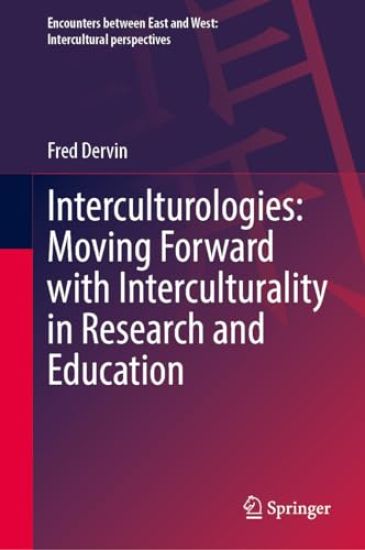
Interculturologies: Moving Forward with Interculturality in Research and Education
This book showcases 100 terms related to the scientific, educational and political notion of interculturality. Each term is presented with its specific multilingual discussions, scientific origins, multifaceted content, and short reviews of the global literature in English. Some myths, imaginaries and ideologies (‘interculturologies’ in the book) that they have led to construct are also introduced. Questions at the end of each entry encourage readers to think further regarding the notion of interculturality in research and education. Based on the author's decades-long experience in researching and teaching in the interdisciplinary field of intercultural communication education in different parts of the world, his constant reflexive and critical engagement with the notion of interculturality, and in-depth reviews of current research, the author has carefully selected (recurrent) concepts, notions, and ideas to be deconstructed in order to challenge readers to think further with him, especially beyond ‘Western’ and certain static and resistant ideological positions. These represent a complex body of concepts and notions, but also involve myths and imaginaries that can prevent us from moving forward in our thinking and in acting interculturally in research and education. This book serves as a reading guide for further interculturologies that the reader might identify in the future or as they engage with the book.
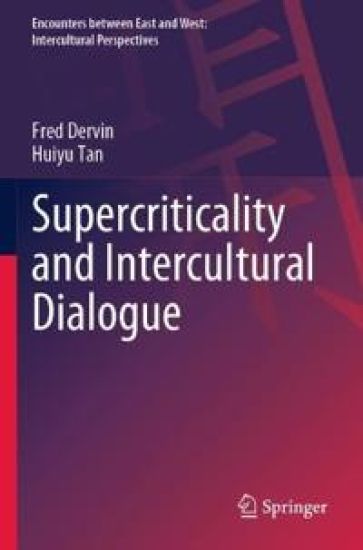
Supercriticality and Intercultural Dialogue

Supercriticality and Intercultural Dialogue

Fred Dervin; Huiyu Tan

SPRINGER VERLAG, SINGAPORE
2023
nidottu
This book offers a snapshot of interculturality as a complex, unstable and highly political object of research and education when it locates at the centre of multifaceted dialogues between teachers and students; students and students; teachers, students, scholars and readers. The context of the book is a Chinese course on intercultural communication education where students engage with local and international teachers. By listening to the intriguing and stimulating voices of these students in dialogue with the teachers, the reader also has the opportunity to enter the intercultural world of Chinese youth, beyond stereotypes. The unique approach proposed in the book is of interest to students, teachers of intercultural communication education, teacher educators, researchers and anyone wishing to build up supercriticality in relation to the fascinating notion of interculturality. The book contains 15 chapters and revolves around five main dialogues between the students and their teachers. Following each dialogue, the floor is given to the students to react to the dialogues and to share their views on questions that emerged from the main dialogues. The book conveys the authors’ excitement about approaching interculturality in supercritical ways, engaging in the process with multiple voices.
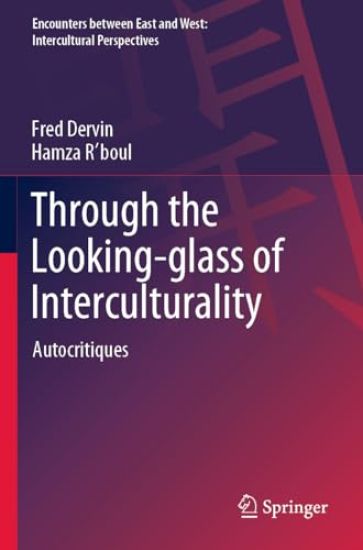
Through the Looking-glass of Interculturality

Through the Looking-glass of Interculturality

Fred Dervin; Hamza R'boul

SPRINGER VERLAG, SINGAPORE
2023
nidottu
This book starts from the premise that honest and constructive dialogue between scholars and educators of interculturality, especially from different geopolitical spheres, is needed more than ever. The book is about the important and yet contested notion of interculturality—a notion used in different fields of research. It was co-written by two scholars who have never met before and who got to know each other intellectually and personally in the process of writing this book, using interculturality as a looking-glass. (Re-)negotiating meanings, ideologies and their own identities in writing the chapters together, the authors enter into multifaceted dialogues and intercommunicate, sharing while accepting disagreements. The co-authors’ different profiles in terms of geography, generation, status, preferred paradigms and multilingual identity (amongst others) are put forward, confronted, and mirrored in the different chapters, leading to the joint negotiation of aspirations concerning interculturality in communication and education. While describing their current takes on interculturality they also conduct autocritiques of their past and present engagement with the notion. The following questions are also addressed: Who is talking the most about interculturality in the world today? Whose voices are not heard? How to disrupt current hegemonies around the notion for real? And how to promote epistemological plurality in the discourses and narratives shaping our understandings of the notion? Autocritiquing is proposed as a way of unthinking and rethinking interculturality ad infinitum. This book argues that engaging with the notion requires constant self-reflection, examining one’s positionality and intersectionality, listening to the voices that one projects onto the world of, e.g., research and education, and operating transformations in one’s thinking, trying out new paradigms, ideologies and methods.
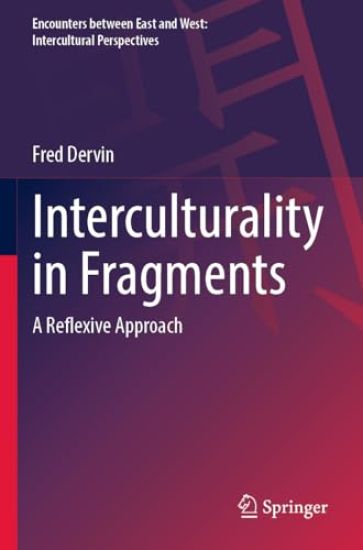
Interculturality in Fragments

Interculturality in Fragments

Fred Dervin

SPRINGER VERLAG, SINGAPORE
2023
nidottu
This book continues the author’s long-term reflections (over 20 years of scholarship and experience in intercultural communication education) around the fascinating and yet contestable notion of interculturality in education. As an unstable and polysemic notion, interculturality deserves to be opened up again and again and there is a need to engage with it continuously, observing, critiquing and problematizing its complexities. This book urges researchers, students and interculturalists to take the time to think carefully and deeply about interculturality and to find inspiration beyond the dominating ‘Western’ ideological world of intercultural research and education. This book starts from short fragments written by the author for himself over a period of one year. In these short statements and notes about interculturality, the author reflects creatively on the questions he had in mind at the time of writing and offers some (temporary) answers, which, in turn, are questionedand revised. Over the 1000 fragments that the author wrote, he selected about 100, for which he wrote commentaries, referring to and reviewing current research and debates on interculturality in the process. One of the specificities of the book is to be highly multidisciplinary to help us get used to looking for inspiration in other fields of research and creativity. The fragments can be read randomly – the reader may open the book at any page and pick any fragment. The author suggests reading each individual fragment first and then the accompanying explanatory texts. While reading them, the reader is also invited to reflect on any potential addition to what the author wrote – anything they might dis-/agree with, anything they would have wanted to discuss with the author. Questions have been added at the end of each chapter for readers to reflect on and to enrich their own criticality and reflexivity. The book serves as continuous guidance for engaging with interculturality.
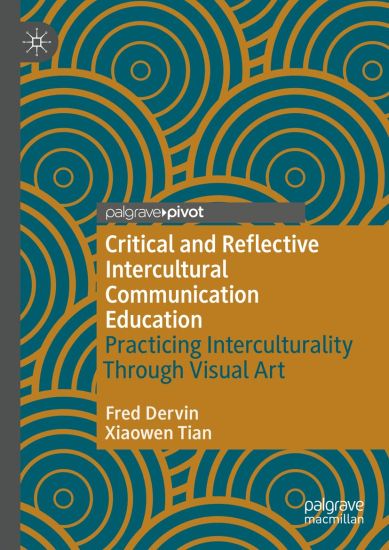
Critical and Reflective Intercultural Communication Education

Critical and Reflective Intercultural Communication Education

Fred Dervin; Xiaowen Tian

Springer International Publishing AG
2023
sidottu
This book provides answers to the following questions: How could visual art support us in reflecting about interculturality critically? When we look at, engage with and experience art, what is it that we can learn, unlearn and relearn about interculturality? The book adds to the multifaceted and multidisciplinary field of intercultural communication education by urging those working on the notion of interculturality (researchers, scholars and students) to give art a place in exploring its complexities. No knowledge background about art (theory) is needed to work through the chapters. The book helps us reflect on ourselves and on our engagement with the world and with others, and learn to ask questions about these elements. The authors draw on anthropology, linguistics, philosophy and sociology to enrich their discussions of critical interculturality.
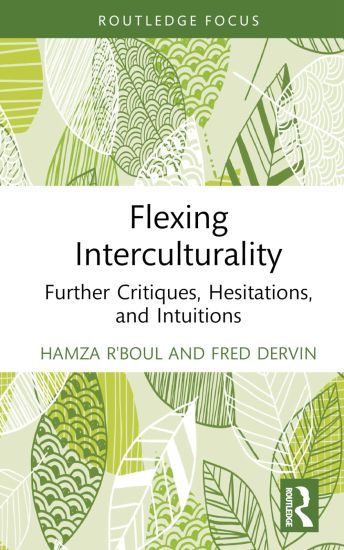
Flexing Interculturality

Flexing Interculturality

Hamza R'boul; Fred Dervin

TAYLOR FRANCIS LTD
2023
sidottu
This book continues the two scholars’ endeavours for opening up more spaces for alternative perspectives, analyses and praxis in interculturality. The main text features fragments that bear relevance to a wide range of topics including education, politics, personal experiences, social realities, hierarchies, self-critique, language and locus of enunciation. The book takes a step forward by using fragments as an alternative way of doing research and writing scholarship. The premise here is that fragments are human and they reflect our fleeting, inconsistent and unsystematic production of knowledge that today’s scholarship has presented to be linear, structured and aligned. The authors draw on fragments to make their points as forcefully as possible by constructing sentences that destabilize themselves and readers to consider other paths and perspectives. That is, writing otherwise may propel thinking otherwise since the very bases, upon which we push our insights to mould through and by, are shaken and ultimately transcended. The chapters include questions with (temporary) answers as an attempt to induce readers to think for themselves and to move beyond what this book has to offer. This book will be a great read to scholars and students in the field of interculturality, education and sociology. The authors hope that this book will be seen as a genuine example of de-linking from mainstream writing and thinking conventions about interculturality in communication and education without compromising epistemic depth and nuance.
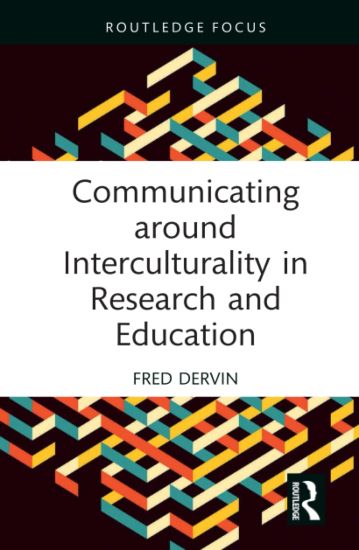
Communicating around Interculturality in Research and Education
This book does not instruct the reader how to communicate interculturally but supports them in reflecting on how they can (re-)negotiate and (re-)construct knowledge(s), ideologies and relations around the notion of interculturality. Anchored in the author’s original and thought-provoking perspectives on interculturality, this interdisciplinary and global-minded book explores how communicating around the notion cannot do away with ideologisms, issues of language and translation or the problematization of voice and silence in research and education. Written in an original and stimulating way, relying on different writing genres and styles to ‘mimic’ the dynamism and flexibility of the very notion under review, the author urges us to (un-)voice, scrutinize, nurture and galvanize our ways of dealing with interculturality alone and together with others in academia. The very specific focus of the book, communicating around interculturality (instead of ‘doing’ interculturality), represents a fresh and important move for observing, analyzing, speaking of and contributing to today's complex and divided world. The title is aimed at researchers, students and educators interested in examining and enriching their own takes on interculturality, from a more reflexive and interactive perspective.