Kirjojen hintavertailu. Mukana 12 566 199 kirjaa ja 12 kauppaa.

Kirjailija

Fred Inglis

Kirjat ja teokset yhdessä paikassa: 14 kirjaa, julkaisuja vuosilta 1982-2013, suosituimpien joukossa The Delicious History of the Holiday. Vertaile teosten hintoja ja tarkista saatavuus suomalaisista kirjakaupoista.

14 kirjaa

Kirjojen julkaisuhaarukka 1982-2013.

Richard Hoggart

Richard Hoggart

Fred Inglis

Polity Press
2013
sidottu
Richard Hoggart has been, perhaps, the best-known, and certainly the most affectionately acknowledged, British intellectual of the past sixty years. His great classic, The Uses of Literacy, provided for thousands of unsung working-class readers a wholly recognisable and tender account of their own coming-to-maturity and of the preciousness and the hardships of the life of the poor in pre-World War II Britain. But he was far more than narrator of a neglected class. Hoggart was also a public figure of extraordinary energy and eminence. He dominated the single most important Royal Commission on broadcasting, and single-handedly he is remembered as clinching for the defence the publication of Lady Chatterley’s Lover, after which he became a leading officer and defender of the international agency protecting the culture of the very world, UNESCO. This is the first biography of this amazing man. It seeks to tie together in a single narrative life and work, to settle Hoggart in the great happiness of a fulfilled family life and in the astonishing achievements of his public and professional career, considering each of his books in detail, and following him through the long and hard labours of his different public and academic offices. Fred Inglis tells this gripping tale of a figure of great significance to anyone who cherishes the stuff of culture, and tells it vividly and directly. It is a tale of a good man with which to edify the present, and to teach us of all that now threatens our best national (and international) forms of expression: our art, our culture, ourselves.
History Man

History Man

Fred Inglis

Princeton University Press
2011
pokkari
This is the first biography of the last and greatest British idealist philosopher, R. G. Collingwood (1889-1943), a man who both thought and lived at full pitch. Best known today for his philosophies of history and art, Collingwood was also a historian, archaeologist, sailor, artist, and musician. A figure of enormous energy and ambition, he took as his subject nothing less than the whole of human endeavor, and he lived in the same way, seeking to experience the complete range of human passion. In this vivid and swiftly paced narrative, Fred Inglis tells the dramatic story of a remarkable life, from Collingwood's happy Lakeland childhood to his successes at Oxford, his archaeological digs as a renowned authority on Roman Britain, his solo sailing adventures in the English Channel, his long struggle with illness, and his sometimes turbulent romantic life. In a manner unheard of today, Collingwood attempted to gather all aspects of human thought into a single theory of practical experience, and he wrote sweeping accounts of history, art, science, politics, metaphysics, and archaeology, as well as a highly regarded autobiography. Above all, he dedicated his life to arguing that history--not science--is the only source of moral and political wisdom and self-knowledge. Linking the intellectual and personal sides of Collingwood's life, and providing a rich history of his milieu, History Man also assesses Collingwood's influence on generations of scholars after his death and the renewed recognition of his importance and interest today.
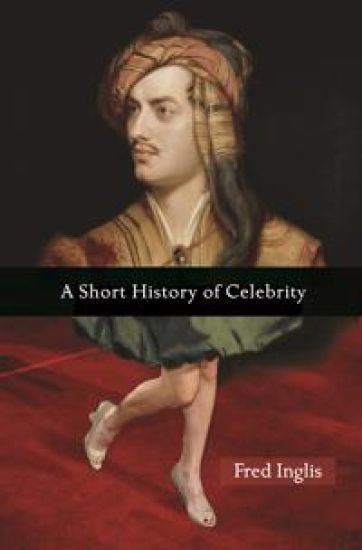
A Short History of Celebrity

A Short History of Celebrity

Fred Inglis

Princeton University Press
2010
sidottu
Love it or hate it, celebrity is one of the dominant features of modern life--and one of the least understood. Fred Inglis sets out to correct this problem in this entertaining and enlightening social history of modern celebrity, from eighteenth-century London to today's Hollywood. Vividly written and brimming with fascinating stories of figures whose lives mark important moments in the history of celebrity, this book explains how fame has changed over the past two-and-a-half centuries. Starting with the first modern celebrities in mid-eighteenth-century London, including Samuel Johnson and the Prince Regent, the book traces the changing nature of celebrity and celebrities through the age of the Romantic hero, the European fin de siecle, and the Gilded Age in New York and Chicago. In the twentieth century, the book covers the Jazz Age, the rise of political celebrities such as Mussolini, Hitler, and Stalin, and the democratization of celebrity in the postwar decades, as actors, rock stars, and sports heroes became the leading celebrities. Arguing that celebrity is a mirror reflecting some of the worst as well as some of the best aspects of modern history itself, Inglis considers how the lives of the rich and famous provide not only entertainment but also social cohesion and, like morality plays, examples of what--and what not--to do. This book will interest anyone who is curious about the history that lies behind one of the great preoccupations of our lives.
Key Concepts in Education

Key Concepts in Education

Fred Inglis; Lesley Aers

SAGE Publications Inc
2008
sidottu
[The SAGE Key Concepts series provides students with accessible and authoritative knowledge of the essential topics in a variety of disciplines. Cross-referenced throughout, the format encourages critical evaluation through understanding. Written by experienced and respected academics, the books are indispensable study aids and guides to comprehension.] 'Dipping into this short collection reveals an eminently useful resource aimed at providing not just a use-friendly lexicon but also an example of a degree of criticality for those new to the area of education….the authors manage to tackle some serious issues with conviction, clarity and concision, all the while maintaining a sense of humour where comparable examples merely seem pedantic' - ESCalate 'This is an essential resource for anyone serious about using the English Language to talk about teaching and learning....Inglis and Aers provide a resource for [a common professional language] in their compact and highly accessible book. It has a sound philosophical rationale in which 102 key concepts in education are presented alphabetically and cross-referenced (the book reads like a high quality hyperlinked web-page)' - www.thinkingclassroom.co.uk 'This is an engaging and accessible resource which explains various sociological, philosophical and psychological concepts relevant to contemporary educational practice. The concepts are succinctly and sometimes provocatively defined and related to today's pressing issues. It will be a particularly useful reference tool for students and practitioners of education alike, with each entry including references for further reading' - Geoff Whitty, Director, Institute of Education, University of London 'If you are seeking a clear guide to principles which should guide public life in general and education in particular, look no further. Inglis and Aers write with enviable and compelling clarity. Something for all in education especially practitioners and policy makers to read and return to' - Tim Brighouse, recently Chief Adviser for London Schools and formerly Chief Education Officer for Birmingham This text provides students with over 100 essential themes, topics and expressions that Education students are likely to encounter, both during their courses and beyond in professional practice. Co-authored to draw on experiences of working within academia, local authorities and the classroom, the entries provide: - a definition of the concept - a description of the historical and practical context - an explanation of how the concept is applied - an evaluation of the concept - helpful references and suggested further reading This book will be essential reading for students of Education, and an invaluable reference tool for their professional careers. Fred Inglis is Emeritus Professor of Cultural Studies, University of Sheffield. Lesley Aers is a senior member of a local authority school improvement service and an Ofsted inspector. Both authors are former schoolteachers.
Key Concepts in Education

Key Concepts in Education

Fred Inglis; Lesley Aers

SAGE Publications Inc
2008
nidottu
[The SAGE Key Concepts series provides students with accessible and authoritative knowledge of the essential topics in a variety of disciplines. Cross-referenced throughout, the format encourages critical evaluation through understanding. Written by experienced and respected academics, the books are indispensable study aids and guides to comprehension.] 'Dipping into this short collection reveals an eminently useful resource aimed at providing not just a use-friendly lexicon but also an example of a degree of criticality for those new to the area of education….the authors manage to tackle some serious issues with conviction, clarity and concision, all the while maintaining a sense of humour where comparable examples merely seem pedantic' - ESCalate 'This is an essential resource for anyone serious about using the English Language to talk about teaching and learning....Inglis and Aers provide a resource for [a common professional language] in their compact and highly accessible book. It has a sound philosophical rationale in which 102 key concepts in education are presented alphabetically and cross-referenced (the book reads like a high quality hyperlinked web-page)' - www.thinkingclassroom.co.uk 'This is an engaging and accessible resource which explains various sociological, philosophical and psychological concepts relevant to contemporary educational practice. The concepts are succinctly and sometimes provocatively defined and related to today's pressing issues. It will be a particularly useful reference tool for students and practitioners of education alike, with each entry including references for further reading' - Geoff Whitty, Director, Institute of Education, University of London 'If you are seeking a clear guide to principles which should guide public life in general and education in particular, look no further. Inglis and Aers write with enviable and compelling clarity. Something for all in education especially practitioners and policy makers to read and return to' - Tim Brighouse, recently Chief Adviser for London Schools and formerly Chief Education Officer for Birmingham This text provides students with over 100 essential themes, topics and expressions that Education students are likely to encounter, both during their courses and beyond in professional practice. Co-authored to draw on experiences of working within academia, local authorities and the classroom, the entries provide: - a definition of the concept - a description of the historical and practical context - an explanation of how the concept is applied - an evaluation of the concept - helpful references and suggested further reading This book will be essential reading for students of Education, and an invaluable reference tool for their professional careers. Fred Inglis is Emeritus Professor of Cultural Studies, University of Sheffield. Lesley Aers is a senior member of a local authority school improvement service and an Ofsted inspector. Both authors are former schoolteachers.
Culture

Culture

Fred Inglis

Polity Press
2004
nidottu
Culture, Raymond Williams once wrote, is one of the most difficult words in language. Since then the concept has become part of our everyday vocabulary; it is used in a variety of different contexts: to describe the behaviour of corporations or criminals; to provide personal and national identity; it even gives its name to a Department of State. In this engaging new textbook, Fred Inglis charts the history of the concept from its origins in the German Enlightenment to contemporary attempts to come to terms with the cultural impact of globalization. Drawing on the work of leading philosophers and theorists, the author adopts a broadly chronological approach to explore the changing definitions and contestations of culture over time. He concludes by highlighting the potential shortcomings of postmodernism, and argues for the continuing need to apply ancient values of truthfulness, goodness and beauty to all discussions of culture. This lively introduction will be of interest to undergraduate students and scholars in sociology, politics, anthropology, cultural and media studies.
Culture

Culture

Fred Inglis

Polity Press
2004
sidottu
Culture, Raymond Williams once wrote, is one of the most difficult words in language. Since then the concept has become part of our everyday vocabulary; it is used in a variety of different contexts: to describe the behaviour of corporations or criminals; to provide personal and national identity; it even gives its name to a Department of State. In this engaging new textbook, Fred Inglis charts the history of the concept from its origins in the German Enlightenment to contemporary attempts to come to terms with the cultural impact of globalization. Drawing on the work of leading philosophers and theorists, the author adopts a broadly chronological approach to explore the changing definitions and contestations of culture over time. He concludes by highlighting the potential shortcomings of postmodernism, and argues for the continuing need to apply ancient values of truthfulness, goodness and beauty to all discussions of culture. This lively introduction will be of interest to undergraduate students and scholars in sociology, politics, anthropology, cultural and media studies.
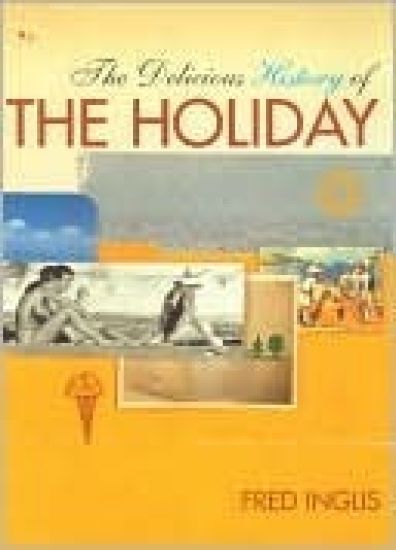
The Delicious History of the Holiday
Our holidays lie near the heart of our emotional life, enjoyed for a fortnight, fed on imagination for eleven months of the year. What we want from our holidays tells a lot about who we are and what we wish we were. In this charming account, Fred Inglis traces the rise of the holiday from its early roots in the Grand Tour, through the coming of Thomas Cook and his Blackpool packages, to sex tourism and the hippie trail to Kathmandu. He celebrates the bodily pleasures of generations of tourists - from Edwardian banquets in Paris to fish and chips on the beach, from the Bright Young Things on the Riviera to the chosen hardships of the sea, the desert wastes and the mountain tops. He considers the ideals and the spiritual aspirations which are part of what we look for in a holiday, but he also warns of a darker current - how we have increasingly destroyed what we take most pleasure in and how the dealings between those who have much and those who have little, can seldom, however good our intentions, avoid the taint of exploitation.
The Delicious History of the Holiday
Our holidays lie near the heart of our emotional life, enjoyed for a fortnight, fed on imagination for eleven months of the year. What we want from our holidays tells a lot about who we are and what we wish we were. In this charming account, Fred Inglis traces the rise of the holiday from its early roots in the Grand Tour, through the coming of Thomas Cook and his Blackpool packages, to sex tourism and the hippie trail to Kathmandu. He celebrates the bodily pleasures of generations of tourists - from Edwardian banquets in Paris to fish and chips on the beach, from the Bright Young Things on the Riviera to the chosen hardships of the sea, the desert wastes and the mountain tops. He considers the ideals and the spiritual aspirations which are part of what we look for in a holiday, but he also warns of a darker current - how we have increasingly destroyed what we take most pleasure in and how the dealings between those who have much and those who have little, can seldom, however good our intentions, avoid the taint of exploitation.
Clifford Geertz

Clifford Geertz

Fred Inglis

JOHN WILEY AND SONS LTD
2000
nidottu
A study of the work of anthropologist Clifford Geertz. In this introduction to his work, Fred Inglis situates Geertz's thought in the context of his life and times, reviewing its 40-year range.
Raymond Williams

Raymond Williams

Fred Inglis

Routledge
1998
nidottu
In his life, Raymond Williams played many parts: child of the Black Mountains, inspirational adult lecturer, Cambridge professor, folk hero and guru of the left. After his death, he has remained a symbolic figure and his classic works, Culture and Society, The Long Revolution, The Country and the City continue to inspire new generations all over the world. In this first major biography, Fred Inglis has spoken to those who knew this complex and charismatic man at every stage of his life, from his boyhood in the Welsh border country to his brief years of retirement. Through their voices and his own passionate stories and at times combative engagement with his subject, he tells of a story of a life not just for its time but for our own. After Thatcher and Reagan and the Cold War, Williams still has much to teach us about the nature of a good and just society and about the constant struggle to attain it.
Raymond Williams

Raymond Williams

Fred Inglis

Routledge
1995
sidottu
In his life, Raymond Williams played many parts: child of the Black Mountains, inspirational adult lecturer, Cambridge professor, folk hero and guru of the left. After his death, he has remained a symbolic figure and his classic works, Culture and Society, The Long Revolution, The Country and the City continue to inspire new generations all over the world. In this first major biography, Fred Inglis has spoken to those who knew this complex and charismatic man at every stage of his life, from his boyhood in the Welsh border country to his brief years of retirement. Through their voices and his own passionate stories and at times combative engagement with his subject, he tells of a story of a life not just for its time but for our own. After Thatcher and Reagan and the Cold War, Williams still has much to teach us about the nature of a good and just society and about the constant struggle to attain it.
Cultural Studies

Cultural Studies

Fred Inglis

Blackwell Publishers
1993
nidottu
What is, or are, Cultural Studies? In this outstanding critical and historical account, Fred Inglis, strips away the philosophical incoherence of Cultural Studies to reveal a common focus within the protean subject-matter and complex history of the field. Inglis begins with a concise, ambitious review of the historical circumstances which made Cultural Studies both necessary and possible in the inter-war years. He then charts the development of the field from its often contradictory origins (in Cambridge, England, and Frankfurt, Germany through its encounter with Marxism. French structuralism and linguistic philosophy, to contemporary anthropology. Focusing on the study of the value as the defining content of Cultural Studies, Inglis illuminates the work of such key figures as F. R. Leavis, Raymond Williams, Stuart Hall, Theodore Adorno, Antonio Gramsci and Clifford Geertz. Balancing the claims of the Grand Theory against the charms of local knowledge, Inglis charts a fascinating course through the theories and methods of Cultural Studies as it seeks to refashion the traditional academic disciplines of the Humanities and Social Sciences. Ending with a chapter on "How to do Cultural Studies", this book provides a much needed critical introduction to an exciting new field of inquiry. Sympathetic but non-partisan in approach, and refreshingly clear in its framework, Cultural Studies should be welcomed by students and teachers alike.
The Promise of Happiness

The Promise of Happiness

Fred Inglis

Cambridge University Press
1982
pokkari
Originally published in paperback in 1982, this book was written in answer to the question 'which books should our children read, and why?' It is a study of what is, in the author's opinion, the best children's fiction of the previous hundred years, and at the same time a study of the social values which that fiction celebrates and criticises. Fred Inglis concentrates on stories for children aged between nine and thirteen; he contrasts the kinds of delight and profit to be gained from classics ancient and modern, from the novels of Dickens and Lewis Carroll via those of Arthur Ransome and Tolkien to William Mayne, Ursula Leguin, Russell Hoban and Philippa Pearce, situating these books in the social context from which they came and relating them to the audience of adults who are expected to write, publish, judge and choose books for their children.