Kirjojen hintavertailu. Mukana 12 533 563 kirjaa ja 12 kauppaa.
Kirjailija
Fred Luthans
Kirjat ja teokset yhdessä paikassa: 7 kirjaa, julkaisuja vuosilta 2015-2023, suosituimpien joukossa Organizational Behavior. Vertaile teosten hintoja ja tarkista saatavuus suomalaisista kirjakaupoista.
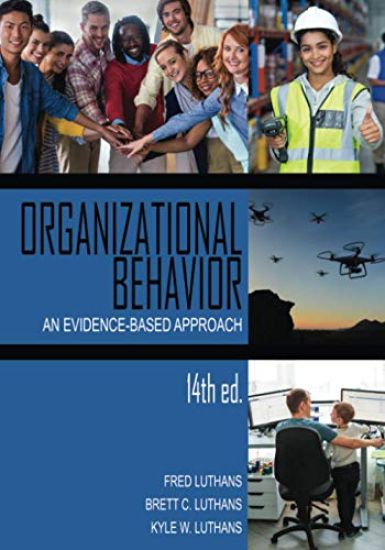
Contrary to the common saying: we do want you to judge this new edition of Organizational Behavior by its front cover. Specifically, featured is that this is the 14th edition, it takes an "Evidence-Based Approach,” and similar to the previous edition there are now three Luthans authors. This 14th edition is based on the foundation provided by the first mainline text which has become the classic for the study and understanding of organizational behavior. However, by taking an evidence based approach, this insures that, even though a classic, this new edition adds the most recent and relevant research to the most extensive, up-to-date reference-base of any organizational behavior text. By adding the two closely related authors (professor sons) literally pumps "new blood" into the sustainability of this classic text by Fred Luthans.Finally, this new edition recognizes that even though the theoretical framework and coverage largely remains, the context of organizational behavior is rapidly changing. This new edition reflects the "New Age" environment, but still holds to the premise that in today's organizations, success and competitive advantage still comes from the understanding, prediction, and effective management of human resources. With this new edition we invite you to continue the never-ending journey guided by the best organizational behavior theory, research, and application.
Contrary to the common saying: we do want you to judge this new edition of Organizational Behavior by its front cover. Specifically, featured is that this is the 14th edition, it takes an "Evidence-Based Approach,” and similar to the previous edition there are now three Luthans authors. This 14th edition is based on the foundation provided by the first mainline text which has become the classic for the study and understanding of organizational behavior. However, by taking an evidence based approach, this insures that, even though a classic, this new edition adds the most recent and relevant research to the most extensive, up-to-date reference-base of any organizational behavior text. By adding the two closely related authors (professor sons) literally pumps "new blood" into the sustainability of this classic text by Fred Luthans.Finally, this new edition recognizes that even though the theoretical framework and coverage largely remains, the context of organizational behavior is rapidly changing. This new edition reflects the "New Age" environment, but still holds to the premise that in today's organizations, success and competitive advantage still comes from the understanding, prediction, and effective management of human resources. With this new edition we invite you to continue the never-ending journey guided by the best organizational behavior theory, research, and application.
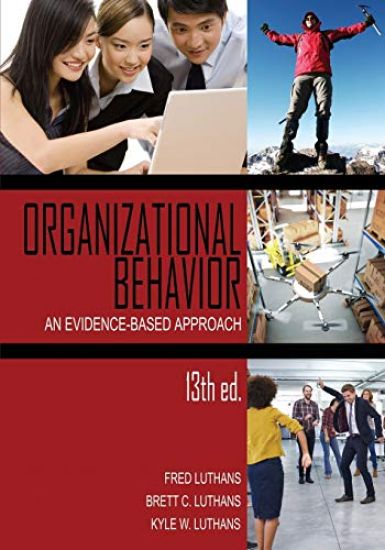
Our goal with this 13th Edition is to keep this first mainline organizational behavior text up-todate with the latest and relevant theory building, basic and applied research, and the best-practice applications. We give special recognition of this scientific foundation by our subtitle - An Evidence-Based Approach. As emphasized in the introductory chapter, the time has come to help narrow the theory/research—effective application/practice gap. This has been the mission from the beginning of this text. As “hard evidence” for this theory/research based text, we can say unequivocally that no other organizational behavior text has close to the number of footnote references. For example, whereas a few texts may have up to 40 or even 50 references for a few chapters, all the chapters of this text average more than twice that amount. This edition continues the tradition by incorporating recent breakthrough research to provide and add to the evidence on the theories and techniques presented throughout. Two distinguishing features that no other organizational behavior textbook can claim are the following:1) We are committed at this stage of development of the field of OB to a comprehensive theoretical framework to structure our text. Instead of the typical potpourri of chapters and topics, there is now the opportunity to have a sound conceptual framework to present our now credible (evidence-based) body of knowledge. We use the widely recognized, very comprehensive social cognitive theory to structure this text. We present the background and theory building of this framework in the introductory chapter and also provide a specific model (Figure 1.5) that fits in all 14 chapters. Importantly, the logic of this conceptual framework requires two chapters not found in other texts and the rearrangement and combination of several others. For example, in the opening organizational context part there is Chapter 4, “Reward Systems,” and in the cognitive processes second part, Chapter 7, “Positive Organizational Behavior and Psychological Capital,” that no other text contains.2) The second unique feature reflects our continuing basic research program over the years. Chapter 7 contains our most recent work on what we have termed “Positive Organizational Behavior” and “Psychological Capital” (or PsyCap). [The three of us introduced the term “Psychological Capital” in our joint article in 2004]. To meet the inclusion criteria (positive; theory and research based; valid measurement; open to development; and manage for performance improvement), for the first time the topics of optimism, hope, happiness/subjective well-being, resiliency, emotional intelligence, selfefficacy, and our overall core construct of psychological capital have been given chapter status.Just as real-world management can no longer afford to evolve slowly, neither can the academic side of the field. With the uncertain, very turbulent environment most organizations face today, drastically new ideas, approaches, and techniques are needed both in the practice of management and in the way we study and apply the field of organizational behavior. This text mirrors these needed changes.Social Cognitive Conceptual Framework. The book contains 14 chapters in four major parts. Social cognitive theory explains organizational behavior in terms of both environmental, contextual events and internal cognitive factors, as well as the dynamics and outcomes of the organizational behavior itself. Thus, Part One provides the evidence-based and organizational context for the study and application of organizational behavior.
International Management: Culture, Strategy, and Behavior reflect new and emerging developments influencing international managers. With integrated real-world examples, research, and practical applications, students understand how to adjust, adapt, and navigate the changing global business landscape and respond to global challenges-making it a market-leader. The authors retain research and practices over the past decades, and incorporate new and emerging developments affecting international managers to increase students' effectiveness in managing across cultures.
Our goal with this 13th Edition is to keep this first mainline organizational behavior text up-todate with the latest and relevant theory building, basic and applied research, and the best-practice applications. We give special recognition of this scientific foundation by our subtitle - An Evidence-Based Approach. As emphasized in the introductory chapter, the time has come to help narrow the theory/research—effective application/practice gap. This has been the mission from the beginning of this text. As “hard evidence” for this theory/research based text, we can say unequivocally that no other organizational behavior text has close to the number of footnote references. For example, whereas a few texts may have up to 40 or even 50 references for a few chapters, all the chapters of this text average more than twice that amount. This edition continues the tradition by incorporating recent breakthrough research to provide and add to the evidence on the theories and techniques presented throughout. Two distinguishing features that no other organizational behavior textbook can claim are the following:1) We are committed at this stage of development of the field of OB to a comprehensive theoretical framework to structure our text. Instead of the typical potpourri of chapters and topics, there is now the opportunity to have a sound conceptual framework to present our now credible (evidence-based) body of knowledge. We use the widely recognized, very comprehensive social cognitive theory to structure this text. We present the background and theory building of this framework in the introductory chapter and also provide a specific model (Figure 1.5) that fits in all 14 chapters. Importantly, the logic of this conceptual framework requires two chapters not found in other texts and the rearrangement and combination of several others. For example, in the opening organizational context part there is Chapter 4, “Reward Systems,” and in the cognitive processes second part, Chapter 7, “Positive Organizational Behavior and Psychological Capital,” that no other text contains.2) The second unique feature reflects our continuing basic research program over the years. Chapter 7 contains our most recent work on what we have termed “Positive Organizational Behavior” and “Psychological Capital” (or PsyCap). [The three of us introduced the term “Psychological Capital” in our joint article in 2004]. To meet the inclusion criteria (positive; theory and research based; valid measurement; open to development; and manage for performance improvement), for the first time the topics of optimism, hope, happiness/subjective well-being, resiliency, emotional intelligence, selfefficacy, and our overall core construct of psychological capital have been given chapter status.Just as real-world management can no longer afford to evolve slowly, neither can the academic side of the field. With the uncertain, very turbulent environment most organizations face today, drastically new ideas, approaches, and techniques are needed both in the practice of management and in the way we study and apply the field of organizational behavior. This text mirrors these needed changes.Social Cognitive Conceptual Framework. The book contains 14 chapters in four major parts. Social cognitive theory explains organizational behavior in terms of both environmental, contextual events and internal cognitive factors, as well as the dynamics and outcomes of the organizational behavior itself. Thus, Part One provides the evidence-based and organizational context for the study and application of organizational behavior.
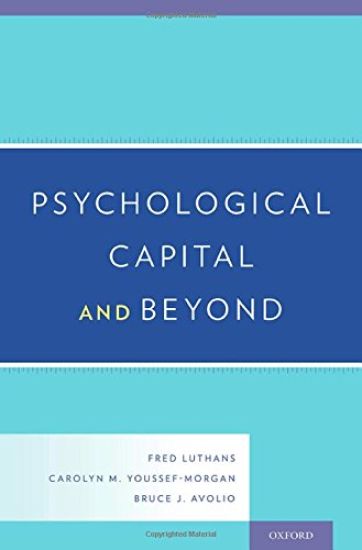
Although there are as many answers to the question of how organizations can gain competitive advantage in today's global economy as there are books and experts, one lesson seems very clear: traditional answers and resources are no longer sufficient. This seminal book offers not only an answer regarding how to gain competitive advantage through people, but also a brand new, untapped human resource--psychological capital, or simply PsyCap. Generated from both the positive-psychology movement and the authors' pioneering work on positive organizational behavior, PsyCap is a rigorous concept: to be included in PsyCap, a given positive construct must be based on theory, research, and valid measurement, must be open to development, and must have measurable performance impact. The positive constructs that have been determined to best meet these PsyCap criteria--efficacy (confidence), hope, optimism, and resiliency--are covered in separate chapters in Psychological Capital and Beyond. Following an exploration of other potential positive constructs such as creativity, wisdom, well-being, flow, humor, gratitude, forgiveness, emotional intelligence, spirituality, authenticity, and courage, the authors summarize the research demonstrating the performance impact of PsyCap. They go on to provide the PsyCap Questionnaire (PCQ) as a measurement tool, and the PsyCap Intervention (PCI) as a development aid. Psychological Capital and Beyond provides theory, research, measurements, and methods of application for psychological capital, a resource that can be developed and sustained for competitive advantage. Each copy includes a complimentary PsyCap online self-assessment.