Kirjojen hintavertailu. Mukana 12 200 100 kirjaa ja 12 kauppaa.

Kirjailija

Frederic M. Wehrey

Kirjat ja teokset yhdessä paikassa: 6 kirjaa, julkaisuja vuosilta 2008-2016, suosituimpien joukossa Future U.S. Security Relationship with Iraq and Afghanistan. Vertaile teosten hintoja ja tarkista saatavuus suomalaisista kirjakaupoista.

6 kirjaa

Kirjojen julkaisuhaarukka 2008-2016.

Future U.S. Security Relationship with Iraq and Afghanistan

Future U.S. Security Relationship with Iraq and Afghanistan

David E. Thaler; Theodore W. Karasik; Dalia Dassa Kaye; Jennifer D. P. Moroney; Frederic M. Wehrey; Obaid Younossi; Farhana Ali; Robert A. Guffey

RAND
2008
pokkari
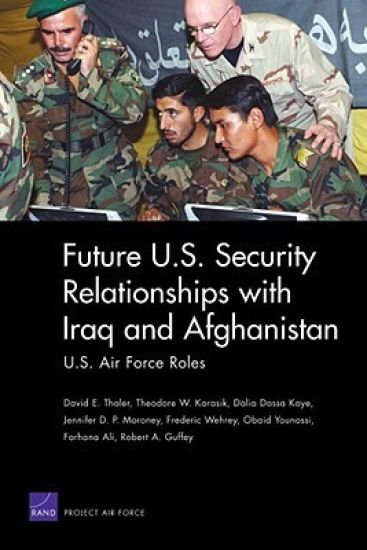
The authors describe possible regional security structures and bilateral U.S. relationships with Iraq and Afghanistan. They recommend that the United States offer a wide range of security cooperation activities to compatible future governments in Kabul and Baghdad and should also plan to hedge against less-favorable contingencies. They emphasize that the U.S. Air Force should expect to remain heavily tasked for the foreseeable future.This book frames potential long-term U.S. security relationships with Iraq and Afghanistan in a regional context and posits roles of U.S. forces, especially the Air Force, in supporting these relationships under a variety of contingencies.
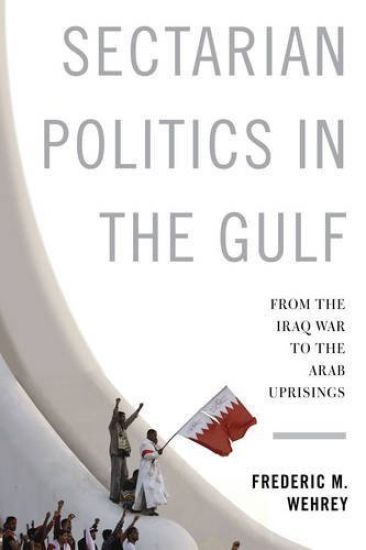
Sectarian Politics in the Gulf

Sectarian Politics in the Gulf

Frederic M. Wehrey

Columbia University Press
2016
pokkari
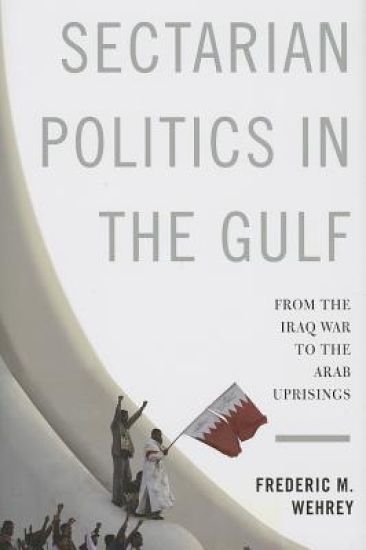
One of Foreign Policy's Best Five Books of 2013, chosen by Marc Lynch of The Middle East Channel Beginning with the 2003 invasion of Iraq and concluding with the aftermath of the 2011 Arab uprisings, Frederic M. Wehrey investigates the roots of the Shi'a-Sunni divide now dominating the Persian Gulf's political landscape. Focusing on three Gulf states affected most by sectarian tensions-Bahrain, Saudi Arabia, and Kuwait-Wehrey identifies the factors that have exacerbated or tempered sectarianism, including domestic political institutions, the media, clerical establishments, and the contagion effect of external regional events, such as the Iraq war, the 2006 Lebanon conflict, the Arab uprisings, and Syria's civil war. In addition to his analysis, Wehrey builds a historical narrative of Shi'a activism in the Arab Gulf since 2003, linking regional events to the development of local Shi'a strategies and attitudes toward citizenship, political reform, and transnational identity. He finds that, while the Gulf Shi'a were inspired by their coreligionists in Iraq, Iran, and Lebanon, they ultimately pursued greater rights through a nonsectarian, nationalist approach. He also discovers that sectarianism in the region has largely been the product of the institutional weaknesses of Gulf states, leading to excessive alarm by entrenched Sunni elites and calculated attempts by regimes to discredit Shi'a political actors as proxies for Iran, Iraq, or Lebanese Hizballah. Wehrey conducts interviews with nearly every major Shi'a leader, opinion shaper, and activist in the Gulf Arab states, as well as prominent Sunni voices, and consults diverse Arabic-language sources.
Sectarian Politics in the Gulf

Sectarian Politics in the Gulf

Frederic M. Wehrey

Columbia University Press
2013
sidottu
One of Foreign Policy's Best Five Books of 2013, chosen by Marc Lynch of The Middle East Channel Beginning with the 2003 invasion of Iraq and concluding with the aftermath of the 2011 Arab uprisings, Frederic M. Wehrey investigates the roots of the Shi'a-Sunni divide now dominating the Persian Gulf's political landscape. Focusing on three Gulf states affected most by sectarian tensions-Bahrain, Saudi Arabia, and Kuwait-Wehrey identifies the factors that have exacerbated or tempered sectarianism, including domestic political institutions, the media, clerical establishments, and the contagion effect of external regional events, such as the Iraq war, the 2006 Lebanon conflict, the Arab uprisings, and Syria's civil war. In addition to his analysis, Wehrey builds a historical narrative of Shi'a activism in the Arab Gulf since 2003, linking regional events to the development of local Shi'a strategies and attitudes toward citizenship, political reform, and transnational identity. He finds that, while the Gulf Shi'a were inspired by their coreligionists in Iraq, Iran, and Lebanon, they ultimately pursued greater rights through a nonsectarian, nationalist approach. He also discovers that sectarianism in the region has largely been the product of the institutional weaknesses of Gulf states, leading to excessive alarm by entrenched Sunni elites and calculated attempts by regimes to discredit Shi'a political actors as proxies for Iran, Iraq, or Lebanese Hizballah. Wehrey conducts interviews with nearly every major Shi'a leader, opinion shaper, and activist in the Gulf Arab states, as well as prominent Sunni voices, and consults diverse Arabic-language sources.
Coping with a Nuclearizing Iran

Coping with a Nuclearizing Iran

James Dobbins; Alireza Nader; Dalia Dassa Kaye; Frederic M. Wehrey

RAND
2011
pokkari
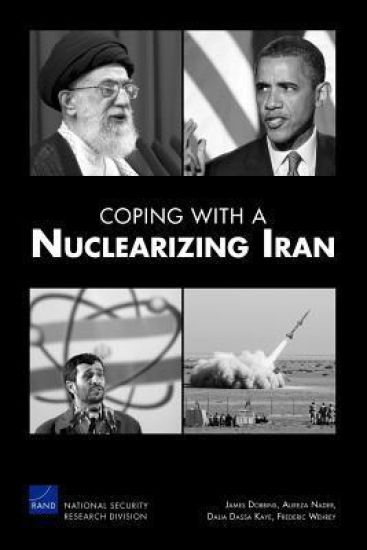
It is not inevitable that Iran will acquire nuclear weapons or even that it will gain the capacity to quickly produce them. U.S. and even Israeli analysts continually push their estimates for such an event further into the future. Nevertheless, absent a change in Iranian policy, it is reasonable to assume that, some time in the coming decade, Iran will acquire such a capability. Most recent scholarly studies have also focused on how to prevent Iran from acquiring nuclear weapons. Other, less voluminous writing looks at what to do after Iran becomes a nuclear power. What has so far been lacking is a policy framework for dealing with Iran before, after, and, indeed, during its crossing of the nuclear threshold. This monograph attempts to fill that gap by providing a midterm strategy for dealing with Iran that neither begins nor ends at the point at which Tehran acquires a nuclear weapon capability. It proposes an approach that neither acquiesces to a nuclear-armed Iran nor refuses to admit the possibility - indeed, the likelihood - of this occurring.
The Iraq Effect

The Iraq Effect

Frederic M. Wehrey; Dalia Dassa Kaye; Jessica Watkins; Jeffrey Martini; Robert A. Guffey

RAND
2010
pokkari
Regardless of its outcome, the Iraq War has had a transformative effect on the Middle East. To equip U.S. policymakers to better manage the war's long-term consequences, the authors analyzed its effects on the regional balance of power, local perceptions of U.S. credibility, the domestic stability of neighboring states, and trends in terrorism after conducting extensive interviews in the region and drawing from an array of local media sources.
Understanding Iran

Understanding Iran

Jerrold D. Green; Frederic M. Wehrey; Charles Wolf

RAND
2009
pokkari
A compact, user-friendly handbook for U.S. Policymakers interested in understanding the Islamic Republic of Iran. It synthesizes existing analysis on Iran and draws from non-American experts with a different interpretive lens for viewing the seemingly opaque Iranian system. It provides short analytic observations about the processes, institutions, networks, and actors that define Iran's politics, strategy, economic policy, and diplomacy.A detailed and insightful, yet compact and user-friendly guide to the Islamic Republic of Iran for U.S. policymakers.