Kirjojen hintavertailu. Mukana 12 430 065 kirjaa ja 12 kauppaa.

Kirjailija

Frederick D. Wilhelmsen

Kirjat ja teokset yhdessä paikassa: 17 kirjaa, julkaisuja vuosilta 2011-2025, suosituimpien joukossa Hilaire Belloc: No Alienated Man; a Study in Christian Integration. Vertaile teosten hintoja ja tarkista saatavuus suomalaisista kirjakaupoista.

Mukana myös kirjoitusasut: Frederick D Wilhelmsen

17 kirjaa

Kirjojen julkaisuhaarukka 2011-2025.

Hilaire Belloc: No Alienated Man; a Study in Christian Integration
This work has been selected by scholars as being culturally important and is part of the knowledge base of civilization as we know it.This work is in the public domain in the United States of America, and possibly other nations. Within the United States, you may freely copy and distribute this work, as no entity (individual or corporate) has a copyright on the body of the work.Scholars believe, and we concur, that this work is important enough to be preserved, reproduced, and made generally available to the public. To ensure a quality reading experience, this work has been proofread and republished using a format that seamlessly blends the original graphical elements with text in an easy-to-read typeface.We appreciate your support of the preservation process, and thank you for being an important part of keeping this knowledge alive and relevant.

The Metaphysics of Love

The Metaphysics of Love

Frederick D Wilhelmsen

Angelico Press
2022
pokkari
First published in 1962, The Metaphysics of Love is both a concise study of Thomas Aquinas's existential metaphysics and a demonstration of the enduring influence of Thomism on Western thought. Penned by distinguished Thomist scholar Frederick Wilhelmsen, this book explores the ontology of the human person, placing it in dialogue with philosophers ranging from Plato, Aristotle, and Aquinas to Kant, Hegel, and Heidegger. Wilhelmsen ultimately narrows his discussion to an examination of human love, particularly in regard to the relationship between love of self (eros) and love of others (agape). For Wilhelmsen, many of the problems societies face are an extenuation of the struggle between eros and agape. While recognizing that certain cultures will manifest these two tendencies differently, Wilhelmsen posits that a truly healthy society will acknowledge the importance of both.Even in this relatively brief work, Frederick Wilhelmsen shows himself to be a lucid metaphysician and convincing teacher. Maintaining a lyrical style alongside a whole host of philosophical and theological voices, The Metaphysics of Love is a standout contribution to the vast Thomistic tradition.
The Metaphysics of Love

The Metaphysics of Love

Frederick D Wilhelmsen

Angelico Press
2022
sidottu
First published in 1962, The Metaphysics of Love is both a concise study of Thomas Aquinas's existential metaphysics and a demonstration of the enduring influence of Thomism on Western thought. Penned by distinguished Thomist scholar Frederick Wilhelmsen, this book explores the ontology of the human person, placing it in dialogue with philosophers ranging from Plato, Aristotle, and Aquinas to Kant, Hegel, and Heidegger. Wilhelmsen ultimately narrows his discussion to an examination of human love, particularly in regard to the relationship between love of self (eros) and love of others (agape). For Wilhelmsen, many of the problems societies face are an extenuation of the struggle between eros and agape. While recognizing that certain cultures will manifest these two tendencies differently, Wilhelmsen posits that a truly healthy society will acknowledge the importance of both.Even in this relatively brief work, Frederick Wilhelmsen shows himself to be a lucid metaphysician and convincing teacher. Maintaining a lyrical style alongside a whole host of philosophical and theological voices, The Metaphysics of Love is a standout contribution to the vast Thomistic tradition.
Hilaire Belloc: No Alienated Man; a Study in Christian Integration
This work has been selected by scholars as being culturally important and is part of the knowledge base of civilization as we know it.This work is in the public domain in the United States of America, and possibly other nations. Within the United States, you may freely copy and distribute this work, as no entity (individual or corporate) has a copyright on the body of the work.Scholars believe, and we concur, that this work is important enough to be preserved, reproduced, and made generally available to the public. To ensure a quality reading experience, this work has been proofread and republished using a format that seamlessly blends the original graphical elements with text in an easy-to-read typeface.We appreciate your support of the preservation process, and thank you for being an important part of keeping this knowledge alive and relevant.

Being and Knowing

Being and Knowing

Frederick D. Wilhelmsen

Routledge
2017
sidottu
Frederick D. Wilhelmsen's Being and Knowing, rooted in the philosophy of St. Thomas Aquinas, rests on two basic assertions: first, metaphysics is the science of being in its first and ultimate act, existence (the act by which all things manifest themselves); second, that existence is known not through observing objects, but in affirming through judgments that these objects are subjects of existence.The chapters of this book explore these Thomistic doctrines. Some explain St. Thomas Aquinas's philosophy of being. Others probe his epistemology. The complexity and density of Aquinas's theory of judgment (that truth is realized in the judgment of man), emphasized throughout most of the book, point not only to a deeper understanding of the nature of metaphysics, but they open doors to the clarification of philosophical issues germane to contemporary thought.This work addresses a number of metaphysical philosophical paradoxes. Wilhelmsen's exploration of them demonstrates why he was the preeminent American scholar of the Thomistic tradition. This volume is part of Transaction's series, the Library of Conservative Thought.
The Paradoxical Structure of Existence

The Paradoxical Structure of Existence

Frederick D. Wilhelmsen

Routledge
2017
sidottu
For metaphysicians who have imbibed the sober and inebriating teachings of Thomas Aquinas, existence is an act, the act which makes all things actually to be. As the act of existence makes things to be, essence makes them to be what they are. Essence and the act of existence, in other words, are really distinct yet together they compose each of the things that are.Such an understanding involves a number of paradoxes, and Frederick D. Wilhelmsen's articulation of them reveals his philosophical genius. These paradoxes include the fact that the act of existence does not exist, that it can be thought but not conceived by the mind, and that truths about God can be known while He himself remains absolutely unknown. Wilhelmsen argues the notion that the Christian faith and philosophical reason harmonize while remaining completely distinct from each other.Writing in a captivating style, Wilhelmsen begins with a discussion of the development, strengths, and limitations of the ancient Greek philosophical accounts of being. Following that, he develops such key topics as the problem of existence, St. Thomas Aquinas' understanding of being, critical analyses of Hegel's and Heidegger's doctrines of being, existence as "towards God," and a metaphysical approach to the human person. The final two chapters develop the sense in which metaphysical thinking is and is not shaped by historical and social factors.
The Metaphysics of Love

The Metaphysics of Love

Frederick D. Wilhelmsen

Routledge
2017
sidottu
The Metaphysics of Love develops the existential metaphysics of St. Thomas Aquinas, applying it to explore the ontological structure of the human person. Published first in 1962, this book demonstrates the fertility of Thomistic metaphysics and the enduring influence of Thomism on Western philosophy. It uncovers the ecstatic structure of human existence, in dialogue with philosophers ranging from Plato, Aristotle, and Aquinas, to Kant, Hegel, Heidegger, Tillich, Zubiri, and Ortega y Gassett, as well as theologians and historians Romano Guardini, Hilaire Belloc, and Eric Voegelin.Philosophical and theological examinations of love have in various ways raised the following question: how can love of self (eros) be harmonized with love of others (agape)? These types of love represent two drives, Wilhelmsen argues, that in the end must be seen as aspects of existence itself. Moral and psychological problems of love turn out to be manifestations of metaphysical issues.While different cultures have emphasized one of these drives or the other, a healthy culture will not completely forget either. Cultures differ in the way they emphasize one or the other, or flee from one or the other. These dimensions of human existence provide the framework for a person's love of self, neighbour, and God. This volume is part of Transaction's Library of Conservative Thought series.
The Metaphysics of Love

The Metaphysics of Love

Frederick D. Wilhelmsen

AldineTransaction
2015
nidottu
The Metaphysics of Love develops the existential metaphysics of St. Thomas Aquinas, applying it to explore the ontological structure of the human person. Published first in 1962, this book demonstrates the fertility of Thomistic metaphysics and the enduring influence of Thomism on Western philosophy. It uncovers the ecstatic structure of human existence, in dialogue with philosophers ranging from Plato, Aristotle, and Aquinas, to Kant, Hegel, Heidegger, Tillich, Zubiri, and Ortega y Gassett, as well as theologians and historians Romano Guardini, Hilaire Belloc, and Eric Voegelin.Philosophical and theological examinations of love have in various ways raised the following question: how can love of self (eros) be harmonized with love of others (agape)? These types of love represent two drives, Wilhelmsen argues, that in the end must be seen as aspects of existence itself. Moral and psychological problems of love turn out to be manifestations of metaphysical issues.While different cultures have emphasized one of these drives or the other, a healthy culture will not completely forget either. Cultures differ in the way they emphasize one or the other, or flee from one or the other. These dimensions of human existence provide the framework for a person's love of self, neighbour, and God. This volume is part of Transaction's Library of Conservative Thought series.
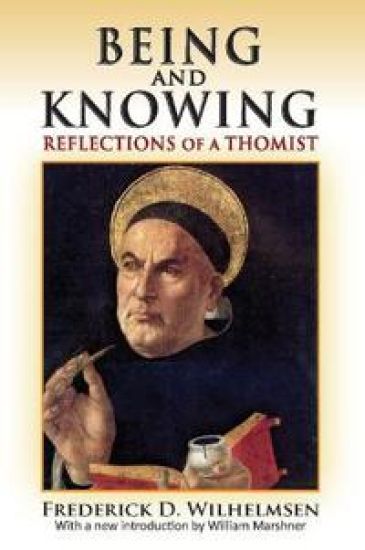
Being and Knowing

Being and Knowing

Frederick D. Wilhelmsen

AldineTransaction
2015
nidottu
Frederick D. Wilhelmsen's Being and Knowing, rooted in the philosophy of St. Thomas Aquinas, rests on two basic assertions: first, metaphysics is the science of being in its first and ultimate act, existence (the act by which all things manifest themselves); second, that existence is known not through observing objects, but in affirming through judgments that these objects are subjects of existence.The chapters of this book explore these Thomistic doctrines. Some explain St. Thomas Aquinas's philosophy of being. Others probe his epistemology. The complexity and density of Aquinas's theory of judgment (that truth is realized in the judgment of man), emphasized throughout most of the book, point not only to a deeper understanding of the nature of metaphysics, but they open doors to the clarification of philosophical issues germane to contemporary thought.This work addresses a number of metaphysical philosophical paradoxes. Wilhelmsen's exploration of them demonstrates why he was the preeminent American scholar of the Thomistic tradition. This volume is part of Transaction's series, the Library of Conservative Thought.
The Paradoxical Structure of Existence

The Paradoxical Structure of Existence

Frederick D. Wilhelmsen

AldineTransaction
2015
nidottu
For metaphysicians who have imbibed the sober and inebriating teachings of Thomas Aquinas, existence is an act, the act which makes all things actually to be. As the act of existence makes things to be, essence makes them to be what they are. Essence and the act of existence, in other words, are really distinct yet together they compose each of the things that are.Such an understanding involves a number of paradoxes, and Frederick D. Wilhelmsen's articulation of them reveals his philosophical genius. These paradoxes include the fact that the act of existence does not exist, that it can be thought but not conceived by the mind, and that truths about God can be known while He himself remains absolutely unknown. Wilhelmsen argues the notion that the Christian faith and philosophical reason harmonize while remaining completely distinct from each other.Writing in a captivating style, Wilhelmsen begins with a discussion of the development, strengths, and limitations of the ancient Greek philosophical accounts of being. Following that, he develops such key topics as the problem of existence, St. Thomas Aquinas' understanding of being, critical analyses of Hegel's and Heidegger's doctrines of being, existence as "towards God," and a metaphysical approach to the human person. The final two chapters develop the sense in which metaphysical thinking is and is not shaped by historical and social factors.
Man's Knowledge of Reality: An Introduction to Thomistic Epistemology

Man's Knowledge of Reality: An Introduction to Thomistic Epistemology

Frederick D. Wilhelmsen

Literary Licensing, LLC
2011
sidottu
Man's Knowledge of Reality: An Introduction to Thomistic Epistemology is a comprehensive book that explores the philosophical and theological ideas of the prominent medieval thinker, Thomas Aquinas. Written by Frederick D. Wilhelmsen, a renowned scholar in the field of Thomistic philosophy, this book provides a thorough introduction to Aquinas�������s epistemology, which is concerned with the nature of knowledge and how it is acquired.The book begins with an overview of Aquinas�������s metaphysics, which provides the foundation for his epistemology. It then delves into Aquinas�������s theory of knowledge, which is based on the idea that knowledge is acquired through the senses, reason, and divine revelation. The book explores the role of perception, memory, imagination, and intellect in the acquisition of knowledge.The book also discusses Aquinas�������s views on the nature of truth, which he believed to be objective and absolute. It examines his arguments for the existence of God, which are based on reason and natural theology. The book also explores Aquinas�������s views on the relationship between faith and reason, which he saw as complementary rather than contradictory.Throughout the book, Wilhelmsen provides a clear and concise summary of Aquinas�������s ideas, making them accessible to readers who may not have a background in philosophy or theology. He also offers his own insights and interpretations, which add depth and nuance to the discussion.Overall, Man's Knowledge of Reality: An Introduction to Thomistic Epistemology is an essential read for anyone interested in the philosophy of knowledge, the history of philosophy, or the works of Thomas Aquinas. It is a valuable resource for students, scholars, and anyone seeking a deeper understanding of the nature of reality and how we come to know it.This scarce antiquarian book is a facsimile reprint of the old original and may contain some imperfections such as library marks and notations. Because we believe this work is culturally important, we have made it available as part of our commitment for protecting, preserving, and promoting the world's literature in affordable, high quality, modern editions, that are true to their original work.