Kirjojen hintavertailu. Mukana 12 595 353 kirjaa ja 12 kauppaa.

Kirjailija

Frederick Douglass Opie

Kirjat ja teokset yhdessä paikassa: 10 kirjaa, julkaisuja vuosilta 2008-2025, suosituimpien joukossa Southern Food and Civil Rights: Feeding the Revolution. Vertaile teosten hintoja ja tarkista saatavuus suomalaisista kirjakaupoista.

10 kirjaa

Kirjojen julkaisuhaarukka 2008-2025.

Bite by Bite

Bite by Bite

Marc Aronson; Paul Freedman; Frederick Douglass Opie; Amanda Palacios; Tatum Willis; David Zheng

SIMON SCHUSTER
2025
pokkari
Explore the fascinating history of America as told through the lens of food in this illustrated nonfiction middle grade book “sure to please history buffs and foodies alike” (BCCB, starred review) that lays out the diverse cultures that have combined to create the rich and delicious tapestry of the American country and cuisine.As American as apple pie. It’s a familiar saying, yet gumbo and chop suey are also American! What we eat tells us who we are: where we’re from, how we move from place to place, and how we express our cultures and living traditions. In twelve dishes that take readers from thousands of years ago through today, this book explores the diverse peoples and foodways that make up the United States. From First Salmon Feasts of the Umatilla and Cayuse tribes in the Pacific Northwest to fish fries celebrated by formerly enslaved African Americans, from “red sauce” Italian restaurants popular with young bohemians in the East to Cantonese restaurants enjoyed by rebellious young eaters in the West, this is the true story of the many Americas—laid out bite by bite.
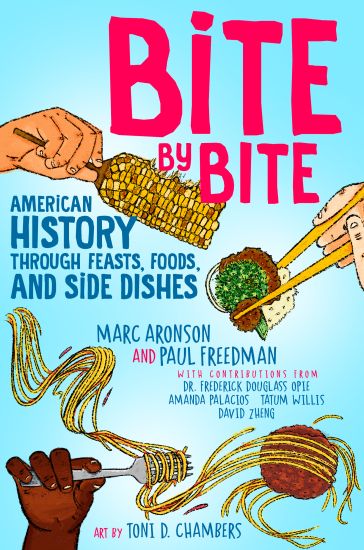
Bite by Bite: American History Through Feasts, Foods, and Side Dishes

Bite by Bite: American History Through Feasts, Foods, and Side Dishes

Marc Aronson; Paul Freedman; Frederick Douglass Opie

Atheneum Books for Young Readers
2024
sidottu
Explore the fascinating history of America as told through the lens of food in this illustrated nonfiction middle grade book "sure to please history buffs and foodies alike" (BCCB, starred review) that lays out the diverse cultures that have combined to create the rich and delicious tapestry of the American country and cuisine. As American as apple pie. It's a familiar saying, yet gumbo and chop suey are also American What we eat tells us who we are: where we're from, how we move from place to place, and how we express our cultures and living traditions. In twelve dishes that take readers from thousands of years ago through today, this book explores the diverse peoples and foodways that make up the United States. From First Salmon Feasts of the Umatilla and Cayuse tribes in the Pacific Northwest to fish fries celebrated by formerly enslaved African Americans, from "red sauce" Italian restaurants popular with young bohemians in the East to Cantonese restaurants enjoyed by rebellious young eaters in the West, this is the true story of the many Americas--laid out bite by bite.
Southern Food and Civil Rights: Feeding the Revolution

Southern Food and Civil Rights: Feeding the Revolution

Frederick Douglass Opie

History Press
2017
nidottu
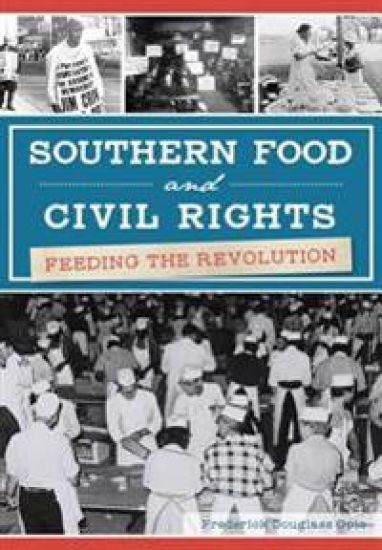
Food has been and continues to be an essential part of any movement for progressive change.From home cooks and professional chefs to local eateries and bakeries, food has helped activists continue marching for change for generations. Paschal's restaurant in Atlanta provided safety and comfort food for civil rights leaders. Elijah Muhammad and the Nation of Islam operated their own farms, dairies and bakeries in the 1960s. The Sandwich Brigade organized efforts to feed the thousands at the March on Washington. Author Fred Opie details the ways southern food nourished the fight for freedom, along with cherished recipes associated with the era.
Southern Food and Civil Rights: Feeding the Revolution

Southern Food and Civil Rights: Feeding the Revolution

Frederick Douglass Opie

History Press Library Editions
2017
sidottu
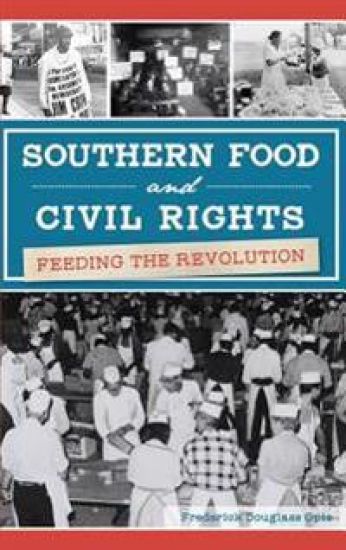
Food has been and continues to be an essential part of any movement for progressive change. From home cooks and professional chefs to local eateries and bakeries, food has helped activists continue marching for change for generations. Paschal s restaurant in Atlanta provided safety and comfort food for civil rights leaders. Elijah Muhammad and the Nation of Islam operated their own farms, dairies and bakeries in the 1960s. The Sandwich Brigade organized efforts to feed the thousands at the March on Washington. Author Fred Opie details the ways southern food nourished the fight for freedom, along with cherished recipes associated with the era."
Zora Neale Hurston on Florida Food: Recipes, Remedies & Simple Pleasures

Zora Neale Hurston on Florida Food: Recipes, Remedies & Simple Pleasures

Frederick Douglass Opie; Fred Opie

History Press Library Editions
2015
sidottu
Eatonville, Florida native Zora Neale Hurston's early twentieth-century ethnographic research and writing emphasizes the essentials of food in Florida through simple dishes and recipes. It considers foods prepared for everyday meals as well as special occasions and looks at what shaped people's eating traditions in early twentieth-century Florida. Hurston did for Florida what William Faulkner did for Mississippi--provided insight into a state's history and culture through various styles of writing. Her collected food stories, folklore and remedies, and the related recipes food professor Fred Opie pairs with them, are essential reading for those who love to cook and eat.
Zora Neale Hurston on Florida Food: Recipes, Remedies & Simple Pleasures
Florida native Zora Neale Hurston's early twentieth-century ethnographic research and writing emphasizes the essentials of food in Florida through simple dishes and recipes.It considers foods prepared for everyday meals as well as special occasions and looks at what shaped people's eating traditions in early twentieth-century Florida. Hurston did for Florida what William Faulkner did for Mississippi - provided insight into a state's history and culture through various styles of writing. Her collected food stories, folklore and remedies, and the related recipes food professor Fred Opie pairs with them, are essential reading for those who love to cook and eat.
Upsetting the Apple Cart

Upsetting the Apple Cart

Frederick Douglass Opie

Columbia University Press
2014
sidottu
Upsetting the Apple Cart surveys the history of black-Latino coalitions in New York City from 1959 to 1989. In those years, African American and Latino Progressives organized, mobilized, and transformed neighborhoods, workplaces, university campuses, and representative government in the nation's urban capital. Upsetting the Apple Cart makes new contributions to our understanding of protest movements and strikes in the 1960s and 1970s and reveals the little-known role of left-of-center organizations in New York City politics as well as the influence of Jesse Jackson's 1984 and 1988 presidential campaigns on city elections. Frederick Douglass Opie provides a social history of black and Latino working-class collaboration in shared living and work spaces and exposes racist suspicion and divisive jockeying among elites in political clubs and anti-poverty programs. He ultimately offers a different interpretation of the story of the labor, student, civil rights, and Black Power movements than has been traditionally told. His work highlights both the largely unknown agents of historic change in the city and the noted politicians, political strategists, and union leaders whose careers were built on this history. Also, as Napoleon said, "An army marches on its stomach," and Opie's history equally delves into the role that food plays in social movements, with representative recipes from the American South and the Caribbean included throughout.
Black Labor Migration in Caribbean Guatemala, 1882-1923

Black Labor Migration in Caribbean Guatemala, 1882-1923

Frederick Douglass Opie

University Press of Florida
2012
nidottu
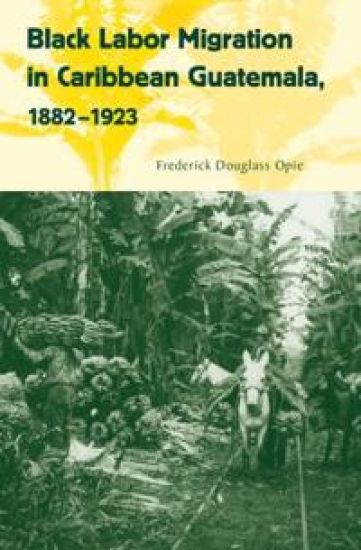
In the late nineteenth century, many Central American governments and countries sought to fill low-paying jobs and develop their economies by recruiting black American and West Indian labourers. Frederick Opie offers a revisionist interpretation of these workers, who were often depicted as simple victims with little, if any, enduring legacy. The Guatemalan government sought to build an extensive railroad system in the 1880s, and actively recruited foreign labour. For poor workers of African descent, immigrating to Guatemala was seen as an opportunity to improve their lives and escape from the racism of the Jim Crow U.S. South and the French and British colonial Caribbean. Using primary and secondary sources as well as ethnographic data, Opie details the struggles of these workers who were ultimately inspired to organise by the ideas of Marcus Garvey. Regularly suffering class- and race-based attacks and persecution, black labourers frequently met such attacks with resistance. Their leverage--being able to shut down the railroad--was crucially important to the revolutionary movements in 1897 and 1920.
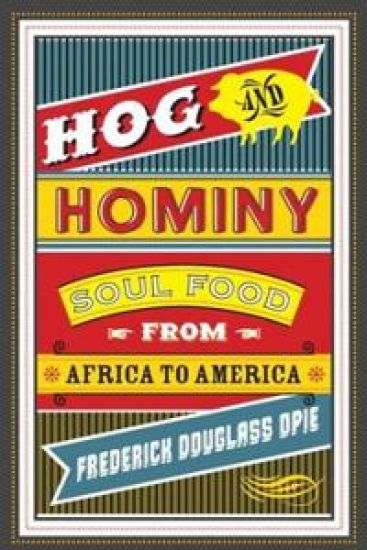
Hog and Hominy

Hog and Hominy

Frederick Douglass Opie

Columbia University Press
2010
pokkari
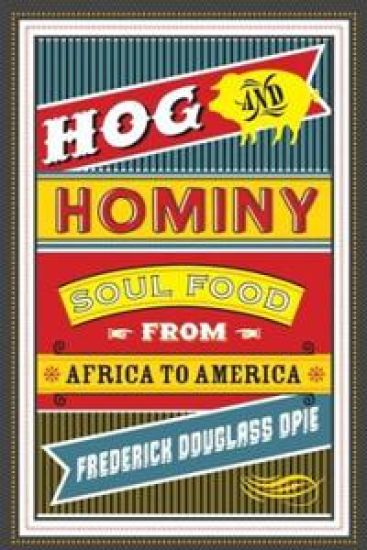
Frederick Douglass Opie deconstructs and compares the foodways of people of African descent throughout the Americas, interprets the health legacies of black culinary traditions, and explains the concept of soul itself, revealing soul food to be an amalgamation of West and Central African social and cultural influences as well as the adaptations blacks made to the conditions of slavery and freedom in the Americas. Sampling from travel accounts, periodicals, government reports on food and diet, and interviews with more than thirty people born before 1945, Opie reconstructs an interrelated history of Moorish influence on the Iberian Peninsula, the African slave trade, slavery in the Americas, the emergence of Jim Crow, the Great Migration, the Great Depression, and the Civil Rights and Black Power movements. His grassroots approach reveals the global origins of soul food, the forces that shaped its development, and the distinctive cultural collaborations that occurred among Africans, Asians, Europeans, and Americans throughout history. Opie shows how food can be an indicator of social position, a site of community building and cultural identity, and a juncture at which different cultural traditions can develop and impact the collective health of a community.
Hog and Hominy

Hog and Hominy

Frederick Douglass Opie

Columbia University Press
2008
sidottu
Frederick Douglass Opie deconstructs and compares the foodways of people of African descent throughout the Americas, interprets the health legacies of black culinary traditions, and explains the concept of soul itself, revealing soul food to be an amalgamation of West and Central African social and cultural influences as well as the adaptations blacks made to the conditions of slavery and freedom in the Americas. Sampling from travel accounts, periodicals, government reports on food and diet, and interviews with more than thirty people born before 1945, Opie reconstructs an interrelated history of Moorish influence on the Iberian Peninsula, the African slave trade, slavery in the Americas, the emergence of Jim Crow, the Great Migration, the Great Depression, and the Civil Rights and Black Power movements. His grassroots approach reveals the global origins of soul food, the forces that shaped its development, and the distinctive cultural collaborations that occurred among Africans, Asians, Europeans, and Americans throughout history. Opie shows how food can be an indicator of social position, a site of community building and cultural identity, and a juncture at which different cultural traditions can develop and impact the collective health of a community.