Kirjailija
Frederick Luis Aldama
Kirjat ja teokset yhdessä paikassa: 43 kirjaa, julkaisuja vuosilta 2003-2026, suosituimpien joukossa Labyrinths Borne. Vertaile teosten hintoja ja tarkista saatavuus suomalaisista kirjakaupoista.
43 kirjaa
Kirjojen julkaisuhaarukka 2003-2026.
Latinx TV offers an accessible and critical guide to television both by and about Latinxs, tracing the representation of Latinxs from the 1950s through to the present day. At once comprehensive in coverage and detailed and specific in examples analyzed, Latinx TV provides key insights into the study of Latinx TV as shaped within historical, social, cultural, regional, and global contexts. Throughout the volume, award-winning scholar Frederick Luis Aldama summarizes, explains, and contextualizes key critical concepts, perspectives, developments, and debates in Latinx media studies. Numerous genres are covered, from comedy, animated cartoons, science fiction and fantasy, and drama, to reality TV. Analogue, digital, and internet technologies in television production and consumption are considered, including the way TikTok, YouTube, and FAST channels that have enabled Latinx creators to build their own serialized storyworlds without network permission. Thematic analyses are of contemporary relevance and focus on issues such as urbanization, immigration, family life, language, politics, gender, sexuality, class, race, and ethnicity. This book makes for an essential read for any media studies students and scholars who want to know more about the history of TV’s representation of US Latinxs.

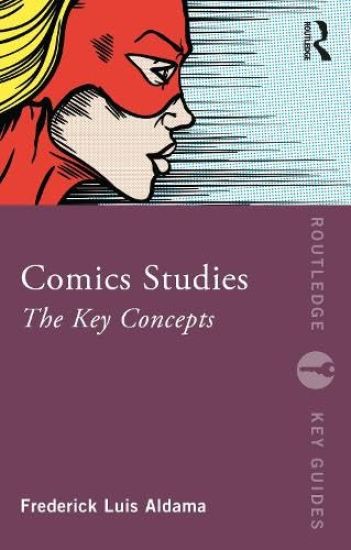
An accessible guide to the central concepts and issues that inform Comics Studies. It summarizes, explains, contextualizes, and assesses key critical concepts, perspectives, developments, and debates in the field. At once comprehensive in coverage and detailed and specific in examples analyzed, the book’s entries provide an essential overview of the key concepts in the field of Comics Studies, as shaped by historical, social, cultural, regional, and global contexts. The 22 concepts covered include: • Adaptation • Aesthetics • Animals • Architecture • Autobiography • Censorship • Convergence • Empire & Postcolonial • Feminism • History • Indigeneity • Intersectionality • Language • LGBTQ • Memoir • Mind/Bodies • Race • Regionalism • Sacred • Social Movements • Speculative • Youth Fully cross-referenced and complete with suggestions for further reading and a glossary, Comics Studies: The Key Concepts is an essential guide for students of media and cultural studies, art and visual culture, gender and women’s studies, and literature that are studying comics and graphic novels.
The topic of Latino/a Literature is not as easily identifiable as it may seem. The definition itself of Latino can change depending on who you are talking to—so, what do we mean in this case, and what will this book explore? In this latest addition to the Routledge Studies in American Literature series, Frederick Luis Aldama, shows the rich, evolving tapestry that makes up "Latino/a literature" across time as well as geographical and institutional spaces, touching on fundamental backdrops like political issues surrounding migration/immigration to the US as well as Central American, South American, and Caribbean political, social and cultural influences that have each added considerable depth, contrast, and variation to the tapestry. This impressive and increasingly influential body of literature that continues to transform the US in countless ways has been underrepresented in the academic community. With the majority minority of the country quickly becoming the majority in some states, Latino/a literature needs more to be given more attention which is exactly what Aldama brilliantly achieves with this new study that covers well know and lesser known works by Latino/a writes of the last few centuries and gives context to the times and environment in which they were written. Offering readers an exceptionally comprehensive review of this vital and under-explored subject, Aldama’s Introduction to Latino/a Literature promises to be an indispensable text.
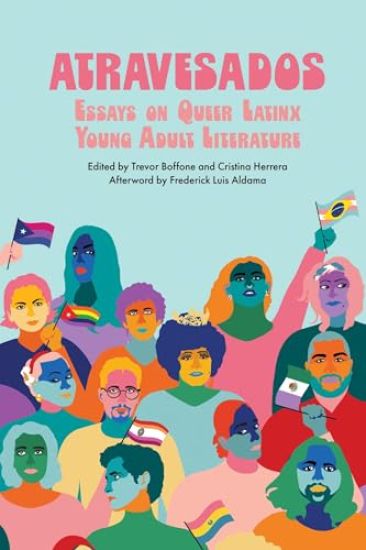
Contributions by Frederick Luis Aldama, T. Jackie Cuevas, Alexander Lalama, Angel Daniel Matos, Regina Marie Mills, Joseph Miranda, Jesus Montaño, Domino Renee Perez, Regan Postma-Montaño, Cristina Rhodes, and Sonia Alejandra RodriguezAtravesados: Essays on Queer Latinx Young Adult Literature shows how Latinx queer YA writers discard the "same old story," and offer critical representations of queerness that broaden YA writing and insist on the presence of queer teens of color. Atravesados draws on foundational Chicana queer theorist Gloria Anzaldúa’s notion of "atravesados" to speak to the spectrum of queer youth Latinidades as they materialize in YA literature. Los atravesados, according to Anzaldúa, are "The squint-eyed, the perverse, the queer, the troublesome, the mongrel, the mulato, the half-breed, the half dead; in short, those who cross over, pass over, or through the confines of the ‘normal.’" Los atravesados reside in the borderlands space of ni de aquí ni de allá, neither here nor there, present yet liminal, their queerness the very source of both frustration and empowerment, a paradox of joy and tragedy. Although written in 1987, Anzaldúa’s theory speaks to the realities of queer Latinx teens that fill the pages of YA literature well into the twenty-first century. Characters such as Juliet from Gabby Rivera’s Juliet Takes a Breath, Aaron from Adam Silvera’s More Happy Than Not, or the titular Chulito from Charles Rice-Gonzales’s novel encompass the highs, lows, and everything in-betweenness of queer Latinx teen lived experiences. This collection tells their stories.Contributors speak to the spectrum of queer youth Latinidades as they materialize in YA literature, paying close attention to representation and the ways youth are portrayed—whether accurate or stereotypical. Close attention is paid to books that succeed in broadening the field of YA, highlighting authors that draw from their own lived experiences and situate strong, fully developed characters. Taken together, these essays move beyond the page, explaining to readers why representation and authenticity matter in YA literature, as well as the far-reaching effects they can have for real world queer Latinx teens.
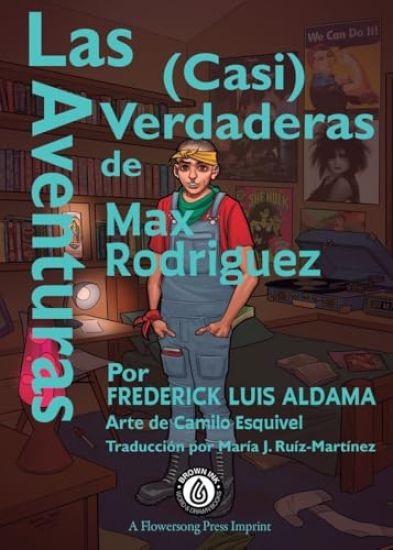
Max Rodr guez (nac o Maxine) pod a leer antes de poder hablar, devorando c mics, novelas y libros de filosof a. Este amor temprano por la lectura le ayuda a navegar la vida turbulenta com estudiante de secundaria en Nowheresville, California. Las aventuras de Max incluyen encuentros con su chispeante abuelita (alias Tatabuela), que conduce un coche musculoso verde Hulk y cultiva mota en su tico; su distanciado abuelo irland s-americano, Logan, que se cree John Wayne; su pap intermitente, Carlos; su mam , una maestra de primaria biling e ferozmente independiente; y su taciturno hermano mayor, Che, que est a punto de ir a la universidad. Otros en la rbita de Max incluyen a su compasivo t o, Jorge, que teme la p rdida de seres queridos debido a la creciente epidemia del SIDA; su prima activista, Lara; y sus mejores amigos salvajes y alocados, Rudy y Miguel. L grimas, risas, valent a y amor inquebrantable dan forma al viaje de autodescubrimiento de Max.
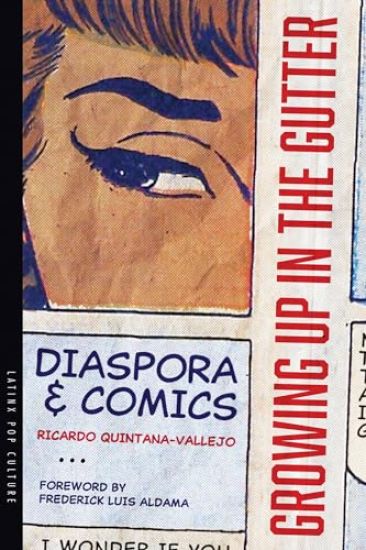
Growing Up in the Gutter
Ricardo Quintana-Vallejo; Frederick Luis Aldama
University of Arizona Press
2024
nidottu
Growing Up in the Gutter offers new understandings of contemporary graphic coming-of-age narratives by looking at the genre’s growth in stories by and for young BIPOC, LGBTQ+, and diasporic readers. Through a careful examination of the genre, Ricardo Quintana-Vallejo analyzes the complex identity formation of first- and subsequent-generation migrant protagonists in globalized rural and urban environments and dissects the implications that these diasporic formative processes have for a growing and popular genre. While the most traditional iteration of the bildungsroman--the coming-of-age story--follows middle-class male heroes who forge their identities in a process of complex introspection, contemporary graphic coming-of-age narratives represent formative processes that fit into, resist, or even disregard narratives of socialization under capitalism, of citizenship, and of nationhood. Quintana-Vallejo delves into several important themes: how the coming-of-age genre can be used to study adulthood, how displacement and international or global heritage are fundamental experiences, how multidiasporic approaches foreground lived experiences, and how queerness opens narratives of development to the study of adulthood as fundamentally diverse and nonconforming to social norms. Quintana-Vallejo shows how openness enables belonging among chosen families and, perhaps most importantly, freedom to disidentify. And, finally, how contemporary authors writing for the instruction of BIPOC children (and children otherwise affected by diaspora and displacement) use the didactic power of the coming-of-age genre, combined with the hybrid language of graphic narratives, to teach difficult topics in accessible ways.
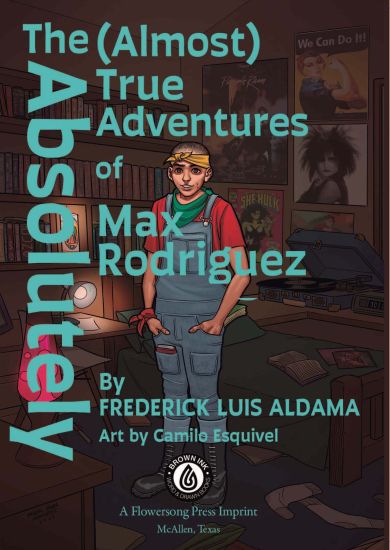
The Absolutely (Almost) True Adventures Of Max Rodriguez
Frederick Luis Aldama
Brown Ink
2024
pokkari
Max Rodriguez (n e Maxine) could read before they could talk, devouring comics, novels, and books on philosophy. This helps them later to navigate the topsy-turvy life as a 9th grader in Nowheresville, California. Max's adventures include encounters with their spirited abuelita (aka Tatabuela), who drives a Hulk-green muscle car and grows marijuana in her attic; an estranged, self-styled John-Wayne-strutting Irish American grandpa, Logan; a fair-weather pap named Carlos; Mam , a fiercely independent, bilingual elementary school teacher; and a taciturn older brother, Che, about to head to college. Others in Max's orbit include a compassionate t o, Jorge, who fears the loss of loved ones to a rising AIDS epidemic, activist prima, Lara, as well as wild and zany best friends, Rudy and Miguel. Tears, laughter, courage, and unyielding love shape Max's journey of self-discovery.
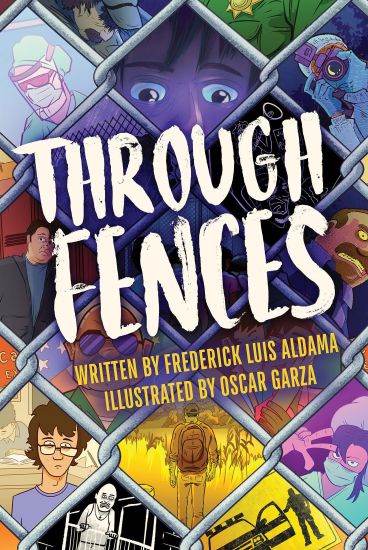
Winner, 2025 TACHE Outstanding Book Award in Fiction Honor-winner, 2025 Texas Institute of Letters Jean Flynn Award for Best Young Adult BookThrough Fences follows the ups and downs of Latino kids and young adults in the US-Mexico borderlands: San Ysidro, Calexico, McAllen, and back and forth across the border. A young girl's journey north goes wrong, and now she is in a forbidding new place, away from her parents and brother, where she doesn't understand what the adults in green are saying even as she tries to obey their rules. Rocky, one of the few white kids in town, stands by and watches as Miguel is jumped by two of his friends. Maggie and her parents are separated at the border in a tragic accident. Alberto's son doesn't understand his Mexican father's hatred for illegals or his work as a border patrol agent. Alicia is a TikTok influencer who doesn't want to grow up to be a hospital cleaning lady like her mother, but COVID complicates things. Whatever their challenges, the kids, teens, tweens, and adults in these pages are just trying to survive their everyday lives. Vibrantly illustrated by Oscar Garza, each of these short stories brings a different perspective on the perils of living on the border while brown.
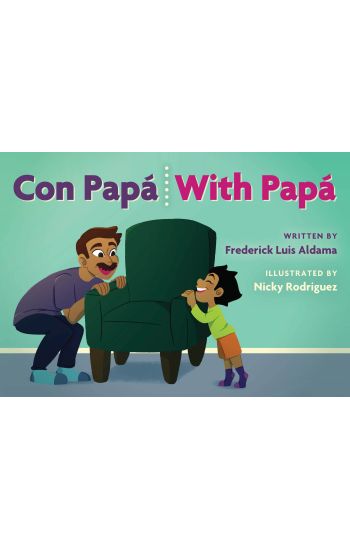
Con pap todo es posible Con ilustraciones divertidas e im genes ricas, este amable libro biling e para las edades de 3-8 celebra a los padres, les ni es y la identidad Latinx mientras lleva a los lectores en un viaje de crecimiento y descubrimiento de la ni ez. Desde la entrega de las alas del dios serpiente a los brazos seguros de Pap hasta presenciar el tapiz m gico de las estrellas, Con Pap / With Pap nos muestra el mundo a trav s de los ojos de une ni e, de la mano de Pap , hasta que est n listos para emprender sus propias aventuras. With Pap , anything is possible With playful illustrations and rich imagery, this gentle bilingual story for ages 3-8 celebrates fathers, children, and Latinx identity as it takes readers on a childhood journey of growth and discovery. From delivery from the serpent god's wings to Pap 's safe arms to witnessing the magical tapestry of stars, Con Pap / With Pap shows us the world through a child's eyes, hand in hand with Pap , until they are ready to set off on their own adventures.
Contagious Imagination
Frederick Luis Aldama; Glenn Willmott
UNIVERSITY PRESS OF MISSISSIPPI
2022
pokkari
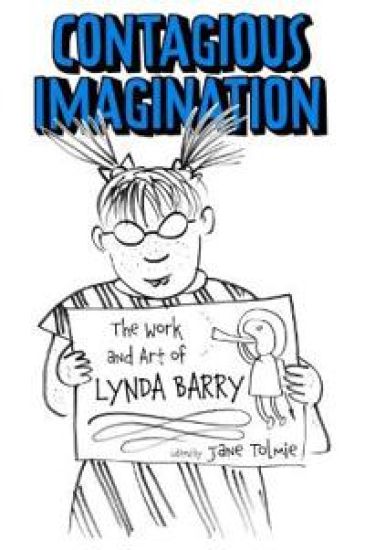
Contributions by Frederick Luis Aldama, Melissa Burgess, Susan Kirtley, Rachel Luria, Ursula Murray Husted, Mark O’Connor, Allan Pero, Davida Pines, Tara Prescott-Johnson, Jane Tolmie, Rachel Trousdale, Elaine Claire Villacorta, and Glenn WillmottLynda Barry (b. 1956) is best known for her distinctive style and unique voice, first popularized in her underground weekly comic Ernie Pook’s Comeek. Since then, she has published prolifically, including numerous comics, illustrated novels, and nonfiction books exploring the creative process. Barry’s work is genre- and form-bending, often using collage to create what she calls "word with drawing" vignettes. Her art, imaginative and self-reflective, allows her to discuss gender, race, relationships, memory, and her personal, everyday lived experience. It is through this experience that Barry examines the creative process and offers to readers ways to record and examine their own lives. The essays in Contagious Imagination: The Work and Art of Lynda Barry, edited by Jane Tolmie, study the pedagogy of Barry’s work and its application academically and practically. Examining Barry’s career and work from the point of view of research-creation, Contagious Imagination applies Barry’s unique mixture of teaching, art, learning, and creativity to the very form of the volume, exploring Barry’s imaginative praxis and offering readers their own. With a foreword by Frederick Luis Aldama and an afterword by Glenn Willmott, this volume explores the impact of Barry’s work in and out of the classroom. Divided into four sections—Teaching and Learning, which focuses on critical pedagogy; Comics and Autobiography, which targets various practices of rememorying; Cruddy, a self-explanatory category that offers two extraordinary critical interventions into Barry criticism around a challenging text; and Research-Creation, which offers two creative, synthetic artistic pieces that embody and enact Barry’s own mixed academic and creative investments—this book offers numerous inroads into Barry’s idiosyncratic imagination and what it can teach us about ourselves.
Contagious Imagination
Frederick Luis Aldama; Glenn Willmott
UNIVERSITY PRESS OF MISSISSIPPI
2022
sidottu
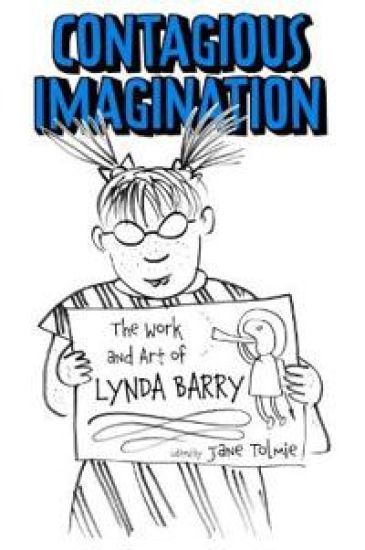
Contributions by Frederick Luis Aldama, Melissa Burgess, Susan Kirtley, Rachel Luria, Ursula Murray Husted, Mark O’Connor, Allan Pero, Davida Pines, Tara Prescott-Johnson, Jane Tolmie, Rachel Trousdale, Elaine Claire Villacorta, and Glenn WillmottLynda Barry (b. 1956) is best known for her distinctive style and unique voice, first popularized in her underground weekly comic Ernie Pook’s Comeek. Since then, she has published prolifically, including numerous comics, illustrated novels, and nonfiction books exploring the creative process. Barry’s work is genre- and form-bending, often using collage to create what she calls "word with drawing" vignettes. Her art, imaginative and self-reflective, allows her to discuss gender, race, relationships, memory, and her personal, everyday lived experience. It is through this experience that Barry examines the creative process and offers to readers ways to record and examine their own lives. The essays in Contagious Imagination: The Work and Art of Lynda Barry, edited by Jane Tolmie, study the pedagogy of Barry’s work and its application academically and practically. Examining Barry’s career and work from the point of view of research-creation, Contagious Imagination applies Barry’s unique mixture of teaching, art, learning, and creativity to the very form of the volume, exploring Barry’s imaginative praxis and offering readers their own. With a foreword by Frederick Luis Aldama and an afterword by Glenn Willmott, this volume explores the impact of Barry’s work in and out of the classroom. Divided into four sections—Teaching and Learning, which focuses on critical pedagogy; Comics and Autobiography, which targets various practices of rememorying; Cruddy, a self-explanatory category that offers two extraordinary critical interventions into Barry criticism around a challenging text; and Research-Creation, which offers two creative, synthetic artistic pieces that embody and enact Barry’s own mixed academic and creative investments—this book offers numerous inroads into Barry’s idiosyncratic imagination and what it can teach us about ourselves.
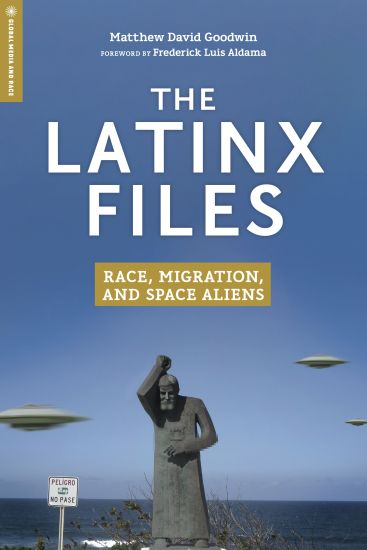
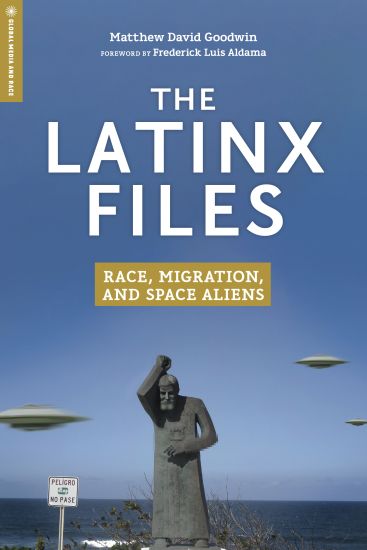
In The Latinx Files, Matthew David Goodwin traces how Latinx science fiction writers are reclaiming the space alien from its xenophobic legacy in the science fiction genre. The book argues that the space alien is a vital Latinx figure preserving Latinx cultures by activating the myriad possible constructions of the space alien to represent race and migration in the popular imagination. The works discussed in this book, including those of H.G. Wells, Gloria Anzaldúa, Junot Diaz, André M. Carrington, and many others, often explicitly reject the derogatory correlation of the space alien and Latinxs, while at other times, they contain space aliens that function as a source of either enlightenment or horror for Latinx communities. Throughout this nuanced analysis, The Latinx Files demonstrates how the character of the space alien has been significant to Latinx communities and has great potential for future writers and artists.
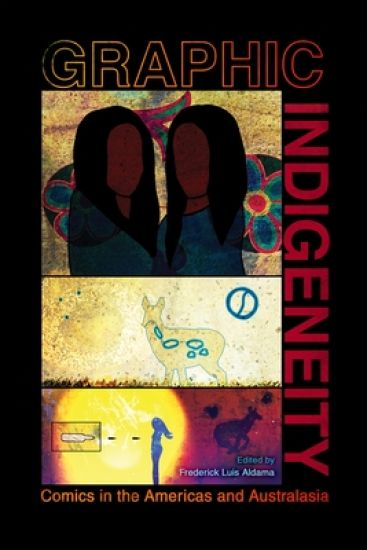
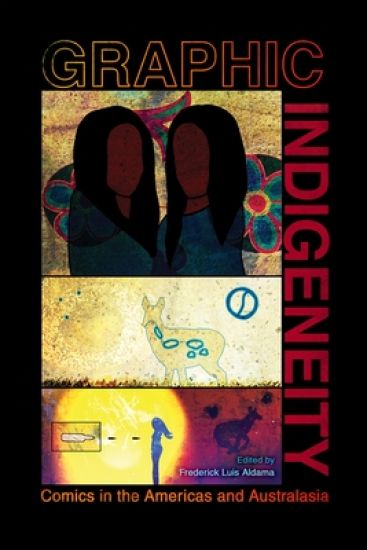
Contributions by Joshua T. Anderson, Chad A. Barbour, Susan Bernardin, Mike Borkent, Jeremy M. Carnes, Philip Cass, Jordan Clapper, James J. Donahue, Dennin Ellis, Jessica Fontaine, Jonathan Ford, Lee Francis IV, Enrique García, Javier García Liendo, Brenna Clarke Gray, Brian Montes, Arij Ouweneel, Kevin Patrick, Candida Rifkind, Jessica Rutherford, and Jorge Santos Cultural works by and about Indigenous identities, histories, and experiences circulate far and wide. However, not all films, animation, television shows, and comic books lead to a nuanced understanding of Indigenous realities. Acclaimed comics scholar Frederick Luis Aldama shines light on how mainstream comics have clumsily distilled and reconstructed Indigenous identities and experiences. He and contributors emphasize how Indigenous comic artists are themselves clearing new visual-verbal narrative spaces for articulating more complex histories, cultures, experiences, and narratives of self. To that end, Aldama brings together scholarship that explores both the representation and misrepresentation of Indigenous subjects and experiences as well as research that analyzes and highlights the extraordinary work of Indigenous comic artists. Among others, the book examines Daniel Parada's Zotz, Puerto Rican comics Turey el Taíno and La Borinqueña, and Moonshot: The Indigenous Comics Collection. This volume's wide-armed embrace of comics by and about Indigenous peoples of the Americas and Australasia is a first step to understanding how the histories of colonial and imperial domination connect the violent wounds that still haunt across continents. Aldama and contributors resound this message: Indigeneity in comics is an important, powerful force within our visual-verbal narrative arts writ large.