Kirjojen hintavertailu. Mukana 12 390 323 kirjaa ja 12 kauppaa.
Kirjailija
Frederick M. Denny
Kirjat ja teokset yhdessä paikassa: 3 kirjaa, julkaisuja vuosilta 1993-2008, suosituimpien joukossa The Holy Book in Comparative Perspective. Vertaile teosten hintoja ja tarkista saatavuus suomalaisista kirjakaupoista.
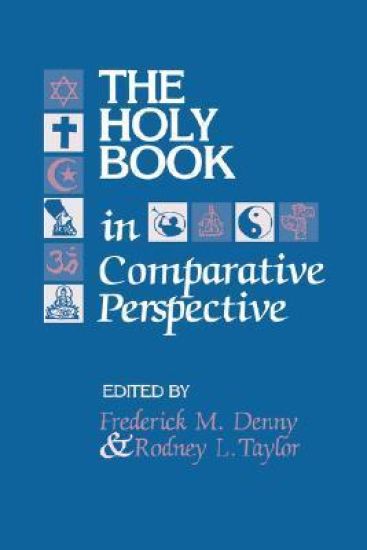
Ten noted religious studies scholars examine the sacred scriptures of Hinduism, Buddhism, Confucianism, Taoism, Islam, Zoroastrianism, Christianity, and Mormonism to produce an authoritative, comprehensive survey of the writings that shape the world's major religions. The Holy Book in Comparative Perspective concentrates on the origins, forms, and functions of scriptures in religious life. This volume also includes a thought-provoking chapter on the transmission of sacred traditions among nonliterate populations and a rebuttal of the widespread elevation of ""primitive"" traditions over literate traditions.
A timely exploration of balancing Islamic heritage with contemporary medical and health concerns,""Muslim Medical Ethics"" draws on the work of historians, health-care professionals, theologians, and social scientists to produce an interdisciplinary view of medical ethics in Muslim societies and of the impact of caring for Muslim patients in non-Muslim societies. Edited by Jonathan E. Brockopp and Thomas Eich, the volume challenges traditional presumptions of theory and practice to demonstrate the ways in which Muslims balance respect for their heritage with the health issues of a modern world.Like members of many other faiths, Muslims are deeply engaged by the technological challenges posed by modern biomedicine, and they respond to those challenges with enormous creativity - whether as patients, doctors, or religious scholars. ""Muslim Medical Ethics"" demonstrates that religiously based cultural norms often inform medical practice, and vice versa, in an ongoing discourse. The contributors map the breadth and boundaries of this discourse through discussions of contested issues on the cutting edge of ethical debates, from fertilized embryos in Saudi Arabia to patient autonomy in Toronto, from organ trafficking in Egypt to sterilization in Tanzania.As the authors illustrate, the effects of Muslim medical ethics have ramifications beyond the Muslim world. With growing populations of Muslims in North America and Europe, Western physicians and health-care workers should be educated on the special needs of this category of patients. In every essay the richness of the Islamic tradition is visible. In the premodern period, Muslim physicians were considered among the best in the world, building and improving on Greek and Indian traditions.Muslim physicians today continue that tradition while incorporating scientific advances. Scholars of Islamic law work closely with physicians to develop ethical guidelines for national and international bodies, and individual Muslims take full advantage of advances in medicine and religious law, combining them with the wisdom of Sufism and traditions of family and community. This exploration of Muslim medical ethics is therefore a foray into the richness and sophistication of the Islamic tradition itself.Designed as an engaging point of entrance for students in religious studies, anthropology, ethics, and medical humanities, this pathbreaking volume also has utility for health-care professionals and policy makers.
Why do religious communities remember some events and not others? Why do some kinds of music find a continuing place in worship while others seem to lose their appeal? Why is it that the Islamic tradition is understood so narrowly, even by some Muslims, when in fact it has a broadly textured history of belief and practice? In Memory, Music, and Religion, Earle H. Waugh addresses such probing questions while exploring a rich vein of Islam in Morocco - the mystical chanters. In this book, a detailed study of the interplay between memory, music, and religion, Waugh opens new areas of thought, particularly regarding a theme that cuts across religious traditions: the role of memory in religious formation. Since the glorious days of Andalusia, Muslim poetic and musical traditions have found a vibrant home among Moroccan Sufis. Through rituals of dhikr, or remembrance, the old forms of music and word blend into a new form of worship for today. In this study, Waugh probes the depths of religious memory within Islam and notes the singular importance of memory in comprehending the meaning and styles of music. Showing how the powerful tradition of music nurtures the Muslim soul, Waugh brings new insights to the study of the religious function of memory.