
Kirjailija
Frederick Marryat
Kirjat ja teokset yhdessä paikassa: 600 kirjaa, julkaisuja vuosilta 1993-2026, suosituimpien joukossa Newton Forster, or, The merchant service. By: Frederick Marryat. Vertaile teosten hintoja ja tarkista saatavuus suomalaisista kirjakaupoista.
600 kirjaa
Kirjojen julkaisuhaarukka 1993-2026.

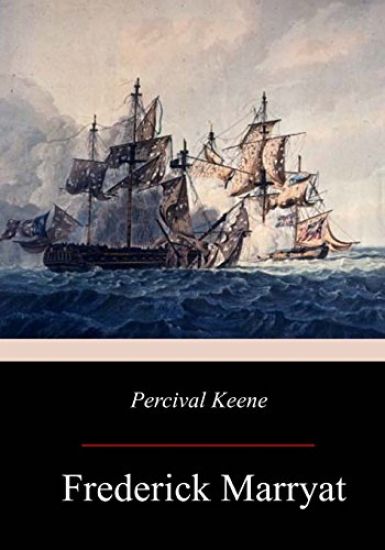
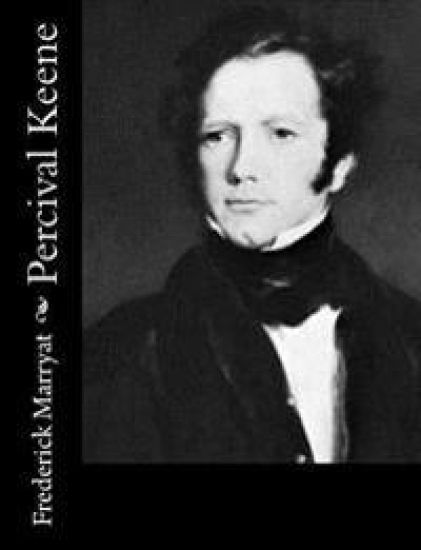
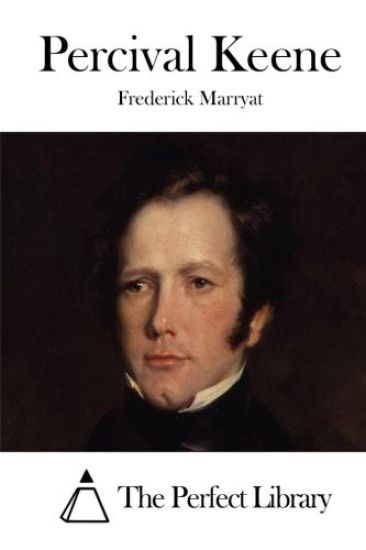
Percival Keene (1842) is a novel by Frederick Marryat. Inspired by the author’s experience as a captain in the Royal Navy, Percival Keene is a tale of bravery, identity, and the manifold reasons for men to take to the high seas. Frequently funny, often profound, Marryat’s novel is an underappreciated classic of nineteenth century fiction. “‘Dead! Well, fathers do die sometimes; you must get on how you can without one. I don’t think fathers are of much use, for, you see, mothers take care of you till you’re old enough to go to sea. My father did nothing for me, except to help mother to lick me, when I was obstropolous.’” Percival Keene is a troubled young man: raised by his mother and grandmother, he gains a reputation for troublemaking and disobedience early on. At school, he lashes out against bullying teacher Mr. O’Gallagher by adding poison to his sandwiches, knowing that the man will steal his lunch as usual. On Guy Fawkes Day, however, Percival finally crosses the line by setting off fireworks underneath O’Gallagher’s office, destroying the school and nearly killing the Irishman. Years later, having lost his chance at receiving an education, Percival enlists in the Royal Navy. While serving on the H.M. Calliope, he discovers that his father may not have been the marine Ben Keene, but rather his employer Captain Delmar. With a beautifully designed cover and professionally typeset manuscript, this edition of Frederick Marryat’s Percival Keene is a classic of British literature reimagined for modern readers.

This work has been selected by scholars as being culturally important and is part of the knowledge base of civilization as we know it.This work is in the public domain in the United States of America, and possibly other nations. Within the United States, you may freely copy and distribute this work, as no entity (individual or corporate) has a copyright on the body of the work.Scholars believe, and we concur, that this work is important enough to be preserved, reproduced, and made generally available to the public. To ensure a quality reading experience, this work has been proofread and republished using a format that seamlessly blends the original graphical elements with text in an easy-to-read typeface.We appreciate your support of the preservation process, and thank you for being an important part of keeping this knowledge alive and relevant.
The Three Cutters (1836) by: Frederick Marryat
Frederick Marryat
Createspace Independent Publishing Platform
2017
nidottu
Mr. Midshipman Easy (1836) by: Frederick Marryat ( A semi-autobiographical NOVEL )
Frederick Marryat
Createspace Independent Publishing Platform
2017
nidottu

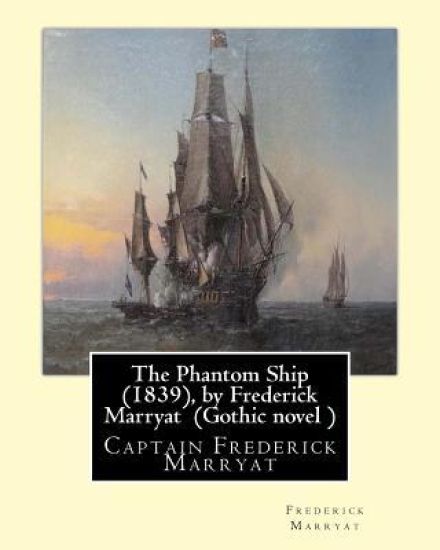
The Phantom Ship (1839), by Frederick Marryat (Gothic novel ): Captain Frederick Marryat
Frederick Marryat
Createspace Independent Publishing Platform
2016
nidottu
The Phantom Ship (1839) is a Gothic novel by Frederick Marryat which explores the legend of the Flying Dutchman and, in one chapter, features a werewolf.The plot concerns the quest of Philip Vanderdecken of Terneuzen in the Netherlands to save his father - who has been doomed to sail for eternity as the Captain of the Bewitched Phantom Ship, after he made a rash oath to heaven and slew one of the crew whilst attempting to sail round the Cape of Good Hope. Vanderdecken learns upon his mother's death that there exists a way by which his father's disturbed spirit may be laid to rest, and vows to live at sea until he has spoken with his father face to face and accomplished this purpose. Vanderdecken sails around the world in a number of ships, in the employ of the Dutch East India Company, so that he can redeem his father by presenting him with the relic of the Holy Cross he wears round his neck. His quest, however, brings him into conflict with earthly and unearthly powers as the sight of the Flying Dutchman brings doom to all who encounter her. Themes--The legend of the Flying Dutchman forms the background to the story and makes regular appearances throughout the novel, while Marryat adds many other supernatural details. He introduces as the heroine, Amine, the daughter of one Mynheer Poots, a miser. Having Arab blood in her veins, she possesses some of the secrets of Arabian magic, but her incautious use of her magic arts brings her into the dungeons of the Inquisition at Goa.Likewise, there is Schrifter, the demon pilot; and Krantz, with a tale of horrors in the Harz mountains;atrocious monks; and ghosts that will not be drowned. The reviews for the novel were generally poor. The Athenaeum thought that the work "falls sadly short of the racy marine stories by which the author won his first fame". In particular, it noted that Marryat "dashes off scenes of portent and terror with the same familiar and slip-shod style ... and the result is a feebleness of effect, not to be found in his other novels."Likewise in referring to the book, The Dublin Review thought that the "falling off in his last novel ... is very considerable", and stated that "a string of extravagant adventures, carelessly put together, and heavily told, deaden curiosity, -the Flying Dutchman makes his appearance as regularly as a packetboat, and becomes at last almost as tiresome." In recent times S.T. Joshi has called the novel "an aesthetic disaster - appallingly prolix, and written in a stiff, cumbersome style that reads like a bad translation from a foreign language
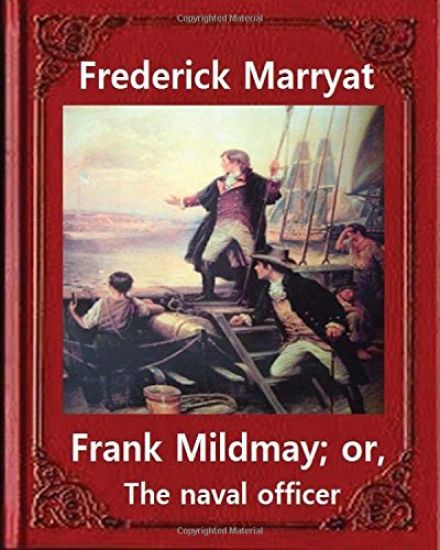
Frank Mildmay; or, The naval officer, By Frederick Marryat (Classic Books): Captain Frederick Marryat
Frederick Marryat
Createspace Independent Publishing Platform
2016
nidottu
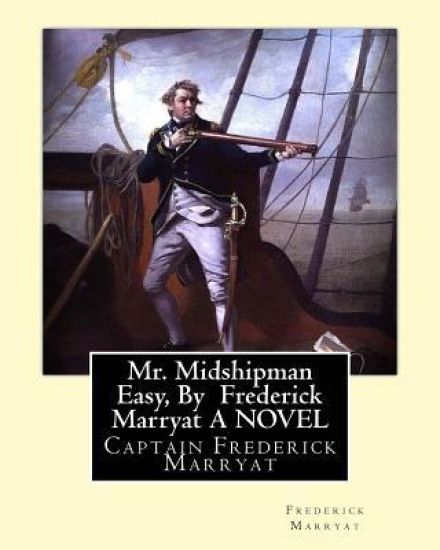
Mr. Midshipman Easy, By Frederick Marryat A NOVEL: Captain Frederick Marryat
Frederick Marryat
Createspace Independent Publishing Platform
2016
nidottu
Mr. Midshipman Easy is an 1836 novel by Frederick Marryat, a retired captain in the Royal Navy. The novel is set during the Napoleonic Wars, in which Marryat himself served with distinction.Easy is the son of foolish parents, who spoiled him. His father, in particular, regards himself as a philosopher, with a firm belief in the "rights of man, equality, and all that; how every person was born to inherit his share of the earth, a right at present only admitted to a certain length that is, about six feet, for we all inherit our graves, and are allowed to take possession without dispute. But no one would listen to Mr Easy's philosophy. The women would not acknowledge the rights of men, whom they declared always to be in the wrong; and, as the gentlemen who visited Mr Easy were all men of property, they could not perceive the advantages of sharing with those who had none. However, they allowed him to discuss the question, while they discussed his port wine. The wine was good, if the arguments were not, and we must take things as we find them in this world." By the time he is a teenager Easy has adopted his father's point of view, to the point where he no longer believes in private property. Easy joins the navy, which his father believes to be the best example of an equal society, and Easy becomes friendly with a lower deck seaman named Mesty (Mephistopheles Faust), an escaped slave, who had been a prince in Africa. Mesty is sympathetic to Easy's philosophizing, which seems to offer him a way up from his lowly job of "boiling kettle for de young gentlemen"; but once Mesty is promoted to ship's corporal and put in charge of discipline, he changes his mind: "...now I tink a good deal lately, and by all de power, I tink equality all stuff." "All stuff, Mesty, why? you used to think otherwise." "Yes, Massa Easy, but den I boil de kettle for all young gentleman. Now dat I ship's corporal and hab cane, I tink so no longer." In some way Mesty is the real hero of the novel, as he pulls Easy out of several scrapes the impulsive 17-year-old gets himself into as he cruises the Mediterranean on several British ships. Easy becomes a competent officer, in spite of his notions. Easy's mother dies, and he returns home to find his father is completely mad. Easy senior has developed an apparatus for reducing or enlarging phrenological bumps on the skull, but as he attempts to reduce his own benevolence bump, the machine kills him. Easy throws out the criminal servants his father has employed and puts the estate to rights, demanding back rents from the tenants, and evicting those who will not pay. Using his new-found wealth, he formally quits the navy, rigs out his own privateering vessel, and returns to Sicily to claim his bride Agnes. As he is a wealthy gentleman now, no longer a junior midshipman, her family cannot refuse him, and he and Agnes live happily ever after...
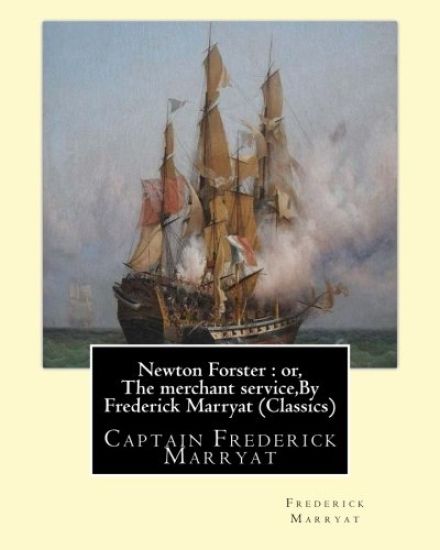
Newton Forster: or, The merchant service, By Frederick Marryat (Classics): Captain Frederick Marryat
Frederick Marryat
Createspace Independent Publishing Platform
2016
nidottu
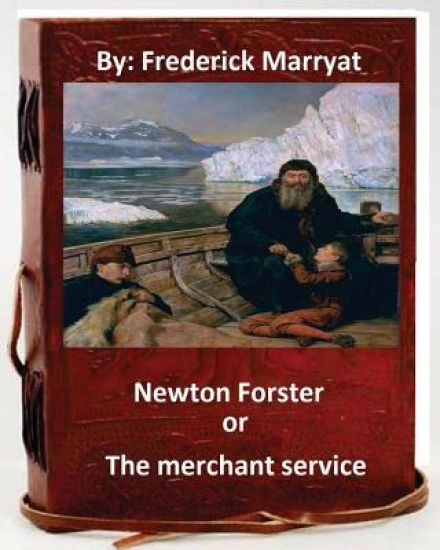
Newton Forster, or, The merchant service. By: Frederick Marryat
Frederick Marryat
Createspace Independent Publishing Platform
2016
nidottu
Captain Frederick Marryat (10 July 1792 - 9 August 1848) was a British Royal Navy officer, novelist, and an acquaintance of Charles Dickens, noted today as an early pioneer of the sea story. He is now known particularly for the semi-autobiographical novel Mr Midshipman Easy and his children's novel The Children of the New Forest, and for a widely used system of maritime flag signalling, known as Marryat's Code Marryat was born in London, the son of Joseph Marryat, a "merchant prince" and member of Parliament, and his American wife Charlotte, n e von Geyer. After trying to run away to sea several times, Marryat was permitted to enter the Royal Navy in 1806 as a midshipman on board HMS Imperieuse, a frigate commanded by Lord Cochrane (who later served as inspiration for both Marryat and other authors). Marryat's time aboard the Imperieuse included action off the Gironde, the rescue of a fellow midshipman who had fallen overboard, captures of many ships off the Mediterranean coast of Spain, and the capture of the castle of Montgat. The Imperieuse shifted to operations in the Scheldt in 1809, where Marryat contracted malaria; he returned to England on the 74-gun HMS Victorious.
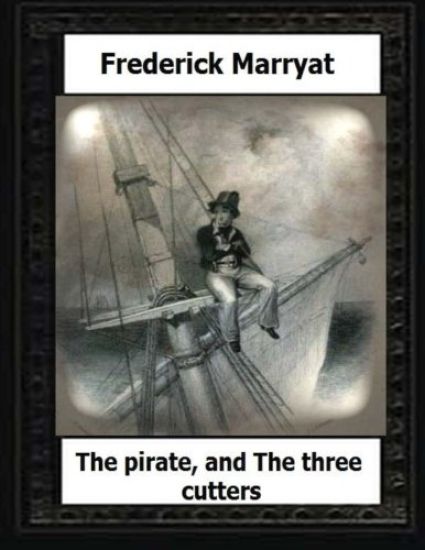
The pirate, and The three cutters(1836) by: Frederick Marryat
Frederick Marryat
Createspace Independent Publishing Platform
2016
nidottu
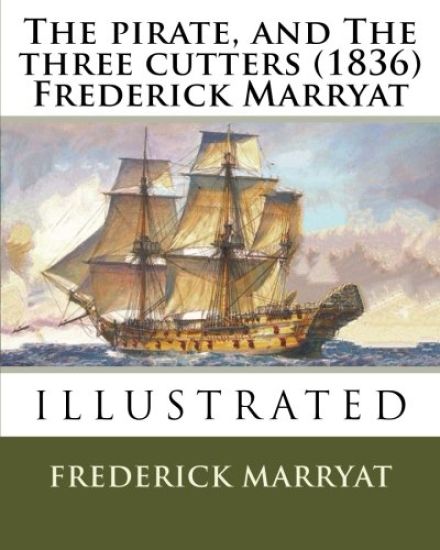
The pirate, and The three cutters (1836) Frederick Marryat
Frederick Marryat
Createspace Independent Publishing Platform
2016
nidottu

Peter Simple ... Illustrated by J. A. Symington, with an introduction by D. Hannay.
Frederick Marryat; David Hannay; James Ayton Symington
British Library, Historical Print Editions
2011
pokkari
Title: Peter Simple ... Illustrated by J. A. Symington, with an introduction by D. Hannay.Publisher: British Library, Historical Print EditionsThe British Library is the national library of the United Kingdom. It is one of the world's largest research libraries holding over 150 million items in all known languages and formats: books, journals, newspapers, sound recordings, patents, maps, stamps, prints and much more. Its collections include around 14 million books, along with substantial additional collections of manuscripts and historical items dating back as far as 300 BC.The GENERAL HISTORICAL collection includes books from the British Library digitised by Microsoft. This varied collection includes material that gives readers a 19th century view of the world. Topics include health, education, economics, agriculture, environment, technology, culture, politics, labour and industry, mining, penal policy, and social order. ++++The below data was compiled from various identification fields in the bibliographic record of this title. This data is provided as an additional tool in helping to insure edition identification: ++++ British Library Marryat, Frederick; Hannay, David; Symington, James Ayton; 1895. xxx. 493 p.; 8 . 012624.g.12.
The Novels of Captain Marryat. Edited by R. Brimley Johnson. L.P.
Frederick Marryat
British Library, Historical Print Editions
2011
pokkari
The Novels of Captain Marryat. Edited by R. Brimley Johnson. L.P.
Frederick Marryat
British Library, Historical Print Editions
2011
pokkari