Kirjojen hintavertailu. Mukana 12 595 353 kirjaa ja 12 kauppaa.
Kirjailija
Frederick Ober
Kirjat ja teokset yhdessä paikassa: 6 kirjaa, julkaisuja vuosilta 2014-2022, suosituimpien joukossa Hernando Cortes, Conqueror of Mexico. Vertaile teosten hintoja ja tarkista saatavuus suomalaisista kirjakaupoista.
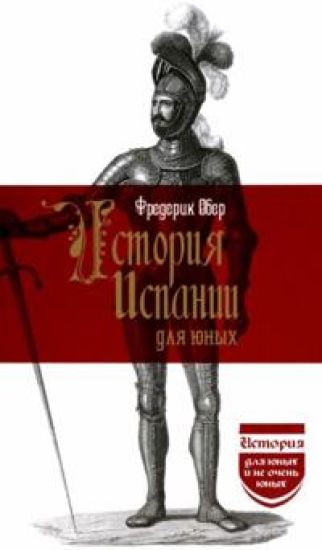
Eta kniga byla napisana-spetsialno dlja detej-amerikanskim pisatelem Frederikom Oberom (1849-191Z), zajadlym puteshestvennikom i avtorom bolee soroka knig, sredi kotorykh romany i biografii Pisarro, Kolumba, Kortesa, a takzhe rasskazy dlja detej."Istorija Ispanii" vyshla v 1912 godu, no i segodnja niskolko ne poterjala svoej aktualnosti. Zhivoj jazyk, uvlekatelnost sjuzhetov, romanticheskie istorii, jarkie personazhi, ljubopytnye fakty delajut knigu Obera interesnoj ne tolko dlja detej, no i dlja vzroslykh.Perevodchik: Javrumjan A. E.
Cradled in the valley of the Arno, its noble architecture fitly supplementing its numerous natural charms, lies the Tuscan city of Florence, the birthplace of immortal Dante, the early home of Michael Angelo, the seat of the Florentine Medici, the scene of Savonarola's triumphs and his tragic end. Fame has come to many sons of Florence, as poets, statesmen, sculptors, painters, travellers; but perhaps none has achieved a distinction so unique, apart, and high as the subject of this volume, after whom the continents of the western hemisphere were named. Amerigo Vespucci was born in Florence, March 9, 1451, just one hundred and fifty years after Dante was banished from the city in which both first saw the light.
This is a biography of one of Spain's most notorious explorers and conquistadores, Francisco Pizarro. Naturally, as one of the best known conquistadors, Francisco Pizarro (1471/6-1541) is also one of the most controversial. Like Christopher Columbus and Hernan Cort s before him, Pizarro was celebrated in Europe for subduing the Inca Empire, a culture that fascinated his contemporaries. At the same time, naturally, indigenous views of the man have been overwhelmingly negative. . If Columbus and Cort s were the pioneers of Spain's new global empire, Pizarro consolidated its immense power and riches, and his successes inspired a further generation to expand Spain's dominions to unheard of dimensions. Furthermore, he participated in the forging of a new culture: like Cort s, he took an indigenous mistress with whom he had two mixed-race children, and yet the woman has none of the lasting fame of Cort s's Do a Marina. With all of this in mind, it is again remarkable that Pizarro remains one of the less well-known and less written about of the explorers of his age. On the other hand, there are certain factors that may account for the conqueror of Peru's relative lack of lasting glory. For one, he was a latecomer in more than one sense. Cort s's reputation was built on being the first to overthrow a great empire, so Pizarro's similar feat, even if it bore even greater fruit in the long run, would always be overshadowed by his predecessor's precedent. But Pizarro also lacked the youthful glamour of Cort s: already a wizened veteran in his 50s by the time he undertook his momentous expedition, he proceeded with the gritty determination of a hardened soldier rather than the audacity and cunning of a young courtier.
During the Age of Exploration, some of the most famous and infamous individuals were Spain's best known conquistadors. Naturally, as the best known conquistador, Hern n Cort s (1485-1547) is also the most controversial. Like Christopher Columbus before him, Cort s was lionized for his successes for centuries without questioning his tactics or motives, while indigenous views of the man have been overwhelmingly negative for the consequences his conquests had on the Aztecs and other natives in the region. Just about the only thing everyone agrees upon is that Cort s had a profound impact on the history of North America. Of course, the lionization and demonization of Cort s often take place without fully analyzing the man himself, especially because there are almost no contemporaneous sources that explain what his thinking and motivation was. If anything, Cort s seemed to have been less concerned with posterity or the effects of the Spanish conquest on the natives than he was on relations with the Mother Country itself. Of the few things that are known about Cort s, it appears that he was both extremely ambitious and fully cognizant of politics and political intrigue, even in a New World thousands of miles west of Spain itself. While those ambitions and politics understandably colored his writings about his activities and conquests, scholars nevertheless use what he wrote to gain a better understanding of the indigenous natives he came into contact with. As Adolph Francis Bandelier noted in the Catholic Encyclopedia in 1908, "Cort s was a good writer. His letters to the emperor, on the conquest, deserve to be classed among the best Spanish documents of the period. They are, of course, coloured so as to place his own achievements in relief, but, withal, he keeps within bounds and does not exaggerate, except in matters of Indian civilization and the numbers of population as implied by the size of the settlements. Even there he uses comparatives only, judging from outward appearances and from impressions."