

Kirjailija
Frederick Winslow Taylor
Kirjat ja teokset yhdessä paikassa: 50 kirjaa, julkaisuja vuosilta 1899-2025, suosituimpien joukossa Shop Management (Classic Reprint). Vertaile teosten hintoja ja tarkista saatavuus suomalaisista kirjakaupoista.
50 kirjaa
Kirjojen julkaisuhaarukka 1899-2025.

Frederick Winslow Taylor's "Shop Management" remains a cornerstone text for understanding the principles of industrial management and efficiency in workshops. This influential work, categorized under Technology & Applied Sciences and Business & Economics, delves into the core concepts of scientific management as applied to manufacturing environments. Explore Taylor's methodologies for optimizing workflows, improving productivity, and enhancing overall shop management. This meticulously prepared print edition offers valuable insights into the historical development of management techniques. Whether you're interested in the evolution of industrial engineering or seeking a deeper understanding of the principles that shaped modern manufacturing, "Shop Management" provides a comprehensive exploration of these foundational ideas. Discover the timeless principles that continue to influence discussions on efficiency, work design, and the optimization of industrial processes.This work has been selected by scholars as being culturally important, and is part of the knowledge base of civilization as we know it.This work is in the public domain in the United States of America, and possibly other nations. Within the United States, you may freely copy and distribute this work, as no entity (individual or corporate) has a copyright on the body of the work.Scholars believe, and we concur, that this work is important enough to be preserved, reproduced, and made generally available to the public. We appreciate your support of the preservation process, and thank you for being an important part of keeping this knowledge alive and relevant.

Frederick Winslow Taylor's "The Principles of Scientific Management" remains a foundational text in the field of management theory. Originally published in the early 20th century, this seminal work outlines Taylor's revolutionary ideas on industrial efficiency and the optimization of work processes. Explore the core tenets of "Taylorism," including time-motion studies and the application of scientific principles to management practices. This book delves into methods for improving productivity and streamlining operations. Discover Taylor's approach to standardizing work, selecting and training employees, and fostering collaboration between management and labor. This edition meticulously republishes Taylor's original work, offering a direct connection to the source of scientific management principles. A must-read for anyone interested in the history of business, industrial management, and the evolution of leadership strategies.This work has been selected by scholars as being culturally important, and is part of the knowledge base of civilization as we know it.This work is in the public domain in the United States of America, and possibly other nations. Within the United States, you may freely copy and distribute this work, as no entity (individual or corporate) has a copyright on the body of the work.Scholars believe, and we concur, that this work is important enough to be preserved, reproduced, and made generally available to the public. We appreciate your support of the preservation process, and thank you for being an important part of keeping this knowledge alive and relevant.

Shop Management - (Deluxe Hardbound Edition)
Frederick Winslow Taylor
SANAGE PUBLISHING HOUSE LLP
2025
sidottu

The Principles of Scientific Management
Frederick Winslow Taylor
SANAGE PUBLISHING HOUSE LLP
2024
nidottu

LES PRINCIPES DE L'ORGANISATION SCIENTIFIQUE DU TRAVAIL (version française avec biographie de l'auteur)
Frederick Winslow Taylor
Tessa Sterling
2024
pokkari
D couvrez l'oeuvre r volutionnaire qui a transform le monde du travail et de la gestion: Les Principes de l'organisation scientifique du travail de Frederick Winslow Taylor. Ce livre pionnier, publi pour la premi re fois en 1911, propose une approche m thodique et scientifique de la gestion des entreprises et de l'organisation du travail. Taylor, souvent consid r comme le p re du management scientifique, d voile des m thodes innovantes pour am liorer l'efficacit et la productivit , des concepts qui restent plus pertinents que jamais dans notre monde moderne.Taylor commence par exposer les probl mes fondamentaux du travail manuel et de la gestion inefficace, soulignant la n cessit d'une r volution industrielle qui repose non seulement sur la technologie, mais aussi sur une compr hension approfondie des processus de travail. Il propose une s rie de principes visant optimiser chaque aspect de la production et tablir une relation harmonieuse entre les employ s et la direction.Au coeur de sa th orie se trouve l'id e de remplacer les m thodes empiriques et improvis es par des techniques standardis es, fond es sur des tudes minutieuses de temps et de mouvements. Taylor d montre que, gr ce une planification rigoureuse, la formation ad quate des travailleurs et la d composition des t ches en gestes simples et r p titifs, il est possible d'augmenter consid rablement la productivit tout en r duisant la fatigue des employ s.L'une des contributions majeures de Taylor est la division du travail et la sp cialisation des t ches, permettant ainsi chaque travailleur de devenir un expert dans son domaine sp cifique. Cette sp cialisation, associ e une supervision troite et des incitations financi res, cr e un environnement o l'efficacit est maximis e et les co ts minimis s.Taylor ne se contente pas de th oriser; il illustre ses principes par des tudes de cas et des exemples concrets tir s de son exp rience pratique dans l'industrie. Des usines de fabrication aux ateliers de montage, ses m thodes ont t appliqu es avec succ s, prouvant leur valeur ind niable. Ces exemples montrent comment une gestion scientifique peut conduire des am liorations spectaculaires de la production et de la rentabilit .Mais Les Principes de l'organisation scientifique du travail est bien plus qu'un manuel technique. C'est une r flexion profonde sur la nature du travail humain et sur la mani re dont les entreprises peuvent cr er un environnement de travail plus efficace et plus satisfaisant. Taylor plaide pour une coop ration troite entre la direction et les ouvriers, o chacun comprend et accepte son r le dans le processus de production. Il propose galement un syst me de r mun ration bas sur la performance, incitant les travailleurs atteindre des niveaux d'efficacit plus lev s.

A Popular History of England, From the Earliest Times to the Reign of Queen Victoria; Volume II (Edition1)
Frederick Winslow Taylor
Alpha Editions
2024
nidottu

Tales of the Caravan, Inn, and Palace (Edition1)
Frederick Winslow Taylor
Alpha Editions
2023
nidottu
Reproduction of the original. The publishing house Megali specialises in reproducing historical works in large print to make reading easier for people with impaired vision.

Reproduction of the original. The publishing house Megali specialises in reproducing historical works in large print to make reading easier for people with impaired vision.



This work has been selected by scholars as being culturally important, and is part of the knowledge base of civilization as we know it.This work is in the "public domain in the United States of America, and possibly other nations. Within the United States, you may freely copy and distribute this work, as no entity (individual or corporate) has a copyright on the body of the work.Scholars believe, and we concur, that this work is important enough to be preserved, reproduced, and made generally available to the public. We appreciate your support of the preservation process, and thank you for being an important part of keeping this knowledge alive and relevant.

The Principles of Scientific Management
Frederick Winslow Taylor
INDOEUROPEANPUBLISHING.COM
2022
sidottu
The Principles of Scientific Management
Frederick Winslow Taylor
INDOEUROPEANPUBLISHING.COM
2022
pokkari
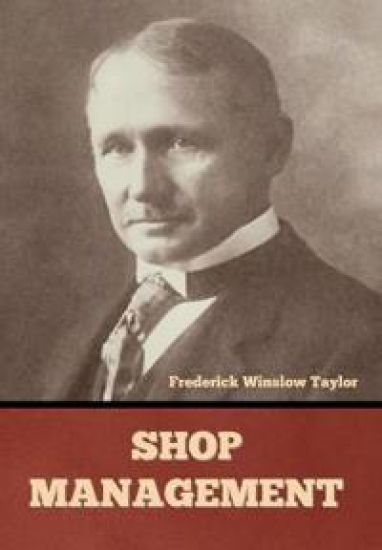
Frederick Winslow Taylor (March 20, 1856 - March 21, 1915) was an American mechanical engineer. He was widely known for his methods to improve industrial efficiency. He was one of the first management consultants. In 1911, Taylor summed up his efficiency techniques in his book The Principles of Scientific Management which, in 2001, Fellows of the Academy of Management voted the most influential management book of the twentieth century. His pioneering work in applying engineering principles to the work done on the factory floor was instrumental in the creation and development of the branch of engineering that is now known as industrial engineering. Taylor made his name, and was most proud of his work, in scientific management; however, he made his fortune patenting steel-process improvements. As a result, Scientific management is sometimes referred to as Taylorism. ...Taylor thought that by analysing work, the "one best way" to do it would be found. He is most remembered for developing the stopwatch time study, which, combined with Frank Gilbreth's motion study methods, later became the field of time and motion study. He broke a job into its component parts and measured each to the hundredth of a minute. One of his most famous studies involved shovels. He noticed that workers used the same shovel for all materials. He determined that the most effective load was 211/2 pounds, and found or designed shovels that for each material would scoop up that amount. He was generally unsuccessful in getting his concepts applied, and was dismissed from Bethlehem Iron Company/Bethlehem Steel Company. Nevertheless, Taylor was able to convince workers who used shovels and whose compensation was tied to how much they produced to adopt his advice about the optimum way to shovel by breaking the movements down into their component elements and recommending better ways to perform these movements. It was largely through his disciples' efforts (most notably Henry Gantt's) that industry came to implement his ideas. Moreover, the book he wrote after parting company with the Bethlehem company, Shop Management, sold well. (wikipedia.org)

Frederick Winslow Taylor (March 20, 1856 - March 21, 1915) was an American mechanical engineer. He was widely known for his methods to improve industrial efficiency. He was one of the first management consultants. In 1911, Taylor summed up his efficiency techniques in his book The Principles of Scientific Management which, in 2001, Fellows of the Academy of Management voted the most influential management book of the twentieth century. His pioneering work in applying engineering principles to the work done on the factory floor was instrumental in the creation and development of the branch of engineering that is now known as industrial engineering. Taylor made his name, and was most proud of his work, in scientific management; however, he made his fortune patenting steel-process improvements. As a result, Scientific management is sometimes referred to as Taylorism. ...Taylor thought that by analysing work, the "one best way" to do it would be found. He is most remembered for developing the stopwatch time study, which, combined with Frank Gilbreth's motion study methods, later became the field of time and motion study. He broke a job into its component parts and measured each to the hundredth of a minute. One of his most famous studies involved shovels. He noticed that workers used the same shovel for all materials. He determined that the most effective load was 211/2 pounds, and found or designed shovels that for each material would scoop up that amount. He was generally unsuccessful in getting his concepts applied, and was dismissed from Bethlehem Iron Company/Bethlehem Steel Company. Nevertheless, Taylor was able to convince workers who used shovels and whose compensation was tied to how much they produced to adopt his advice about the optimum way to shovel by breaking the movements down into their component elements and recommending better ways to perform these movements. It was largely through his disciples' efforts (most notably Henry Gantt's) that industry came to implement his ideas. Moreover, the book he wrote after parting company with the Bethlehem company, Shop Management, sold well. (wikipedia.org)

First published in 1911, "The Principles of Scientific Management" by the American mechanical engineer and efficiency expert Frederick Winslow Taylor, is the highly influential study on industrial organization and management theory. Taylor is often referred to as the "Father of Scientific Management" and his approach to decision-making and management to optimize efficiency is often referred to as "Taylor's Principles", or "Taylorism". The impact on the field of business strategy of Taylor's work is undeniable and his legacy continues to inform and guide the study of industrial engineering and management methods. Taylor argued that the application of scientific principles and research methods to coordinate industrial enterprise would create a system that all parties could benefit from, including the employer, the worker, and society at large. The goal of Taylor's approach was to secure both the maximum prosperity for both the owner and for each employee by using proper scientific training methods that focused on developing individual skill to its greatest effect. Taylor also encouraged the use of incentive programs to motivate increased effort and efficiency. "The Principles of Scientific Management" remains a truly lasting and important work of management science over a century after it was first published. This edition is printed on premium acid-free paper.