Kirjojen hintavertailu. Mukana 12 657 676 kirjaa ja 12 kauppaa.

Kirjailija

Frederique Apffel-Marglin

Kirjat ja teokset yhdessä paikassa: 4 kirjaa, julkaisuja vuosilta 2012-2023, suosituimpien joukossa Sacred Soil. Vertaile teosten hintoja ja tarkista saatavuus suomalaisista kirjakaupoista.

Mukana myös kirjoitusasut: Frédérique Apffel-Marglin

4 kirjaa

Kirjojen julkaisuhaarukka 2012-2023.

Sacred Soil

Sacred Soil

Robert Tindall; Frederique Apffel-Marglin; David Shearer; Ian Baker

North Atlantic Books,U.S.
2017
pokkari
This book details the remarkable potential of terra preta, the recently rediscovered sacred soil of the pre-Columbian peoples of the Amazon rainforest, to reverse some of the most the catastrophic damage that has been visited on our environment. The authors lay out a fascinating description of how utilizing the biochar embedded in this highly fertile, living soil offers a way to free ourselves from dependency on petrochemicals, restore the health of our soils, and remove carbon from our overheating atmosphere by fixing it back where it belongs--in the earth. They predict that biochar could significantly contribute to the restoration of the planet to pre-industrial levels of atmospheric carbon by 2050. The book also shows that the rediscovery of terra preta is an opportunity to move beyond the West's tradition of plunder and genocide of the native civilizations of the Americas by offering an invitation to embrace the deeper mystery of the indigenous methods of inquiry and to participate in an animate cosmos that gave rise to such a powerful technology as terra preta in the first place. Sacred Soil, in recognizing the need for biocultural regeneration, takes a multi-disciplinary approach to the phenomenon of bio-char soils, utilizing mythopoeic, historical, anthropological, and scientific perspectives to embrace the deep past, the vexed present, and the prospectus for our future. Coming at this crucial juncture in human history, the potential resting in biochar is also an open doorway into the indigenous ways of knowing that enabled the pre-Columbian Amazonian high civilizations to support a population of millions while leaving their lands more fertile than when they arose.
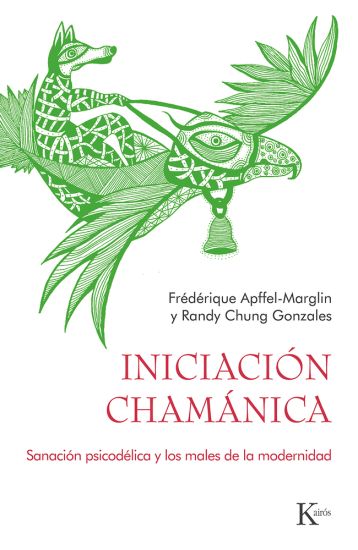
Iniciación Chamánica: Sanación Psicodélica Y Los Males de la Modernidad

Iniciación Chamánica: Sanación Psicodélica Y Los Males de la Modernidad

Randy Chung Gonzalez; Frédérique Apffel-Marglin

Editorial Kairos
2023
nidottu
Randy Chung Gonzales fue iniciado por entidades descarnadas. Durante tres a os le entregaron poderes de sanaci n. l no era m s que un mestizo laico y materialista, pero fue totalmente transformado en su iniciaci n. Fue Fr d rique Apffel-Marglin quien forz a Randy a ir a la ceremonia de ayahuasca donde acabar a siendo iniciado en contra de su voluntad. Esta iniciaci n cham nica cambi la vida de ambos. El libro junta la voz de Randy, en primera persona y sus propias ilustraciones, y la de Fr d rique, que se transform de una antrop loga acad mica en algo diferente. Ambas experiencias sirven asimismo para un profundo an lisis de la modernidad occidental, donde la erradicaci n del chamanismo juega un papel clave. Con el actual renacimiento del estudio cient fi co de los psicod licos, Iniciaci n cham nica argumenta con rotundidad que las plantas sagradas del chamanismo pueden curar las epidemias mentales y sociales del norte global. Randy Chung Gonzales was initiated just a materialistic lay mongrel, but he was transformed by his introduction to Shamanism. It was Fr d rique Apffel-Marglin who forced Randy to go to the ayahuasca ceremony where he would end up being initiated against his will. This shamanic initiation changed both their lives. The book brings together Randy's voice with Fr d rique's and both their experiences serve for a deep analysis of Western modernity. With the current renaissance in the scientific study of psychedelics, Shamanic Initiation makes a strong case that the sacred plants of shamanism can cure the mental and social epidemics of the global north.
Subversive Spiritualities

Subversive Spiritualities

Frederique Apffel-Marglin

Oxford University Press Inc
2012
sidottu
Even in the twenty-first century some two-thirds of the world's peoples--the world's social majority--quietly live in non-modern, non-cosmopolitan places. In such places the multitudinous voices of the spirits, deities, and other denizens of the other-than-human world continue to be heard, continue to be loved or feared or both, continue to accompany the human beings in all their activities. In this book, Frederique Apffel-Marglin draws on a lifetime of work with the indigenous peoples of Peru and India to support her argument that the beliefs, values, and practices of such traditional peoples are ''eco-metaphysically true.'' In other words, they recognize that human beings are in communion with other beings in nature that have agency and are kinds of spiritual intelligences, with whom humans can be in relationship and communion. Ritual is the medium for communicating, reciprocating, creating and working with the other-than-humans, who daily remind the humans that the world is not for humans' exclusive use. Apffel-Marglin argues moreover, that when such relationships are appropriately robust, human lifeways are rich, rewarding, and in the contemporary jargon, environmentally sustainable. Her ultimate objective is to ''re-entangle'' humans in nature--she is, in the final analysis, promoting a spirituality and ecology of belonging and connection to nature, and an appreciation of animistic perception and ecologies. Along the way she offers provocative and poignant critiques of many assumptions, including of the ''development'' paradigm as benign (including feminist forms of development advocacy), of the majority of anthropological and other social scientific understandings of indigenous religions, and of common views about peasant and indigenous agronomy. She concludes with a case study of the fair trade movement, illuminating both its shortcomings (how it echoes some of the assumptions in the development paradigms) and its promise as a way to rekindle community between humans as well as between humans and the other-than-human world.
Subversive Spiritualities

Subversive Spiritualities

Frederique Apffel-Marglin

Oxford University Press Inc
2012
nidottu
Even in the twenty-first century some two-thirds of the world's peoples--the world's social majority--quietly live in non-modern, non-cosmopolitan places. In such places the multitudinous voices of the spirits, deities, and other denizens of the other-than-human world continue to be heard, continue to be loved or feared or both, continue to accompany the human beings in all their activities. In this book, Frederique Apffel-Marglin draws on a lifetime of work with the indigenous peoples of Peru and India to support her argument that the beliefs, values, and practices of such traditional peoples are ''eco-metaphysically true.'' In other words, they recognize that human beings are in communion with other beings in nature that have agency and are kinds of spiritual intelligences, with whom humans can be in relationship and communion. Ritual is the medium for communicating, reciprocating, creating and working with the other-than-humans, who daily remind the humans that the world is not for humans' exclusive use. Apffel-Marglin argues moreover, that when such relationships are appropriately robust, human lifeways are rich, rewarding, and in the contemporary jargon, environmentally sustainable. Her ultimate objective is to ''re-entangle'' humans in nature--she is, in the final analysis, promoting a spirituality and ecology of belonging and connection to nature, and an appreciation of animistic perception and ecologies. Along the way she offers provocative and poignant critiques of many assumptions, including of the ''development'' paradigm as benign (including feminist forms of development advocacy), of the majority of anthropological and other social scientific understandings of indigenous religions, and of common views about peasant and indigenous agronomy. She concludes with a case study of the fair trade movement, illuminating both its shortcomings (how it echoes some of the assumptions in the development paradigms) and its promise as a way to rekindle community between humans as well as between humans and the other-than-human world.