
Kirjailija
Freek Lomme
Kirjat ja teokset yhdessä paikassa: 13 kirjaa, julkaisuja vuosilta 2013-2024, suosituimpien joukossa Care Where No One Does. Vertaile teosten hintoja ja tarkista saatavuus suomalaisista kirjakaupoista.
13 kirjaa
Kirjojen julkaisuhaarukka 2013-2024.

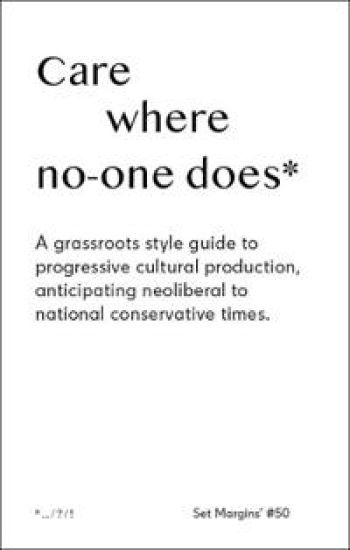
We Are The Market! claims a liberal ALL-INCLUSIVITY to push the stretch of our cultural offer in the eye of the final commonplace; the capitalist commons of the high street. Anticipating to a hegemonic culture encroaching on the city centre, one that’s turning exclusive due an engagement towards a “publics” while narrowing the diversity of cultural production for and by the majority; We Are The Market! commissioned 18 unannounced achievements that offered an alternative. As well as this, written contributions were delivered by people able to provide informed content after tending bar in the exhibition space. These offerings to the public were gathered and presented in the relatively private sphere of the Onomatopee white cube—a space all too often mistaken for yet another shop. It was in this public space that an enormous white leather couch sat directly in front of the biggest flatscreen TV on offer; allowing everyone to flick through the documentation of the actions, flanked by the relics of the achievements scattered throughout the ‘white cube’ exhibition space. All of that is now featured in this piece of print, which is meant to distribute lasting inspiration on the span of engagement in the times of rising capitalist commons. Features achievements by Apparatus 22, BURO SNDVG (A Snodero-Group member), David Blamey, Disarming Design, Everyday Criticality, Harmen de Hoop, Ilke Gers, Jasper Griepink, Jennifer Moon & laub, Martin Krenn, MG&M Collective (Mosab Anzo, Gil & Moti), Mona Lisa’s. Nolwenn Salaün, Su Tomesen, Teun Castelein, The Temple of Tease (Izabella Finch), Toine Klaassen and Vanessa Brazeau. The theory-sparked bartenders contributing their thoughts include Berit Fischer, Dirk Vis, Fred Dewey, Koen Haegens, Lietje Bauwens & Wouter De Raeve, Michel van Dartel, Robert-Jan Gruijthuijzen and Rogier Brom. This project was initiated and led by Freek Lomme and would not have been possible without assistant curator Josh Plough and interns Lucy-Rose Nixon (film and production) and Mook Attanath (graphic design and production); all in service and dedication to Onomatopee. Evidently Bart de Baets also helped a great deal, as` he made some astonishing works of graphic design flirting with commerce to serve our ends.
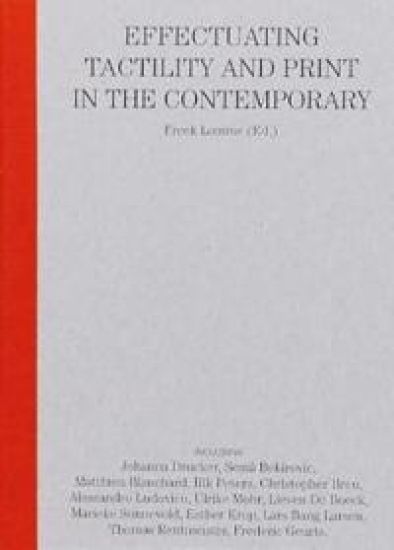
CAN YOU FEEL IT? – EFFECTUATING TACTILITY AND PRINT IN THE CONTEMPORARY
FREEK LOMME
Onomatopee
2018
nidottu
What exactly is the tactile, in a world in which a rising technocracy exploits the designed environment we feel? Who authorizes and who writes, what tradition do we stand in and how can we touch base?After endlessly hearing that Onomatopee publications have a materiality and tactility not often experienced in recent years, Onomatopee director and curator Freek Lomme decided to create an exhibition and publication addressing the issue of tactility and print today, accommodated by the Frans Masereel Centre and Z33. Presenting artists in the practice of making and thinkers in the development of thought here and now, we connect to tactile characteristics, guided by a specific focus on graphic, printed matter. The lasting result is a palm-sized book jam-packed with information and ideas on the subject. Six contemporary artists and eight international academics and authors in the field of graphic design, materiality, theory, and art explore how, in the digital age, our daily interaction with physical materials is greatly altered and how this affects us as humans.
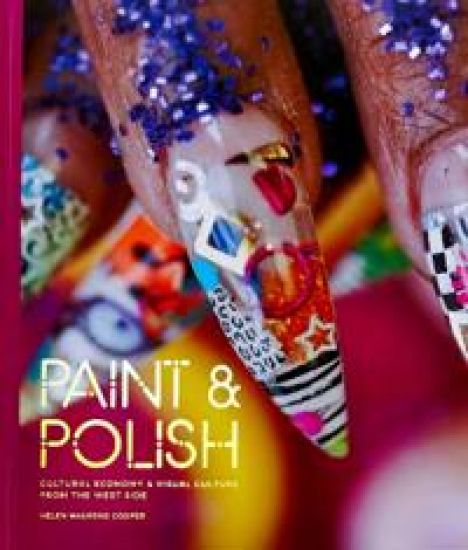
Paint & Polish sources visual inspiration from the microeconomic culture of Hispanic and African-American nail artists in the Northwest Side of Chicago. It fosters engagement with these artists by highlighting their work and collaborating with them. Included are oral histories, conversations with various nail artists, their portraits by Helen Maurene Cooper, and photography from their business. By documenting the community, this set of materials engages with it profoundly. Inspired by these sources and the visually tempting, distinct style of the nail art, Cooper’s photographic artworks open a gateway to elaborate on the visual identification of nail art. In both photography and the nail art scene, concerns such as gesture, self-expression and labor are prominent. The accompanying writings take these issues into consideration.

Onomatopee gives insight into and an overview of 5 years of dynamic partnerships in designing culture. A variety of voices have united in this platform for progressive cultural production – they put our culturally designed mentality, its politics and possibilities, on the agenda. Midway through 2006 writer / curator Freek Lomme and graphic designer Remco van Bladel initiated a platform for projects that consist of both the experience that an exhibition can offer and the depth of content of a publication. 5 years and over 70 projects later and operating from their 700m2 project space in Eindhoven, Onomatopee continues to organise a broad movement of and for a diverse group of involved persons and organisations. In short: Onomatopee discusses our designed culture and offers a space for people who dare to doubt – a space where they can take and retake a critical position – Onomatopee is a platform for (self)critical citizenship.
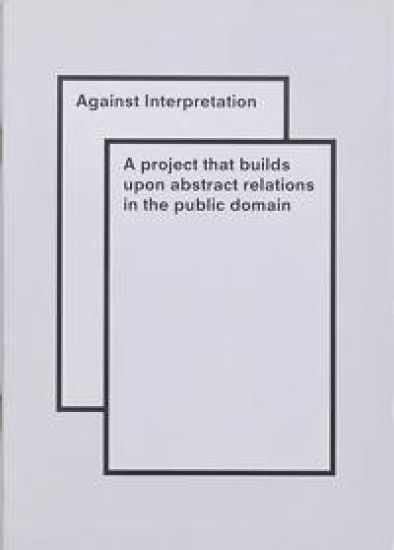
Against Interpretation, a project that builds upon abstract relations in the public domain is initiated by Whatspace in collaboration with Onomatopee. The information overload races on; in public space it’s more like overkill. Whatspace wants to draw from our relationship to information in public space – to offer us the consecutive possibilities of confrontation, tranquillity and renewed concentration – and they want to do so experimentally, through the power of abstract art. Not only do they want to make this power manifest, they also want to grasp hold of it. Through approaching information exchange experimentally, as an intensely loaded erotics which manifests in and through abstract art, this project becomes fascinating – both for people interested in the powers of abstraction and for those who wish to sharpen their perception of things as they are.
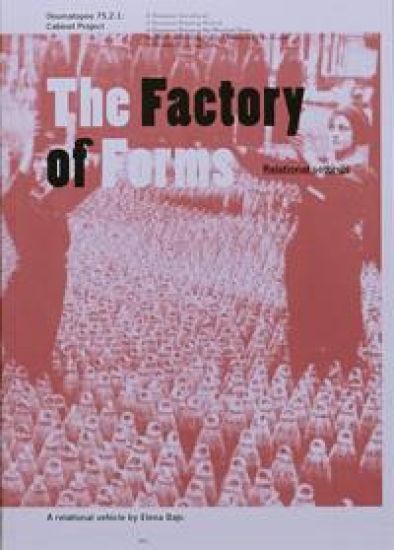
By affirming our fluid being and allowing ourselves to relate within the open structures where we find and may engage with a multitude of carriers, the sum of this stage situates both our heartfelt desire to relate with the common, as the ethical and technocratic conditions to level the common. Here we face up with physical carriers of data, known and unknown, familiar, readable and unfamiliar, open to engage or lost in translation. By relying on chance, contingency and ubiquity, Bajo’s research-inspired and concept-desired work seeks to evoke poetical, non-hierarchical and emancipatory situations. Acting within this choreography’s sculptural setting, we live up playfully. Here, through coincidental contacts of test print runs, encountered archive material gathered and reframed by Elena Bajo and Bastien Rousseau as well as via our human, poetical capacity to relate, weinclude a disrupted fl ow of semi-capitalist logics within our personal lives and our collective spirit; relating on the currents of doubts and default acting underneath. As modern, abstract logic attempts to sustain its surface, this scene evokes a personal and sincere struggle, which challenges to dive underneath, without any guarantee to find ground.
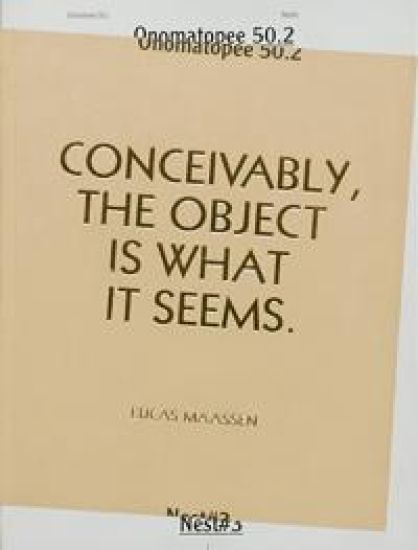
Conceivably, The Object Is What It Seems
Lucas Maassen; Shonquis Moreno; Freek Lomme
Onomatopee
2013
nidottu
Key to the work of Lucas Maassen is a process of validation through perception. To what extent are aspects of scale and matter fundamental to determine and pronounce typological objects? In a highly playful manner, Maassen manipulates the parameters of conceiving objects; deriving from recognisable functionality into a fictional realm of attributed economic value as limited or as matter, both effectively qualitative realities, he qualitatively measures these up to apparent conditions of the imaginary. Utilising exclusive materials and technologies, a secondary layer of tension of conceiving objects arises. A toy chair made of pure gold, poured out of one bar of gold, raises the question of its value: emotional vs. real value. Likewise, a chair created by a Focus Electron Beam (FEB), results in a chair so small that even a regular microscope cannot reveal this seat. This chair is a leap of faith into technological authorship. Our day-to-day empirical reality is just not good enough to capture these objects. To what extent is technological culture able to transmit empirical experiences to our mindset? And moreover, our cultural tradition tells us that a chair has four legs but what happens when these notions are being challenged by a non-empirical, technological order? Measuring up chairs to the extent that they seem to generate a life of their own; through a character derived from inner qualities beyond any man-conceived sphere, Maassen creates an imaginative order. The publication of Lucas Maassen features texts by Sonquis Moreno, writer/editor on design in various forms, and Freek Lomme, curator/writer and director of Onomatopee. Moreno lively portrays Maassen’s ’design act’ in its sphere of being, while Lomme playfully levels up the scope of his work to some ontological and empirical parameters. Furthermore, some processes and hypotheses hit the light within this publication!
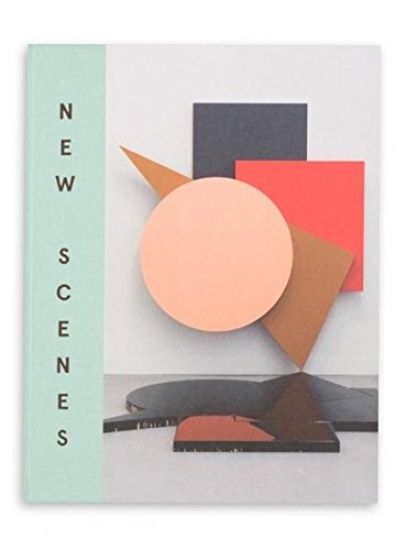
Drawing attention to the visual quality of concentration, sensation, relations,
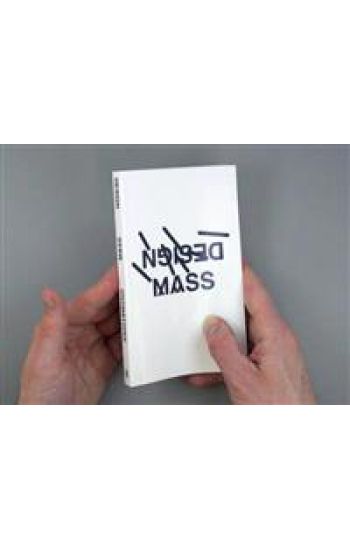
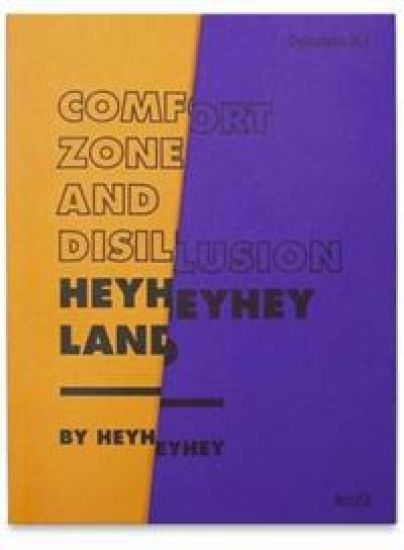

This book discusses how we can and want to relate to our environment. It poses the question of the possibility of social interaction through symbolic gestures and through the meanings manifesting themselves in and via a work of art in its context. In particular, it elaborates on the context of the presentation, the relation between the author, the work and the public, and the way the meanings concerned move in time. The publication also contains descriptions and an extensive review of Schlegel’s most recent work, as an illustration of her art practice and as a showcase in which these gestures take root. The sum of this book discusses the posture and potential of meaningful experiences and the process of signification through art in the (public) context. As Kathrin Schlegel motivates: “It has to work. ” Contributing writers: Alexandra Landre, Alena Alexandrova, Freek Lomme, Marcus Lutkemeyer, Maria Rus Bojan, Nils van Beek.