Kirjojen hintavertailu. Mukana 12 595 353 kirjaa ja 12 kauppaa.

Kirjailija

Freeman J Dyson

Kirjat ja teokset yhdessä paikassa: 11 kirjaa, julkaisuja vuosilta 2001-2023, suosituimpien joukossa The Sun, The Genome, and The Internet. Vertaile teosten hintoja ja tarkista saatavuus suomalaisista kirjakaupoista.

Mukana myös kirjoitusasut: Freeman J. Dyson

11 kirjaa

Kirjojen julkaisuhaarukka 2001-2023.

Tactical Nuclear Weapons In Southeast Asia
With Russian officials and political leaders explicitly threatening the use of tactical nuclear weapons in their war with Ukraine, it is worth re-examining the lessons learned about tactical nuclear weapons during the Cold War. This illuminating report on the proposed use of tactical nuclear weapons in Southeast Asia was written in 1967 by a four-man team from the JASON scientific advisory committee, including Freeman J. Dyson. This groundbreaking work examines the potential consequences had tactical nuclear weapons been utilized during the Vietnam War. It examines a range of topics including arms control, targeting strategies, and the potential effects of nuclear war on civilian populations. The authors take a comprehensive approach to their subject matter and provide valuable insights into how these weapons could have been used in Southeast Asia had they been available. This book is essential reading for anyone interested in understanding the complex nature of tactical nuclear weapons as well as their potential consequences in modern warfare. It provides a fascinating look at one of history's most explosive topics and offers important lessons for today's conflicts involving TNWs. Most notably, much larger numbers of warhead uses would be required than most modern commentators are even imagining. The reason is that tactical military units are small, well dispersed, and difficult to target. The JASON team found an estimate of 10 weapons/day, or 3000 year, to be plausible. This edition is annotated by Nimble AI with twenty-four pages of front matter and includes a Foreword by Shiva AI], Nimble's Contributing Editor for nuclear weapons and strategy; Abstracts including scientific style, tldr, tldr one word, and Explain It to Me Like I'm Five Years Old, Action Items; Viewpoints including MAGA Perspectives and Red Team Critique; a recursive summary with synopsis; a page-by-page summary; and interior art by artist herb.loc 'AI'] Books in the AI Lab for Book-Lovers series uae AI to make the experience of reading books richer.
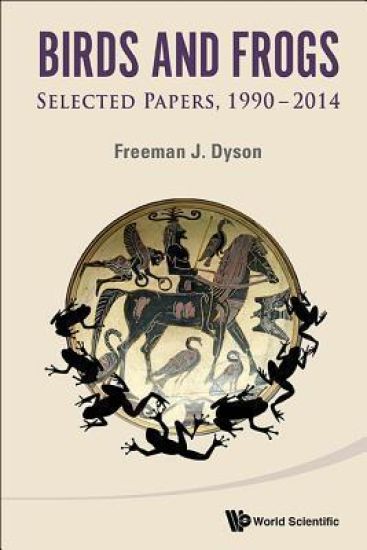
Birds And Frogs: Selected Papers Of Freeman Dyson, 1990-2014

Birds And Frogs: Selected Papers Of Freeman Dyson, 1990-2014

Freeman J Dyson

World Scientific Publishing Co Pte Ltd
2015
nidottu
This book is a sequel to the volume of selected papers of Dyson up to 1990 that was published by the American Mathematical Society in 1996. The present edition comprises a collection of the most interesting writings of Freeman Dyson, all personally selected by the author, from the period 1990-2014.The five sections start off with an Introduction, followed by Talks about Science, Memoirs, Politics and History, and some Technical Papers. The most noteworthy is a lecture entitled Birds and Frogs to the American Mathematical Society that describes two kinds of mathematicians with examples from real life. Other invaluable contributions include an important tribute to C. N. Yang written for his retirement banquet at Stony Brook University, as well as a historical account of the Operational Research at RAF Bomber Command in World War II provocatively titled A Failure of Intelligence. The final section carries the open-ended question of whether any conceivable experiment could detect single gravitons to provide direct evidence of the quantization of gravity — Is a Graviton Detectable? Various possible graviton-detectors are examined.This invaluable compilation contains unpublished lectures, and surveys many topics in science, mathematics, history and politics, in which Freeman Dyson has been so active and well respected around the world.
Birds And Frogs: Selected Papers Of Freeman Dyson, 1990-2014

Birds And Frogs: Selected Papers Of Freeman Dyson, 1990-2014

Freeman J Dyson

World Scientific Publishing Co Pte Ltd
2015
sidottu
This book is a sequel to the volume of selected papers of Dyson up to 1990 that was published by the American Mathematical Society in 1996. The present edition comprises a collection of the most interesting writings of Freeman Dyson, all personally selected by the author, from the period 1990-2014.The five sections start off with an Introduction, followed by Talks about Science, Memoirs, Politics and History, and some Technical Papers. The most noteworthy is a lecture entitled Birds and Frogs to the American Mathematical Society that describes two kinds of mathematicians with examples from real life. Other invaluable contributions include an important tribute to C. N. Yang written for his retirement banquet at Stony Brook University, as well as a historical account of the Operational Research at RAF Bomber Command in World War II provocatively titled A Failure of Intelligence. The final section carries the open-ended question of whether any conceivable experiment could detect single gravitons to provide direct evidence of the quantization of gravity — Is a Graviton Detectable? Various possible graviton-detectors are examined.This invaluable compilation contains unpublished lectures, and surveys many topics in science, mathematics, history and politics, in which Freeman Dyson has been so active and well respected around the world.
Advanced Quantum Mechanics

Advanced Quantum Mechanics

Freeman J Dyson

World Scientific Publishing Co Pte Ltd
2011
sidottu
Renowned physicist and mathematician Freeman Dyson is famous for his work in quantum mechanics, nuclear weapons policy and bold visions for the future of humanity. In the 1940s, he was responsible for demonstrating the equivalence of the two formulations of quantum electrodynamics — Richard Feynman's diagrammatic path integral formulation and the variational methods developed by Julian Schwinger and Sin-Itiro Tomonoga — showing the mathematical consistency of QED.This invaluable volume comprises the legendary lectures on quantum electrodynamics first given by Dyson at Cornell University in 1951. The late theorist Edwin Thompson Jaynes once remarked, “For a generation of physicists they were the happy medium: clearer and better motivated than Feynman, and getting to the point faster than Schwinger”.This edition has been printed on the 60th anniversary of the Cornell lectures, and includes a foreword by science historian David Kaiser, as well as notes from Dyson's lectures at the Les Houches Summer School of Theoretical Physics in 1954. The Les Houches lectures, described as a supplement to the original Cornell notes, provide a more detailed look at field theory, a careful and rigorous derivation of Fermi's Golden Rule, and a masterful treatment of renormalization and Ward's Identity.Future generations of physicists are bound to read these lectures with pleasure, benefiting from the lucid style that is so characteristic of Dyson's exposition.
Advanced Quantum Mechanics

Advanced Quantum Mechanics

Freeman J Dyson

World Scientific Publishing Co Pte Ltd
2011
nidottu
Renowned physicist and mathematician Freeman Dyson is famous for his work in quantum mechanics, nuclear weapons policy and bold visions for the future of humanity. In the 1940s, he was responsible for demonstrating the equivalence of the two formulations of quantum electrodynamics — Richard Feynman's diagrammatic path integral formulation and the variational methods developed by Julian Schwinger and Sin-Itiro Tomonoga — showing the mathematical consistency of QED.This invaluable volume comprises the legendary lectures on quantum electrodynamics first given by Dyson at Cornell University in 1951. The late theorist Edwin Thompson Jaynes once remarked, “For a generation of physicists they were the happy medium: clearer and better motivated than Feynman, and getting to the point faster than Schwinger”.This edition has been printed on the 60th anniversary of the Cornell lectures, and includes a foreword by science historian David Kaiser, as well as notes from Dyson's lectures at the Les Houches Summer School of Theoretical Physics in 1954. The Les Houches lectures, described as a supplement to the original Cornell notes, provide a more detailed look at field theory, a careful and rigorous derivation of Fermi's Golden Rule, and a masterful treatment of renormalization and Ward's Identity.Future generations of physicists are bound to read these lectures with pleasure, benefiting from the lucid style that is so characteristic of Dyson's exposition.
A Many-colored Glass

A Many-colored Glass

Freeman J. Dyson

University of Virginia Press
2010
nidottu
A Many-Colored Glass does not attempt to bring together all of the celebrated physicist's thoughts on science and technology into a unified theory. The emphasis is, instead, on the myriad ways in which the universe presents itself to us - and how, as observers and participants in its processes, we respond to it. Taken from Freeman Dyson's recent public lectures - delivered to audiences with no specialized knowledge in hard sciences - the book begins with a consideration of the practical and political questions surrounding biotechnology. As he seeks how best to explain the place of life in the universe, Dyson then moves from the ethical to the purely scientific. The book concludes with an attempt to understand the implications of biology for philosophy and religion.
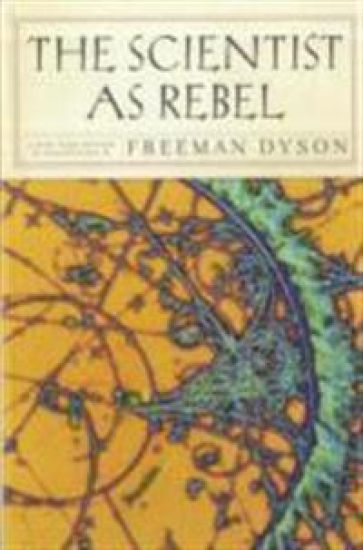
The Scientist As Rebel

The Scientist As Rebel

Freeman J. Dyson

NYRB Classics
2008
nidottu
From Galileo to today's amateur astronomers, scientists have been rebels, writes Freeman Dyson. Like artists and poets, they are free spirits who resist the restrictions their cultures impose on them. In their pursuit of nature's truths, they are guided as much by imagination as by reason, and their greatest theories have the uniqueness and beauty of great works of art. Dyson argues that the best way to understand science is by understanding those who practice it. He tells stories of scientists at work, ranging from Isaac Newton's absorption in physics, alchemy, theology, and politics, to Ernest Rutherford's discovery of the structure of the atom, to Albert Einstein's stubborn hostility to the idea of black holes. His descriptions of brilliant physicists like Edward Teller and Richard Feynman are enlivened by his own reminiscences of them. He looks with a skeptical eye at fashionable scientific fads and fantasies, and speculates on the future of climate prediction, genetic engineering, the colonization of space, and the possibility that paranormal phenomena may exist yet not be scientifically verifiable. Dyson also looks beyond particular scientific questions to reflect on broader philosophical issues, such as the limits of reductionism, the morality of strategic bombing and nuclear weapons, the preservation of the environment, and the relationship between science and religion. These essays, by a distinguished physicist who is also a prolific writer, offer informed insights into the history of science and fresh perspectives on contentious current debates about science, ethics, and faith.
Advanced Quantum Mechanics

Advanced Quantum Mechanics

Freeman J Dyson

World Scientific Publishing Co Pte Ltd
2007
nidottu
Renowned physicist and mathematician Freeman Dyson is famous for his work in quantum mechanics, nuclear weapons policy and bold visions for the future of humanity. In the 1940s, he was responsible for demonstrating the equivalence of the two formulations of quantum electrodynamics — Richard Feynman's diagrammatic path integral formulation and the variational methods developed by Julian Schwinger and Sin-Itiro Tomonoga — showing the mathematical consistency of QED.This invaluable volume comprises the legendary, never-before-published, lectures on quantum electrodynamics first given by Dyson at Cornell University in 1951. The late theorist Edwin Thompson Jaynes once remarked “For a generation of physicists they were the happy medium: clearer and motivated than Feynman, and getting to the point faster than Schwinger”.Future generations of physicists are bound to read these lectures with pleasure, benefiting from the lucid style that is so characteristic of Dyson's exposition.
Advanced Quantum Mechanics

Advanced Quantum Mechanics

Freeman J Dyson

World Scientific Publishing Co Pte Ltd
2007
sidottu
Renowned physicist and mathematician Freeman Dyson is famous for his work in quantum mechanics, nuclear weapons policy and bold visions for the future of humanity. In the 1940s, he was responsible for demonstrating the equivalence of the two formulations of quantum electrodynamics — Richard Feynman's diagrammatic path integral formulation and the variational methods developed by Julian Schwinger and Sin-Itiro Tomonoga — showing the mathematical consistency of QED.This invaluable volume comprises the legendary, never-before-published, lectures on quantum electrodynamics first given by Dyson at Cornell University in 1951. The late theorist Edwin Thompson Jaynes once remarked “For a generation of physicists they were the happy medium: clearer and motivated than Feynman, and getting to the point faster than Schwinger”.Future generations of physicists are bound to read these lectures with pleasure, benefiting from the lucid style that is so characteristic of Dyson's exposition.
Infinite In All Directions

Infinite In All Directions

Freeman J Dyson

HARPERCOLLINS PUBLISHERS INC
2004
nidottu
Infinite in All Directions is a popularized science at its best. In Dyson's view, science and religion are two windows through which we can look out at the world around us. The book is a revised version of a series of the Gifford Lectures under the title "In Praise of Diversity" given at Aberdeen, Scotland. They allowed Dyson the license to express everything in the universe, which he divided into two parts in polished prose: focusing on the diversity of the natural world as the first, and the diversity of human reactions as the second half. Chapter 1 is a brief explanation of Dyson's attitudes toward religion and science. Chapter 2 is a one-hour tour of the universe that emphasizes the diversity of viewpoints from which the universe can be encountered as well as the diversity of objects which it contains. Chapter 3 is concerned with the history of science and describes two contrasting styles in science: one welcoming diversity and the other deploring it. He uses the cities of Manchester and Athens as symbols of these two ways of approaching science. Chapter 4, concerned with the origin of life, describes the ideas of six illustrious scientists who have struggled to understand the nature of life from various points of view. Chapter 5 continues the discussion of the nature and evolution of life. The question of why life characteristically tends toward extremes of diversity remains central in all attempts to understand life's place in the universe. Chapter 6 is an exercise in eschatology, trying to define possible futures for life and for the universe, from here to infinity. In this chapter, Dyson crosses the border between science and science fiction and he frames his speculations in a slightly theological context.
The Sun, The Genome, and The Internet

The Sun, The Genome, and The Internet

Freeman J. Dyson

Oxford University Press Inc
2001
nidottu
In this visionary look into the future, Freeman Dyson argues that technological changes fundamentally alter our ethical and social arrangements and that three rapidly advancing new technologies -- solar energy, genetic engineering, and worldwide communication -- together have the potential to create a more equal distribution of the world's wealth. Dyson begins by rejecting the idea that scientific revolutions are primarily concept driven. He shows rather that new tools are more often the sparks that ignite scientific discovery. Such tool-driven revolutions have profound social consequences: the invention of the telescope turning the medieval view of the world upside down, the widespread use of household appliances in the 1950s replacing servants, to cite just two examples. In looking ahead, Dyson suggests that solar energy, genetics, and the Internet will have similarly transformative effects, with the potential to produce a more just and equitable society. Solar power could bring electricity to even the poorest, most remote areas of third-world nations, allowing everyone access to the vast stores of information on the Internet and effectively ending the cultural isolation of the poorest countries. Similarly, breakthroughs in genetics may well enable us to give our children healthier lives and grow more efficient crops, thus restoring the economic and human vitality of village cultures devalued and dislocated by the global market. Written with passionate conviction about the ethical uses of science, The Sun, The Genome, and The Internet is both a brilliant reinterpretation of the scientific process and a challenge to use new technologies to close, rather than widen, the gap between rich and poor.