Kirjojen hintavertailu. Mukana 12 390 323 kirjaa ja 12 kauppaa.

Kirjailija

Freya Johnston

Kirjat ja teokset yhdessä paikassa: 3 kirjaa, julkaisuja vuosilta 2005-2023, suosituimpien joukossa Samuel Johnson and the Art of Sinking 1709-1791. Vertaile teosten hintoja ja tarkista saatavuus suomalaisista kirjakaupoista.

3 kirjaa

Kirjojen julkaisuhaarukka 2005-2023.

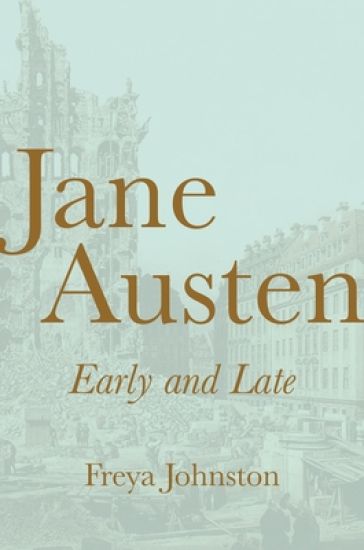
Jane Austen, Early and Late

Jane Austen, Early and Late

Freya Johnston

PRINCETON UNIVERSITY PRESS
2023
pokkari
A reexamination of Austen’s unpublished writings that uncovers their continuity with her celebrated novels—and that challenges distinctions between her “early” and “late” workJane Austen’s six novels, published toward the end of her short life, represent a body of work that is as brilliant as it is compact. Her earlier writings have routinely been dismissed as mere juvenilia, or stepping stones to mature proficiency and greatness. Austen’s first biographer described them as “childish effusions.” Was he right to do so? Can the novels be definitively separated from the unpublished works? In Jane Austen, Early and Late, Freya Johnston argues that they cannot.Examining the three manuscript volumes in which Austen collected her earliest writings, Johnston finds that Austen’s regard and affection for them are revealed by her continuing to revisit and revise them throughout her adult life. The teenage works share the milieu and the humour of the novels, while revealing more clearly the sources and influences upon which Austen drew. Johnston upends the conventional narrative, according to which Austen discarded the satire and fantasy of her first writings in favour of the irony and realism of the novels. By demonstrating a stylistic and thematic continuity across the full range of Austen’s work, Johnston asks whether it makes sense to speak of an early and a late Austen at all.Jane Austen, Early and Late offers a new picture of the author in all her complexity and ambiguity, and shows us that it is not necessarily true that early work yields to later, better things.
Jane Austen, Early and Late

Jane Austen, Early and Late

Freya Johnston

PRINCETON UNIVERSITY PRESS
2021
sidottu
A reexamination of Austen’s unpublished writings that uncovers their continuity with her celebrated novels—and that challenges distinctions between her “early” and “late” workJane Austen’s six novels, published toward the end of her short life, represent a body of work that is as brilliant as it is compact. Her earlier writings have routinely been dismissed as mere juvenilia, or stepping stones to mature proficiency and greatness. Austen’s first biographer described them as “childish effusions.” Was he right to do so? Can the novels be definitively separated from the unpublished works? In Jane Austen, Early and Late, Freya Johnston argues that they cannot.Examining the three manuscript volumes in which Austen collected her earliest writings, Johnston finds that Austen’s regard and affection for them are revealed by her continuing to revisit and revise them throughout her adult life. The teenage works share the milieu and the humour of the novels, while revealing more clearly the sources and influences upon which Austen drew. Johnston upends the conventional narrative, according to which Austen discarded the satire and fantasy of her first writings in favour of the irony and realism of the novels. By demonstrating a stylistic and thematic continuity across the full range of Austen’s work, Johnston asks whether it makes sense to speak of an early and a late Austen at all.Jane Austen, Early and Late offers a new picture of the author in all her complexity and ambiguity, and shows us that it is not necessarily true that early work yields to later, better things.
Samuel Johnson and the Art of Sinking 1709-1791

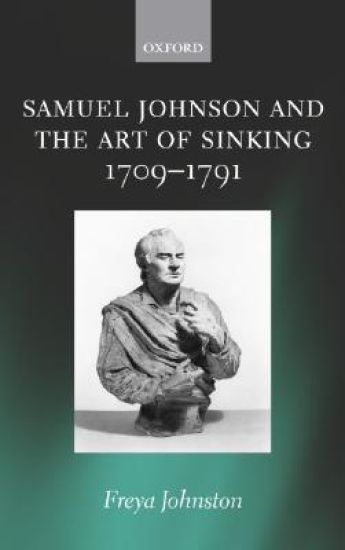
Samuel Johnson and the Art of Sinking 1709-1791

Freya Johnston

Oxford University Press
2005
sidottu
The traditional view of Samuel Johnson as hostile to particulars, trifles, and aesthetic mediocrity only half-explains his authorial character. Samuel Johnson and the Art of Sinking 1709-1791 argues that, in a period dominated by social and literary hierarchies, Johnson's works reveal a defining interest in 'little', 'mean', or 'low' topics and people. Freya Johnston moves away from a critical emphasis on what literature of this period excludes, to consider its modes of including recalcitrant material. Of necessity finite, any piece of writing is informed by the subject matter it omits or to which it indirectly alludes. How can we identify the peripheral topics or characters purportedly 'excluded' from a text, unless it provides compelling inferences that oblige us to supply the omission? In which case, something subtler is at work than barefaced proscription. Rehearsing the comparative merits of great and little things, Johnson and his contemporaries tested the opposing claims of pagan and Christian authority. Ancient criticism, and its eighteenth-century adherents, held that each subject required an appropriate style: little matters call for the low, lofty ones for the high. Yet Gospel writers stressed Christ's incarnation as a praiseworthy and imitable descent to the humanly little -- one that is compatible with the most sublime style. Through a series of close readings, this book examines how Johnson conceived of his relationships to and with the margins of writing and of society. It proposes that his literary and critical practice is neither inclusive nor exclusive in its attitudes towards peripheral things.