Kirjojen hintavertailu. Mukana 12 390 323 kirjaa ja 12 kauppaa.

Kirjailija

Friederike Eyssel

Kirjat ja teokset yhdessä paikassa: 7 kirjaa, julkaisuja vuosilta 2020-2024, suosituimpien joukossa Mensch-Roboter-Interaktion. Vertaile teosten hintoja ja tarkista saatavuus suomalaisista kirjakaupoista.

7 kirjaa

Kirjojen julkaisuhaarukka 2020-2024.

Human-Robot Interaction

Human-Robot Interaction

Christoph Bartneck; Tony Belpaeme; Friederike Eyssel; Takayuki Kanda; Merel Keijsers; Selma Šabanovic

Cambridge University Press
2024
pokkari
The role of robots in society keeps expanding and diversifying, bringing with it a host of issues surrounding the relationship between robots and humans. This introduction to human–robot interaction (HRI) by leading researchers in this developing field is the first to provide a broad overview of the multidisciplinary topics central to modern HRI research. Written for students and researchers from robotics, artificial intelligence, psychology, sociology, and design, it presents the basics of how robots work, how to design them, and how to evaluate their performance. Self-contained chapters discuss a wide range of topics, including speech and language, nonverbal communication, and processing emotions, plus an array of applications and the ethical issues surrounding them. This revised and expanded second edition includes a new chapter on how people perceive robots, coverage of recent developments in robotic hardware, software, and artificial intelligence, and exercises for readers to test their knowledge.
Theory and Practice of Sociosensitive and Socioactive Systems

Theory and Practice of Sociosensitive and Socioactive Systems

Jacqueline Bellon; Friederike Eyssel; Bruno Gransche; Sebastian Nähr-Wagener; Ricarda Wullenkord

Springer Fachmedien Wiesbaden
2022
nidottu
Interactive adaptive systems increasingly become part of our everyday life. Which factors could shape this development and under which conditions will interactions with technical systems be deemed socially appropriate? The "FActors of Social Appropriateness" (FASA) Model presented in this Open Access-book provides a structured approach to our understanding of social appropriateness in human-technology interaction. The FASA Model serves to inform design choices for sociosensitive and socioactive artificial assistants.
Theorie und Praxis soziosensitiver und sozioaktiver Systeme

Theorie und Praxis soziosensitiver und sozioaktiver Systeme

Jacqueline Bellon; Friederike Eyssel; Bruno Gransche; Sebastian Nähr-Wagener; Ricarda Wullenkord

Springer Fachmedien Wiesbaden
2022
nidottu
Interaktive technische Systeme sind zunehmend Teil unseres Alltags. Wie aber kann gelingende Mensch-Technik-Interaktion gestaltet werden? Welche Rolle spielen Aspekte sozial angemessenen Umgangs? Für das menschliche Zusammenleben haben sich in jeder Gesellschaft Kulturtechniken des Verhaltens und des Umgangs entwickelt. Wer sie beherrscht, weiß, wann bestimmte soziale Praktiken wie etwa Entschuldigungen angebracht sind und wie sie vollzogen werden. Können und sollten auch Assistenzsysteme mit derartigen Fähigkeiten ausgestattet werden? Das in diesem Buch vorgestellte, interdisziplinär orientierte Rahmenmodell der „FAktoren der Sozialen Angemessenheit“ (FASA-Modell) bietet eine strukturierte Annäherung an die Thematik und liefert eine Grundlage für eine hinsichtlich sozialer Angemesseneheit reflektierte Gestaltung soziosensitiver und soziaktiver Assistenzsysteme.
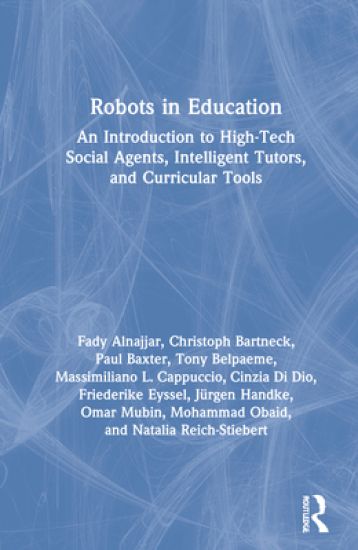
Robots in Education

Robots in Education

Fady Alnajjar; Christoph Bartneck; Paul Baxter; Tony Belpaeme; Massimiliano Cappuccio; Cinzia Di Dio; Friederike Eyssel; Jürgen Handke; Omar Mubin; Mohammad Obaid; Natalia Reich-Stiebert

Routledge
2021
nidottu
Robots in Education is an accessible introduction to the use of robotics in formal learning, encompassing pedagogical and psychological theories as well as implementation in curricula. Today, a variety of communities across education are increasingly using robots as general classroom tutors, tools in STEM projects, and subjects of study. This volume explores how the unique physical and social-interactive capabilities of educational robots can generate bonds with students while freeing instructors to focus on their individualized approaches to teaching and learning. Authored by a uniquely interdisciplinary team of scholars, the book covers the basics of robotics and their supporting technologies; attitudes toward and ethical implications of robots in learning; research methods relevant to extending our knowledge of the field; and more.
Robots in Education

Robots in Education

Fady Alnajjar; Christoph Bartneck; Paul Baxter; Tony Belpaeme; Massimiliano Cappuccio; Cinzia Di Dio; Friederike Eyssel; Jürgen Handke; Omar Mubin; Mohammad Obaid; Natalia Reich-Stiebert

Routledge
2021
sidottu
Robots in Education is an accessible introduction to the use of robotics in formal learning, encompassing pedagogical and psychological theories as well as implementation in curricula. Today, a variety of communities across education are increasingly using robots as general classroom tutors, tools in STEM projects, and subjects of study. This volume explores how the unique physical and social-interactive capabilities of educational robots can generate bonds with students while freeing instructors to focus on their individualized approaches to teaching and learning. Authored by a uniquely interdisciplinary team of scholars, the book covers the basics of robotics and their supporting technologies; attitudes toward and ethical implications of robots in learning; research methods relevant to extending our knowledge of the field; and more.
Human-Robot Interaction

Human-Robot Interaction

Christoph Bartneck; Tony Belpaeme; Friederike Eyssel; Takayuki Kanda; Merel Keijsers; Selma Šabanovic

Cambridge University Press
2020
pokkari
The role of robots in society keeps expanding and diversifying, bringing with it a host of issues surrounding the relationship between robots and humans. This introduction to human-robot interaction (HRI), written by leading researchers in this developing field, is the first to provide a broad overview of the multidisciplinary topics central to modern HRI research. Students and researchers from robotics, artificial intelligence, psychology, sociology, and design will find it a concise and accessible guide to the current state of the field. Written for students from diverse backgrounds, it presents relevant background concepts, describing how robots work, how to design them, and how to evaluate their performance. Self-contained chapters discuss a wide range of topics, including the different communication modalities such as speech and language, non-verbal communication and the processing of emotions, as well as ethical issues around the application of robots today and in the context of our future society.