Kirjailija
Friedrich Engels
Kirjat ja teokset yhdessä paikassa: 634 kirjaa, julkaisuja vuosilta 1848-2026, suosituimpien joukossa The Wealth of Nations (Book One) and the Manifesto of the Communist Party. a Combined Edition. Vertaile teosten hintoja ja tarkista saatavuus suomalaisista kirjakaupoista.
634 kirjaa
Kirjojen julkaisuhaarukka 1848-2026.
This is the most representative collection of writings on religion by the two founding fathers of communism. It presents the full arsenal of ideas with which Marx and Engels hoped to explode the religious foundations of all previous societies. Yet also in these writings, as Reinhold Neibuhr's Introduction reveals, are clues to that remarkable development whereby an irreligion was transmuted into a new political religion, canonized precisely in the writings of Marx as sacred scripture. Included are excerpts from Das Kapital, occasional journalistic pieces, private letters, and more formal philosophical writings.
Briefwechsel Mit Karl Marx Und Friedrich Engels
Karl Marx; Friedrich Engels; Wilhelm Liebknecht
Walter de Gruyter
1963
sidottu
Friedrich Engels Schriften der Frühzeit
Friedrich Engels; Gustav Mayer
Springer-Verlag Berlin and Heidelberg GmbH Co. K
1920
nidottu
Dieser Buchtitel ist Teil des Digitalisierungsprojekts Springer Book Archives mit Publikationen, die seit den Anfängen des Verlags von 1842 erschienen sind. Der Verlag stellt mit diesem Archiv Quellen für die historische wie auch die disziplingeschichtliche Forschung zur Verfügung, die jeweils im historischen Kontext betrachtet werden müssen. Dieser Titel erschien in der Zeit vor 1945 und wird daher in seiner zeittypischen politisch-ideologischen Ausrichtung vom Verlag nicht beworben.
The Origin of the Family, Private Property, and the State: in the Light of the Researches of Lewis H. Morgan (German: Der Ursprung der Familie, des Privateigenthums und des Staats) is an 1884 historical materialist treatise by Friedrich Engels. It is partially based on notes by Karl Marx to Lewis H. Morgan's book Ancient Society (1877). The book is an early anthropological work and is regarded as one of the first major works on family economics.Following the death of his friend and co-thinker Karl Marx in 1883, Friedrich Engels served as his literary executor, actively organizing and preparing for publication various writings of his scholarly friend. This activity, while time consuming, did not fully occupy Engels' available hours, however, and he managed to persevere reading and writing on topics of his own.While his 1883 manuscript Dialectics of Nature faltered, remaining uncompleted and unpublished, a greater success was achieved in the spring of 1884 with the writing and publication in Zurich of Der Ursprung der Familie, des Privateigenthums und des Staats: Im Anschluss an Lewis H. Morgan's Forschungen (The Origin of the Family, Private Property, and the State: in the Light of the Researches of Lewis H. Morgan).Writing of The Origin of the Family began early in April 1884, with the project completed on 26 May. 1] Engels began his work on the subject after reading Marx's handwritten synopsis of a book by pioneering anthropologist Lewis H. Morgan, Ancient Society; or, Researches in the Lines of Human Progress from Savagery, Through Barbarism to Civilization, first published in London in 1877. 2] Engels believed it clear that Marx had intended upon a critical book-length treatment of the ideas first broached by Morgan and determined to produce such a manuscript as a means of fulfilling a literary behest of his late comrade.
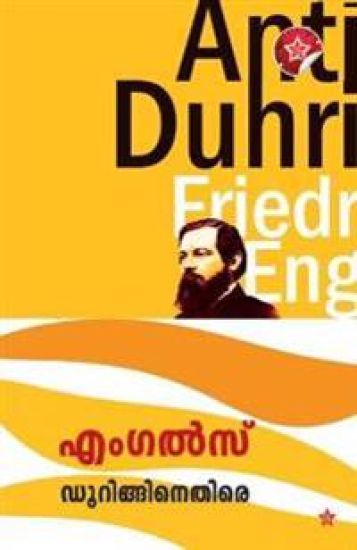
Socialism: Utopian and Scientific is a short book first published in 1880 by German-born socialist Friedrich Engels. The work was primarily extracted from a longer polemic work published in 1876, Anti-D hring. It first appeared in the French language.The title Socialism: Utopian and Scientific was adopted for the first English edition -- the tenth language in which the book appeared. Intended as a popularization of Marxist ideas for a working class readership, the book was one of the fundamental publications of the international socialist movement during the late 19th and early 20th centuries, selling tens of thousands of copies.Throughout the decade of the 1860s, Karl Marx, close personal friend and political associate of Friedrich Engels, dedicated himself to the study of economics, culminating in the publication of the first volume of Das Kapital in 1867. Marx's lengthy and ponderous volume was extremely difficult for the average reader to penetrate, however, leading Engels to suggest to Marx in a letter of September 16, 1868 that a short popularized version of Das Kapital for a working class audience was urgently needed."If it is not written, some Moses or other will come along and do it and botch it up," Engels warned.Marx concurred with Engels' assessment, suggesting "it would be a very good thing if you yourself wrote a small popular explanatory pamphlet. Engels went on to prepare a short summary of the central points of Das Kapital, but the pamphlet was never published. Nevertheless, the necessity for popularization of Marx's frequently turgid prose remained -- a need finally addressed by Engels with the publication of the short work Socialism: Utopian and Scientific more than a decade later.
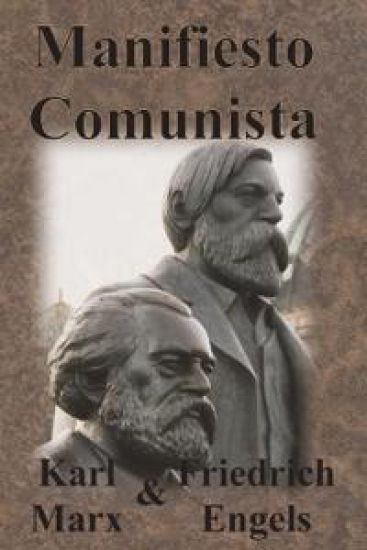
The Communist Manifesto (originally Manifesto of the Communist Party) is an 1848 political pamphlet by German philosophers Karl Marx and Friedrich Engels. Commissioned by the Communist League and originally published in London (in German as Manifest der Kommunistischen Partei) just as the revolutions of 1848 began to erupt, the Manifesto was later recognised as one of the world's most influential political documents. It presents an analytical approach to the class struggle (historical and then-present) and the problems of capitalism and the capitalist mode of production, rather than a prediction of communism's potential future forms.The Communist Manifesto summarises Marx and Engels' theories about the nature of society and politics, that in their own words, "The history of all hitherto existing society is the history of class struggles." It also briefly features their ideas for how the capitalist society of the time would eventually be replaced by socialism. Source: Wikipedia