Kirjojen hintavertailu. Mukana 12 657 676 kirjaa ja 12 kauppaa.
Kirjailija
Friedrich Schneider
Kirjat ja teokset yhdessä paikassa: 23 kirjaa, julkaisuja vuosilta 1897-2025, suosituimpien joukossa The Berlin Creative Industries. Vertaile teosten hintoja ja tarkista saatavuus suomalaisista kirjakaupoista.
Unver nderter Nachdruck der Originalausgabe von 1883. Der Verlag Antigonos spezialisiert sich auf die Herausgabe von Nachdrucken historischer B cher. Wir achten darauf, dass diese Werke der ffentlichkeit in einem guten Zustand zug nglich gemacht werden, um ihr kulturelles Erbe zu bewahren.
"Sanftes Schmoren: Die Kunst des Slow Cookings" ist die kreative Kreation des erfahrenen K chenchefs Friedrich Schneider. In diesem Buch f hrt Schneider Sie in die beruhigende und n hrstoffschonende Welt des Slow Cookings ein. Dies ist jedoch nicht einfach ein Rezeptbuch, sondern eine umfassende Einf hrung in die Techniken und Vorteile des langsamen Kochens. Mit seiner langj hrigen Erfahrung in der K che und seinem tiefen Verst ndnis f r das Gleichgewicht von Geschmack und Ern hrung bietet Schneider einen Einblick in die Geheimnisse des langsamen Kochens. "Sanftes Schmoren" ist ein kulinarisches Abenteuer, das Sie durch die Philosophie und die Praktiken des Slow Cookings f hrt, einschlie lich seiner tiefgreifenden Wirkung auf den Geschmack und die Erhaltung der N hrstoffe. Dieses Buch ist ein Muss f r jeden, der die Vorteile des langsamen Kochens entdecken und die Qualit t seiner Mahlzeiten steigern m chte, ob Sie ein begeisterter K chenliebhaber oder ein professioneller Koch sind.
Bringing together top international researchers this book provides a worldwide coverage of underground economic activities. It presents estimates of the underground economy for 145 countries - the most comprehensive ever undertaken; an in-depth examination of the underground economy for a select number of these countries; and an analysis of the public policy implications through an assessment of how various governments have attempted to address this issue. The book brings together the latest research on tax evasion, tax morale and other underlying factors that have so significantly influenced participation in the underground economy. It provides a comprehensive overview of the size and development of the underground economy, its major causes and motivations and its effects on the legitimate economy. In addition, it reviews recent public policy concerns by a number of countries and how they have responded with measures to curb these underground economic activities.
Bringing together top international researchers this book provides a worldwide coverage of underground economic activities. It presents estimates of the underground economy for 145 countries - the most comprehensive ever undertaken; an in-depth examination of the underground economy for a select number of these countries; and an analysis of the public policy implications through an assessment of how various governments have attempted to address this issue. The book brings together the latest research on tax evasion, tax morale and other underlying factors that have so significantly influenced participation in the underground economy. It provides a comprehensive overview of the size and development of the underground economy, its major causes and motivations and its effects on the legitimate economy. In addition, it reviews recent public policy concerns by a number of countries and how they have responded with measures to curb these underground economic activities.
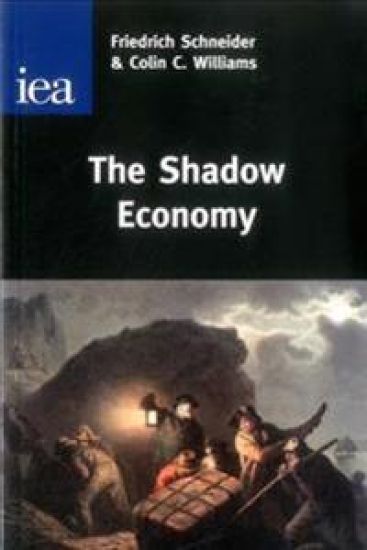
Illicit work, social security fraud, economic crime and other shadow economy activities are fast becoming an international problem. This second edition uses new data to reassess currency demand and the model approach to estimate the size of the shadow economy in 151 developing, transition, and OECD countries. This updated edition argues that during the 2000s the average size of the shadow economy varied from 19 per cent of GDP for OECD countries, to 30 per cent for transition countries, to 45 per cent for developing countries. It examines the causes and consequences of this development using an integrated approach to explain deviant behaviour that combines findings from economic, sociological, and psychological research. The authors suggest that increasing taxation and social security contributions, rising state regulatory activities, and the decline of the tax morale are all driving forces behind this growth, and they propose a reform of state public institutions in order to improve the dynamics of the official economy.
This book brings together two leading researchers in the field to provide a comprehensive overview of the shadow economy from a global perspective. Reviewing the advantages and disadvantages of different ways of measuring the informal sector, the authors evaluate its size and key determinants across the world. Williams and Schneider clearly establish the persistence and prevalence of the shadow economy, analysing the narrowness of existing policy approaches and explaining how these fail to address the key factors for its existence and may even exacerbate the problem.Proposing an alternative way forward, the authors argue that little headway will ever be made in reducing the shadow economy until there are changes not only to the character of formal institutions but also informal institutions (the values, beliefs and norms of citizens) through the introduction of macro-level structural changes.This timely, cutting-edge review of the global shadow economy and how it can be measured and tackled is an invaluable resource for postgraduate students, researchers and policy-makers, particularly those with a interest in tax evasion and informal labour.
Measurement of the shadow economy is notoriously difficult as it requires estimation of economic activity that is deliberately hidden from official transactions. Surveys typically understate the size of the shadow economy but econometric techniques can now be used to obtain a much better understanding of its size. The shadow economy constitutes approximately 10 per cent of GDP in the UK; about 14 per cent in Nordic countries and about 20 - 30 per cent in many southern European countries. The main drivers of the shadow economy are (in order): tax and social security burdens, tax morale, the quality of state institutions and labour market regulation. A reduction in the tax burden is therefore likely to lead to a reduction in the size of the shadow economy. Indeed, a virtuous circle can be created of lower tax rates, less shadow work, higher tax morale, a higher tax take and the opportunity for lower rates. Of course, a vicious circle in the other direction can also be created.
Illicit work, social security fraud, economic crime and other shadow economy activities are fast becoming an international problem. This second edition uses new data to reassess currency demand and the model approach to estimate the size of the shadow economy in 151 developing, transition, and OECD countries. This updated edition argues that during the 2000s the average size of the shadow economy varied from 19 per cent of GDP for OECD countries, to 30 per cent for transition countries, to 45 per cent for developing countries. It examines the causes and consequences of this development using an integrated approach to explain deviant behaviour that combines findings from economic, sociological, and psychological research. The authors suggest that increasing taxation and social security contributions, rising state regulatory activities, and the decline of the tax morale are all driving forces behind this growth, and they propose a reform of state public institutions in order to improve the dynamics of the official economy.
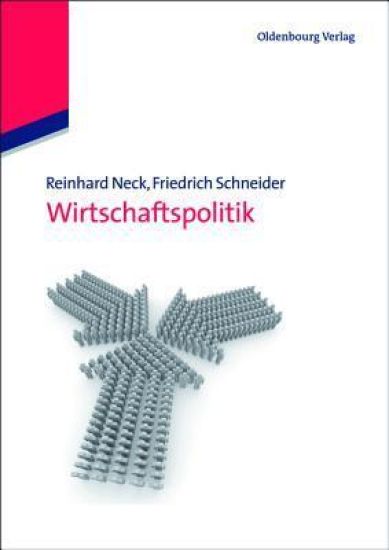
Dieses Lehrbuch behandelt sowohl den traditionellen Stoff der Allgemeinen Wirtschaftspolitik als auch neuere Ansatze der quantitativen Wirtschaftspolitik und der Okonomischen Theorie der Politik. Dabei wird besonderer Wert darauf gelegt, die theoretischen Grundlagen der verschiedenen wirtschaftspolitischen Konzepte und die wirtschaftspolitischen Folgerungen aus den verschiedenen Theorien der Volkswirtschaftslehre herauszuarbeiten, um den Studierenden den engen Zusammenhang zwischen Theorie und Politik nahezubringen. Dadurch eignet sich das Lehrbuch insbesondere fur Kurse, in denen die Kluft zwischen der teilweise hoch spezialisierten wirtschaftstheoretischen Forschung und der Anwendung auf aktuelle wirtschaftspolitische Probleme uberbruckt werden soll."
The Creative Industries have recently come into the focus of urban development strategies and economic policy. The driving force behind that was, amongst others, Richard Florida with his bestseller “The rise of the creative class and how it’s tra- forming work, leisure, community, and everyday life”. The Creative Industries are increasingly dynamic and growing three times faster than the economy in total. With respect to the economic value added, the Creative In- 1 dustries in Germany are absolutely comparable to the automotive industry. Nonetheless, for entrepreneurs it is often still easier to find financing opportu- ties for property, real estate and assets than for ideas and intangible assets. Thus, - vestitionsbank Berlin has been researching possibilities to finance the Creative Economy since several years. Many who are engaged in spurring the development of cities and regions, h- ever, come across various different definitions of the term “Creative Industries” and several approaches which cannot be exactly distinguished from one another. This might cause confusion.
Die Autoren stellen unterschiedliche Ansätze der Kreativen Industrien differenziert dar. Sie untersuchen spezifische Geschäftsmodelle und entsprechende Finanzierungsanforderungen für die spezielle und in sich heterogene Struktur der kreativen Industrien mit überwiegend Klein- und Kleinstunternehmen. Dies erfordert auch kreative Förderinstrumente und interdisziplinäres Denken in der Wirtschaftspolitik.
Spatestens seit dem 11. September 2001 ist der Terrorismus weltweit in den Blickpunkt der Offentlichkeit geraten. Es gibt heute nahezu keinen Staat mehr, der bislang von Terroraktionen verschont geblieben ist. Die Motive und Hintergrunde des Terrors sind vielfaltiger Natur; die Auswirkungen machen sich in fast allen Lebensbereichen bemerkbar. Mit dem verstarkten Auftreten des fundamentalistischen Terrors stieg auch die Berichterstattung in den Medien und die Fulle an Literatur aus diesem Bereich ist kaum mehr uberschaubar. Es stellt sich deshalb mit Recht die F- ge, ob ein weiteres Buch uber den Terrorismus uberhaupt sinnvoll ist. Wir sind der Auffassung, dass gerade aufgrund dieser Informationsfulle das n- wendige Orientierungswissen fur den Leser vielfach zu kurz kommt. Aus diesem Grund soll dieses Buch helfen, sich das fur diese Thematik notwendige Uberblickswissen anzueignen. Der Schwerpunkt wurde dabei vor allem auf die Entwicklungstendenzen, Motive sowie die gesellschaftlichen und okono- schen Auswirkungen des Terrorismus und des Kampfes gegen den Terror gelegt. Das Phanomen des Terrorismus ist lediglich eine Erscheinungsform in unserer zunehmend komplexer werdenden Welt. Am Umgang mit dieser - sellschaftlichen Herausforderung wird in Hinkunft allerdings der Reifegrad unserer entwickelten Gesellschaft gemessen werden."
"Pecunia non olet" - Geld stinkt nicht. Diese Eigenschaft des Geldes hat bis jetzt seine Gültigkeit bewahrt. Nach einer "Wäsche" der Gelder, um die Herkunft zu verschleiern bzw. vom "Gestank" zu befreien, lässt es sich nicht mehr anmerken auf welche Art und Weise es verdient wurde. Das Buch zeigt, welche Techniken heute zum Waschen illegaler Gelder angewendet werden, es analysiert das weltweite Volumen, das diese illegalen Transaktionen haben, und es zeigt den Zusammenhang zwischen Geldwäsche, organisierter Kriminalität und Terrorismus auf.
Schwarzarbeit: Fluch oder Segen? Das Buch zeigt, wie Schattenwirtschaft und offizielle Wirtschaft interagieren. Der Autor beschreibt Strategien zur Reduktion der Schattenwirtschaft.