Kirjojen hintavertailu. Mukana 12 390 323 kirjaa ja 12 kauppaa.
Kirjailija
Fritjof Capra
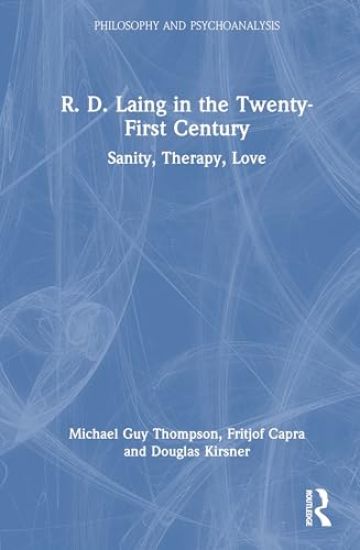
Kirjat ja teokset yhdessä paikassa: 36 kirjaa, julkaisuja vuosilta 1988-2025, suosituimpien joukossa R. D. Laing in the Twenty-First Century. Vertaile teosten hintoja ja tarkista saatavuus suomalaisista kirjakaupoista.
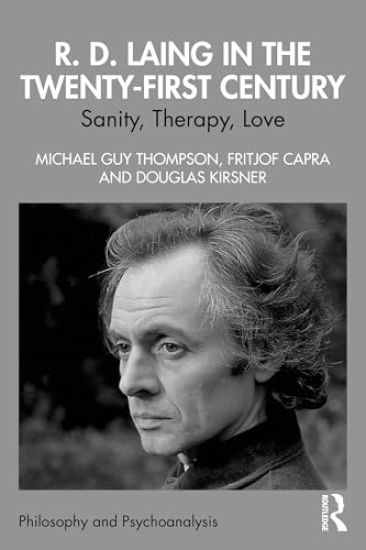
In this remarkable review of the seminal contribution of the Scottish psychiatrist and psychoanalyst, R. D. Laing, the three authors, each intimately acquainted with the subject matter, explore Laing’s intellectual and clinical legacy.Written from the perspective of a psychoanalyst, a scientist, and a philosopher, this unique book thoroughly addresses the three principal themes that defined Laing’s work: his views about sanity and madness, the use of therapy with those suffering from psychotic disturbance, and the vicissitudes of love relationships. They also explore authenticity, altered states, and healing. The authors bring a broad range of viewpoints in assessing Laing’s seminal contribution to contemporary thought, from both a scholarly and personal assessment rooted in each of their diverse relationships with him, both professional and personal.This volume will be of interest to those in the worlds of psychoanalysis, philosophy, science, and anyone with an interest in the work of R. D. Laing.
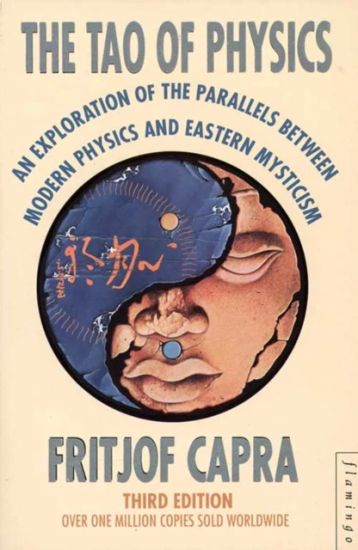
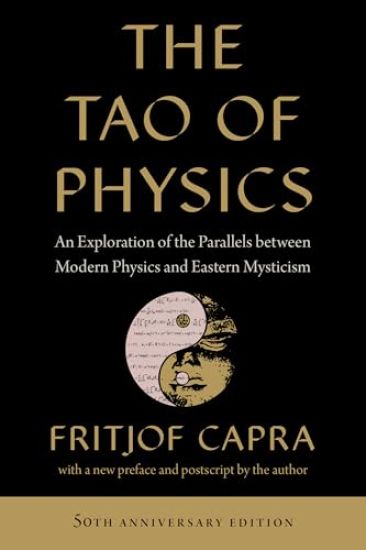
Here is the book that brought the mystical implications of subatomic physics to popular consciousness for the very first time--way back in 1975. This special edition celebrates the thirty-fifth anniversary of this early Shambhala best seller that has gone on to become a classic. It includes a new preface by the author, in which he reflects on the further discoveries and developments that have occurred in the years since the book's original publication. Physicists do not need mysticism, Dr. Capra says, and mystics do not need physics, but humanity needs both. It's a message of timeless importance.
After a quarter of a century in print, Capra's groundbreaking work still challenges and inspires. This updated edition of The Tao of Physics includes a new preface and afterword in which the author reviews the developments of the twenty-five years since the book's first publication, discusses criticisms the book has received, and examines future possibilities for a new scientific world.
Winner of the Silver Medal for Environment/Ecology in the 2022 Independent Publisher (IPPY Book AwardsFritjof Capra, scientist, educator, activist, and accomplished author, presents the evolution of his thought over five decades in Patterns of Connection. First introduced in the late 1950s to the work of Werner Heisenberg, a founder of quantum mechanics, Capra quickly intuited the connections between the discoveries of quantum physics and the traditions of Eastern philosophy - resulting in his first book, the bestselling The Tao of Physics. This synthesis, representative of the change from the mechanistic worldview of Descartes and Newton to a systemic, ecological one, went on to inform Capra's thinking about the life sciences, ecology, and environmental policy. His observations of sustainable communities in nature inspired his work on systems theory - the complex web of interrelated processes that organize everything from biological systems to social, cultural, and political systems.Today Fritjof Capra remains a major figure at the crossroads of physics, spirituality, environmentalism, and systems theory. Organized thematically and chronologically, the essays in Patterns of Connection document the revolutionary and far-reaching intellectual journey of one of the major public thinkers of the last half-century.
Uma das principais personalidades nas fronteiras da f sica, espiritualidade, meio ambiente e teoria sist mica, Fritjof Capra, apresenta neste livro a evolu o de seu pensamento ao longo de cinco d cadas sintetizado no tema "Padr es de Conex o". Ele traz nesta obra uma s ntese brilhante e representativa de seu trabalho, mostrando a mudan a da vis o de mundo mecanicista de Descartes e Newton para uma vis o de mundo sist mica, capaz de abranger e proporcionar informa es sobre o seu pensamento a respeito das ci ncias da vida, ecologia e pol tica ambiental. Organizada de forma tem tica e cronol gica, ele documenta sua jornada intelectual revolucion ria e de longo alcance, trazendo-nos a evolu o do pensamento de um dos principais pensadores do ltimo meio s culo.
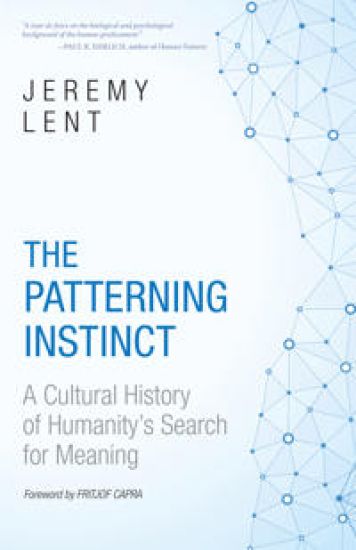
Winner of the 2017 Nautilus Silver Award! This fresh perspective on crucial questions of history identifies the root metaphors that cultures have used to construct meaning in their world. It offers a glimpse into the minds of a vast range of different peoples: early hunter-gatherers and farmers, ancient Egyptians, traditional Chinese sages, the founders of Christianity, trail-blazers of the Scientific Revolution, and those who constructed our modern consumer society.Taking the reader on an archaeological exploration of the mind, the author, an entrepreneur and sustainability leader, uses recent findings in cognitive science and systems theory to reveal the hidden layers of values that form today's cultural norms. Uprooting the tired cliches of the science-religion debate, he shows how medieval Christian rationalism acted as an incubator for scientific thought, which in turn shaped our modern vision of the conquest of nature. The author probes our current crisis of unsustainability and argues that it is not an inevitable result of human nature, but is culturally driven: a product of particular mental patterns that could conceivably be reshaped. By shining a light on our possible futures, the book foresees a coming struggle between two contrasting views of humanity: one driving to a technological endgame of artificially enhanced humans, the other enabling a sustainable future arising from our intrinsic connectedness with each other and the natural world. This struggle, it concludes, is one in which each of us will play a role through the meaning we choose to forge from the lives we lead.
Fritjof Capra, scientist, educator, activist, and accomplished author, presents the evolution of his thought over five decades in Patterns of Connection. First introduced in the late 1950s to the work of Werner Heisenberg, a founder of quantum mechanics, Capra quickly intuited the connections between the discoveries of quantum physics and the traditions of Eastern philosophy--resulting in his first book, the bestselling The Tao of Physics. This synthesis, representative of the change from the mechanistic worldview of Descartes and Newton to a systemic, ecological one, went on to inform Capra's thinking about the life sciences, ecology, and environmental policy.Today Fritjof Capra remains a major figure at the crossroads of physics, spirituality, environmentalism, and systems theory. Organized thematically and chronologically, the essays in Patterns of Connection document the revolutionary and far-reaching intellectual journey of one of the major public thinkers of the last half-century.
Vi mennesker er alltid på jakt etter sammenheng - i familien, i nasjonen, i verdens mange samfunn, i kunnskap og vitenskap og like ut i verdensrommet. Den østerrikske fysikeren og nobelprisvinneren Erwin Schrödinger var sentral i å utvikle kvantefysikken, men han var også tidlig ute med å postulere «den store sammenhengen» - som én altomfattende mental sfære, en overordnet bevissthet som rommer ditt og mitt og alle andres sinn, dermed også et kraftig utvidet potensial for kommunikasjon. Her møter du Schrödinger med hans egne ord om et radikalt, men også eldgammelt syn på tilværelsen som kosmisk bevisst sammenheng («alt i alt»). Den høyt profilerte amerikanske legen Larry Dossey støtter opp med solid erfaring og forskning, sammen med en annen verdenskjent fysiker og systemteoretiker, Fritjof Capra. Radikalt, ja. Men høyst begripelig. Og kanskje en viktig erkjennelse i en splittet verden. Bokserien «På tvers» består av korte og små bøker som vil inspirere til å finne nye veier og mening der hvor færre går. Vi blir klokere av å gå på tvers. Boken er redigert av Henrik B. Tschudi. Den første boken i serien heter "Dialog", etterfulgt av boken "Bevissthet i kosmos".
“A profound and accessible guide to an ecological civilization of peace, material sufficiency, and spiritual abundance for all.” —David Korten, international-bestselling author of When Corporations Rule the World Consumerism drives the pursuit of happiness in much of the world, yet as wealth grows unhappiness abounds, compounded by the grave problems of climate change, pollution, and ecological degradation. We’ve now reached both an environmental and spiritual dead-end that leaves us crying out for alternatives. Elegant Simplicity provides a coherent philosophy of life that weaves together simplicity of material life, thought, and spirit. In it, Satish Kumar, environmental thought leader and former monk, distills five decades of reflection and wisdom into a guide for everyone, covering: The ecological and spiritual principles of living simplyShedding both “stuff” and psychological baggageOpening your mind and heart to the deep value of relationshipsEmbedding simplicity in all aspects of life including education and workMerging science and spirituality for a coherent worldview. Elegant Simplicity is a life guide for everyone wanting off the relentless treadmill of competition and consumption and seeking a life that prioritizes the ecological integrity of the Earth, social equity, and personal tranquility and happiness. “Satish Kumar embodies the elegance of simplicity . . . follow his path to make your life simple, elegant, and inspiring.” —Deepak Chopra, New York Times–bestselling author “In this moving and eloquent book, Satish Kumar takes us through his own journey to a simpler, happier life with a low ecological footprint.” —David Suzuki, award-winning geneticist, author, broadcaster, and environmental activist AWARDS SILVER | 2019 Foreword INDIES: Body, Mind, SpiritBRONZE (Tie) | 2020 Living Now Awards: Enlightenment / Spirituality
Winner of the 2017 Nautilus Silver Award! This fresh perspective on crucial questions of history identifies the root metaphors that cultures have used to construct meaning in their world. It offers a glimpse into the minds of a vast range of different peoples: early hunter-gatherers and farmers, ancient Egyptians, traditional Chinese sages, the founders of Christianity, trail-blazers of the Scientific Revolution, and those who constructed our modern consumer society. Taking the reader on an archaeological exploration of the mind, the author, an entrepreneur and sustainability leader, uses recent findings in cognitive science and systems theory to reveal the hidden layers of values that form today's cultural norms. Uprooting the tired cliches of the science-religion debate, he shows how medieval Christian rationalism acted as an incubator for scientific thought, which in turn shaped our modern vision of the conquest of nature. The author probes our current crisis of unsustainability and argues that it is not an inevitable result of human nature, but is culturally driven: a product of particular mental patterns that could conceivably be reshaped. By shining a light on our possible futures, the book foresees a coming struggle between two contrasting views of humanity: one driving to a technological endgame of artificially enhanced humans, the other enabling a sustainable future arising from our intrinsic connectedness with each other and the natural world. This struggle, it concludes, is one in which each of us will play a role through the meaning we choose to forge from the lives we lead.
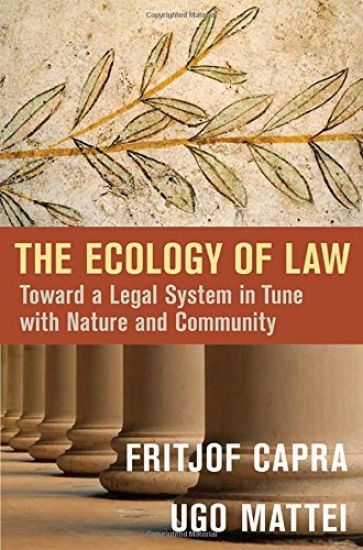
WINNER OF THE 2015 IBPA BENJAMIN FRANKLIN AWARD IN POLITICS/CURRENT EVENTS The Ecology of Law Fritjof Capra and Ugo Mattei argue that at the root of many of the environmental, economic, and social crises we face today is a legal system based on an obsolete worldview. Capra, a bestselling author, physicist, and systems theorist, and Mattei, a distinguished legal scholar, explain how, by incorporating concepts from modern science, the law can become an integral part of bringing about a better world, rather than facilitating its destruction. This is the first book to trace the fascinating parallel history of law and science from antiquity to modern times, showing how the two disciplines have always influenced each other--until recently. In the past few decades, science has shifted from seeing the natural world as a kind of cosmic machine best understood by analyzing each cog and sprocket to a systems perspective that views the world as a vast network of fluid communities and studies their dynamic interactions. The concept of ecology exemplifies this approach. But law is stuck in the old mechanistic paradigm: the world is simply a collection of discrete parts, and ownership of these parts is an individual right, protected by the state. Capra and Mattei show that this has led to overconsumption, pollution, and a general disregard on the part of the powerful for the common good. Capra and Mattei outline the basic concepts and structures of a legal order consistent with the ecological principles that sustain life on this planet. This is a profound and visionary reconceptualization of the very foundations of the Western legal system, a kind of Copernican revolution in the law, with profound implications for the future of our planet.
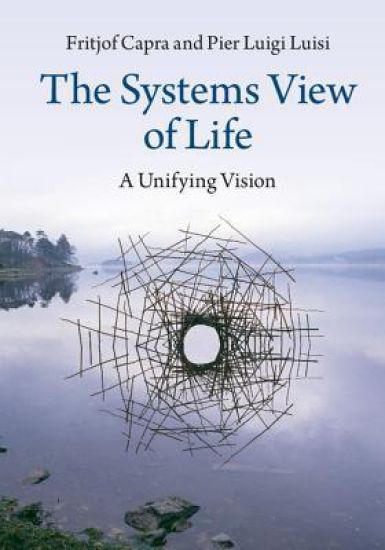
Over the past thirty years, a new systemic conception of life has emerged at the forefront of science. New emphasis has been given to complexity, networks, and patterns of organisation, leading to a novel kind of 'systemic' thinking. This volume integrates the ideas, models, and theories underlying the systems view of life into a single coherent framework. Taking a broad sweep through history and across scientific disciplines, the authors examine the appearance of key concepts such as autopoiesis, dissipative structures, social networks, and a systemic understanding of evolution. The implications of the systems view of life for health care, management, and our global ecological and economic crises are also discussed. Written primarily for undergraduates, it is also essential reading for graduate students and researchers interested in understanding the new systemic conception of life and its implications for a broad range of professions - from economics and politics to medicine, psychology and law.
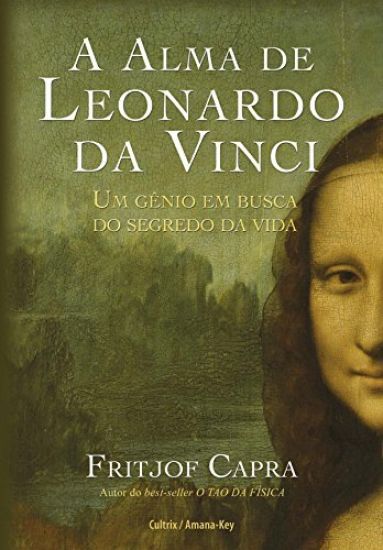
Leonardo da Vinci was a brilliant artist, scientist, engineer, mathematician, architect, inventor, and even musician - the archetypal Renaissance man. But he was also a profoundly modern man. Not only did Leonardo invent the empirical scientific method over a century before Galileo and Francis Bacon, but Capra's decade - long study of Leonardo's fabled notebooks reveals that he was a systems thinker centuries before the term was coined. At the very core of Leonardo's science, Capra argues, lies his persistent quest for understanding the nature of life. His science is a science of living forms, of qualities and patterns, radically different from the mechanistic science that emerged 200 years later. Because he saw the world as an integrated whole, Leonardo always applied concepts from one area to illuminate problems in another. His studies of the movement of water informed his ideas about how landscapes are shaped, how sap rises in plants, how air moves over a bird's wing, and how blood flows in the human body. His observations of nature enhanced his art, his drawings were integral to his scientific studies, and he brought art, science, and technology together in his beautiful and elegant mechanical and architectural designs. Capra describes seven defining characteristics of Leonardo da Vinci's genius and includes a list of over forty discoveries he made that weren't rediscovered until centuries later. Capra follows the organizational scheme Leonardo himself intended to use if he ever published his notebooks. So in a sense, this is Leonardo's science as he himself would have presented it. Obviously, we can't all be geniuses on the scale of Leonardo da Vinci. But his persistent endeavor to put life at the very center of his art, science, and design and his recognition that all natural phenomena are fundamentally interconnected and interdependent are important lessons we can learn from. By exploring the mind of the preeminent Renaissance genius, we can gain profound insights into how to address the complex challenges of the 21st century.
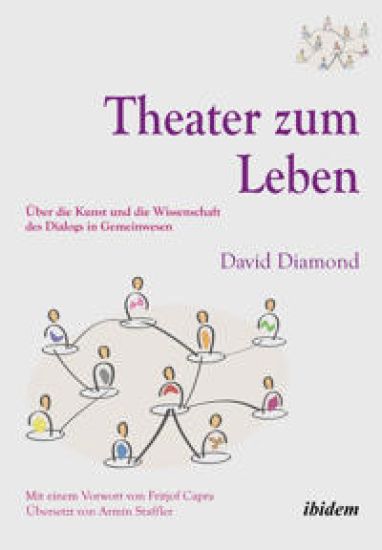
Das Theater zum Leben (Theatre for Living) des kanadischen Theatermachers David Diamond entwickelte sich aus dem Theater der Unterdrückten nach Augusto Boal und lenkt die künstlerisch-pädagogische Kraft des Theaters vor dem Hintergrund systemtheoretischer Erkenntnisse in eine Welt jenseits von einfachen Lösungen und gefährlichen Trennungen in Gut und Böse. Es greift die Grundlagen Paulo Freires auf, adaptiert die Methoden Augusto Boals für die Herausforderungen heutiger Gesellschaften und erkennt mit Fritjof Capra die Zusammenhänge lebendiger Systeme, die für ein Leben in einer Gemeinschaft wertvoll sind. Diamonds Buch unterstreicht den Wert des Theaters für einen Dialog zwischen Individuen, zwischen Gruppen und Gemeinschaften aller Art sowie zwischen Kunst und Wissenschaft, und es stellt ein flammendes Plädoyer dar für ein Theater, das nach immer neuen Wegen für ein gelungenes Zusammenleben sucht.