Kirjojen hintavertailu. Mukana 12 595 353 kirjaa ja 12 kauppaa.

Kirjailija

Fritz Graf

Kirjat ja teokset yhdessä paikassa: 11 kirjaa, julkaisuja vuosilta 1974-2020, suosituimpien joukossa La Magie Dans l'Antiquite Greco-Romaine. Vertaile teosten hintoja ja tarkista saatavuus suomalaisista kirjakaupoista.

11 kirjaa

Kirjojen julkaisuhaarukka 1974-2020.

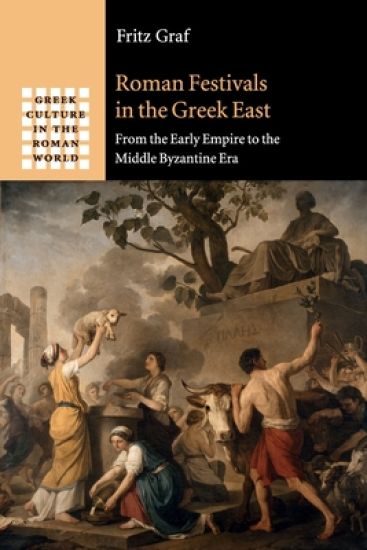
Roman Festivals in the Greek East

Roman Festivals in the Greek East

Fritz Graf

Cambridge University Press
2020
pokkari
This study explores the development of ancient festival culture in the Greek East of the Roman Empire, paying particular attention to the fundamental religious changes that occurred. After analysing how Greek city festivals developed in the first two Imperial centuries, it concentrates on the major Roman festivals that were adopted in the Eastern cities and traces their history up to the time of Justinian and beyond. It addresses several key questions for the religious history of later antiquity: who were the actors behind these adoptions? How did the closed religious communities, Jews and pre-Constantinian Christians, articulate their resistance? How did these festivals change when the empire converted to Christianity? Why did emperors not yield to the long-standing pressure of the Church to abolish them? And finally, how did these very popular festivals - despite their pagan tradition - influence the form of the newly developed Christian liturgy?

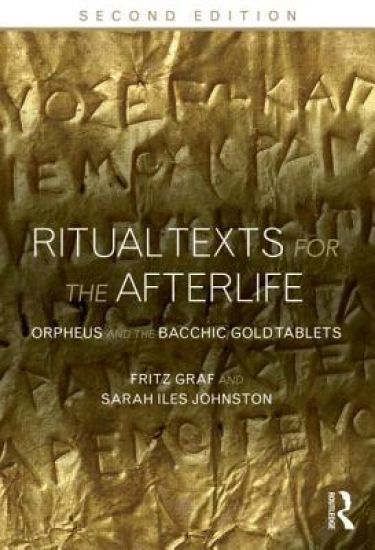
Ritual Texts for the Afterlife

Ritual Texts for the Afterlife

Fritz Graf; Sarah Johnston; Sarah Iles Johnston

Routledge
2013
sidottu
Fascinating texts written on small gold tablets that were deposited in graves provide a unique source of information about what some Greeks and Romans believed regarding the fate that awaited them after death, and how they could influence it. These texts, dating from the late fifth century BCE to the second century CE, have been part of the scholarly debate on ancient afterlife beliefs since the end of the nineteenth century. Recent finds and analysis of the texts have reshaped our understanding of their purpose and of the perceived afterlife. The tablets belonged to those who had been initiated into the mysteries of Dionysus Bacchius and relied heavily upon myths narrated in poems ascribed to the mythical singer Orpheus. After providing the Greek text and a translation of all the available tablets, the authors analyze their role in the mysteries of Dionysus, and present an outline of the myths concerning the origins of humanity and of the sacred texts that the Greeks ascribed to Orpheus. Related ancient texts are also appended in English translations. Providing the first book-length edition and discussion of these enigmatic texts in English, and their first English translation, this book is essential to the study of ancient Greek religion.
Ritual Texts for the Afterlife

Ritual Texts for the Afterlife

Fritz Graf; Sarah Johnston; Sarah Iles Johnston

Routledge
2013
nidottu
Fascinating texts written on small gold tablets that were deposited in graves provide a unique source of information about what some Greeks and Romans believed regarding the fate that awaited them after death, and how they could influence it. These texts, dating from the late fifth century BCE to the second century CE, have been part of the scholarly debate on ancient afterlife beliefs since the end of the nineteenth century. Recent finds and analysis of the texts have reshaped our understanding of their purpose and of the perceived afterlife. The tablets belonged to those who had been initiated into the mysteries of Dionysus Bacchius and relied heavily upon myths narrated in poems ascribed to the mythical singer Orpheus. After providing the Greek text and a translation of all the available tablets, the authors analyze their role in the mysteries of Dionysus, and present an outline of the myths concerning the origins of humanity and of the sacred texts that the Greeks ascribed to Orpheus. Related ancient texts are also appended in English translations. Providing the first book-length edition and discussion of these enigmatic texts in English, and their first English translation, this book is essential to the study of ancient Greek religion.
Apollo

Apollo

Fritz Graf

Routledge
2008
nidottu
Fritz Graf here presents a survey of a god once thought of as the most powerful of gods, and capable of great wrath should he be crossed: Apollo the sun god.From his first attestations in Homer, through the complex question of pre-Homeric Apollo, to the opposition between Apollo and Dionysos in nineteenth and twentieth-century thinking, Graf examines Greek religion and myth to provide a full account of Apollo in the ancient world.For students of Greek religion and culture, of myth and legend, and in the fields of art and literature, Apollo will provide an informative and enlightening introduction to this powerful figure from the past.
Apollo

Apollo

Fritz Graf

Routledge
2008
sidottu
Fritz Graf here presents a survey of a god once thought of as the most powerful of gods, and capable of great wrath should he be crossed: Apollo the sun god.From his first attestations in Homer, through the complex question of pre-Homeric Apollo, to the opposition between Apollo and Dionysos in nineteenth and twentieth-century thinking, Graf examines Greek religion and myth to provide a full account of Apollo in the ancient world.For students of Greek religion and culture, of myth and legend, and in the fields of art and literature, Apollo will provide an informative and enlightening introduction to this powerful figure from the past.
Magic in the Ancient World

Magic in the Ancient World

Fritz Graf

Harvard University Press
1999
nidottu
Ancient Greeks and Romans often turned to magic to achieve personal goals. Magical rites were seen as a route for direct access to the gods, for material gains as well as spiritual satisfaction. In this fascinating survey of magical beliefs and practices from the sixth century B.C.E. through late antiquity, Fritz Graf sheds new light on ancient religion.Evidence of widespread belief in the efficacy of magic is pervasive: the contemporaries of Plato and Aristotle placed voodoo dolls on graves in order to harm business rivals or attract lovers. The Twelve Tables of Roman Law forbids the magical transference of crops from one field to another. Graves, wells, and springs throughout the Mediterranean have yielded vast numbers of Greek and Latin curse tablets. And ancient literature abounds with scenes of magic, from necromancy to love spells. Graf explores the important types of magic in Greco-Roman antiquity, describing rites and explaining the theory behind them. And he characterizes the ancient magician: his training and initiation, social status, and presumed connections with the divine world. With trenchant analysis of underlying conceptions and vivid account of illustrative cases, Graf gives a full picture of the practice of magic and its implications. He concludes with an evaluation of the relation of magic to religion. Magic in the Ancient World offers an unusual look at ancient Greek and Roman thought and a new understanding of popular recourse to the supernatural.
La Magie Dans l'Antiquite Greco-Romaine

La Magie Dans l'Antiquite Greco-Romaine

Fritz Graf

Les Belles Lettres
1994
nidottu
Qu'est-ce que la magie? Apres un siecle de recherches et de discussions, la question reste ouverte, et le terme meme n'a pas recu une definition satisfaisante. Cette imprecision explique que les specialistes de l'histoire des sciences, des religions et des cultures traditionnelles aient de nouveau place la magie au centre de leurs recherches. Dans ce debat, la teminologie et les sources heritee du monde greco-romain jouent un role central, car le vocabulaire meme de la magie remonte a cette epoque tandis que les papyrus et les livres magiques d'Egypte - une Egypte qui, conquise par les Grecs puis par les Romains, restait pour eux un lieu exotique et mysterieux - n'ont cesse de passionner tous ceux qui se sont interesse a la question.L'inventaire et le commentaire des principales sources greco-romaines servent ainsi a definir la figure du sorcier, les principes de son art - initiation, diagnostics, rites d'envoutement, acces aux dieux et a un savoir superieur - ainsi que la place des pratiques magiques par rapport a la religion. Ecrit par l'un des meilleurs specialistes des religions du monde classique, cette analyse, precise et conforme aux approches historique et anthropologique modernes, pose les termes du debat actuel sur la magie. A tous ceux qui s'interessent a l'histoire de la pensee scientifique, religieuse et esoterique il fournit un instrument de travail de premiere importance. Fritz Graf est professeur de philologie a l'Universite de Bale. Il est l'auteur de livres sur les cultes de l'Ionie du Nord et sur la mythologie grecque, ainsi que de nombreux travaux sur les religions du monde classique.
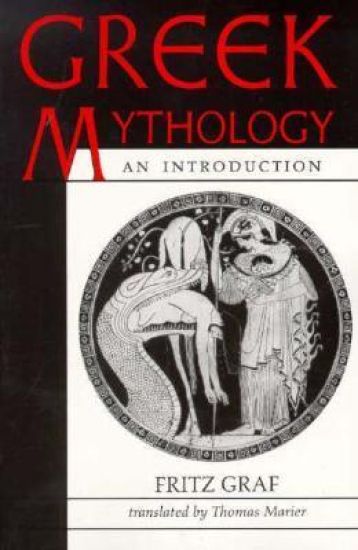
Greek Mythology

Greek Mythology

Fritz Graf

Johns Hopkins University Press
1993
pokkari
This revised translation of Fritz Graf's highly acclaimed introduction to Greek mythology offers a chronological account of the principal Greek myths that appear in the surviving literary and artistic sources and concurrently documents the history of interpretation of Greek mythology from the 17th century to the present. First surveying the various definitions of myth that have been advanced, Graf proceeds to examine topics such as the relationship between Greek myths and epic poetry, the connection between particular myths and shrines or holy festivals, the use of myth in Greek song and tragedy, and the uses and interpretations of myth by philosophers and allegorists.