Kirjojen hintavertailu. Mukana 12 571 676 kirjaa ja 12 kauppaa.

Kirjailija

Fumiko Joo

Kirjat ja teokset yhdessä paikassa: 4 kirjaa, julkaisuja vuosilta 2017-2026, suosituimpien joukossa Peony Lantern Tales. Vertaile teosten hintoja ja tarkista saatavuus suomalaisista kirjakaupoista.

4 kirjaa

Kirjojen julkaisuhaarukka 2017-2026.

Peony Lantern Tales

Peony Lantern Tales

Fumiko Joo

UNIVERSITY OF HAWAI'I PRESS
2026
nidottu
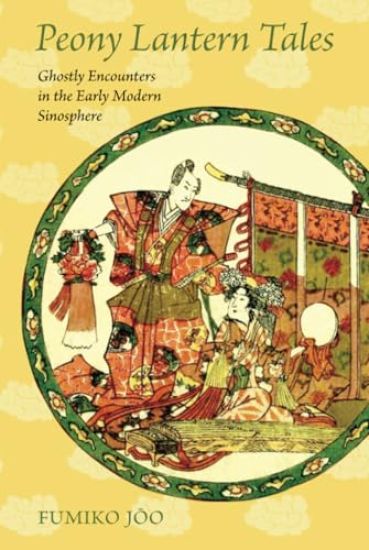
"The Story of the Peony Lantern" by the Chinese author Qu You (1347–1433) traveled across lingual, cultural, and geopolitical borders in early modern East Asia. The original tale, set in fourteenth-century Ningbo, China, is one of ghostly seduction and murder, but it continued to transform as it traveled from city to city and in its encounters with characters from other texts, publishing networks, and countless readers in the Sinosphere. Fumiko Joo closely analyzes the cultural and societal structures that framed how a seductive female ghost was reconceived in texts, sites, and objects, both locally and trans-regionally. The myriad transformations of "The Peony Lantern" explain the context and the structures of knowledge production and practice where depictions of female sexuality, death, and morality emerged and were remade. Joo incorporates a breadth of sources, from local gazetteers to theater ephemera, to shed light on the cultural life of objects, the collective memory of vanished sites, and the public’s desire to encounter the phantom. She examines the historical moments and sociocultural spaces where Peony Lantern narratives and their writers thrived, following the tale as it moved from Hangzhou literati in the twelfth to fourteenth centuries to an early nineteenth-century group of Edo playwrights, kabuki theater producers, and publishers. Readers will welcome Joo’s exploration of the tale’s transformation by local scholars of Ningbo in the eighteenth century and the female classical writer Arakida Reijo (1732–1806) and her Ise literary circle. The key sites of literary activity for the stories, according to Joo’s illuminating analyses, are not modern nation-states but networks of literati connected by class, gender, and regional affinities. This volume includes complete translations of Qu You’s original "Peony Lantern" and two later adaptions, "The Double-Fish Fan Pendant" by Xiong Long Feng Publishing House and Arakida’s "Floating Weeds."
Peony Lantern Tales

Peony Lantern Tales

Fumiko Joo

UNIVERSITY OF HAWAI'I PRESS
2025
sidottu
The Story of the Peony Lantern by the Chinese author Qu You (1347–1433) travelled across lingual, cultural, and geopolitical borders in early modern East Asia. The original tale, set in fourteenth-century Ningbo, China, is one of ghostly seduction and murder, but it continued to transform as it traveled from city to city and in its encounters with characters from other texts, publishing networks, and countless readers in the Sinosphere. Fumiko Joo closely analyzes the cultural and societal structures that framed how a seductive female ghost was reconceived in texts, sites, and objects, both locally and trans-regionally. The myriad transformations of The Peony Lantern explain the context and the structures of knowledge production and practice where depictions of female sexuality, death, and morality emerged and were remade.Joo incorporates a breadth of sources, from local gazetteers to theater ephemera, to shed light on the cultural life of objects, the collective memory of vanished sites, and the public’s desire to encounter the phantom. She examines the historical moments and sociocultural spaces where Peony Lantern narratives and their writers thrived, following the tale as it moved from Hangzhou literati from the twelfth to fourteenth centuries to an early nineteenth-century group of Edo playwrights, kabuki theater producers, and publishers. Readers will welcome Joo’s exploration of the tale’s transformation by local scholars of Ningbo in the eighteenth century and the female classical writer Arakida Reijo (1732–1806) and her Ise literary circle. The key sites of literary activity for the stories, according to Joo’s illuminating analyses, are not modern nation-states but networks of literati connected by class, gender, and regional affinities.This volume includes complete translations of Qu You’s original Peony Lantern and two later adaptions, The Double-Fish Fan Pendant by Xiong Long Feng Publishing House and Arakida’s Floating Weeds.
Japanese for Sinologists

Japanese for Sinologists

Joshua A. Fogel; Fumiko Joo

University of California Press
2017
sidottu
For many years it has been known that scholars of Chinese history and culture must keep abreast of scholarship in Japan, but the great majority have found that to be difficult. Japanese for Sinologists is the first textbook dedicated to helping Sinologists learn to read scholarly Japanese writing on China. It includes essays by eminent scholars, vocabulary lists with romanizations, English translations, grammar notes, and a wealth of general information not easily available anywhere. The reader will be introduced to a wide panoply of famed Sinologists and their writing styles. The first chapters introduce some basic information on dictionaries, encyclopedias, and other resources for research on China in Japanese materials, including a list of names and terms from Chinese political, historical, and cultural events. The chapters cover a range of topics and time periods and highlight authors, all well-known Japanese scholars, with an appendix of English translations of all the articles. After completing this book, the user will be able to begin his or her own reading in Japanese Sinology without the extensive apparatus this volume supplies.
Japanese for Sinologists

Japanese for Sinologists

Joshua A. Fogel; Fumiko Joo

University of California Press
2017
pokkari
For many years it has been known that scholars of Chinese history and culture must keep abreast of scholarship in Japan, but the great majority have found that to be difficult. Japanese for Sinologists is the first textbook dedicated to helping Sinologists learn to read scholarly Japanese writing on China. It includes essays by eminent scholars, vocabulary lists with romanizations, English translations, grammar notes, and a wealth of general information not easily available anywhere. The reader will be introduced to a wide panoply of famed Sinologists and their writing styles. The first chapters introduce some basic information on dictionaries, encyclopedias, and other resources for research on China in Japanese materials, including a list of names and terms from Chinese political, historical, and cultural events. The chapters cover a range of topics and time periods and highlight authors, all well-known Japanese scholars, with an appendix of English translations of all the articles. After completing this book, the user will be able to begin his or her own reading in Japanese Sinology without the extensive apparatus this volume supplies.