Kirjojen hintavertailu. Mukana 12 595 353 kirjaa ja 12 kauppaa.

Kirjailija

G. A. Loud

Kirjat ja teokset yhdessä paikassa: 6 kirjaa, julkaisuja vuosilta 1999-2025, suosituimpien joukossa Frederick Barbarossa. Vertaile teosten hintoja ja tarkista saatavuus suomalaisista kirjakaupoista.

Mukana myös kirjoitusasut: G.A. Loud

6 kirjaa

Kirjojen julkaisuhaarukka 1999-2025.

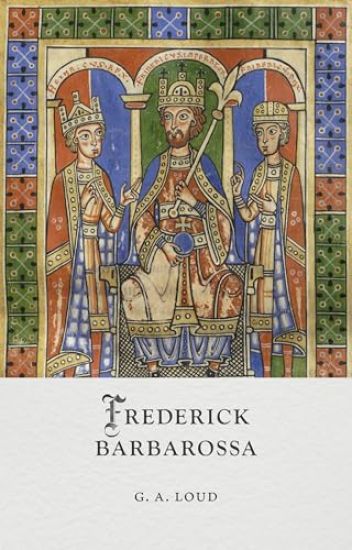
Frederick Barbarossa

Frederick Barbarossa

G. A. Loud

REAKTION BOOKS
2025
sidottu
Frederick Barbarossa, also known as Frederick I, Holy Roman Emperor from 1155, was a dominant figure in late 12th-century European history. He is remembered as one of the greatest medieval German emperors; some even regard him as a German hero. He brought peace to Germany, fought to maintain control over Italian cities and engaged in a lengthy dispute with the papacy. Barbarossa died on a Crusade to reclaim the Holy Land for Christianity. But despite his efforts, his reign marked a decline in imperial authority, with defeats in Italy and growing local power among German princes. Frederick Barbarossa examines this paradox, revealing the realities and limitations of monarchical power in medieval Europe. This is a cogent, original and up-to-date analysis of Barbarossa, suitable for both students and the general reader.
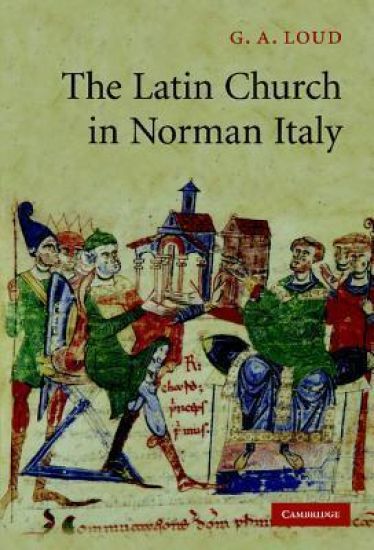
The Latin Church in Norman Italy

The Latin Church in Norman Italy

G. A. Loud

Cambridge University Press
2011
pokkari
First published in 2007, this was the first significant study of the incorporation of the Church in southern Italy into the mainstream of Latin Christianity during the eleventh and twelfth centuries. Professor G. A. Loud examines the relationship between Norman rulers, south Italian churchmen and the external influence of the new 'papal monarchy'. He discusses the impact of the creation of the new kingdom of Sicily in 1130; the tensions that arose from the papal schism of that era; and the religious policy and patronage of the new monarchs. He also explores the internal structures of the Church, both secular and monastic, and the extent and process of Latinisation within the Graecophone areas of the mainland and on the island of Sicily, where at the time of the Norman conquest the majority of the population was Muslim. This is a major contribution to the political, religious and cultural history of the Central Middle Ages.
Raisin

Raisin

Judd Woldin; G. A. Loud; Robert Nemiroff

Samuel French, Inc
2009
pokkari
Based on Lorraine Hansberry's A Raisin in the Sun. Musical Drama / 9m, 6f, chorus and extras / Unit set This winner of Tony and Grammy awards as Best Musical ran for three years on Broadway and enjoyed a record breaking national tour. A proud family's quest for a better life meets conflicts that span three generations and set the stage for a drama rich in emotion and laughter. Taking place on Chicago's Southside, it explodes in song, dance, drama and comedy. "Pure magic ...dazzling! Tremendous!...Warms the heart and touches the soul ...with a human dimension that takes the measurement of man!" - N.Y. Times "A tidal wave of soul!" - Ebony
The Latin Church in Norman Italy

The Latin Church in Norman Italy

G. A. Loud

Cambridge University Press
2007
sidottu
First published in 2007, this was the first significant study of the incorporation of the Church in southern Italy into the mainstream of Latin Christianity during the eleventh and twelfth centuries. Professor G. A. Loud examines the relationship between Norman rulers, south Italian churchmen and the external influence of the new 'papal monarchy'. He discusses the impact of the creation of the new kingdom of Sicily in 1130; the tensions that arose from the papal schism of that era; and the religious policy and patronage of the new monarchs. He also explores the internal structures of the Church, both secular and monastic, and the extent and process of Latinisation within the Graecophone areas of the mainland and on the island of Sicily, where at the time of the Norman conquest the majority of the population was Muslim. This is a major contribution to the political, religious and cultural history of the Central Middle Ages.
Montecassino and Benevento in the Middle Ages
This second volume by Graham Loud focuses on two key centres of the south Italian church in the central Middle Ages. The first section concentrates on the 'golden age' of the abbey of Montecassino, during the 11th and 12th centuries, when it was at the height of its influence and three of its monks became popes. The studies seek to place the abbey in its context, examining its relations with the papacy, Byzantium, and the local nobility. The second part deals with Benevento and the abbey of St Sophia, and looks at its development and administration, as well as the tensions that arose from its position as a papal enclave within the Kingdom of Sicily. Based on extensive archival research, the volume as a whole presents a fresh and original insight into the society of southern Italy from the coming of the Normans to its conquest by Charles of Anjou.
Conquerors and Churchmen in Norman Italy
The impact of the Norman conquest of Sicily and Southern Italy in the 11th-12th centuries upon the society of that region forms the central theme of this volume. Norman relations with the Byzantine world are also an important topic. Several studies directly examine questions of continuity and change, both with regard to lay society and in a section devoted to the Church; others approach the subject more obliquely, through the analysis of contemporary historical writing, the documents and diplomatic of the Princes of Capua, and religious patronage. Throughout, they attempt to locate the conquerors within the context of the society they invaded, and within which they were only a minority.