Kirjojen hintavertailu. Mukana 12 390 323 kirjaa ja 12 kauppaa.

Kirjailija

G Guida

Kirjat ja teokset yhdessä paikassa: 4 kirjaa, julkaisuja vuosilta 1999-2021, suosituimpien joukossa Méthode de comptabilité en partie double simplifiée, facilis. Vertaile teosten hintoja ja tarkista saatavuus suomalaisista kirjakaupoista.

Mukana myös kirjoitusasut: G. Guida

4 kirjaa

Kirjojen julkaisuhaarukka 1999-2021.

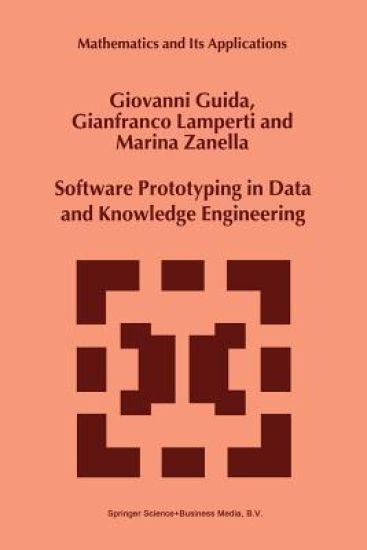
Software Prototyping in Data and Knowledge Engineering

Software Prototyping in Data and Knowledge Engineering

G. Guida; G. Lamperti; Marina Zanella

Springer
2012
nidottu
This monograph describes an innovative prototyping framework for data and knowledge intensive systems. The proposed approach will prove especially useful for advanced and research-oriented projects that aim to develop a traditional database perspective into fully-fledged advanced database approaches and knowledge engineering technologies. The book is organised in two parts. The first part, comprising chapters 1 to 4, provides an introduction to the concept of prototyping, to database and knowledge-based technologies, and to the main issues involved in the integration of data and knowledge engineering. The second part, comprising chapters 5 to 12, illustrates the proposed approach in technical detail. Audience: This volume will be of interest to researchers in the field of databases and knowledge engineering in general, and for software designers and knowledge engineers who aim to expand their expertise in data and knowledge intensive systems.
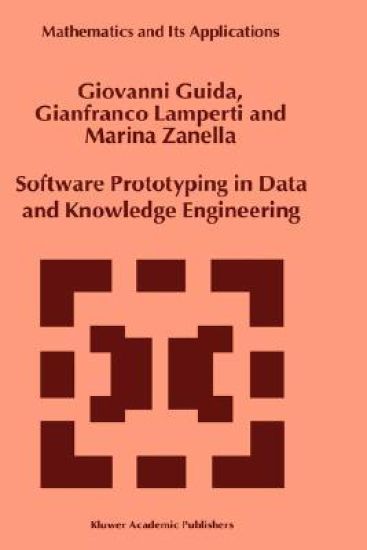
Software Prototyping in Data and Knowledge Engineering

Software Prototyping in Data and Knowledge Engineering

G. Guida; G. Lamperti; Marina Zanella

Springer
1999
sidottu
This monograph describes an innovative prototyping framework for data and knowledge intensive systems. The proposed approach will prove especially useful for advanced and research-oriented projects that aim to develop a traditional database perspective into fully-fledged advanced database approaches and knowledge engineering technologies. The book is organised in two parts. The first part, comprising chapters 1 to 4, provides an introduction to the concept of prototyping, to database and knowledge-based technologies, and to the main issues involved in the integration of data and knowledge engineering. The second part, comprising chapters 5 to 12, illustrates the proposed approach in technical detail. Audience: This volume will be of interest to researchers in the field of databases and knowledge engineering in general, and for software designers and knowledge engineers who aim to expand their expertise in data and knowledge intensive systems.