Kirjojen hintavertailu. Mukana 12 595 353 kirjaa ja 12 kauppaa.

Kirjailija

G.V. Chilingarian

Kirjat ja teokset yhdessä paikassa: 3 kirjaa, julkaisuja vuosilta 2005-2010, suosituimpien joukossa Evolution of Earth and its Climate. Vertaile teosten hintoja ja tarkista saatavuus suomalaisista kirjakaupoista.

3 kirjaa

Kirjojen julkaisuhaarukka 2005-2010.

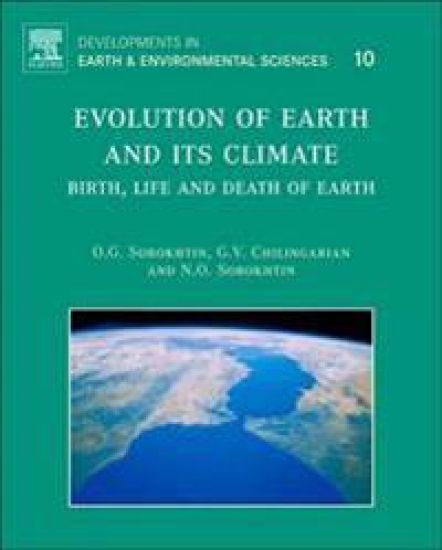
Evolution of Earth and its Climate

Evolution of Earth and its Climate

O.G. Sorokhtin; G.V. Chilingarian; N.O. Sorokhtin

Elsevier Science Ltd
2010
nidottu
The book reviews the current physical theory of Earth's global evolution, its origin, structure and composition, the process of Earth's core formation, Earth's energy, and the nature of its tectonomagnetic activity. The book also deals with the origin of the Moon and its influence on our planet's evolution. Based on the integral positions of this theory, the book analyzes the issues of the origin of the hydrosphere and atmosphere, and the conception and evolution of life on Earth. The monograph also reviews the adiabatic theory of the greenhouse effect developed by the authors, and the effects of nitrogen-consuminging bacteria and of periodic changes in the precession angle on its climate. In particular, these effects cause the onset and periodicity of ice ages and a significant climate warming during the periods of supercontinent appearance (like Pangaea in the Mid-Mesozoic).
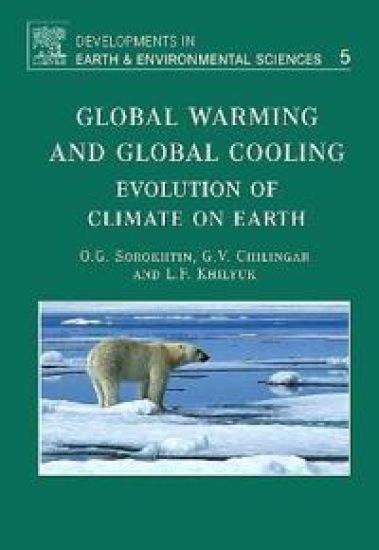
Global Warming and Global Cooling

Global Warming and Global Cooling

O.G. Sorokhtin; Leonid F. Khilyuk Ph.D.; G.V. Chilingarian

Elsevier Science Ltd
2007
sidottu
The theory of the Earth's climate evolution based on universal chemical-physical laws of matter-energy transformation is presented in the book. It shows how the process of Earth's core separation has led to formation and evolution of the hydrosphere and atmosphere. Having analyzed the processes of heat transfer in the atmosphere, the writers developed the adiabatic theory of the greenhouse effect, which was applied for analysis of climatic changes on the Earth. The influence of changes in climate on formation of mineral deposits and development of life on Earth was considered and presented based on modeling of typical climatic regimes. It shows that the anthropogenic effect on the Earth's global temperature is negligible in comparison with the effect of global forces of nature.
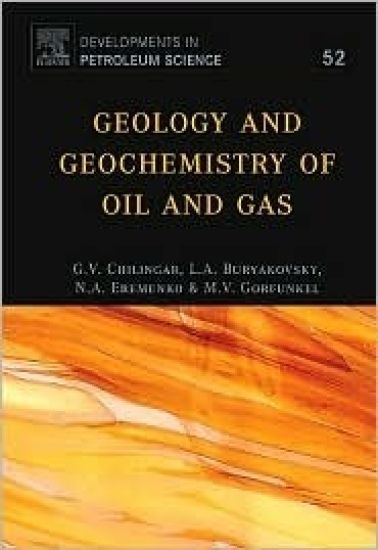
Geology and Geochemistry of Oil and Gas

Geology and Geochemistry of Oil and Gas

L. Buryakovsky; N.A. Eremenko; M.V. Gorfunkel; G.V. Chilingarian

Elsevier Science Ltd
2005
sidottu
This book discusses the progress that is being made through innovations in instrumental measurements of geologic and geochemical systems and their study using modern mathematical modeling. It covers the systems approach to understanding sedimentary rocks and their role in evolution and containment of subsurface fluids. Fundamental aspects of petroleum geology and geochemistry, generation, migration, accumulation, evaluation and production of hydrocarbons are discussed with worldwide examples. Various physical and chemical properties of subsurface waters, crude oils and natural gases are described which is especially important to production engineering. Among various properties of liquid and gaseous hydrocarbons the most important are wettability affecting production characteristics and ultimate recovery: relative permeability affecting reservoir fluid flow to the production wells; density differences between immiscible fluids which affects gravity drainage; viscosity of subsurface fluids affecting the relative mobility of each fluid; and fluid chemistry, which affects the absorption, ultimate recovery and monetary value of produced hydrocarbons. Discussion of the formation and accumulation of hydrocarbons includes (1) the changes in the chemical composition of hydrocarbons that originate from the debris of living plants and organisms to form crude oil and natural gas; (2) the origin of hydrocarbons in different areas of a single reservoir; (3) the conditions, which determine the distribution of water, oil and gas in the reservoir; (4) the migration of subsurface fluids until they eventually accumulate in isolated traps; (5) discussion of the traps as a function of sedimentary geology and tectonics. This is based on the systems approach to the specific geologic and geochemical systems using analytical and statistical principles and examples of modern mathematical modeling of static and dynamic systems.