Kirjojen hintavertailu. Mukana 12 390 323 kirjaa ja 12 kauppaa.

Kirjailija

Gabriel Kolko

Kirjat ja teokset yhdessä paikassa: 12 kirjaa, julkaisuja vuosilta 1970-2016, suosituimpien joukossa Vietnam: Anatomy of a Peace. Vertaile teosten hintoja ja tarkista saatavuus suomalaisista kirjakaupoista.

12 kirjaa

Kirjojen julkaisuhaarukka 1970-2016.

Railroads and Regulations, 1877-1916

Railroads and Regulations, 1877-1916

Gabriel Kolko

Princeton University Press
2016
sidottu
This examination of the relationship of the economy to political process in the United States from 1877 to 1916 shows how the railroad industry encouraged and relied on national politics to solve its economic problems, and created a precedent for government regulation of the economy in the twentieth century. The continuity in governmental regulation from 1877 to 1900, in the Progressive Era, and in the administrations of Roosevelt, Taft, and Wilson are pointed out. The origin of each major federal railroad act and contending forces is analyzed. Federal regulation of the railroads, probably the most important example of federal intervention in the economy from the Civil War to World War I is used as a key in reassessing the motives behind Progressivism. Originally published in 1965. The Princeton Legacy Library uses the latest print-on-demand technology to again make available previously out-of-print books from the distinguished backlist of Princeton University Press. These editions preserve the original texts of these important books while presenting them in durable paperback and hardcover editions. The goal of the Princeton Legacy Library is to vastly increase access to the rich scholarly heritage found in the thousands of books published by Princeton University Press since its founding in 1905.
Railroads and Regulations, 1877-1916

Railroads and Regulations, 1877-1916

Gabriel Kolko

Princeton University Press
2015
pokkari
This examination of the relationship of the economy to political process in the United States from 1877 to 1916 shows how the railroad industry encouraged and relied on national politics to solve its economic problems, and created a precedent for government regulation of the economy in the twentieth century. The continuity in governmental regulation from 1877 to 1900, in the Progressive Era, and in the administrations of Roosevelt, Taft, and Wilson are pointed out. The origin of each major federal railroad act and contending forces is analyzed. Federal regulation of the railroads, probably the most important example of federal intervention in the economy from the Civil War to World War I is used as a key in reassessing the motives behind Progressivism. Originally published in 1965. The Princeton Legacy Library uses the latest print-on-demand technology to again make available previously out-of-print books from the distinguished backlist of Princeton University Press. These editions preserve the original texts of these important books while presenting them in durable paperback and hardcover editions. The goal of the Princeton Legacy Library is to vastly increase access to the rich scholarly heritage found in the thousands of books published by Princeton University Press since its founding in 1905.
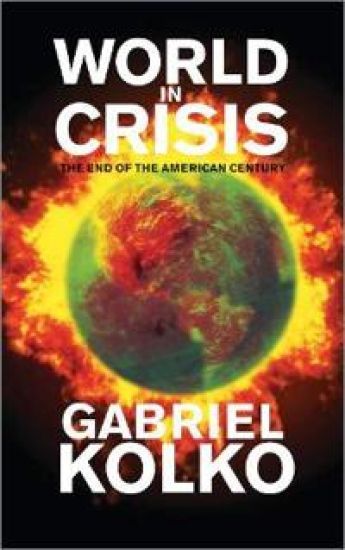
World in Crisis

World in Crisis

Gabriel Kolko

Pluto Press
2009
pokkari
World in Crisis is a new book from one of the world's leading scholars. Gabriel Kolko provides a panoramic overview of the problems facing the US and the world today. Each chapter covers a key topic, spanning a range of international issues including the current financial crisis, the limits of US foreign policy, the politicisation of intelligence, and why a war with Iran would by likely to culminate in disaster for the US. Kolko also outlines why changes in military technology make all wars, no matter who fights them, increasingly futile. At the heart of the book is the idea that the international system is in the grip of a great transition. Kolko shows how America is losing its dominance, and examines the profound changes we are experiencing as it is forced to accept the limits of its military power.
World in Crisis

World in Crisis

Gabriel Kolko

Pluto Press
2009
sidottu
World in Crisis is a new book from one of the world's leading scholars. Gabriel Kolko provides a panoramic overview of the problems facing the US and the world today. Each chapter covers a key topic, spanning a range of international issues including the current financial crisis, the limits of US foreign policy, the politicisation of intelligence, and why a war with Iran would by likely to culminate in disaster for the US. Kolko also outlines why changes in military technology make all wars, no matter who fights them, increasingly futile. At the heart of the book is the idea that the international system is in the grip of a great transition. Kolko shows how America is losing its dominance, and examines the profound changes we are experiencing as it is forced to accept the limits of its military power.
After Socialism

After Socialism

Gabriel Kolko

Routledge
2006
sidottu
Does socialism have a future in the world of the twenty-first century? If not, what is the future for progressive politics?This is a major contribution to contemporary social and political thought written by one of the world's leading critical historians. Gabriel Kolko ask the difficult questions about where the left can go in a post-Cold War world where neoliberal policies appear to have triumphed in both the West and the former Soviet bloc. In trying to answer this, he interrogates both the origins and development of socialist ideas and the contemporary dynamics of the globalized economy dominated by American military, cultural and political might.While avoiding the temptations of either pessimism or utopianism, Kolko offers an original and practical solution about the way forward for a liberal politics.
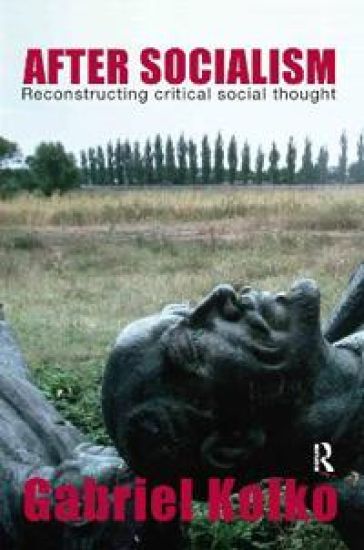
After Socialism

After Socialism

Gabriel Kolko

Routledge
2006
nidottu
Does socialism have a future in the world of the twenty-first century? If not, what is the future for progressive politics?This is a major contribution to contemporary social and political thought written by one of the world's leading critical historians. Gabriel Kolko ask the difficult questions about where the left can go in a post-Cold War world where neoliberal policies appear to have triumphed in both the West and the former Soviet bloc. In trying to answer this, he interrogates both the origins and development of socialist ideas and the contemporary dynamics of the globalized economy dominated by American military, cultural and political might.While avoiding the temptations of either pessimism or utopianism, Kolko offers an original and practical solution about the way forward for a liberal politics.
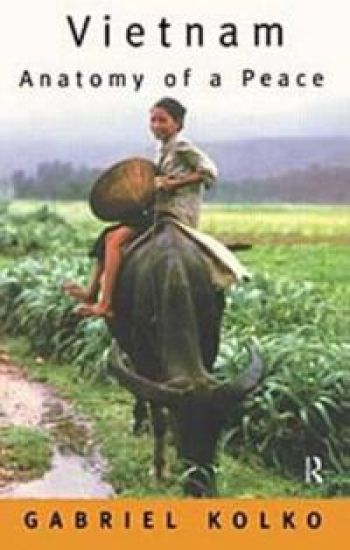
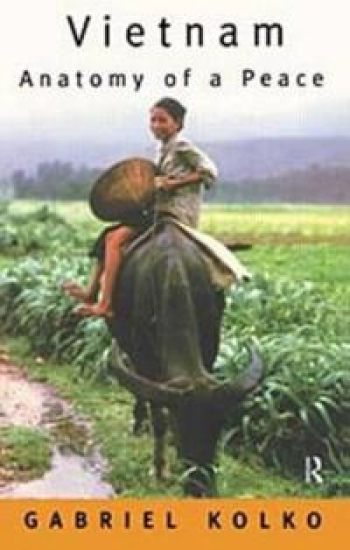
Vietnam: Anatomy of a Peace

Vietnam: Anatomy of a Peace

Gabriel Kolko

Routledge
1997
sidottu
Vietnam has experienced huge political and economic development since the war. In Anatomy of a Peace, Gabriel Kolko looks at the main economic phases the Communist Party has embarked upon since 1986 and outlines the transition to nascent capitalism. He also explores Vietnam's relations to its neighbours and the US in the light of social and psychological national features. Based on extensive research and over 30 years first hand experience, Anatomy of a Peace is a timely examination of recent history and developing economies in Asia. Gabriel Kolko argues that neither an intentional socialist or market strategy have determined recent Vietnamese history and, in fact, the Communist Party has little control over development during peace time.
Vietnam: Anatomy of a Peace

Vietnam: Anatomy of a Peace

Gabriel Kolko

Routledge
1997
nidottu
Vietnam has experienced huge political and economic development since the war. In Anatomy of a Peace, Gabriel Kolko looks at the main economic phases the Communist Party has embarked upon since 1986 and outlines the transition to nascent capitalism. He also explores Vietnam's relations to its neighbours and the US in the light of social and psychological national features. Based on extensive research and over 30 years first hand experience, Anatomy of a Peace is a timely examination of recent history and developing economies in Asia. Gabriel Kolko argues that neither an intentional socialist or market strategy have determined recent Vietnamese history and, in fact, the Communist Party has little control over development during peace time.
Century of War

Century of War

Gabriel Kolko

The New Press
1995
pokkari
Over the last three decades the historian Gabriel Kolko has redefined the way we look at modern warfare and its social and political effects. Century of War gives us a masterly synthesis of the effects of war on civilian populations and the political results of these traumatizing experiences in the twentieth century.
Railroads and Regulation, 1877-1916

Railroads and Regulation, 1877-1916

Kolko; Gabriel Kolko

W. W. Norton Company
1970
nidottu
Government regulation of the railroads is probably the most important example of federal intervention in the economy from the Civil War to World War I. It is also a key to an assessment of the impulses and motives behind Progressivism. In Railroads and Regulation, Gabriel Kolko presents a case study of the relationship of the economy to the political process in the United States during the years from 1877 to 1916.The author discusses the extent to which the railroad industry encouraged and relied on national political solutions--such as the creation of the first significant federal regulatory agency, the Interstate Commerce Commission, in 1887--to its economic problems. He shows how this reliance created a pattern of interdependence between economic and political power that set a precedent for government regulation of the economy in the twentieth century. Drawing on new material and manuscript sources, Dr. Kolko describes the roles of the railroad men in the movement for federal regulation. The attitudes of the railroads toward regulation are placed in the broader context of the determination of governmental economic policies--policies frequently formulated in response to railroad pressure.Dr. Kolko traces the continuity in governmental regulation between 1877 and 1900 and during the administration of Roosevelt, Taft, and Wilson, with fresh material of Progressive leaders in the period from 1910 to 1916. He analyzes the origin of each major federal railroad act and the contending forces trying to shape the legislation, and gives an illuminating discussion of the relationship of the state and federal regulation. Railroads and Regulation, 1877-1916 was awarded the Transportation History Prize of the Organization of American Historians.